The Hildegard of Bingen Abbey – A Living Legacy
If you’re interested in philosophy – as I am – you will eventually come across Hildegard of Bingen. And the deeper you go, the greater your sense of wonder becomes. She was one of the first women to write in Latin – finding a voice in a world where female thought was largely unwelcome. But Hildegard would not be silenced. She was a philosopher, mystic, healer, composer – and above all, a woman of extraordinary inner clarity.
What touches me most is that her true work began only at the age of 50. In the Middle Ages. A time when women were rarely visible in public life – and she steps forward, right then, with full force. You carry that knowledge with you when you enter the abbey. And suddenly, you feel it: her legacy is alive.
The abbey is more than just a building. It is lived philosophy, lived devotion. A quiet spirituality that welcomes you without overwhelming. And the moment you step across the threshold, something opens. It’s as if the space widens – and with it, the heart.
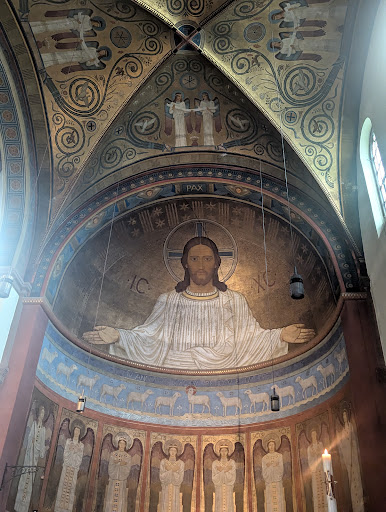
What greets you is not a suffering Christ on the cross. It is his open hands. Not a symbol of pain, but an invitation. A gesture that says: You are welcome. You may be still. You may feel. You may pray. You may belong.
Even the smallest details speak: the script, the beautifully illuminated texts, the way history is shared – nothing feels contrived. It is beautiful. Deep. And somehow timeless. Even the donation boxes, modest as they are, feel like part of the whole – signs that this place is still sustained. By people. By women walking in Hildegard’s footsteps.
I will definitely return – the library was closed during my visit. And especially if you love the written word, you come to understand something essential here: In a time when we stare at flickering screens, when our words disappear into messages and feeds, these ancient texts stand still and shining – in gold, in color, in soul. They speak. And they wait for eyes that are ready to truly read again.
And the beauty is: it’s so close. So close to Frankfurt. So close to ourselves. This place does not leave you untouched. I’ll return, too, to listen to the sacred chants – because I believe we have so much to learn from them.
Thank you for keeping this place open....
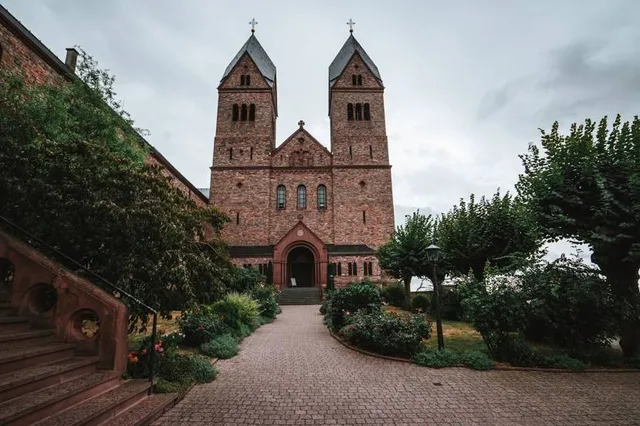
Read moreAn imposing building on the slopes above Rudesheim, dedicated to the memory of an amazing woman. The Abbey was constructed between 1900 and 1908 above the site of Hildegard's original convent at Eibigen near Rudesheim which dated to the mid 12th century.
The solid, massive building constructed of reddish brown sandstone and quartzite is reminiscent of some ancient Roman buildings, giving an impression of permanence. The western facade is framed by twin towers. The nave of the Abbey is simple encouraging quiet contemplation, and is dominated by the almost overpowering painting of Christ above the altar. Everything else seems a little insignificant by comparison.
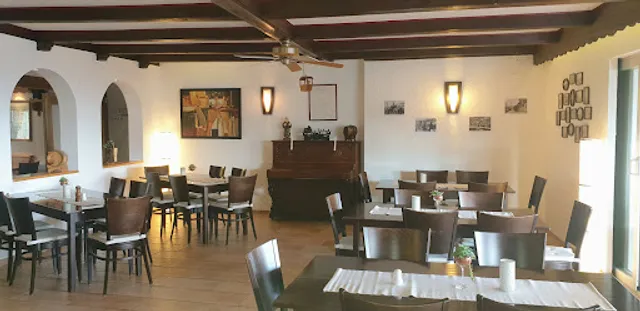
The nuns follow the Benedictine tradition, dedicating their lives to God while working in a community. They run a successful bookshop, which also sells a variety of goods including art, candles and wine. In addition they repair books and manuscripts and research into St. Hildegard's works. There is also a cafe which is open daily except Mondays. St. Hildegard who was born in 1098 was a polymath - composing music and chants which are still performed (CDs may be purchased in the shop), she created art, much of which was based on religious visions, andwas renowned for her medical knowledge. An truly amazing woman.
I really can't recommend a visit to the Abbey too much. A circular walk from Rudesheim to the Abbey and then along just below the treeline to the Germania statue at Neiderwald-Denkmal is a beautiful way to...
Read more5 Sterne – Ein himmlischer Ort mit weltlicher Weinsorge
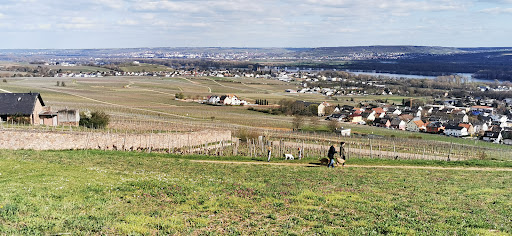
Die Abtei St. Hildegard ist ein Ort von solcher Ruhe, Schönheit und spiritueller Kraft, dass Worte kaum ausreichen, ihn zu beschreiben. Hoch über dem Rhein gelegen, zwischen Weinbergen, Himmel und Horizont, scheint die Zeit dort stillzustehen. Die Benediktinerinnen, die hier leben und wirken, schaffen eine Atmosphäre, in der Körper, Geist und Seele in Einklang finden können. Die klösterliche Architektur, die gepflegten Gärten, die liebevoll gestaltete Kirche und das ausgezeichnete Klosterladenangebot runden das Erlebnis auf berührende Weise ab.
Besonders beeindruckend ist die geistige Präsenz der heiligen Hildegard von Bingen, deren Visionen, Heilwissen und Musik bis heute inspirieren. Ihre ganzheitliche Sicht auf den Menschen und die Natur ist in der gesamten Atmosphäre der Abtei spürbar. Wer hier verweilt, fühlt sich tief verbunden – mit sich selbst, mit der Erde und mit dem Himmel.
Einziger Wermutstropfen: Die Weine der Abtei werden nicht vegan produziert, da zur Klärung Gelatine (oft tierischen Ursprungs) oder andere tierische Produkte zum Einsatz kommen. Das wirkt angesichts der Prinzipien der heiligen Hildegard irritierend, denn diese betonte in ihrer Physica wie auch in ihrer theologischen Weltsicht immer wieder die Bedeutung von Reinheit, Natürlichkeit und Achtung vor dem Leben – auch dem tierischen. Sie lehnte übermäßigen Fleischkonsum ab, insbesondere Schweinefleisch, das sie als „nicht förderlich für die inneren Kräfte des Menschen“ bezeichnete.
Auch in ihren naturheilkundlichen Schriften tritt Hildegard für eine ausgewogene, pflanzenbasierte Ernährung ein, die im Einklang mit den vier Elementen steht und die „Grünkraft“ (viriditas) fördert – ein zentrales Konzept ihrer Lehre. Schlachtabfälle zur Weinerzeugung zu verwenden, wäre mit diesem Denken schwer zu vereinbaren. Vielmehr hätte sie vermutlich auf pflanzliche Alternativen zur Klärung zurückgegriffen, etwa Tonerden oder pflanzliche Proteine, die heute problemlos verfügbar sind.
Es wäre wünschenswert, wenn die Abtei diesen Aspekt überdenken würde – nicht nur im Sinne moderner ethischer Standards, sondern auch im Geiste ihrer eigenen Patronin, die uns lehrt, dass wahre Harmonie im Einklang mit der Schöpfung entsteht.
Dennoch: Die Abtei St. Hildegard bleibt ein unvergleichlicher Ort – ein Schatz spiritueller Tiefe und sinnlicher Schönheit. Wer einmal dort war, trägt ein Stück dieses Ortes für...
Read more