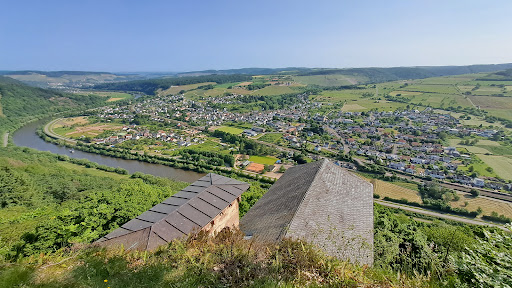
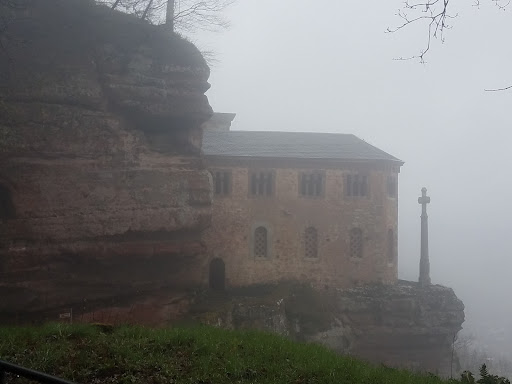
HTML SitemapExplore
logo
Find Things to DoFind The Best Restaurants

Klause bei Kastel — Attraction in Saarburg-Kell

Name
Klause bei Kastel
Description
Nearby attractions
Traumschleife Kasteler Felsenpfad (Start), Kastel-Staadt
Unnamed Road,54441, Kastel-Staadt, Germany
Altfels (Naturdenkmal)
Staadt, 54441 Kastel-Staadt, Germany
Nearby restaurants
Nearby hotels
Pension Schmitz
Losheimer Str. 27, 54455 Serrig, Germany
Related posts
Keywords
Klause bei Kastel tourism.Klause bei Kastel hotels.Klause bei Kastel bed and breakfast. flights to Klause bei Kastel.Klause bei Kastel attractions.Klause bei Kastel restaurants.Klause bei Kastel travel.Klause bei Kastel travel guide.Klause bei Kastel travel blog.Klause bei Kastel pictures.Klause bei Kastel photos.Klause bei Kastel travel tips.Klause bei Kastel maps.Klause bei Kastel things to do.
Klause bei Kastel things to do, attractions, restaurants, events info and trip planning
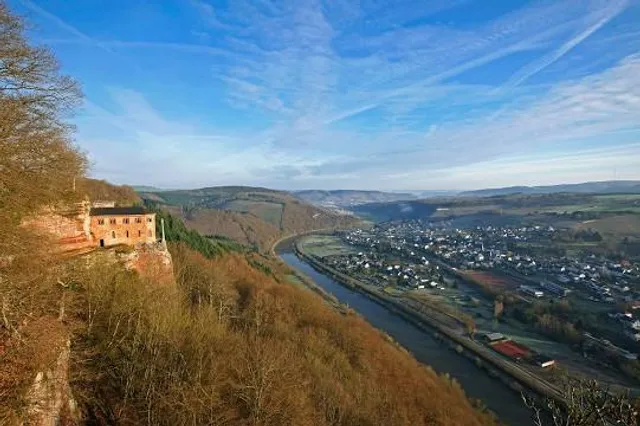
Klause bei Kastel
GermanyRhineland-PalatinateSaarburg-KellKlause bei Kastel

Basic Info

Klause bei Kastel

König-Johann-Straße 66, 54441 Kastel-Staadt, Germany
4.6(179)
Open 24 hours
Save
spot

Ratings & Description

Info

Cultural
Scenic
Off the beaten path
attractions: Traumschleife Kasteler Felsenpfad (Start), Kastel-Staadt, Altfels (Naturdenkmal), restaurants:
logoLearn more insights from Wanderboat AI.
Phone
+49 6581 995980
Website
saar-obermosel.de

Plan your stay

hotel
Pet-friendly Hotels in Saarburg-Kell
Find a cozy hotel nearby and make it a full experience.
hotel
Affordable Hotels in Saarburg-Kell
Find a cozy hotel nearby and make it a full experience.
hotel
The Coolest Hotels You Haven't Heard Of (Yet)
Find a cozy hotel nearby and make it a full experience.
hotel
Trending Stays Worth the Hype in Saarburg-Kell
Find a cozy hotel nearby and make it a full experience.

Reviews

Nearby attractions of Klause bei Kastel

Traumschleife Kasteler Felsenpfad (Start), Kastel-Staadt

Altfels (Naturdenkmal)

Traumschleife Kasteler Felsenpfad (Start), Kastel-Staadt

Traumschleife Kasteler Felsenpfad (Start), Kastel-Staadt

4.8

(45)

Open until 12:00 AM
Click for details
Altfels (Naturdenkmal)

Altfels (Naturdenkmal)

4.7

(115)

Open 24 hours
Click for details

Things to do nearby

Roman & Medieval Trier – Guided City Tour
Wed, Dec 10 • 3:00 PM
54290, Trier, Germany
View details
The Jury Experience : l’affaire du meurtre
Sun, Dec 14 • 5:30 PM
45 Avenue John F. Kennedy, KirchbergLuxembourg, 1855
View details
Filiation ou filiations au Luxembourg ?
Thu, Dec 11 • 9:00 AM
4, Rue Alphonse Weicker, 2721 Luxembourg
View details
Get the Appoverlay
Get the AppOne tap to find yournext favorite spots!
Wanderboat LogoWanderboat

Your everyday Al companion for getaway ideas

CompanyAbout Us
InformationAI Trip PlannerSitemap
SocialXInstagramTiktokLinkedin
LegalTerms of ServicePrivacy Policy

Get the app

© 2025 Wanderboat. All rights reserved.
logo

Reviews of Klause bei Kastel

4.6
(179)
avatar
5.0
3y

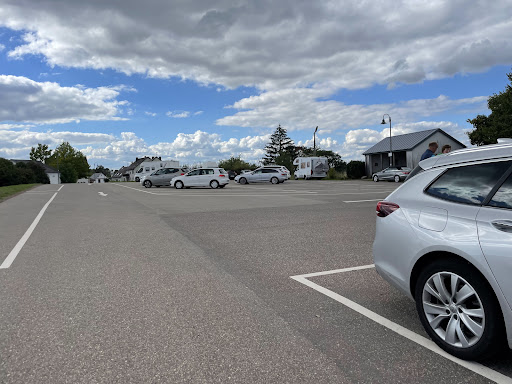
Fantastic historical experience for young and old. I came here with my three kids ages 6, 4, and 2 and a friend with her 6 year old. We parked at the Parkplatz at the end of KonigJohannStrasse,walked past the Bee trail, to the right of the Alte Kirche to see Elisensitz, then behind the church through the cemetery to the kasse for Klause bei Kastel. After our visit, we followed paths using Komoot to visit the Romisches theater; this route was beautiful and easily done, and only totaled less than 1km in all.

Once we arrived at the Kasse, which is just inside the main gate into the Klause, and the only public entrance into it, you must pay IN CASH. Kids under 7 were free, and adults were 3.50 euro. The woman at the kasse was friendly and spoke English well. Just inside, there is a model of the complex, which is much larger than I had realized. There are several trails and stone staircases (most with directional signage) that bring you to various lookout points, many of which have old-appearing sandstone benches and tables, At the center of this complex is the highlight - the beautiful hermitage and chapel. The hermitage is from the 12th century (which during the 1800s housed the bones of the king of Bohemia from the 1300s) and the chapel added on in the 16th century. The hermitage has two rooms which are fun to explore for a few minutes, and the chapel building is only accessible through one short foyer that looks into the beautiful (locked) chapel through an iron gate. As you walk out of the chapel to the right of the building, you see what looks like an outdoor stone bath which was the "holy spring". We then walked through all the other side paths, spending about 1 hour in total here enjoying the stunning views and looking at every small detail we could find of the old structures. The kids enjoyed it, though it was a little nerve wracking as there were MANY places a child (or adult, for that matter) could fall quite a ways down a hill or cliffside, and the bannisters are meager metal railings that a small child could easily fall through. Most of the time I wore the toddler, and held the hands of my other two during risky places. A stroller would not have worked, except for the short walk from the parking lot to the kasse, which I didn't feel was worth it.

Overall, a great sightseeing destination for any age, especially in combination with the local Roman ampitheater and Alte Kirche and grounds, with close free parking and...

   Read more
avatar
5.0
2y

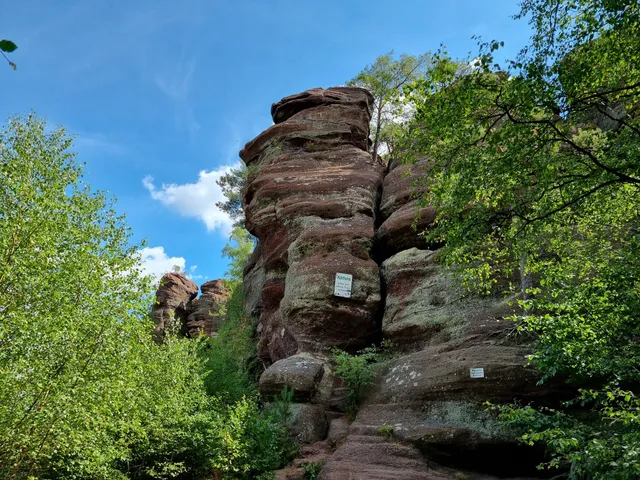
Die Klause ist ein Refugium auf einem schmalen Felsplateau über dem Saartal. Ihre Ursprünge gehen auf die Zeit der Kreuzzüge (13. Jahrhundert) zurück. Damals wurden zunächst zwei Kammern in den Sandsteinfelsen gehauen, die an Golgota erinnern sollten.

Um 1600 ließ der Franziskaner Roméry davor eine zweigeschossige Kapelle errichten, deren Obergeschoss mit der oberen Felskammer verbunden war. In dieser Zeit entstanden auch eine Grabnische und verschiedene Quellbecken. Die Anlage verfiel jedoch nach der französischen Besetzung von 1794.

1833 erhielt der spätere Preußenkönig Friedrich Wilhelm IV. die Ruine als Geschenk. In seinem Auftrag wurde dort 1834/35 von Karl Friedrich Schinkel eine Grabkapelle für Johann von Böhmen erbaut. Friedrich Wilhelm IV. hatte die Gebeine, die in Mettlach gelagert hatten, von Jean-François Boch erhalten (der Boch in Villeroy & Boch), dem sie zuvor wiederum die Mönche der Abtei Neumünster in Luxemburg anvertraut hatten, um sie vor den Wirren der Französischen Revolution in Sicherheit zu bringen. 1838 wurden dessen Gebeine in einem Sarkophag in der Kapelle bestattet; sie verblieben dort bis 1945. Damals wurden die Gebeine auf Veranlassung des Staates Luxemburg in einer Nacht-und-Nebel-Aktion aus der Grabkapelle nach Luxemburg in die Krypta unter der Kathedrale unserer lieben Frau verbracht, wo sie bis heute ruhen.

Die Klause Kastel ist aber ohnehin eher wegen ihrer Lage hoch über der Saar und ihrer Architektur interessant. Die Grabkapelle gehört zu den wichtigen Spätwerken Schinkels und gilt als bedeutendes Zeugnis der klassizistischen Neoromanik. Schinkel nutzte den noch vorhandenen Rest des alten Bauwerks, ließ lediglich bunte Glasfenster einsetzen und errichtete darüber eine Kapelle mit Triforienfenstern und einem italienisierendem Glockengiebel. Der klassizistische Sarkophag, in den damals die Gebeine des Königs gebettet waren, ist heute noch vorhanden. Zum 500. Todestag Johanns von Böhmen wurde 1846 noch ein Stabkreuz auf der Plattform aufgestellt.

Die Anlage ist nicht nur ein Zeugnis der romantischen Veranlagung Friedrich Wilhelms IV., sondern auch eine Machtdemonstration Preußens, das 1815 die Herrschaft im Rheinland übernommen und die Luxemburger Dynastie...

   Read more
avatar
5.0
4y

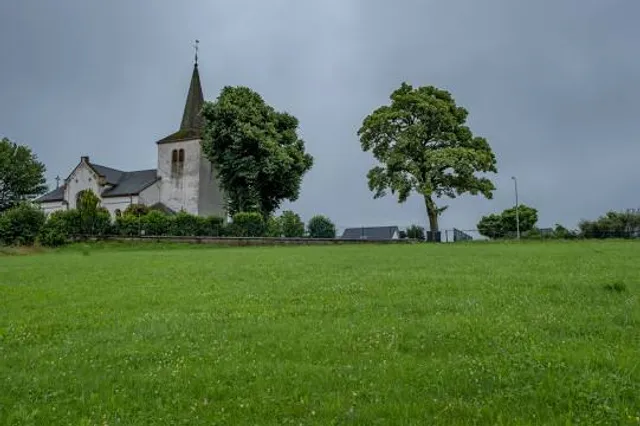
Beautiful place. Entrance fee was 3.50€ per adult. You want to begin on the right and work your way around. Fantastic views. Not stroller friendly because of all the stairs. Careful if you go when it's raining. The stairs can be very slick. I almost busted my head within the first 5 minutes. Hahaha There is a church before the entrance, but it was closed...

   Read more
Page 1 of 7
Previous
Next

Posts

Danielle CummingsDanielle Cummings
Fantastic historical experience for young and old. I came here with my three kids ages 6, 4, and 2 and a friend with her 6 year old. We parked at the Parkplatz at the end of KonigJohannStrasse,walked past the Bee trail, to the right of the Alte Kirche to see Elisensitz, then behind the church through the cemetery to the kasse for Klause bei Kastel. After our visit, we followed paths using Komoot to visit the Romisches theater; this route was beautiful and easily done, and only totaled less than 1km in all. Once we arrived at the Kasse, which is just inside the main gate into the Klause, and the only public entrance into it, you must pay IN CASH. Kids under 7 were free, and adults were 3.50 euro. The woman at the kasse was friendly and spoke English well. Just inside, there is a model of the complex, which is much larger than I had realized. There are several trails and stone staircases (most with directional signage) that bring you to various lookout points, many of which have old-appearing sandstone benches and tables, At the center of this complex is the highlight - the beautiful hermitage and chapel. The hermitage is from the 12th century (which during the 1800s housed the bones of the king of Bohemia from the 1300s) and the chapel added on in the 16th century. The hermitage has two rooms which are fun to explore for a few minutes, and the chapel building is only accessible through one short foyer that looks into the beautiful (locked) chapel through an iron gate. As you walk out of the chapel to the right of the building, you see what looks like an outdoor stone bath which was the "holy spring". We then walked through all the other side paths, spending about 1 hour in total here enjoying the stunning views and looking at every small detail we could find of the old structures. The kids enjoyed it, though it was a little nerve wracking as there were MANY places a child (or adult, for that matter) could fall quite a ways down a hill or cliffside, and the bannisters are meager metal railings that a small child could easily fall through. Most of the time I wore the toddler, and held the hands of my other two during risky places. A stroller would not have worked, except for the short walk from the parking lot to the kasse, which I didn't feel was worth it. Overall, a great sightseeing destination for any age, especially in combination with the local Roman ampitheater and Alte Kirche and grounds, with close free parking and inexpensive prices.
Thus Wurstbursch Kögl de Waldinutzy, Attaknabe (De x-träjm Soup man)Thus Wurstbursch Kögl de Waldinutzy, Attaknabe (De x-träjm Soup man)
Die Klause ist ein Refugium auf einem schmalen Felsplateau über dem Saartal. Ihre Ursprünge gehen auf die Zeit der Kreuzzüge (13. Jahrhundert) zurück. Damals wurden zunächst zwei Kammern in den Sandsteinfelsen gehauen, die an Golgota erinnern sollten. Um 1600 ließ der Franziskaner Roméry davor eine zweigeschossige Kapelle errichten, deren Obergeschoss mit der oberen Felskammer verbunden war. In dieser Zeit entstanden auch eine Grabnische und verschiedene Quellbecken. Die Anlage verfiel jedoch nach der französischen Besetzung von 1794. 1833 erhielt der spätere Preußenkönig Friedrich Wilhelm IV. die Ruine als Geschenk. In seinem Auftrag wurde dort 1834/35 von Karl Friedrich Schinkel eine Grabkapelle für Johann von Böhmen erbaut. Friedrich Wilhelm IV. hatte die Gebeine, die in Mettlach gelagert hatten, von Jean-François Boch erhalten (der Boch in Villeroy & Boch), dem sie zuvor wiederum die Mönche der Abtei Neumünster in Luxemburg anvertraut hatten, um sie vor den Wirren der Französischen Revolution in Sicherheit zu bringen. 1838 wurden dessen Gebeine in einem Sarkophag in der Kapelle bestattet; sie verblieben dort bis 1945. Damals wurden die Gebeine auf Veranlassung des Staates Luxemburg in einer Nacht-und-Nebel-Aktion aus der Grabkapelle nach Luxemburg in die Krypta unter der Kathedrale unserer lieben Frau verbracht, wo sie bis heute ruhen. Die Klause Kastel ist aber ohnehin eher wegen ihrer Lage hoch über der Saar und ihrer Architektur interessant. Die Grabkapelle gehört zu den wichtigen Spätwerken Schinkels und gilt als bedeutendes Zeugnis der klassizistischen Neoromanik. Schinkel nutzte den noch vorhandenen Rest des alten Bauwerks, ließ lediglich bunte Glasfenster einsetzen und errichtete darüber eine Kapelle mit Triforienfenstern und einem italienisierendem Glockengiebel. Der klassizistische Sarkophag, in den damals die Gebeine des Königs gebettet waren, ist heute noch vorhanden. Zum 500. Todestag Johanns von Böhmen wurde 1846 noch ein Stabkreuz auf der Plattform aufgestellt. Die Anlage ist nicht nur ein Zeugnis der romantischen Veranlagung Friedrich Wilhelms IV., sondern auch eine Machtdemonstration Preußens, das 1815 die Herrschaft im Rheinland übernommen und die Luxemburger Dynastie abgelöst hatte.
Tania DominguezTania Dominguez
Beautiful place. Entrance fee was 3.50€ per adult. You want to begin on the right and work your way around. Fantastic views. Not stroller friendly because of all the stairs. Careful if you go when it's raining. The stairs can be very slick. I almost busted my head within the first 5 minutes. Hahaha There is a church before the entrance, but it was closed when I went.
See more posts
See more posts
hotel
Find your stay

Pet-friendly Hotels in Saarburg-Kell

Find a cozy hotel nearby and make it a full experience.

Fantastic historical experience for young and old. I came here with my three kids ages 6, 4, and 2 and a friend with her 6 year old. We parked at the Parkplatz at the end of KonigJohannStrasse,walked past the Bee trail, to the right of the Alte Kirche to see Elisensitz, then behind the church through the cemetery to the kasse for Klause bei Kastel. After our visit, we followed paths using Komoot to visit the Romisches theater; this route was beautiful and easily done, and only totaled less than 1km in all. Once we arrived at the Kasse, which is just inside the main gate into the Klause, and the only public entrance into it, you must pay IN CASH. Kids under 7 were free, and adults were 3.50 euro. The woman at the kasse was friendly and spoke English well. Just inside, there is a model of the complex, which is much larger than I had realized. There are several trails and stone staircases (most with directional signage) that bring you to various lookout points, many of which have old-appearing sandstone benches and tables, At the center of this complex is the highlight - the beautiful hermitage and chapel. The hermitage is from the 12th century (which during the 1800s housed the bones of the king of Bohemia from the 1300s) and the chapel added on in the 16th century. The hermitage has two rooms which are fun to explore for a few minutes, and the chapel building is only accessible through one short foyer that looks into the beautiful (locked) chapel through an iron gate. As you walk out of the chapel to the right of the building, you see what looks like an outdoor stone bath which was the "holy spring". We then walked through all the other side paths, spending about 1 hour in total here enjoying the stunning views and looking at every small detail we could find of the old structures. The kids enjoyed it, though it was a little nerve wracking as there were MANY places a child (or adult, for that matter) could fall quite a ways down a hill or cliffside, and the bannisters are meager metal railings that a small child could easily fall through. Most of the time I wore the toddler, and held the hands of my other two during risky places. A stroller would not have worked, except for the short walk from the parking lot to the kasse, which I didn't feel was worth it. Overall, a great sightseeing destination for any age, especially in combination with the local Roman ampitheater and Alte Kirche and grounds, with close free parking and inexpensive prices.
Danielle Cummings

Danielle Cummings

hotel
Find your stay

Affordable Hotels in Saarburg-Kell

Find a cozy hotel nearby and make it a full experience.

Get the Appoverlay
Get the AppOne tap to find yournext favorite spots!
Die Klause ist ein Refugium auf einem schmalen Felsplateau über dem Saartal. Ihre Ursprünge gehen auf die Zeit der Kreuzzüge (13. Jahrhundert) zurück. Damals wurden zunächst zwei Kammern in den Sandsteinfelsen gehauen, die an Golgota erinnern sollten. Um 1600 ließ der Franziskaner Roméry davor eine zweigeschossige Kapelle errichten, deren Obergeschoss mit der oberen Felskammer verbunden war. In dieser Zeit entstanden auch eine Grabnische und verschiedene Quellbecken. Die Anlage verfiel jedoch nach der französischen Besetzung von 1794. 1833 erhielt der spätere Preußenkönig Friedrich Wilhelm IV. die Ruine als Geschenk. In seinem Auftrag wurde dort 1834/35 von Karl Friedrich Schinkel eine Grabkapelle für Johann von Böhmen erbaut. Friedrich Wilhelm IV. hatte die Gebeine, die in Mettlach gelagert hatten, von Jean-François Boch erhalten (der Boch in Villeroy & Boch), dem sie zuvor wiederum die Mönche der Abtei Neumünster in Luxemburg anvertraut hatten, um sie vor den Wirren der Französischen Revolution in Sicherheit zu bringen. 1838 wurden dessen Gebeine in einem Sarkophag in der Kapelle bestattet; sie verblieben dort bis 1945. Damals wurden die Gebeine auf Veranlassung des Staates Luxemburg in einer Nacht-und-Nebel-Aktion aus der Grabkapelle nach Luxemburg in die Krypta unter der Kathedrale unserer lieben Frau verbracht, wo sie bis heute ruhen. Die Klause Kastel ist aber ohnehin eher wegen ihrer Lage hoch über der Saar und ihrer Architektur interessant. Die Grabkapelle gehört zu den wichtigen Spätwerken Schinkels und gilt als bedeutendes Zeugnis der klassizistischen Neoromanik. Schinkel nutzte den noch vorhandenen Rest des alten Bauwerks, ließ lediglich bunte Glasfenster einsetzen und errichtete darüber eine Kapelle mit Triforienfenstern und einem italienisierendem Glockengiebel. Der klassizistische Sarkophag, in den damals die Gebeine des Königs gebettet waren, ist heute noch vorhanden. Zum 500. Todestag Johanns von Böhmen wurde 1846 noch ein Stabkreuz auf der Plattform aufgestellt. Die Anlage ist nicht nur ein Zeugnis der romantischen Veranlagung Friedrich Wilhelms IV., sondern auch eine Machtdemonstration Preußens, das 1815 die Herrschaft im Rheinland übernommen und die Luxemburger Dynastie abgelöst hatte.
Thus Wurstbursch Kögl de Waldinutzy, Attaknabe (De x-träjm Soup man)

Thus Wurstbursch Kögl de Waldinutzy, Attaknabe (De x-träjm Soup man)

hotel
Find your stay

The Coolest Hotels You Haven't Heard Of (Yet)

Find a cozy hotel nearby and make it a full experience.

hotel
Find your stay

Trending Stays Worth the Hype in Saarburg-Kell

Find a cozy hotel nearby and make it a full experience.

Beautiful place. Entrance fee was 3.50€ per adult. You want to begin on the right and work your way around. Fantastic views. Not stroller friendly because of all the stairs. Careful if you go when it's raining. The stairs can be very slick. I almost busted my head within the first 5 minutes. Hahaha There is a church before the entrance, but it was closed when I went.
Tania Dominguez

Tania Dominguez

See more posts
See more posts