For over 750 historical and famous black history locations found on Google Maps click on the photo icon or my name above left.
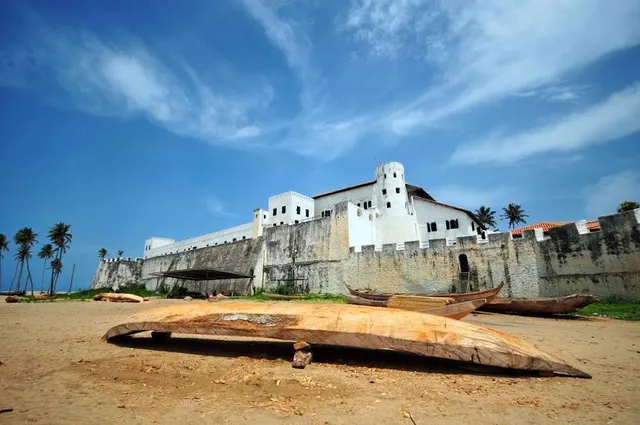
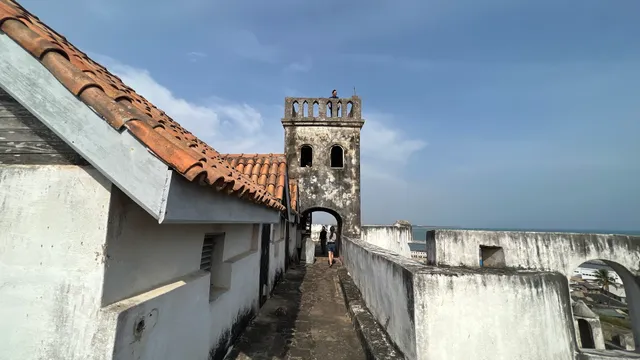
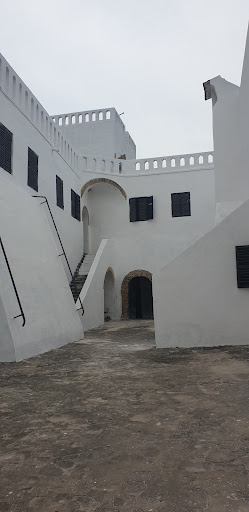
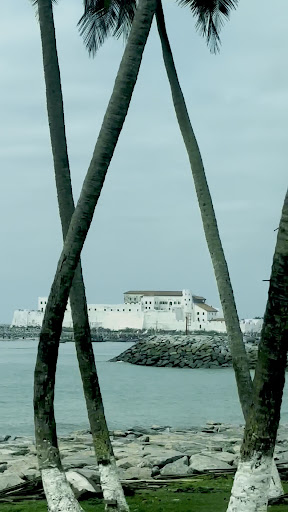
SLAVE TRADING POST: GHANA, WEST AFRICA Elmina Castle (aka St. George’s Castle) Known as the oldest European structure in Ghana, the castle’s construction began in 1482 following the arrival of the Portuguese on the Gold Coast in 1471, and served to protect the Portuguese settlement area, named São Jorge da Mina (St. George of the Mines).
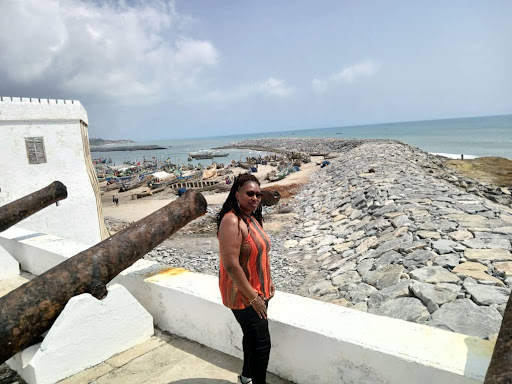
Over the decades, various parts of the Castle were rebuilt, with trade remaining its main focus. However, by the 17th century most of this trade was in people. In 1637, the Dutch seized control of the Gold Coast and continued to use the Elmina Castle as a place to ‘store’ slaves until their departure. The Dutch made some substantial changes to the Castle, such as setting up a marketplace where slaves could be auctioned. The conditions were similar to that of the neighboring Cape Coast Castle. In the dungeons light could only enter through the doorways or a few small holes at either end of the ceiling. Any revolt was harshly disciplined. Men were sent to the condemned cell with no lighting and were starved to death, while women were beaten and chained to cannon balls in the courtyard. Mindful of possible attacks, the Dutch built a bastion, Fort Coenraadsburg (also known as St. Jago), on the hill opposite Elmina Castle, which overlooked its big brother’s house of horrors.
Under the rule of the Dutch West Indies Company, around 30,000 slaves a year passed through Elmina’s door of no return, right up until 1814 when the Dutch slave trade was abolished, seven years after the British. Ceded to the British in 1872, Elmina Castle was hardly in use until Ghana’s independence. Thereafter it became a training center for Ghanaian police recruits and surprisingly a school for some time, before also being converted into a history museum.
Destination of enslaved Africans (1519–1867) (Destination and Percentage)
Portuguese America 38.5% British America (minus North America) 18.4% Spanish Empire 17.5% French Americas 13.6% British North America 6.5% English Americas 3.3% Dutch West Indies 2.0% Danish West Indies 0.3%
Enslaved people imported to those regions that are part of present-day USA (Date and “official” Numbers). Not counted the many, many people, who died before!
1620–1650: 824 people imported. 1651–1675' 0 people imported. 1676–1700: 3,327 people imported. 1701–1725: 3,277 people imported. 1726–1750: 34,004 people imported. 1751–1775: 84,580 people imported. 1776–1800: 67,443 people imported. 1801–1825: 109,545 people imported. 1826–1850: 1,850 people imported. 1851–1866: 476 people imported. Total people...
Read moreThis was the very beginning place of the slave trade in 1482, the castle was built by the Portuguese. It was known as Castelo de Sao Jorge da Mina or Castelo da Mina. To which its known as elmina in present day. Men and women were held in separate dungeons. The women were held in one cell this includes child, adolescent girls and fully grown women. The cell have one window which is from the place the soldiers kept thier weapons. Pregnant women and those menstruating were all kept in the same cell and they didn't have much water to bath and as a result, a diseases broke out and killed most of the women. Most of them did not survive before getting on the ship because of sickness and enduring the smell of their excess. Those that died in the dungeon were tossed into the sea. The governor's quarter was right above the woman dungeon. The governor would walk out on the balcony to select a woman to spend the night with and as a result some got pregnant and gave birth for the governors to which the children were separated and given good education to. If you refuse to go to the governors room that night you will be chained outside of the cell and left to the mercies of the rain and sun, not to talk of been beaten. That was the beginning of the people of elmina adopting the foreign names. The hole up in the wall was used to throw food down to the slaves. The food was not meant for them to be full or get satisfied but to sustain them. Most died from starvation. Our ancestors were used in building the foreigners nation. The likes of America, Portugal and the Great Britain. The came in to trade in our natural minerals but ended up enslaving...
Read moreElmina Castle is a place that stirs up strong emotions in me every time I visit. I think I have visited 4 times in my lifetime. It is a place that reflects the tragic history of the slave trade One of the most memorable parts of the visit is when the tour through the dungeons that held the slaves. The tour guides are very knowledgeable and passionate about the history of the castle and the slave trade. They are able to take us on a journey of what it must have been like for those who were captured, imprisoned, tortured, and shipped away to Europe and the Americas. They tell us stories of their lives, their struggles, their hopes, and their fates. They make us feel the horror and the humanity of those who suffered there. As I walk through the dungeons, I feel the presence of those who lived and died there. I smell the stench of blood and despair in the air. I feel the pain and oppression that they endured. One of the most striking moments of my visit is when I climb to the top of the castle and see the beautiful view of the sea and the town. I see the colorful canoes and boats of the fishermen who have been living here for generations. I see the vibrant market and streets where people sell their goods and services. I see the contrast between the old and the new, the past and the present, the sorrow and joy. Elmina Castle is a place that touches my heart and soul every time I visit. It is a place that teaches me about our history and heritage, but also about our diversity and unity. It is a place that inspires me to remember those who suffered there, but also to celebrate those who survived and thrived. It is a place that I will...
Read more