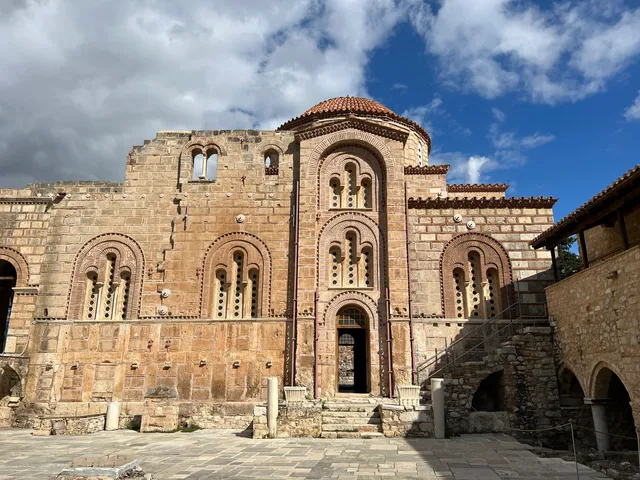
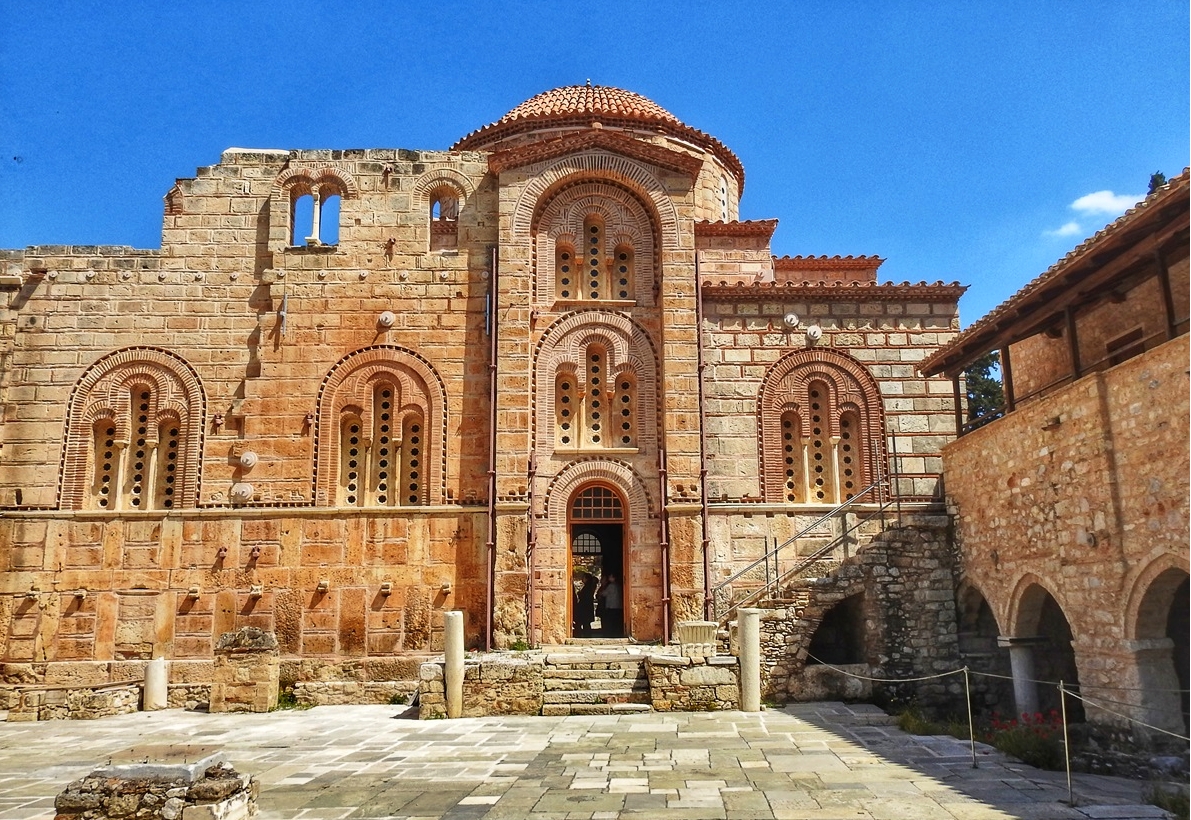
The Monastery of Daphni is a beautiful ancient byzantin church with very rich history. The first monastery, dedicated to the Dormition of the Virgin, was erected on the site in the 6th century A.D. and it was built on the site of the ancient sanctuary of Apollo Daphnaios which was destroyed during the invasion of the Goths in 395 A.D. The second phase of the monastery is dated to the end of the 11th century (around 1080), and it is the one that was preserved. It is a remarkable archaeological site and highly recommended when you pass on the road from Athens to Corinth.
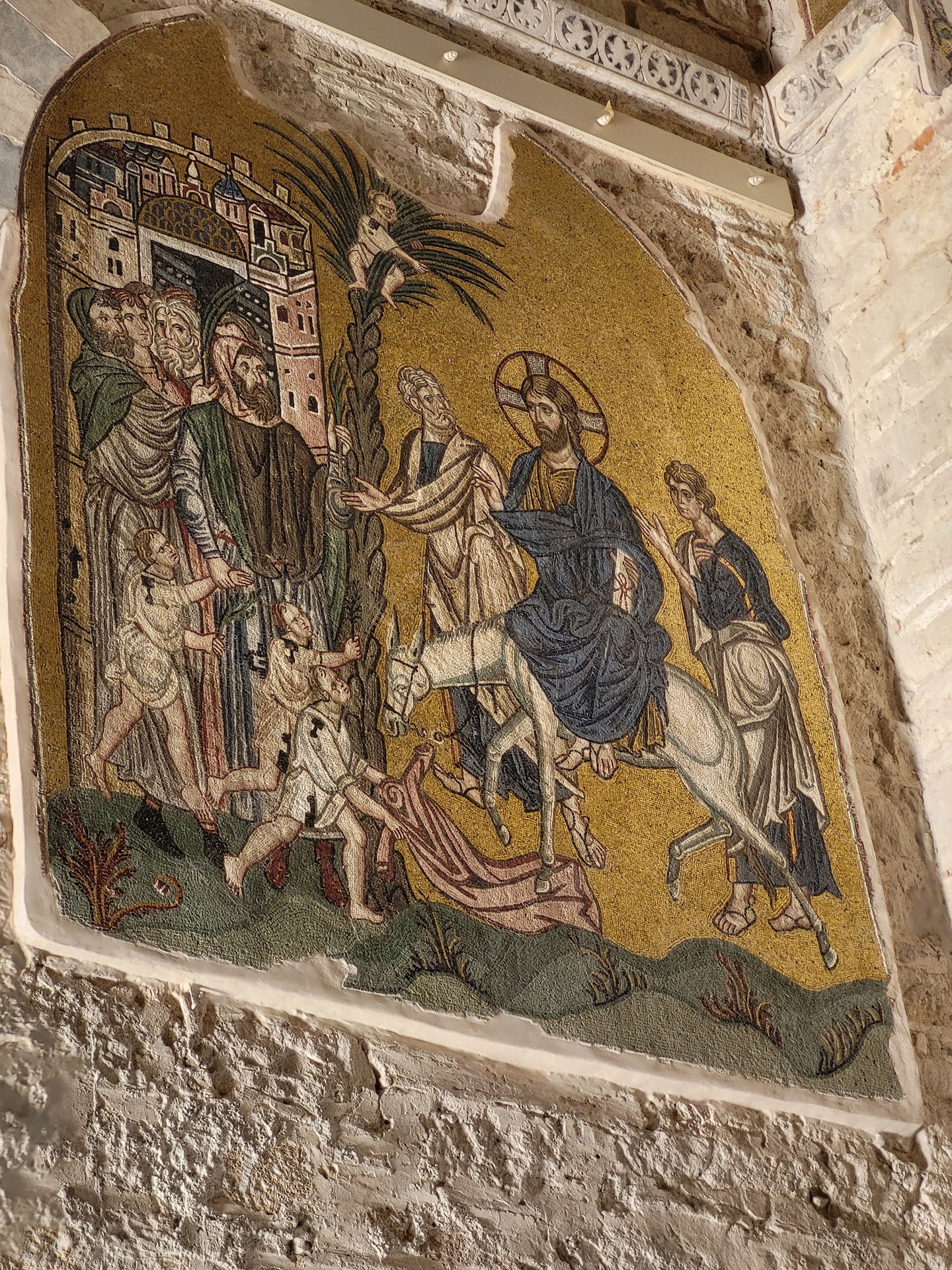
The monastery was declared by UNESCO as a World Heritage Site, along with the monasteries of Hosios Loukas (near Delphi) and Nea Moni (in Chios island). All the three are decorated with superb marble works as well as mosaics on a gold background and they are all characteristic of the 'second golden age of Byzantine art'.
The monastery functions nowadays as a museum and not as monastery and therefore has no religious services. It is open on: Tuesday, Thursday and Friday 08:00-15:00, and it is free of admission charge. All you need when you arrive there is to ring the bell on the gate, and it opens...
Read moreMooolto bello. Il Monastero di per sé è molto piccolo, ed è un vero e proprio sito archeologico, con resti tutto intorno. E' lontano dal centro di Atene, ma comunque assolutamente raggiungibile. State attenti agli orari e ai giorni di apertura! Per arrivarci bisogna prendere la metro 3, quella blu, e scendere ad Agia Marina/Aghia Marina. Su alcune mappe della metro questa sembra il capolinea, ma a marzo 2025 non lo è. Ci sono molte altre fermate e il capolinea è Dimotiko Theatro. Una volta arrivati ad Agia Marina vi consiglio di usare l'app Moovit, che vi dirà dove andare ad aspettare il bus e il suo numero. I bus che portano vicino al monastero sono due: l'876 e l'866. Il bus salta molte fermate, per cui stati attenti alle indicazioni di moovit e magari controllate anche su google maps man mano quanto manca al monastero, così da avere la certezza su quando scendere. Dovrebbe esserci gente, ma nel caso cliccate uno dei pulsanti rossi per far fermare l'autobus. Allo stesso modo, se non dovesse esserci nessuno quando lo aspettate per l'andata o per il ritorno, quando vedere arrivare l'autubus fatte un segno con la mano, allungando il braccio verso la strada, per invitarlo a fermarsi. Da agia marina il bus ci mette una mezz'ora per arrivare nelle vicinanze del Monastero, che poi potete facilmente raggiungere usando maps. Vi consiglio, però, di attraversare immediatamente la strada, cercando alla vostra destra e sinistra le strisce pedonali più vicine e, una volta raggiunta la zona verde dall'altra parte della strada, cercare di tagliarci di mezzo, tramite le scalette, così che sarà molto più veloce raggiungere il monastero (comunque anche non facendo ciò ci metterete al max 10 minuti). Il monastero è gratis, e lì fuori troverete, sulla sinistra, anche delle indicazioni per raggiungere "la grotta di Pan". Se vi piace fare escursioni o siete fan di Percy Jackson, ve lo consiglio anche solo per il meme, ma la strada, inizialmente semplice, diventa dopo un po' impervia. E' lunga solo un kilometro, ma a tappe è in verticale. Alla fine vi aspetta una grotta, punto. Per accedere al monastero, bisogna suonare al campanello su questa "porta" di metallo e dall'interno vi apriranno. Potete fotografare tutto, ma non toccare (ovviamente, non siate turisti beceri che si aggrappano e siedono ovunque, ma questo vale per tutti i resti archeologici). Il sito del Monastero si visita in una mezz'ora, ma è molto bello. Per il ritorno vi consiglio lo stesso percorso dell'andata ma al contrario. Con moovit raggiungete la fermata del bus, che sarà ovviamente sul vostro lato della strada, e dovrebbero essere sempre il bus 876 o 866. Una volta salitoci il viaggio di ritorno per Agia Marina è molto più breve, 10 minuti al massimo. Per il biglietto potete stesso comprarlo in stazione alle macchinette o in biglietteria. Io avevo l'abbonamento per i mezzi di 5 giorni, pagato 8,20€, valido anche per i bus. Salito sul bus dovete "obliterarlo" appoggiandolo come una carta contacless contro la...
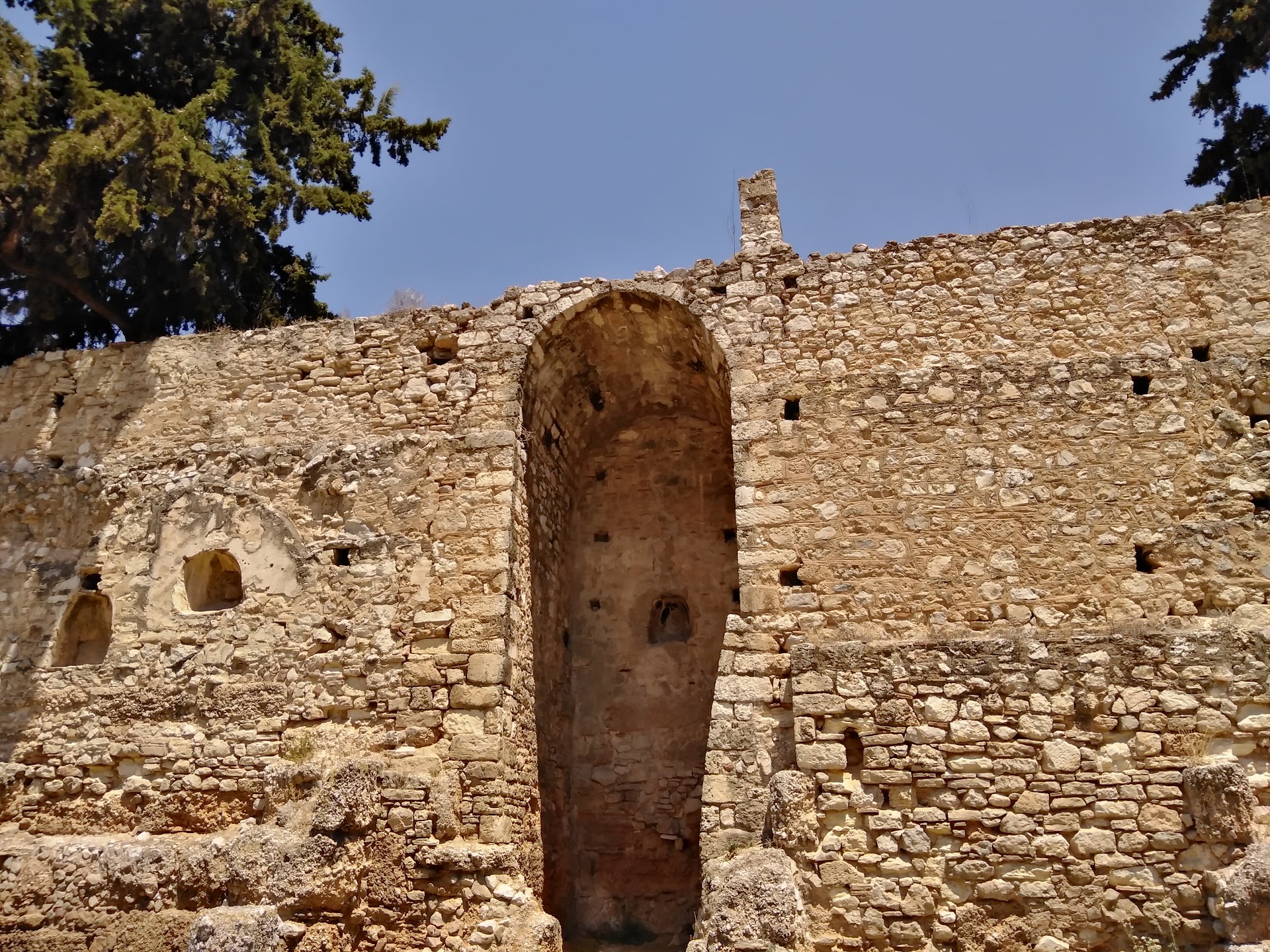
Read moreIf you would like to see a combination of architectural elements from ancient Greece, Byzantium, and the period of Frankish occupation, this is the place. Originally an archeological site, the Eastern Romans, known today as the Byzantines, rebuilt the complex with extensive use of the ancient materials as a temple. After the conquest of most of Greece by the crusaders/Invaders of the infamous 4th "crusade," the Franks established the Duchy of Athens, which evolved into one of the prevalent crusader states in Greece. This was one of their most important religious centers, as it was turned into a monastery and served as burial ground for the nobility of the Duchy. The main temple and many of the surrounding buildings remain, as does much of its fortification, necessary for fending off pirate raids, a frequent plague of medieval times. Easy to access and to visit, it is well worth the short time this...
Read more