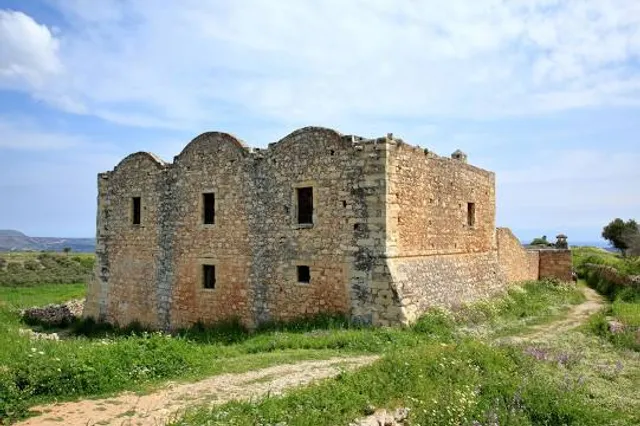
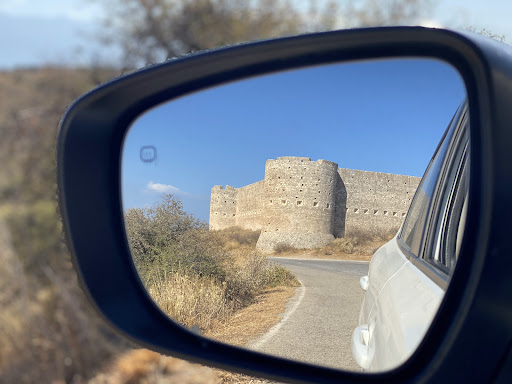
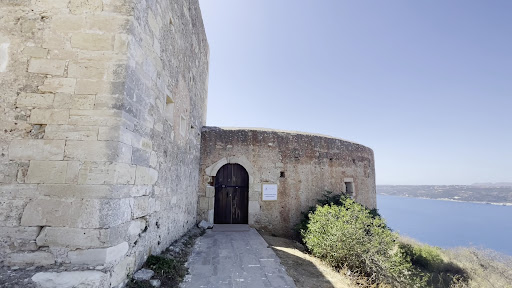
The Koules Ottoman Fortress located near Souda, Crete, stands as a imposing relic of 19th-century military architecture, built by the Ottomans shortly after the Cretan Revolution of 1866 as part of a strategic network to control Crete and its key passageways.
Positioned in the Paleokastro area close to the ruins of ancient Aptera and near the village of Megala Chorafia, this fortress was constructed under the direction of Hussein Avni Pasha, the Turkish governor of Crete.
Its primary purpose was to oversee and secure the Apokoronas valley, the main route into the Chania region from central Crete, and to simultaneously protect the bay of Souda through coordination with other nearby fortresses, notably the fortress on Souda islet and the Intzedin fortress.
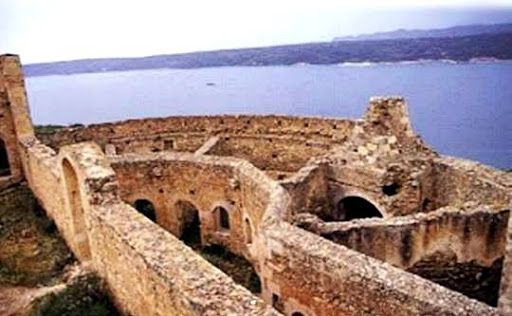
Architecturally, the Koules fortress is distinguished by its symmetrical P-shaped layout centered around a rectangular courtyard. It features two prominent towers, one facing west toward the Keramia area and another eastward toward Kalives, providing an unbroken visual and defensive connection with surrounding watchtowers and forts.
This interconnected system of fortifications extended widely across the region with over twenty towers communicating with the fortress, enabling comprehensive surveillance and control over movements in the area.
Inside, the fortress was well-equipped for sustained military occupation with facilities including quarters for officers, barracks, storage rooms, prisons, and areas for food preparation and catering.
The construction quality is evident in the fortress’s excellent preservation, attributable to the solid workmanship of its walls. After Ottoman rule ended, the fortress found a new role as a school for the community of Megala Chorafia, demonstrating its adaptive reuse.
Today, the fortress not only serves as a monument to the region’s turbulent history but also houses a cultural exhibition called "The Guardians of Souda Bay", which highlights the fortress's role alongside the other castles protecting Souda Bay, as well as the rich history of the surrounding area.
The exhibition includes archival materials, rare maps, historical photographs, and literary excerpts, offering visitors an immersive experience that blends history with culture.
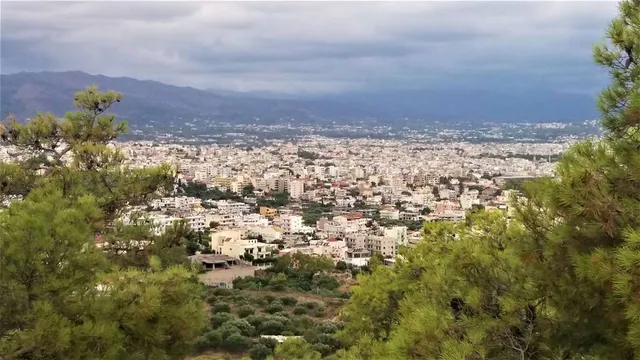
Visitors can appreciate the fortress’s commanding views over the impressive natural harbor of Souda, one of the safest Mediterranean ports, underscoring the fortress’s strategic significance past and present.
Overall, Koules Ottoman Fortress is a remarkable site blending architectural resilience, military history, and cultural narratives. Its location near beautiful ancient ruins and a picturesque village adds further appeal, making it not only a significant historical landmark but also a meaningful destination for those interested in the layered history of Crete and its...
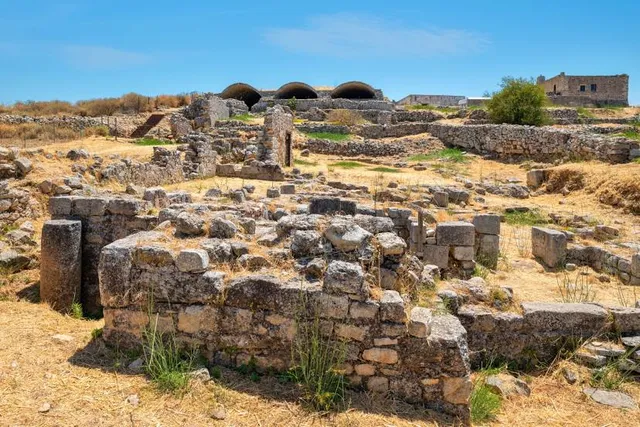
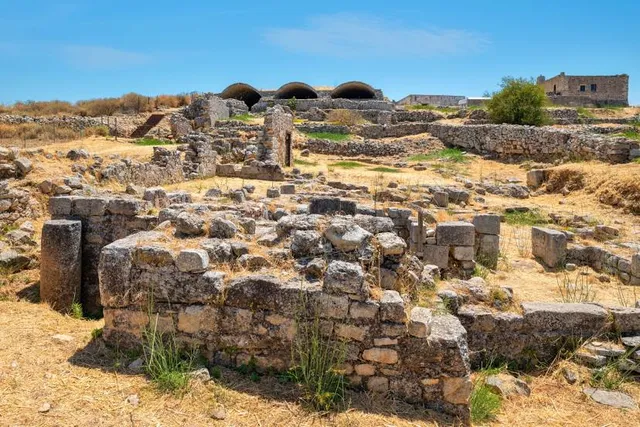
Read moreOne of the most interesting archaeological sites in western Crete, Aptera was inhabited since Minoan times (the first reference of the city Aptera as A-pa-ta-wa is traced in Linear B tablets coming from Knossos in the 14th- 13th century BC) but it only became a significant city around the 8th century BC. Its location above the bay of Souda was also strategically important: close to its two seaports Minoa (today's Marathi) and Kasteli (near Kalyves) Aptera could control the circulation of ships and it became a very important trading post in Crete and one of the greatest cities on the island. Aptera was destroyed in the great earthquake of 365 AD and only sparsely inhabited afterwards but a monastery dedicated to St. John the Theologian remained amidst the ruins. A part of the archaeological site is fenced off and you have to pay a small entry fee (in 2016 it is 2 Euro) to access it (from 8.00 to 15.00, closed Mondays). Within the site you can visit impressive Roman cisterns, ruins of Roman bath houses, a newly excavated theater and the monastery of Agios Ioannis Theologos in which there is an excellent presentation of the site of Aptera. The enclosed area is only a small part of the very large site which encompasses the whole hill. Surrounded by massive fortification walls (with total circumference of 3.5km) most of the area is still not exacavated but lots of work has been done on the western gate (the first place you see when you drive up towards Aptera) and there is an interesting Hellenistic villa excavated in a field near the site's entrance. To the North of the hill a large Ottoman fort overlooks the whole of Souda Bay. Aptera is located around 13 km away from Chania. As there are no public buses to Aptera it is best reached by car. You could in theory take any bus to Rethymnon / Heraklion and get off at the crossroad that leads to Aptera but it will take you around 45 minutes to walk up the hill to the...
Read moreWho is up for history lesson? Ok then I’ll keep it short 😁 The 19th century fortress built by the ottomans in order to control the island of Crete. Needless to say, the plan failed but this beautiful fortress survived in perfect condition until today.
It was temporarily closed when we got there but the outside of the fort promises. We could see through the lock hole of the main gate that they were doing some restoration so it will surely be a hit when they open for public.
Oh, and interesting fact! The sea the fortress is “looking at” is the sea to which the sirens were thrown after a defeat by the muses in a contest - mythological tale of the muse and sirens congesting in the singing contest. Google it or read my review on the archeological site of the...
Read more