HTML SitemapExplore
logo
Find Things to DoFind The Best Restaurants

Plaka Arched Bridge — Attraction in North Tzoumerka Municipality

Name
Plaka Arched Bridge
Description
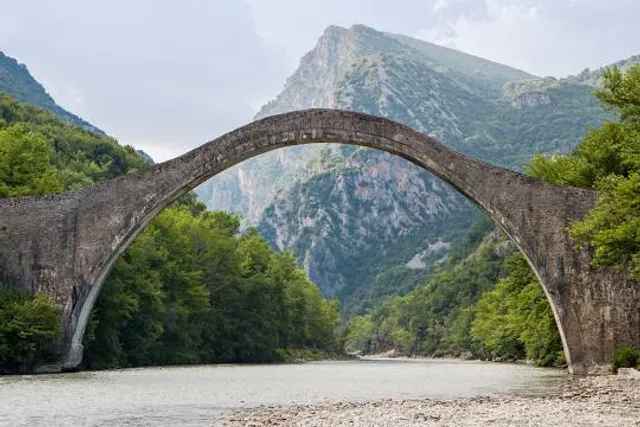
Plaka Bridge is a 19th-century stone one-arch bridge in Greece that collapsed during the floods of 1 February 2015, and rebuilt in 2020. It is located at the borders of Arta and Ioannina prefectures, above the waters of Arachthos River. Administratively, it belongs to the community of Plaka-Raftaneon.
Nearby attractions
Nearby restaurants
Zapata
Epar.Od. Artas - Ioanninon, Voria Tzoumerka 440 13, Greece
Nearby hotels
Τελωνείο Ξενοδοχείο Τζουμέρκα
Epar.Od. Ioanninon-Sirakou, Tzoumerka 440 13, Greece
Hotel Gefiri Plakas
Μονολίθι 440 13, Greece
Frasta's Rose (Φράστα Τζουμέρκων)
Epar.Od. Agnanton - Lazena, Frasta 470 43, Greece
Related posts
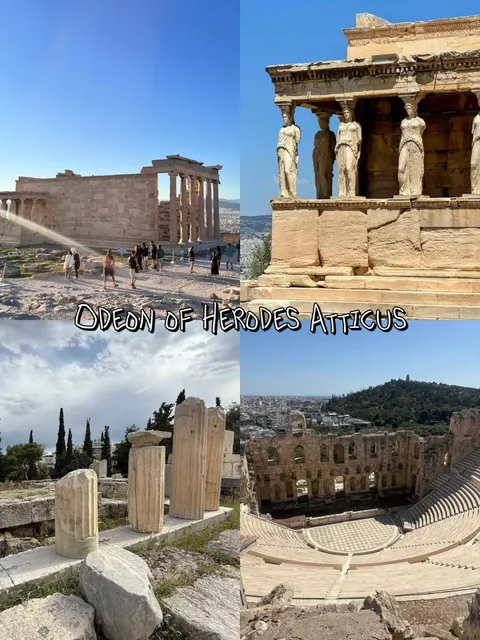
🇬🇷 Athens Guide|You can’t visit Greece without going to these places
Keywords
Plaka Arched Bridge tourism.Plaka Arched Bridge hotels.Plaka Arched Bridge bed and breakfast. flights to Plaka Arched Bridge.Plaka Arched Bridge attractions.Plaka Arched Bridge restaurants.Plaka Arched Bridge travel.Plaka Arched Bridge travel guide.Plaka Arched Bridge travel blog.Plaka Arched Bridge pictures.Plaka Arched Bridge photos.Plaka Arched Bridge travel tips.Plaka Arched Bridge maps.Plaka Arched Bridge things to do.
Plaka Arched Bridge things to do, attractions, restaurants, events info and trip planning
Plaka Arched Bridge
GreeceEpirus and Western MacedoniaNorth Tzoumerka MunicipalityPlaka Arched Bridge

Basic Info

Plaka Arched Bridge

Unnamed Road, Voria Tzoumerka 470 43, Greece
4.9(1.2K)
Open until 12:00 AM
Save
spot

Ratings & Description

Info

Plaka Bridge is a 19th-century stone one-arch bridge in Greece that collapsed during the floods of 1 February 2015, and rebuilt in 2020. It is located at the borders of Arta and Ioannina prefectures, above the waters of Arachthos River. Administratively, it belongs to the community of Plaka-Raftaneon.

Cultural
Outdoor
Adventure
Scenic
Off the beaten path
attractions: , restaurants: Zapata
logoLearn more insights from Wanderboat AI.
Open hoursSee all hours
WedOpen 24 hoursOpen

Plan your stay

hotel
Pet-friendly Hotels in North Tzoumerka Municipality
Find a cozy hotel nearby and make it a full experience.
hotel
Affordable Hotels in North Tzoumerka Municipality
Find a cozy hotel nearby and make it a full experience.
hotel
The Coolest Hotels You Haven't Heard Of (Yet)
Find a cozy hotel nearby and make it a full experience.
hotel
Trending Stays Worth the Hype in North Tzoumerka Municipality
Find a cozy hotel nearby and make it a full experience.

Reviews

Things to do nearby

Explore Ioannina like a local
Wed, Dec 10 • 8:00 AM
452 21, Ioannina, Greece
View details
Recreate traditional Epirus dishes
Wed, Dec 10 • 9:00 AM
453 33, Ioannina, Greece
View details

Nearby restaurants of Plaka Arched Bridge

Zapata

Zapata

Zapata

4.8

(213)

Click for details
Get the Appoverlay
Get the AppOne tap to find yournext favorite spots!
Wanderboat LogoWanderboat

Your everyday Al companion for getaway ideas

CompanyAbout Us
InformationAI Trip PlannerSitemap
SocialXInstagramTiktokLinkedin
LegalTerms of ServicePrivacy Policy

Get the app

© 2025 Wanderboat. All rights reserved.
logo

Posts

🇬🇷 Athens Guide|You can’t visit Greece without going to these places
Claire PenelopeClaire Penelope
🇬🇷 Athens Guide|You can’t visit Greece without going to these places
Pavlos PapPavlos Pap
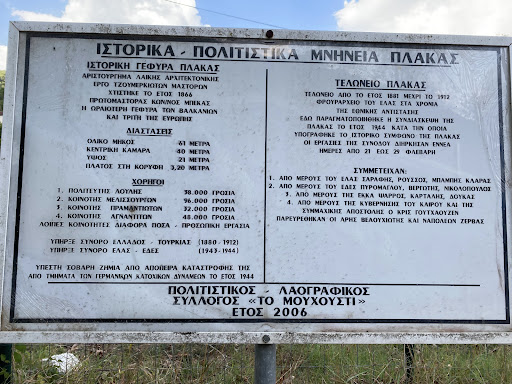
From wiki: Construction The bridge was built upon the order of Ottoman Sultan Abdülaziz,and was completed in 1866 under the supervision of the famous local builder Kostas Bekas (Greek: Κώστας Μπέκας)from the nearby village Pramanta.Two previous attempts by other builders in 1860 and 1863 had proven unsuccessful,[4] with the bridge collapsing during construction (in 1863 it collapsed on the very day of its inauguration).[6] The cost of construction, 180,000 kuruş, was covered by the local communities and the rich merchant Ioannis Loulis.[5] In operation Plaka Bridge being crossed by tourists On 3 February 1878, during the anti-Ottoman revolt of that year, Greek troops under the command of Konstantinos Kottikas defeated the Turkish garrison of the bridge and made them retreat.[8] Between 1881 and 1912 (the First Balkan War), the bridge marked the border between the Kingdom of Greece and the Ottoman Empire, and a customs building was erected alongside it,[9] which still survives.[5] Also, near the bridge there was an outpost of the Greek army and an inn.[8] The bridge used to be a trade route, connecting Tzoumerka with Epirus and Thessaly.[10] During World War II, it was bombed by the Germans, and it withstood the bombing with minor damage.[4] Locals repaired it using cement in 1943.[10] On 29 February 1944, during the Axis Occupation of Greece, the Treaty of Plaka [el] was signed near the bridge among the armed groups of the Greek Resistance, EAM, EDES, and EKKA.[9] According to the treaty resistance groups agreed to refrain from infringing on each other's territory, and all future war efforts would be directed against the Germans. This marked the end of the "first round" of the Greek civil war, which had started on October 12, 1943.[11] In spite of the two small 6 m (20 ft)-wide relief arches,[1] the bridge's apex thickness of 1.56 m (5 ft 1 in) has been considered small by experts, causing a concentration of horizontal stresses in a region where a 15 cm (5.9 in) crack could be found.[12] Plaka bridge after the restoration During heavy rains in 2007, the bridge nearly collapsed, and a restoration was considered but not taken, raising criticism by the public.[4] Collapse (2015) The bridge, which was one of the most impressive examples of Greek popular architecture, collapsed on 1 February 2015. A flash flood caused by heavy rainfall[13] caused the Arachthos River to rip the bridge's foundations from the riverbanks[14] leading the central section of the bridge to collapse and be washed away.[13] The next day, Alternate Minister of Infrastructure Christos Spirtzis and representatives of the Culture Ministry travelled to the region to assess the situation and announced that it was technically feasible to restore the historic bridge.[10] Experts assessed the damage. The materials would be recovered from the river once water levels have fallen.[9] As of July 2020, restoration work, supported by the National Technical University of Athens is over, and the rebuilt bridge was completed in the summer of 2020.[15][16]
fraus legifraus legi
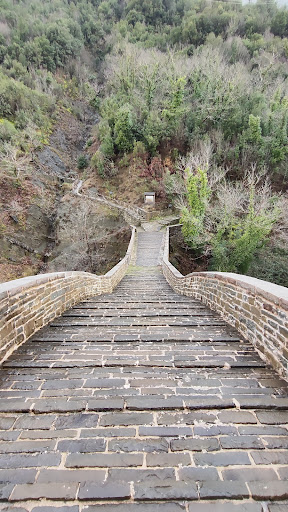
Impressive from far, even more impressive when you are close. There is a significant high and it is not recommended for people with vertigo. The walk along the river until you reach the bridge is very pleasant and not challenging at all. The bar at the bridge was closed when we went but we did not bother as we had the whole bridge to ourselves. Read the signs. Some work was being done on the road entering the parking area, probably because of the heavy rainfall the previous days. Hiking options on the other side of the bridge.
See more posts
See more posts
hotel
Find your stay

Pet-friendly Hotels in North Tzoumerka Municipality

Find a cozy hotel nearby and make it a full experience.

🇬🇷 Athens Guide|You can’t visit Greece without going to these places
Claire Penelope

Claire Penelope

hotel
Find your stay

Affordable Hotels in North Tzoumerka Municipality

Find a cozy hotel nearby and make it a full experience.

Get the Appoverlay
Get the AppOne tap to find yournext favorite spots!
From wiki: Construction The bridge was built upon the order of Ottoman Sultan Abdülaziz,and was completed in 1866 under the supervision of the famous local builder Kostas Bekas (Greek: Κώστας Μπέκας)from the nearby village Pramanta.Two previous attempts by other builders in 1860 and 1863 had proven unsuccessful,[4] with the bridge collapsing during construction (in 1863 it collapsed on the very day of its inauguration).[6] The cost of construction, 180,000 kuruş, was covered by the local communities and the rich merchant Ioannis Loulis.[5] In operation Plaka Bridge being crossed by tourists On 3 February 1878, during the anti-Ottoman revolt of that year, Greek troops under the command of Konstantinos Kottikas defeated the Turkish garrison of the bridge and made them retreat.[8] Between 1881 and 1912 (the First Balkan War), the bridge marked the border between the Kingdom of Greece and the Ottoman Empire, and a customs building was erected alongside it,[9] which still survives.[5] Also, near the bridge there was an outpost of the Greek army and an inn.[8] The bridge used to be a trade route, connecting Tzoumerka with Epirus and Thessaly.[10] During World War II, it was bombed by the Germans, and it withstood the bombing with minor damage.[4] Locals repaired it using cement in 1943.[10] On 29 February 1944, during the Axis Occupation of Greece, the Treaty of Plaka [el] was signed near the bridge among the armed groups of the Greek Resistance, EAM, EDES, and EKKA.[9] According to the treaty resistance groups agreed to refrain from infringing on each other's territory, and all future war efforts would be directed against the Germans. This marked the end of the "first round" of the Greek civil war, which had started on October 12, 1943.[11] In spite of the two small 6 m (20 ft)-wide relief arches,[1] the bridge's apex thickness of 1.56 m (5 ft 1 in) has been considered small by experts, causing a concentration of horizontal stresses in a region where a 15 cm (5.9 in) crack could be found.[12] Plaka bridge after the restoration During heavy rains in 2007, the bridge nearly collapsed, and a restoration was considered but not taken, raising criticism by the public.[4] Collapse (2015) The bridge, which was one of the most impressive examples of Greek popular architecture, collapsed on 1 February 2015. A flash flood caused by heavy rainfall[13] caused the Arachthos River to rip the bridge's foundations from the riverbanks[14] leading the central section of the bridge to collapse and be washed away.[13] The next day, Alternate Minister of Infrastructure Christos Spirtzis and representatives of the Culture Ministry travelled to the region to assess the situation and announced that it was technically feasible to restore the historic bridge.[10] Experts assessed the damage. The materials would be recovered from the river once water levels have fallen.[9] As of July 2020, restoration work, supported by the National Technical University of Athens is over, and the rebuilt bridge was completed in the summer of 2020.[15][16]
Pavlos Pap

Pavlos Pap

hotel
Find your stay

The Coolest Hotels You Haven't Heard Of (Yet)

Find a cozy hotel nearby and make it a full experience.

hotel
Find your stay

Trending Stays Worth the Hype in North Tzoumerka Municipality

Find a cozy hotel nearby and make it a full experience.

Impressive from far, even more impressive when you are close. There is a significant high and it is not recommended for people with vertigo. The walk along the river until you reach the bridge is very pleasant and not challenging at all. The bar at the bridge was closed when we went but we did not bother as we had the whole bridge to ourselves. Read the signs. Some work was being done on the road entering the parking area, probably because of the heavy rainfall the previous days. Hiking options on the other side of the bridge.
fraus legi

fraus legi

See more posts
See more posts

Reviews of Plaka Arched Bridge

4.9
(1,201)
avatar
5.0
2y

From wiki:

Construction

The bridge was built upon the order of Ottoman Sultan Abdülaziz,and was completed in 1866 under the supervision of the famous local builder Kostas Bekas (Greek: Κώστας Μπέκας)from the nearby village Pramanta.Two previous attempts by other builders in 1860 and 1863 had proven unsuccessful,4] with the bridge collapsing during construction (in 1863 it collapsed on the very day of its inauguration).[6] The cost of construction, 180,000 kuruş, was covered by the local communities and the rich merchant Ioannis Loulis.[5]

In operation

Plaka Bridge being crossed by tourists On 3 February 1878, during the anti-Ottoman revolt of that year, Greek troops under the command of Konstantinos Kottikas defeated the Turkish garrison of the bridge and made them retreat.[8]

Between 1881 and 1912 (the First Balkan War), the bridge marked the border between the Kingdom of Greece and the Ottoman Empire, and a customs building was erected alongside it,[9] which still survives.[5] Also, near the bridge there was an outpost of the Greek army and an inn.[8] The bridge used to be a trade route, connecting Tzoumerka with Epirus and Thessaly.[10]

During World War II, it was bombed by the Germans, and it withstood the bombing with minor damage.[4] Locals repaired it using cement in 1943.[10] On 29 February 1944, during the Axis Occupation of Greece, the Treaty of Plaka [el] was signed near the bridge among the armed groups of the Greek Resistance, EAM, EDES, and EKKA.[9] According to the treaty resistance groups agreed to refrain from infringing on each other's territory, and all future war efforts would be directed against the Germans. This marked the end of the "first round" of the Greek civil war, which had started on October 12, 1943.[11]

In spite of the two small 6 m (20 ft)-wide relief arches,[1] the bridge's apex thickness of 1.56 m (5 ft 1 in) has been considered small by experts, causing a concentration of horizontal stresses in a region where a 15 cm (5.9 in) crack could be found.[12]

Plaka bridge after the restoration During heavy rains in 2007, the bridge nearly collapsed, and a restoration was considered but not taken, raising criticism by the public.[4]

Collapse (2015)

The bridge, which was one of the most impressive examples of Greek popular architecture, collapsed on 1 February 2015. A flash flood caused by heavy rainfall[13] caused the Arachthos River to rip the bridge's foundations from the riverbanks[14] leading the central section of the bridge to collapse and be washed away.[13] The next day, Alternate Minister of Infrastructure Christos Spirtzis and representatives of the Culture Ministry travelled to the region to assess the situation and announced that it was technically feasible to restore the historic bridge.[10] Experts assessed the damage. The materials would be recovered from the river once water levels have fallen.[9]

As of July 2020, restoration work, supported by the National Technical University of Athens is over, and the rebuilt bridge was completed in the...

   Read more

avatar
5.0
1y

Impressive from far, even more impressive when you are close. There is a significant high and it is not recommended for people with vertigo. The walk along the river until you reach the bridge is very pleasant and not challenging at all. The bar at the bridge was closed when we went but we did not bother as we had the whole bridge to ourselves. Read the signs. Some work was being done on the road entering the parking area, probably because of the heavy rainfall the previous days. Hiking options on the other side...

   Read more
avatar
5.0
3y

Γεφύρι της Πλάκας Το γεφύρι της Πλάκας είναι ένα μονότοξο πέτρινο γεφύρι, το μεγαλύτερο και πιο εντυπωσιακό του είδους του στην Ήπειρο. Θεωρείται το μεγαλύτερο μονότοξο γεφύρι των Βαλκανίων και το τρίτο μεγαλύτερο στην Ευρώπη. Την 1η Φεβρουαρίου 2015, κατά τη διάρκεια μίας ισχυρής καταιγίδας η οποία προκάλεσε την υπερχείλιση του ποταμού, κατέρρευσε ένα σημαντικό μέρος της κύριας καμάρας και του ανατολικού βάθρου της γέφυρας. Το γεφύρι χτίστηκε το 1866 στον ποταμό Άραχθο, με τόξο που εκτείνεται πλέον των  40 μ. σε μήκος και 20 μ. σε ύψος. Κατασκευάστηκε για να ενισχύσει την επικοινωνία και το εμπόριο στις γύρω κοινότητες και, μέχρι το 1913, βρισκόταν στη συνοριακή γραμμή μεταξύ Ελλάδας και Οθωμανικής Αυτοκρατορίας, χρησιμεύοντας ως μία από τις δύο εισόδους στην ηπειρωτική χώρα. Έχει κηρυχθεί προστατευόμενο ιστορικό μνημείο και η ιστορική του σημασία για την Ελλάδα είναι σημαντική. Αν και κατά καιρούς πραγματοποιήθηκαν περιορισμένες επισκευαστικές εργασίες, καμία δεν αντιμετώπισε τη σοβαρή υποβρύχια διάβρωση των θεμελίων της γέφυρας. Μετά την κατάρρευση του σύντομα ξεκίνησε προσπάθεια αναστήλωσης. Το έργο αποκατέστησε το γεφύρι στην παλιά του μορφή και ανέδειξε την υλική και άυλη του αξία εντός του ιδιαίτερου φυσικού τοπίου στο οποίο βρίσκεται. Το έργο αποκατάστασης βραβεύτηκε από την Ευρωπαϊκή Επιτροπή και την Europa Nostra, έναν οργανισμό για την πολιτιστική...

   Read more
Page 1 of 7
Previous
Next