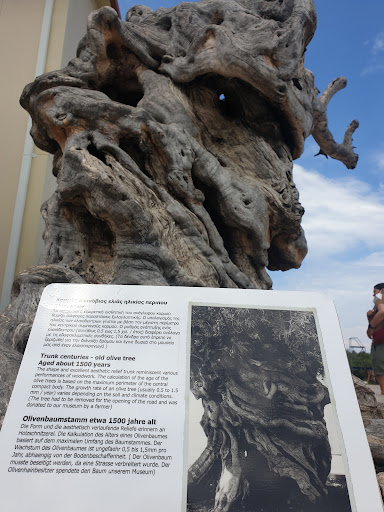
Step through the unassuming entrance of the Olive Press Museum in Zakynthos, and prepare for your reality to gently, then emphatically, unfurl. This isn't merely a collection of ancient machinery; it's a breathing anachronism, a portal where the primal essence of the olive fruit whispers secrets to your soul. The first thing you notice isn't the presses, but the light. It filters through unseen cracks, dancing in kaleidoscopic patterns, illuminating the gnarled wooden beams. Each shadow seems to writhe with a latent energy, the whispers of untold stories from the hands that once guided these colossal stones. Are those gears merely turning, or are they grinding the very fabric of time into a golden, viscous paste? You might find yourself leaning in, trying to discern the faint echo of ancient songs sung by workers under a blazing Grecian winter sun. The olive presses themselves are not just machines they are sentient monoliths. Run your hand over the cool, rough stone, and you might feel a faint vibration, a resonance from the earth itself, as if the very mountains of Zakynthos are speaking to you through the medium of crushed fruit. The air becomes thick with an ethereal scent of crushed olives, both bitter and sweet, carrying with it the memory of generations of sun-drenched fields, and the simple, profound magic of turning fruit into liquid gold. As you wander, the lines between past and present begin to blur. The clanking of an imaginary lever, the gurgle of unseen oil, the distant shouts of phantom workers – they all weave into a sensory tapestry that pulls you deeper into the heart of the olive. Leaving the museum, the bright Zakynthian sun may feel startlingly intense. The modern world might seem a little too sharp, a little too loud. For a fleeting moment, you've tasted the cosmic consciousness of the olive, a connection to an ancient lineage of sustenance and simple alchemy. Υou'll leave with a subtle shift in your perception, a deeper understanding of the liquid gold that flows not just from the trees, but from the very heart of this island. A truly bizarre and unforgettable experience especially...
Read moreIt's certainly an interesting place, but I strongly advise against it to my fellow Poles. I've been traveling the world for some time now and have never encountered racist behavior towards me, and I never expected to encounter it in an olive oil mill in Zakynthos. In short, I tried to pay for products with a multi-currency card, but the transaction was declined because, I believe, the seller (a middle-aged man with glasses and curly black hair) had selected the EUR payment option for me, which I didn't have, as the funds were available in a Polish złoty account, which I had to select. After the transaction was declined, my attempt to pay again was ignored by the seller, and the man was ostentatiously rude to me. I tried to pay again but was ignored; my girlfriend paid for the products. Disgusting and contemptuous behavior. I don't think the salesperson would have behaved the same way towards Germans or English people, with whom he was noticeably more professional. I should point out that the rest of the staff was very friendly, like everyone else on the island. If the salesperson described is prejudiced against Poles, perhaps he should travel to Poland and compare the country where he lives with the country I come from, and draw his own...
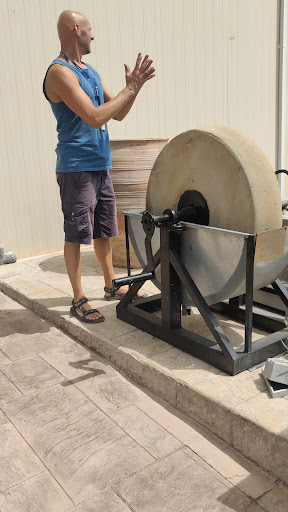
Read moreThis is a quick trip so ideal if you have a short window of time to fill. We came at the start of the olive picking season so they were busy processing olives. The museum starts outside in the front of the building showing the various old technologies (donkey-driven and wood-based to mechanical and metal-based machinery) and then you walk inside through the building. We didn't get a tour as it was the end of the day and I think all hands were on deck to process the harvest. It was possible to see what the different stages were and see the olives being processed and pressed, but would benefit from some more interpretation and signage to help you understand specific things. You can get up close to the working machinery which feels very odd to a Brit used to being behind ropes and supervised due to health and safety! At the end of the building is a tasting table where you can try their incredible produce, which led to us spending good money. Compared to branded olive oil you can buy in the UK, it was cheaper with the benefit of it being local, extra virgin, and simply delicious. Note that it is very loud in...
Read more