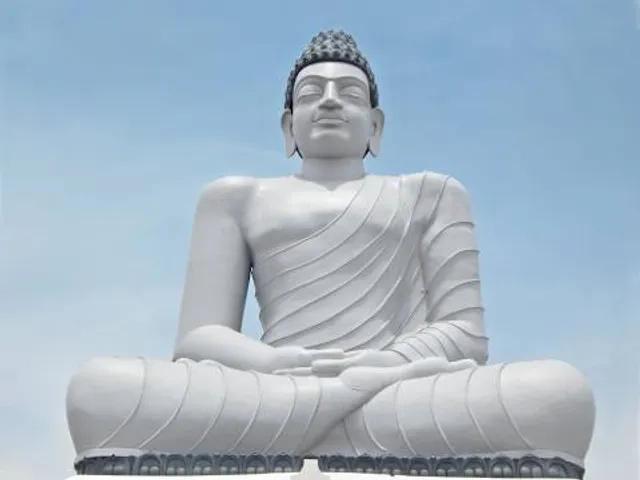
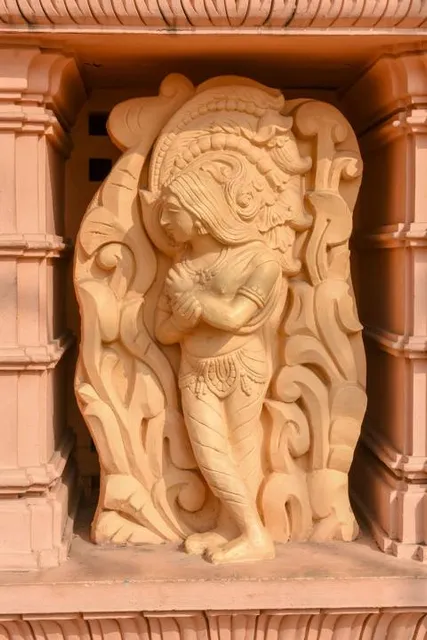
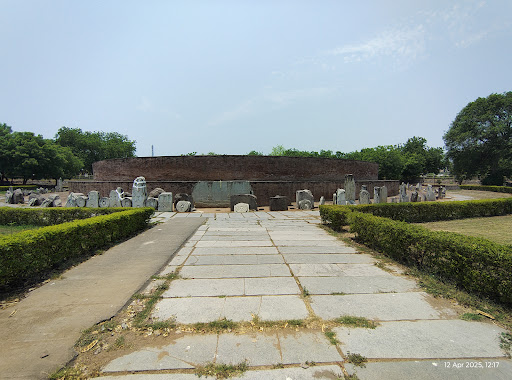
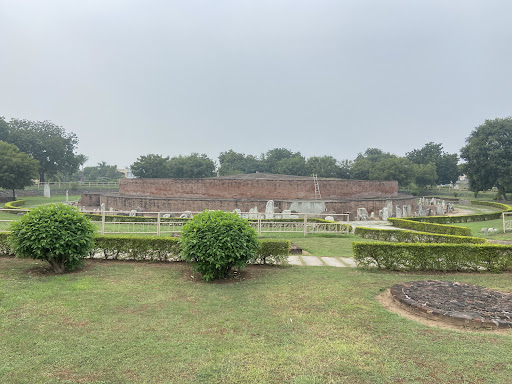
Maha Chaitya at Amaravati The great stupa or Maha Chaitya at Amaravati was one of the biggest in Andhra Pradesh with probable diameter of 50 meters and a height of 27 meters. It has a brick built circular vedika or drum with projecting rectangular ayaka platforms in four cardinal directions measuring 7.20 x 2.10 meters each. Five ayaka pillars must have stood on each platform symbolically representing the five main events in Buddha’s life viz. the birth, the great renunciation, the enlightenment, the first sermon, and the final extinction. The drum and ayaka platforms were covered with sculptured slabs. Five crystal caskets containing bone pieces, pearls and gold flowers were discovered from the southern ayaka platform. This is a sariraka type of stupa and hence its great importance, mounted on this circular drum stood an anda or hemispherical dome. Tall sculptured dome slabs covered the vertical part of the dome, above which came decorations in stucco. Scenes from the life of Buddha, Jataka stories, animal motifs, floral decorations, formed the subject matter of these sculptures carved on the locally available light green lime stone. The dome was crowned by a harmika or box like structure over which stood a chhatra or umbrella all now missing except the remains of the plinth. The drum of the stupa had a well laid pradakshinapatha or circumambulatory path of 4 meters with paved with cuddapah slabs protected by a railing in stone on its extreme end, pierced on all the four sides by gateways projecting out. The railing consisted of updmvapatas or upright pillars, three suchis or cross bars connecting each pair of upright pillars, and ushnisha or coping stone running on top those pillars, seated lions stood on pillars guarding either side of the gate ways. The stone railing of later periods was highly ornamental. The history of Mahachaitya is spread to a period of roughly over a thousand and seven hundred years (Circa 3rd Century BCE to circa 14th Century CE). The foundation of this maha stupa must have been laid by the great Mahadeva Bikshu an emissary of Emperor Asoka who was deputed to Mahishamandala for the propagation of the Buddhist norm. The first construction is believed to have been plain and modest. The ornamental renovations were brought later during the next seven centuries. The stupa had received its rich patronage from Kings like Vasistiputra Pulumavi, Sivaskanda, Satakarni, Gautamiputra Yajna Sri Satakarni, Buddhist Monks like Acharyaa Nagarjuna, and Nuns like Nanda and lay Devotees like Utara, Khalata etc. Evidence shows that the stupa was an object of worship receiving attention during the reign of the dynasties of the Satavahana, Ikshvaku, Chalukya, Pallava, Salankayaha, Vishnukundin Kakatiya and Kota kings. The Chinese Traveller Yuvan Chwang and the Tibetan Historian Taranath glorified in their accounts the greatness of this ancient seat of Buddhism. Colonel Colin Mackenzie of the trignometrical survey had discovered these remains of this stupa in 1791 CE. Subsequently Archaeologists like Mr. Burgess, Mr. Rea, Sri TN Ramachandran, Dr. R. Subrahmanyan, Dr. K. Krishnamurthy and Dr. I Karthikeya Sarma have worked on it. Out of the vast sculptural wealth this stupa has yielded, a good Number have become the objects of exhibition in the galleries of the British Museum London, Musie Guimet Germany, National Museum, New Delhi, Indian Museum, Calcutta, and Government Museum, Madras. The rest are on display in the...
Read moreAMRAVATI STUPA
The Amravati stupa, which is also known as Mahachaitya Stupa, has the privilege of being the largest stupa(95 feet high) in India - the birthplace of Buddhism. Built during the 2nd century BCE, the stupa was discovered by a British archaeologist, Colonel Colin Mackenzie in 1797. The stupa was earlier a simple structure with limestone crossbars and simple carvings, but when renovated by the Satavahana rulers, became a highly marked architectural monument.
The great stupa or Mahachaitya at Amaravati was one of the biggest in Andhra Pradesh with a probable diameter of 50 meters and a height of 27 meters. It has a brick built circular vedika or drum with projecting rectangular Ayaka platforms in four cardinal directions measuring 7.20 X 2.10 meters each. Five Ayaka pillars must have stood on each platform symbolically representing the five main events in Buddha’s life viz., the birth, the great renunciation, the enlightenment, the first sermon and the final extinction. The drum and Ayaka platforms were covered with sculptured slabs. All the four-ayaka platforms have yielded seven crystal and one Ivory relic caskets, some of which contain bone-pieces, pearls, precious stones and gold flowers. This is a Sariraka type of stupa and hence it’s great importance.
Mounted on this circular drum stood an anda or hemispherical dome. Tall sculptured dome slabs covered the vertical part of the dome, above which came decorations in stucco. Scenes from the life of Buddha, Jataka stories, animal motifs, floral decorations formed the subject matter of these sculptures carved on the locally available light green limestone.The drum was crowned by a harmika or box like structure over which stood a chhatra or umbrella. All now missing except the remains of the plinth.
The drum of the stupa had a well laid Pradakshinapatha or circumambulatory path of 4 meters width paved with Cuddapah slabs protected by a railing in stone on its outer extreme end, pierced on all the four sides by gateways projecting out. The railing consisted of Urdhvapatas or Upright pillars, three suchis or cross-bars connecting each pair of upright pillars, and Ushnisha or coping stone running on top of those pillars. Seated lions stood on pillars guarding either side of the gateways. The stone railing of later periods was...
Read moreAmaravati Stupam, located in the city of Amaravati, is a magnificent Buddhist monument that truly showcases the rich heritage and architectural brilliance of ancient India. As a tourist attraction, it offers a mesmerizing experience that leaves visitors in awe.
The grandeur of Amaravati Stupam is truly captivating, with its towering structure and intricate carvings. The sheer size of this monument is astonishing, and it stands as a testament to the skill and craftsmanship of the artisans who built it centuries ago.
The location of Amaravati Stupam adds to its appeal, as it is situated amidst serene surroundings and lush greenery. The peaceful ambiance of the place creates a sense of tranquility and spirituality, making it a perfect spot for meditation and reflection.
Visiting Amaravati Stupam is not just about admiring its architectural beauty, but also about immersing oneself in the rich history and culture of Buddhism. The site is filled with ancient relics and sculptures, each telling a story and providing insight into the teachings of Lord Buddha.
The well-maintained gardens surrounding the stupam offer a peaceful retreat for visitors, allowing them to relax and soak in the serene atmosphere. The place also hosts various cultural events and festivals, which further enhance the overall experience.
In conclusion, Amaravati Stupam is a must-visit destination for anyone interested in exploring the rich heritage and spirituality of ancient India. Its architectural splendor, serene location, and cultural significance make it a perfect spot for both locals and tourists. It offers a glimpse into the profound teachings of Buddhism while providing a memorable experience for...
Read more