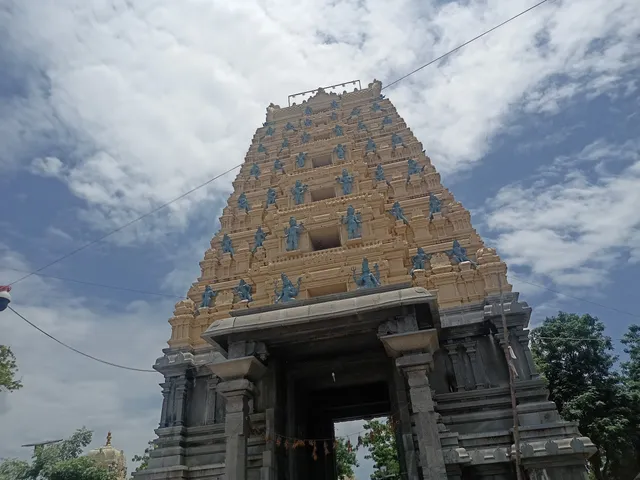
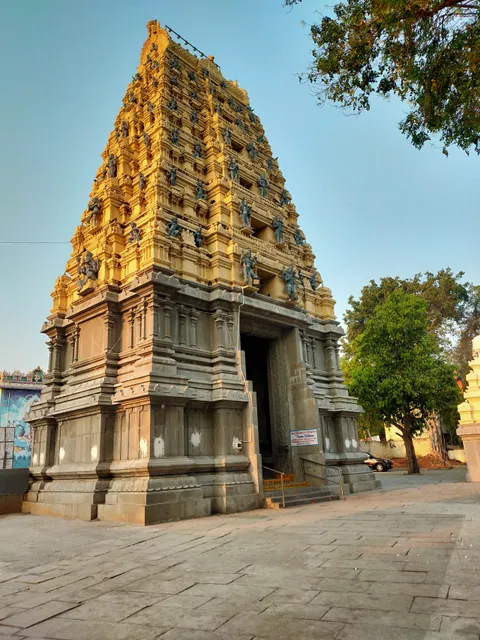
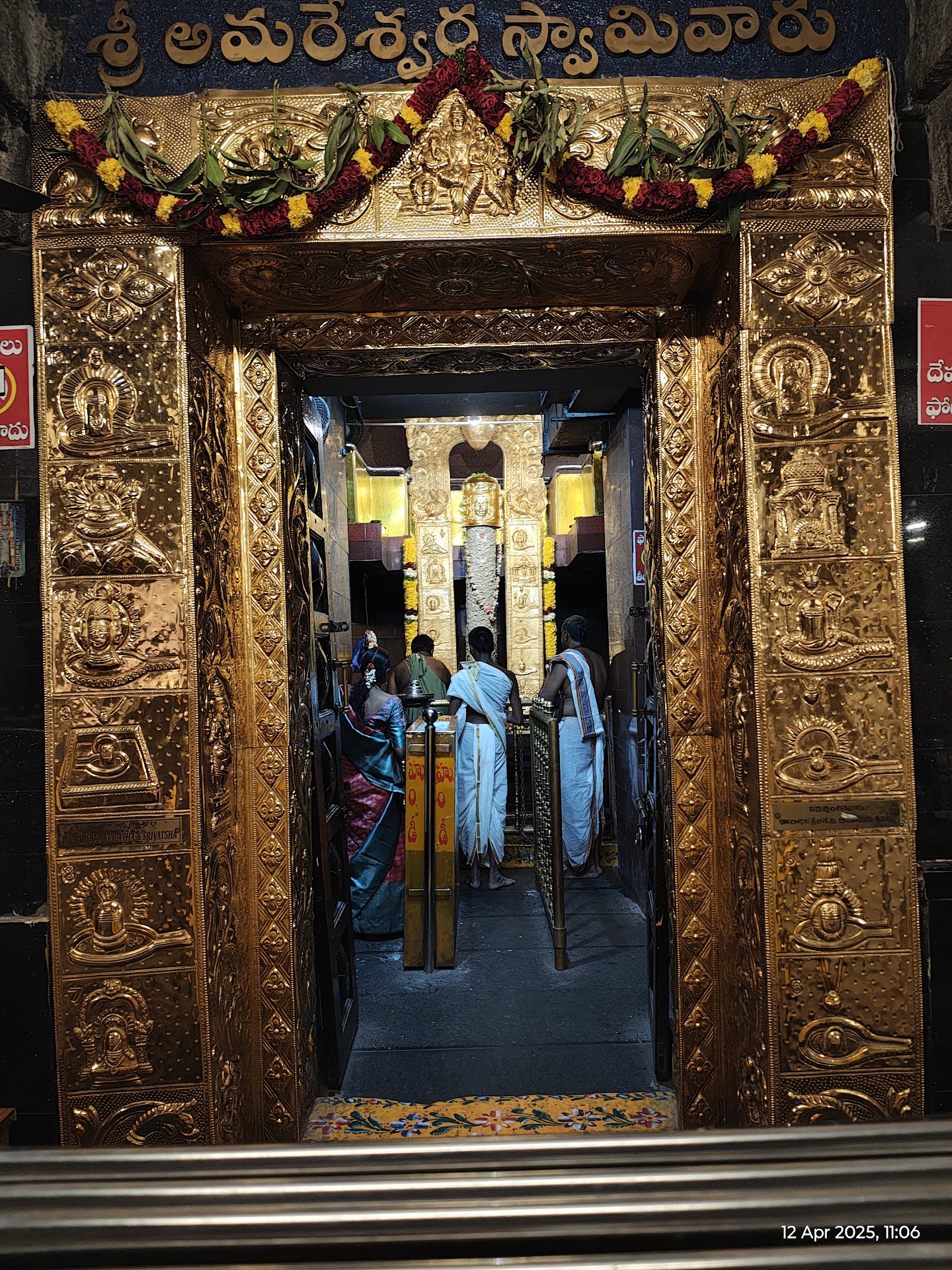
Moolavar : Sri Amareswara Swamy Consort : Sri Bala Chamundika Some of the salient features of this temple are… The temple is in the form of Mada temple with steps faces east. Rajagopuras are on all four sides, of which the South Side Rajagopuram is of 7-tiers and east side is of 5-tiers. Balipeedam, Dwajasthambam and Suryan are at the end of the steps. Stucco image of Natarajar is on the top of the mukha mandapam. Dwarapalakas are on both sides of the entrance to sanctum sanctorum. The moolavar Shiva Lingam is in the form of a sthamba of about 15 feet tall from pedestal with a kavasam on the top. In koshtam Dakshinamurthy, Lingothbavar and Brahma.
Ambal Sri Bala Chamundika is in a separate sannidhi in the ardha mandapam. Ambal is in a standing posture, holding a lotus but in the right hand and left hand in dola hastam. In praharam Ambal sannidhi, Shiva Linga Sannidhi, and Venugopalaswamy with folded hands. At the base level Thulabara Mandapa, vasantha mandapas, two 4 pillar mandapas, Annapoorani, Vinayagar, Arumugar (Kumarasamy/ Murugan), Bairavar, Navagrahas, Saniswarar, Gangadhara, Hanuman, Shiva Lingas, Nagars, Kannabiran, etc. ARCHITECTURE Sri Amareshwara temple was built in Devaswanam with three prakaras of Shiva, Ammavaru, Vishnu, Vinayaka and Surya and became famous as Panchayat Kshetra. Along with Sri Amareshwara Swami Sri Balachamundeswari Ammavari Devasthanams, there are 22 sub-devalayas in this temple complex. In the praharam, Shri Balachamundeshwari Amma Varu, the first prakaram is the shrine of Sri Jalamukhi Ammavaru in the western part and Sri Mahishasura in the eastern part. The sanctum sanctorum is on a adhistanam and the Vimanam above the sanctum sanctorum was built with brick. The Vimana is of Dravidian style 2 tiers (totally 3, including adi tala) and greevam is of nagara style. Shiva, Dakshinamurthy, Maha Vishnu and Brahma are in the tala and greeva koshtas. HISTORY AND INSCRIPTIONS Chaturmukha Linga and a small mukhalinga sculpture, belongs to the Satavahana dynasty (1st–2nd centuries CE). Hence this temple was existed since Satvahana Dynasty. In the Devasthanam of Lord Shri Amareswara Swamy, Kammanayakunisasana, Kotaketaraja's inscriptions are Anavemareddy Sri Krishnadevaraya Vasanamu. The edicts of Hendrakam Peddasam and Sri Raja Vasireddy Venkatadrinaidu can be seen. Sri Rajavasireddy Venkatadri Naidu, who made Venthapalli as his capital and ruled as Chintapalli as a zamindar, saw the sufferings caused by the spoons to the people and punished them. It is known that 108 Shiva temples were consecrated in Prakamuhurta in his Parakata for the purpose of atonement. Sri Venkatadrinaidu moved his capital from Chintapalli to Dhanyakataka in 1795 on the advice of Thina Amatyula. Dhanyakatakamu (Dharanikota) is known to have been the capital of the Satavahanas since the 4th century CE. The Tulabhara Mandapams built by Sri Krishna Devaraya and major renovations were carried out during his period. Sri Rajavasireddy Venkatadri Naidu can be found in the 2nd praharam. Sri Venkatadrinaidu named the area where the temple is located as Amaravati. During their reign, the present temple was renovated and the temple was blessed with constant incense offerings. Since Shiva saved Amaras- Devas from Tarukasura, called as Amaralingeswara. Some Historians believed that this temple was a Buddhist temple and the same might have been converted as a Hindu temple at a later date. Renovations and consecrations are conducted on 11th September...
Read moreAmaravathi: The Historic and Cultural Capital of Andhra Pradesh
Amaravathi, situated on the banks of the Krishna River in the Guntur district of Andhra Pradesh, India, holds great historical, religious, and cultural significance. Known for its rich heritage and contributions to the state's history, Amaravathi has emerged as an important destination for tourists, pilgrims, and history enthusiasts.
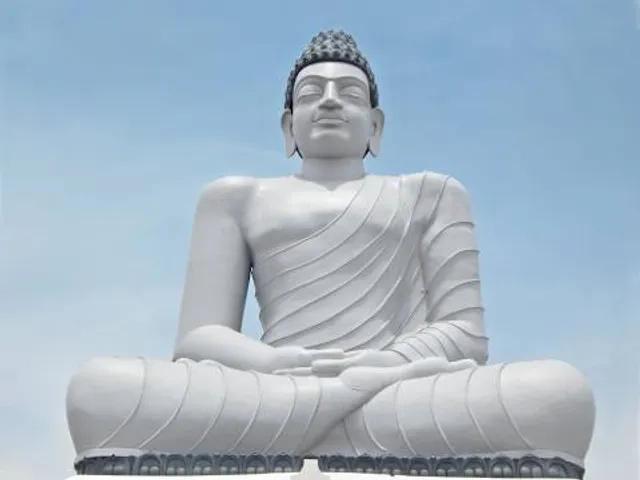
Historical Significance: Amaravathi's history dates back to ancient times, with references found in various scriptures and literary works. It served as the capital of the Satavahana dynasty, one of the earliest South Indian dynasties, from the 2nd century BCE to the 3rd century CE. During this period, Amaravathi flourished as a center of Buddhist art, culture, and learning. The famous Amaravathi Stupa, an architectural marvel adorned with intricate carvings depicting scenes from the life of Lord Buddha, stands as a testament to its glorious past.
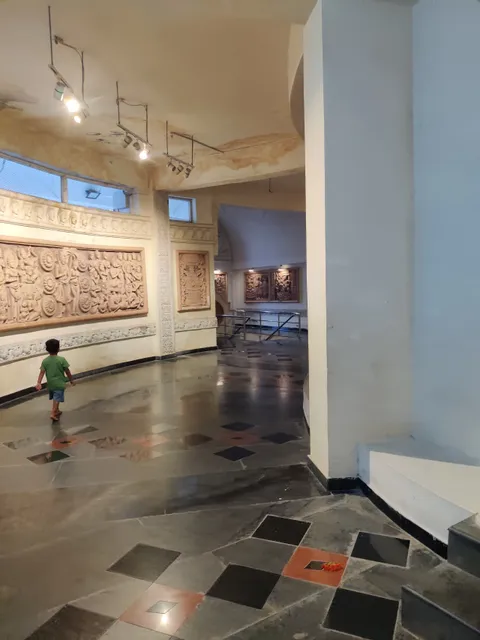
Amaravathi Stupa and Archaeological Museum: The Amaravathi Stupa, also known as Mahachaitya, is one of the largest and most well-preserved Buddhist stupas in India. The stupa is adorned with intricate sculptural panels, depicting stories from the Jataka tales and various aspects of Buddhist philosophy. The Amaravathi Archaeological Museum houses a remarkable collection of sculptures, relics, and artifacts unearthed from the surrounding areas, offering a deeper insight into the region's ancient Buddhist heritage.
Amaravathi as a Pilgrimage Site: For Buddhists, Amaravathi holds immense religious significance. It is believed to be one of the places visited by Lord Buddha during his lifetime, making it an important pilgrimage site. Devotees from all over the world visit Amaravathi to pay their respects and seek spiritual solace. The serene atmosphere, combined with the historical and cultural aura, creates a profound and peaceful experience for visitors.
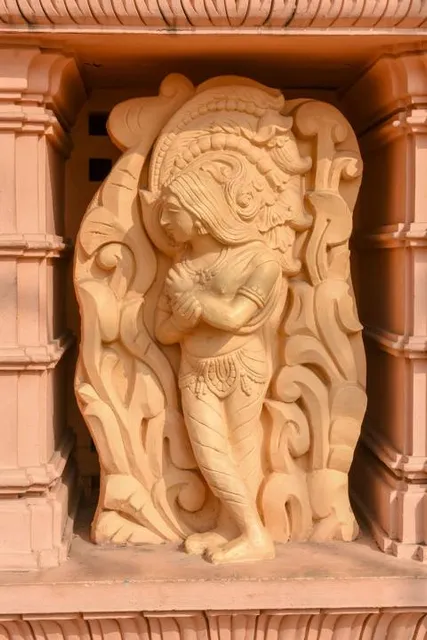
Amaralingeswara Temple: Another prominent attraction in Amaravathi is the Amaralingeswara Temple, dedicated to Lord Shiva. This ancient temple, built during the 12th century, showcases exquisite Dravidian architectural style. The temple complex is adorned with intricate carvings and sculptures that depict various mythological stories and deities. The annual festival of Maha Shivaratri attracts a large number of devotees who come to seek the blessings of Lord Shiva.
Amaravathi as the New Capital of Andhra Pradesh: In recent years, Amaravathi has gained significant attention as it was declared the capital city of Andhra Pradesh in 2014. The government initiated various infrastructure projects to develop Amaravathi into a modern and sustainable city. The region has witnessed rapid urbanization, with the establishment of government offices, educational institutions, residential complexes, and other amenities. The development plans aim to create a vibrant and well-planned city that preserves its cultural heritage while embracing modernity.
In conclusion, Amaravathi stands as a living testament to the glorious history, religious significance, and cultural heritage of Andhra Pradesh. With its ancient stupas, temples, and archaeological treasures, it offers a fascinating glimpse into the past. Whether one is drawn to its historical sites, seeking spiritual enlightenment, or witnessing the development of a new capital, Amaravathi is a destination that leaves an indelible impression...
Read moreSri Amareswara Swamy Vari Devasthanam is located in Amaravathi, Andhra Pradesh at a distance of 40 Kms from Vijayawada. It is one of the Pancharama Shiva Kshetras Andhra Pradesh. Others are : Draksharamam , Kumararamam , ,Ksheeraramam and Somaramam. It is unique for being situated on the Krishna River, unlike the others in the Godavari region.
Moolavar : Sri Amareswara / Amaralingeswara Ambal : Shree Bala Chamundika Devi. It is believed that Lord Shiva here is present in the structure of five lingams - Pranaveswara, Agasteswara, Kosaleswara, Someswara and Parthiveswara. The main idol is a vertically aligned cylinder crafted from 15-foot white marble. As per the temple lore, the Sivalinga once began to grow continuously, prompting devotees to drive a nail into its top to halt its expansion, resulting in a red mark where it is said blood emerged. One can see the stain even today.
The 11th century temple has been patronized by various dynasties, including the Kota chiefs, and the Vijayanagara Empire, with notable contributions from Sri Krishnadevaraya. Major renovations were carried out in the late 18th century. The Amararamam temple complex is surrounded by four towering gopuras in the Dravidian style, with a central vimana. Located on Krouncha Saila, a small hill near the Krishna River, the temple combines Buddhist and Dravidian architectural influences.
Access to the sanctum sanctorum, which is elevated, is via a flight of steps, leading to the main deity, a 15-foot white marble lingam which is the largest among the Pancharama lingams, with a circumference of three feet. Abhisheka rituals are performed from a platform within the sanctum.
The sanctum of the temple is surrounded by three concentric circles. The first circle houses the temples of Mahishasura Mardini, Veerabhadraswamy, Omkareswara Swamy, Guru Dattareya, and Agasteswara Swamy, the second circle contains the temples of Vinayaka, Kalabhairava, Anjaneya, Nagendraswamy, Kumaraswamy along with the statue of Lord Krishna under a tree while the third circle is a bit above the second circle and comes with the temples of Kasi Viswanatha, Mallikarjuna, Pushpadanteswara Swamy and Kalahasthiswara.
As per the Legend, when Sri Subramanya killed the demon Tarakasura, the Shivalingam in his throat broke and fell in five different spots, which became the Pancharama kshetras. It is believed that the sacred Shivalinga of Amareswara Swamy Temple was installed by Lord Indra himself.
The temple hosts several major Hindu festivals, including Maha Sivaratri, which falls on Magha Bahula Dasami, and Navaratri, along with various Kalyana Utsavas. Its sacred location along the Krishna River elevates the temple's religious significance, making it an important pilgrimage site.
Darshan timings are : 6 am -11.30 am and...
Read more