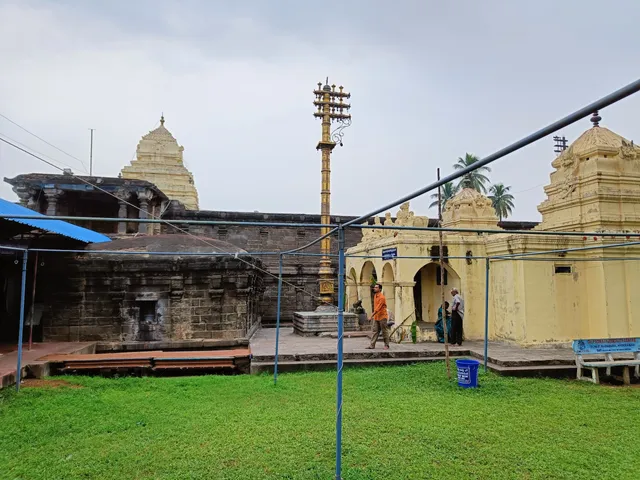
Manikyamba Devi is the consort of Lord Bhimeswara Swamy. Lord Bhimeswara Swamy temple is considered as one of the Pancharama kshetras and is one of the Trilinga kshetras. Here there is a big temple of Lord Bhimeswara Swamy, constructed in many Prakaras and the Manikyamaba Devi temple is situated in the inner circle of Lord Bhimeswara Swamy temple.
Draksharamam Temple History;
The history of this sacred pilgrimage place began in previous yugas, which was associated with the story of Lord Siva and the Divine Mother Satī Devi. The Divine Mother, Sakti, used to take birth as a human being to reunite with and marry Lord Siva. Such was the case when Sati Devi took birth as the daughter of a powerful ruler, Daksha Prajapati. Though Daksha hated Shiva, Sati Devi married Shiva against her father’s wishes. After their marriage, Daksha travelled from North India to Draksharamam to perform a large Yagna, known as Daksha Yagnam. Daksha invited the entire gods and goddesses except Shiva and Sati Devi. Even though they were not invited, Sati Devi attended the Yagna because she wanted to convince her father that Shiva was a form of Supreme Being. But Daksha did not listen to her daughter’s words and he started insulting her and Lord Shiva. Unable to tolerate the humiliation, Sati Devi killed herself. Carrying the corpse of his beloved wife, the angry Shiva performed Pralaya Thandava. Lord Vishnu applied his disc on the corpse and the parts of the body of Sati Devi fell in 18 locations, and those locations became known as Sakthi Peethas. Draksaramam is one of those 18 Sakthi Peethas. It is interesting to note that the earlier name of Draksharamam was Daksharamam.
Sri Manikyamba Devī at Draksharamam is one of the 18 Sakthi PIthas. The portion of Sati Devi that exists in the Daksaramam temple was believed to be installed by Lord Siva. About 1200 years ago Adi Sankaracarya visited this temple and installed a powerful Sri Chakra in the shrine of the Goddess. Near the Draksharamam Temple, we can still see the Homa Kunda of Daksha Prajapati, where Satī Devī left her body. Now the homa kunda has become a small tank. An idol of the Goddess Sati has been enshrined in the centre and there are some small temples adjacent to the homa kunda.
Draksharamam Temple Sculpture:
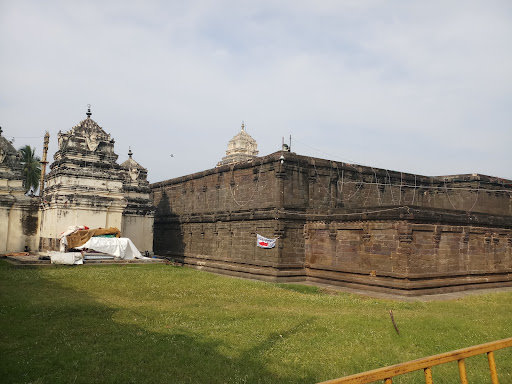
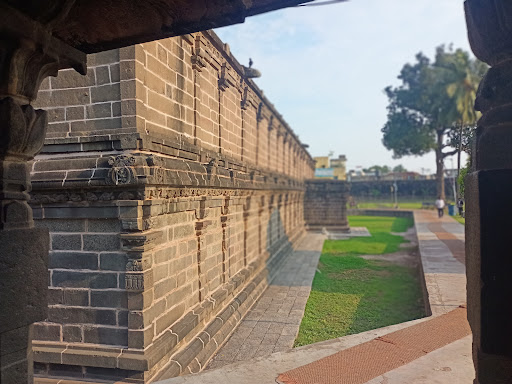
As per the inscription at Pithapuram, the temple of Kumaram Chalukya Bhimesvara was built by Chalukya Bhima-I , the famous Eastern Chalukya king towards the end of 9th century AD. The presiding deity Lord Siva, in the form of tall Sivalinga, was named after the monarch as Chalukya Bhimesvara. The inscription mentions that Chalukya Bhima was the son of Vikramaditya, who had won 360 battles and ruled the country for thirty years. The temple is in similar in architecture to that of the Bhimesvara temple at Samalkot. Two prakara walls, built of dressed sandstones, surround the temple. The outer prakara wall has gopura entrance on all the four sides. The four gopura – entrances have ardha mandapas on either side. The inner enclosure wall is partitioned horizontally into two sections, which are separated by a cornice and has a two-storeyed pillared mandapa running throughout the inner side.
Draksharamam Temple Legend:
Dakshaprajapati, father of Goddess Parvathi arranged for a yagna and did not invite Lord Shiva and Sati. But, Goddess Sati went ther against Siva’s desire and got humiliated by her father and sacrificed her life in the same fire. Angry Shiva created Lord Veerabhadra out of his hair to destroy the yagna. After the demolition, Lord Shiva had done rudrataandavam carrying Sati’s corpse in anger. Lord Vishnu had used his disc to cut Sati Devi’s dead body into 18 pieces to calm Lord Shiva. The places where the parts of Sati Devi fell were called Shakthi Peetas, the holy places of Goddess. One among them is at Draksharamam and the goddess here is named as Manikyamba. Another legend says that demon Tarakasura after doing severe penance was booned by Lord Shiva with his AtmaLinga. Further, Tarakasura committed many sins against devas. Devas carried out Goddess...
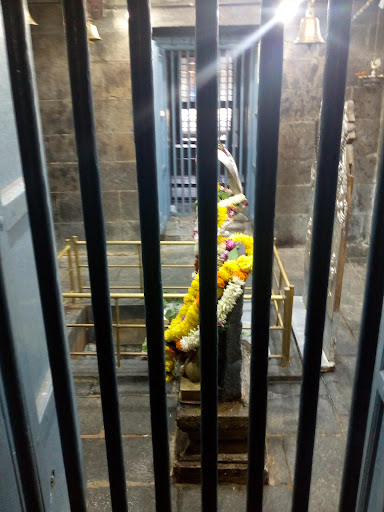
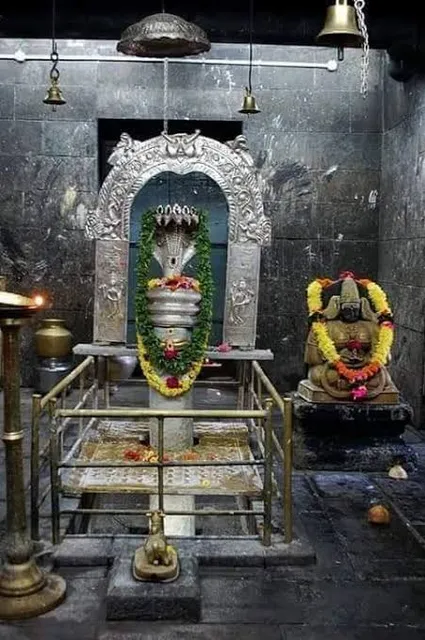
Read moreIt is one of the pancharamas and one of the oldest Temple in India here we can see the Temple of Lord Shiva and the siva linga has height of 14 feet and name of the Temple is bhimeshwara swami Templ
Draksharamam Temple Darsanam Timings:
5:00 AM to 12:00 Noon and 3:00 PM to 7:30 PM On Masa Shivaratri Maha Shivaratri temple will be open from 6:00 am to 8:00 pm. Manikyamba Devi is the consort of Lord Bhimeswara Swamy. Lord Bhimeswara Swamy temple is considered as one of the Pancharama kshetras and is one of the Trilinga kshetras. Here there is a big temple of Lord Bhimeswara Swamy, constructed in many Prakaras and the Manikyamaba Devi temple is situated in the inner circle of Lord Bhimeswara Swamy temple.
Draksharamam Temple History;
The history of this sacred pilgrimage place began in previous yugas, which was associated with the story of Lord Siva and the Divine Mother Satī Devi. The Divine Mother, Sakti, used to take birth as a human being to reunite with and marry Lord Siva. Such was the case when Sati Devi took birth as the daughter of a powerful ruler, Daksha Prajapati. Though Daksha hated Shiva, Sati Devi married Shiva against her father’s wishes. After their marriage, Daksha travelled from North India to Draksharamam to perform a large Yagna, known as Daksha Yagnam. Daksha invited the entire gods and goddesses except Shiva and Sati Devi. Even though they were not invited, Sati Devi attended the Yagna because she wanted to convince her father that Shiva was a form of Supreme Being. But Daksha did not listen to her daughter’s words and he started insulting her and Lord Shiva. Unable to tolerate the humiliation, Sati Devi killed herself. Carrying the corpse of his beloved wife, the angry Shiva performed Pralaya Thandava. Lord Vishnu applied his disc on the corpse and the parts of the body of Sati Devi fell in 18 locations, and those locations became known as Sakthi Peethas. Draksaramam is one of those 18 Sakthi Peethas. It is interesting to note that the earlier name of Draksharamam was Daksharamam.
Sri Manikyamba Devī at Draksharamam is one of the 18 Sakthi PIthas. The portion of Sati Devi that exists in the Daksaramam temple was believed to be installed by Lord Siva. About 1200 years ago Adi Sankaracarya visited this temple and installed a powerful Sri Chakra in the shrine of the Goddess. Near the Draksharamam Temple, we can still see the Homa Kunda of Daksha Prajapati, where Satī Devī left her body. Now the homa kunda has become a small tank. An idol of the Goddess Sati has been enshrined in the centre and there are some small temples adjacent to the homa kunda.
Draksharamam Temple Sculpture:
As per the inscription at Pithapuram, the temple of Kumaram Chalukya Bhimesvara was built by Chalukya Bhima-I , the famous Eastern Chalukya king towards the end of 9th century AD. The presiding deity Lord Siva, in the form of tall Sivalinga, was named after the monarch as Chalukya Bhimesvara. The inscription mentions that Chalukya Bhima was the son of Vikramaditya, who had won 360 battles and ruled the country for thirty years. The temple is in similar in architecture to that of the Bhimesvara temple at Samalkot. Two prakara walls, built of dressed sandstones, surround the temple. The outer prakara wall has gopura entrance on all the four sides. The four gopura – entrances have ardha mandapas on either side. The inner enclosure wall is partitioned horizontally into two sections, which are separated by a cornice and has a two-storeyed pillared mandapa running throughout...
Read moreManikyamba Devi is an incarnation of Goddess Shakti. The popular belief is that the spot where left cheek of Goddess Sati fell after her death is the spot where Goddess Manikyamba Devi appeared. This spot is believed to be the Draksharamam Temple (Sri Bhimeswara Swami Temple) in Andhra Pradesh.his place is also called as Dakshina Kashi.
As per the legend in South India, the body fell in 18 spots known as Ashta Dasa Peetahs. The spot where the left cheek of Goddess Sati fell is spot associated with Goddess Manikyamba Devi. Out of the eighteen places Sri Manikyamba of Draksharama is the twelfth place. This story is mentioned in the Skanda Purana.Draksharamam is located about 28 Km from Kakinada in Andhra Pradesh.
Draksharamam is a Shavite shrine. It is belived that sage Vyasa who performed penance here named this as Dakshina Kasi (Southern Benaras). Legend has it that the Saptamaharshis (Seven sages) to achieve the end of their penance divided the akhanda (unbranched) Godavari river into seven different streams at Draksharama. Bharadhwaja, Viswamitra and Jamadagni streams known as Antarvahinies, were believed to have gone under ground. There is Sapta Godavari Kundam (Seven river pond) near the temple. Devotees bath in this kundam. Sivarathri attracts huge crowds of pilgrims.
Lord Vishnu shrine is present at the entrance of main temple. He is the Kshetrapalaka of Draksharamam. Lord Vishnu is present here along with his consort, Lakshmi Devi.
Sthala Puranam:-
There are three stories related to Manikyamba devi. First one is, A Brahmin widow made a golden idol to remember her died daughter. But after some time, the idol got talking power. This idol was decorated with Manikyas(gems), hence the name Manikyamba or Manikyeswari. Bhimadeva, a new king came to this area taken that idol and worshiped her as his Kula devata. Some stories also tells us that Manikyamba name comes from a word Mainakamba, That means she was the daughter of Menaka devi, wife of Himavanta. Gradually the word Manikamba turned as Manikyamba in time period.
On every Ekadasi day Lord Bhimeswaraswamy and Manikyamba devi ekanta seva will be performed. Eight slokas will be sung by priests regarding Manikyamba devi and Bhimeswaraswamy and their romantic love story.Fridays also important days to worship Manikyamba devi. Kumkumarchana will be done in Fridays.
This Holy Pilgrimage is one of the rare few, where the God and Goddess are equally important. One is Varanasi in Northern India with Viswanatha and Annapurna. Second is Srisailam in Southern India with Sri Mallikharjuna and Bramaramba and third is Draksharama with Bhimanatha and Manikyamba.
There are many mythological anecdotes scattered in many of the Sacred puranas about the 'Swayambhu' aspect of the Lord's...
Read more