HTML SitemapExplore
logo
Find Things to DoFind The Best Restaurants

Lepakshi Main temple — Attraction in Andhra Pradesh

Name
Lepakshi Main temple
Description
Nearby attractions
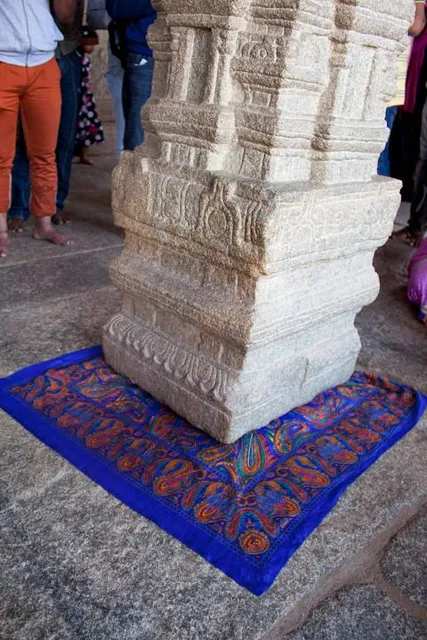
Hanging Pillar
RJ25+RQJ, Lepakshi, Andhra Pradesh 515331, India
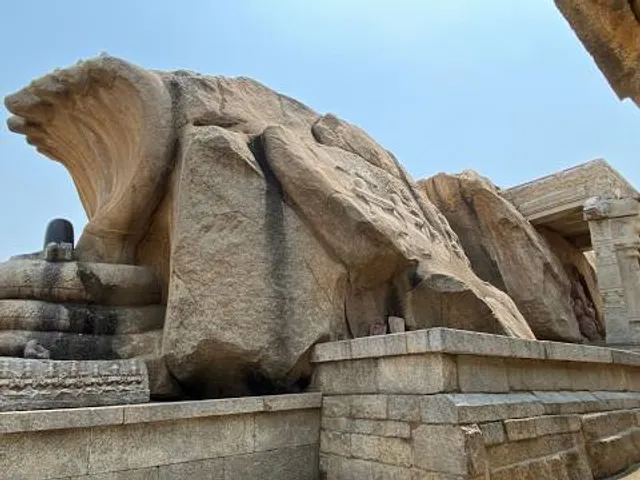
Lepakshi Nagalinga
RJ25+MR9, Lepakshi, Andhra Pradesh 515331, India
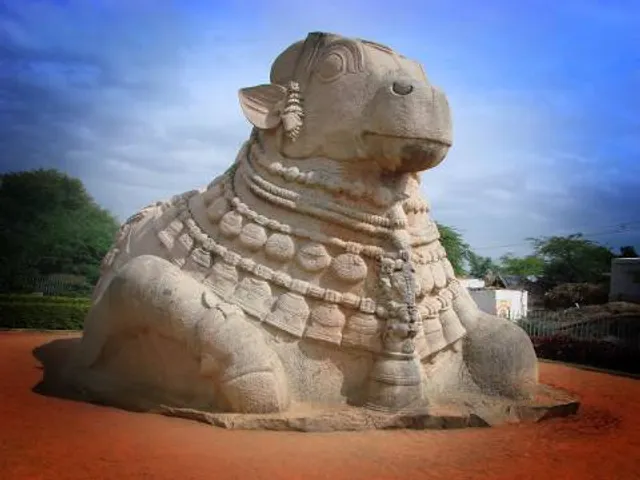
Lepakshi Nandi
Lepakshi mandal Hindupur taluk, Dst, Lepakshi, Andhra Pradesh 515331, India
Nearby restaurants
Annadanam Center
RJ35+4PW, Lepakshi Temple Rd, Lepakshi, Andhra Pradesh 515331, India
Pavitra Annadandana Bhavana
RJ35+2PP, Lepakshi, Andhra Pradesh 515331, India
Natraj Hotel In Lepakshi
Lepakshi, MD Farm Road, Sai Nagar, Syndicate Bank Colony, Bowenpally, Secunderabad, Lepakshi, Telangana 500009, India
Maha laxml bhel center
RJ35+CM9, Lepakshi, Andhra Pradesh 515331, India
Sri Saila Mallikarjuna Swamy Hotel
Main road, opposite to YSR statue, Lepakshi, Andhra Pradesh 515331, India
NRT hotel
RJ35+F9F, Lepakshi Rd, Lepakshi, Andhra Pradesh 515331, India
Nearby hotels
Related posts
Keywords
Lepakshi Main temple tourism.Lepakshi Main temple hotels.Lepakshi Main temple bed and breakfast. flights to Lepakshi Main temple.Lepakshi Main temple attractions.Lepakshi Main temple restaurants.Lepakshi Main temple travel.Lepakshi Main temple travel guide.Lepakshi Main temple travel blog.Lepakshi Main temple pictures.Lepakshi Main temple photos.Lepakshi Main temple travel tips.Lepakshi Main temple maps.Lepakshi Main temple things to do.
Lepakshi Main temple things to do, attractions, restaurants, events info and trip planning
Lepakshi Main temple
IndiaAndhra PradeshLepakshi Main temple

Basic Info

Lepakshi Main temple

Sri Sathya Sai District, Lepakshi, Andhra Pradesh 515331, India
4.7(1.9K)
Closed
Save
spot

Ratings & Description

Info

Cultural
Family friendly
attractions: Hanging Pillar, Lepakshi Nagalinga, Lepakshi Nandi, restaurants: Annadanam Center, Pavitra Annadandana Bhavana, Natraj Hotel In Lepakshi, Maha laxml bhel center, Sri Saila Mallikarjuna Swamy Hotel, NRT hotel
logoLearn more insights from Wanderboat AI.
Website
lepakshitemple.in
Open hoursSee all hours
Fri6 AM - 6 PMClosed

Plan your stay

hotel
Pet-friendly Hotels in Andhra Pradesh
Find a cozy hotel nearby and make it a full experience.
hotel
Affordable Hotels in Andhra Pradesh
Find a cozy hotel nearby and make it a full experience.
hotel
The Coolest Hotels You Haven't Heard Of (Yet)
Find a cozy hotel nearby and make it a full experience.
hotel
Trending Stays Worth the Hype in Andhra Pradesh
Find a cozy hotel nearby and make it a full experience.

Reviews

Nearby attractions of Lepakshi Main temple

Hanging Pillar

Lepakshi Nagalinga

Lepakshi Nandi

Hanging Pillar

Hanging Pillar

4.6

(91)

Open 24 hours
Click for details
Lepakshi Nagalinga

Lepakshi Nagalinga

4.8

(111)

Open 24 hours
Click for details
Lepakshi Nandi

Lepakshi Nandi

4.6

(3.8K)

Open 24 hours
Click for details

Nearby restaurants of Lepakshi Main temple

Annadanam Center

Pavitra Annadandana Bhavana

Natraj Hotel In Lepakshi

Maha laxml bhel center

Sri Saila Mallikarjuna Swamy Hotel

NRT hotel

Annadanam Center

Annadanam Center

4.7

(6)

Click for details
Pavitra Annadandana Bhavana

Pavitra Annadandana Bhavana

4.5

(3)

Click for details
Natraj Hotel In Lepakshi

Natraj Hotel In Lepakshi

3.6

(6)

Closed
Click for details
Maha laxml bhel center

Maha laxml bhel center

3.0

(1)

Closed
Click for details
Get the Appoverlay
Get the AppOne tap to find yournext favorite spots!
Wanderboat LogoWanderboat

Your everyday Al companion for getaway ideas

CompanyAbout Us
InformationAI Trip PlannerSitemap
SocialXInstagramTiktokLinkedin
LegalTerms of ServicePrivacy Policy

Get the app

© 2025 Wanderboat. All rights reserved.
logo

Reviews of Lepakshi Main temple

4.7
(1,876)
avatar
5.0
1y

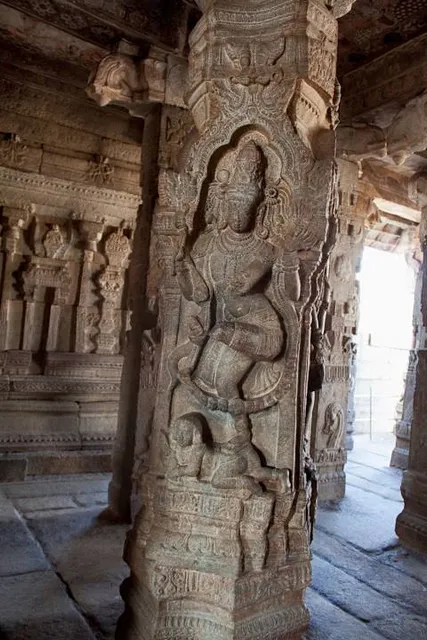
The Hanging Pillar of Lepakshi Temple The beautiful 16th century Veerabhadra temple, also known as Lepakshi temple, is located in the small historical village of Lepakshi in the Anantapur District of Andhra Pradesh, India, about 15 km east of Hindupur and approximately 120 km north of Bangalore. Built in the typical style of Vijayanagara architecture, the temple features many exquisite sculptures of god, goddesses, dancers and musicians, and hundreds of paintings all over the walls, columns and ceiling depicting stories from the epics of the Mahabharata, the Ramayana, and the Puranas. This includes a 24 feet by 14 feet fresco of Veerabhadra, the fiery god created by Shiva, on the ceiling, which is the largest fresco of any single figure in India. At the front of the temple is a large Nandi (bull), the mount of Shiva, which is carved from a single block of stone, and is said to be one of the largest of its type in the world.

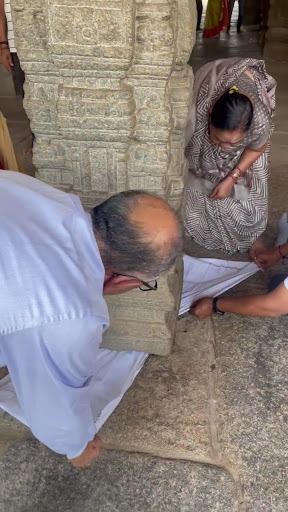
Veerabhadra temple is famed for another engineering wonder. Among the 70 stone pillars, there is one that hangs from the ceiling. The base of the pillar barely touches the ground and is possible to pass objects such as a thin sheet of paper or a piece of cloth from one side to the other. It is said that the pillar is a bit dislodged from its original position when a British engineer tried to move it in an unsuccessful attempt to uncover the secret of its support. Veerabhadra temple was built by the brothers Viranna and Virupanna, who were Governors under the Vijayanagar Empire during the reign of King Achutaraya.

The village Lepakshi holds a significant place in the great Indian epic Ramayana. Legend has it that the bird Jatayu, wounded by the king of Lanka, Ravana, fell here after a futile battle against the king who was carrying away Sita, the wife of Rama, the king of Ayodhya. When Rama reached the spot, he saw the bird and said compassionately to him, “Le Pakshi” — meaning “Arise, bird” in Telegu.

The mystery of the Hanging Pillar in Veerabhadra Swamy Lepakshi temple of Andhra Pradesh

The great Vijayanagara empire gave patronage to Indian artists. The Veerbhadra Lepakshi Temple at Anantapur in Andhra Pradesh is a marvel in stone. Many tried exploring how a stone pillar hangs but failed.

One big mystery at the Lepakshi temple is how the hanging piller was constructed or carved. While sixty-nine other pillars support the ceiling, one corner pillar does not touch the temple floor at all. There is a small gap between the temple floor and base of the pillar and you can pass thin objects like a piece of cloth from one side to the other. The Lepakshi temple, also known as Veerbhadra temple is one among the marvels of ancient Indian architecture. Carved out of rock, this magnificence in stone speaks volumes about the great Vijayanagara Empire.

The shrine dedicated to Lord Veerabhadra, the Lepakshi Temple is an exhibition of timeless art which includes beautiful frescoes and murals. Much of the temple is built on a low, rocky hill called Kurmasailam ("tortoise hill" in Telugu) - inspired by the shape of the hill.

As per the Puranas, the Veerabhadra temple was built by the sage Agastya. Moortis of Ganesha, Nandi, Veerabhadra, Shiva, Bhadrakali, Vishnu and Lakshmi are important deities in the temple. It is also believed that Pakshi Jatayu fell at this spot after his battle with Ravana to rescue Mata Sita. Lord Rama is said to have said to the brave bird “Le Pakshi” — ‘rise, bird’ in Telugu. This temple also houses a footprint that is believed to be of Mata Sita.

Walking around the temple, you will discover the glory of the Vijayanagara kingdom which gave patronage to artists who created these amazing pictorial representations. Carved in its walls are images of musicians and saints. You will see beautiful dancing Ganesha moorti, murtis of Mata Parvati and Lord Shiva. There is also a cave chamber here where Sage Agasthya is said...

   Read more

avatar
5.0
25w

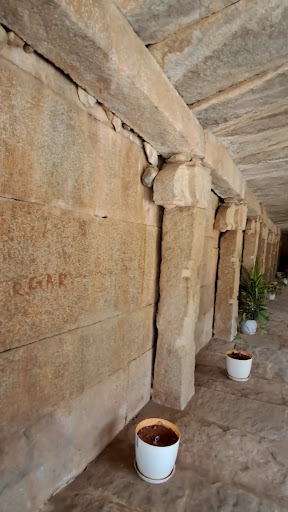
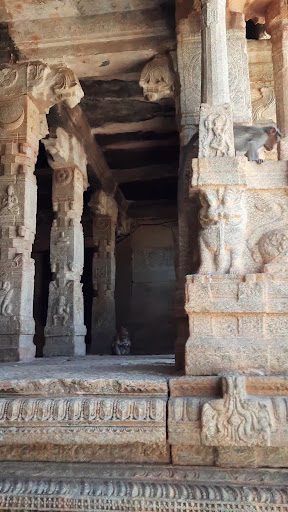
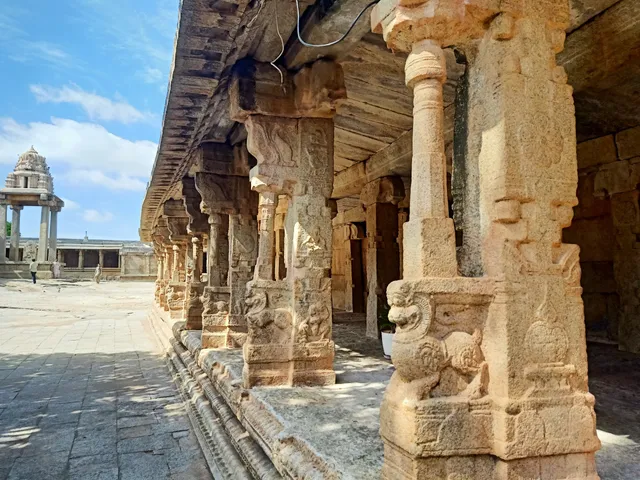
magnificent Veerabhadra Temple. This 16th-century architectural marvel is a testament to the grandeur of the Vijayanagara Empire and is steeped in rich history, intricate artistry, and captivating legends. The name "Lepakshi" itself is intertwined with a popular legend from the epic Ramayana. It is believed that when Ravana abducted Sita, the mythical bird Jatayu fought bravely to rescue her but was grievously wounded and fell at this spot. When Lord Rama arrived, he saw the dying bird and compassionately uttered the words "Le Pakshi," meaning "Rise, oh bird!" in Telugu, granting Jatayu moksha (salvation). This legend gives the village its evocative name. Vijayanagara Empire (16th Century): The Veerabhadra Temple is primarily attributed to two brothers, Virupanna Nayaka and Viranna, who served as governors under the Vijayanagara Empire during the reign of King Achyuta Deva Raya (around 1530-1542 AD). They were instrumental in the construction and development of this temple. Architectural Style: The temple is a brilliant example of Vijayanagara architecture, known for its elaborate carvings, vibrant frescoes, and monolithic structures. It's built on a low-lying granite hill known as Kurmasaila, which resembles the shape of a tortoise. While the current temple largely dates back to the Vijayanagara period, inscriptions suggest that the site had earlier historical significance, possibly with earlier structures or patronage from dynasties like the Satavahanas, Chalukyas, and Hoysalas. Sage Agastya is also believed to have installed a Linga here in ancient times. Architectural Highlights and Features: The main temple is dedicated to Lord Veerabhadra, a fierce incarnation of Lord Shiva. It comprises three main parts: Mukha Mandapa (Assembly Hall/Natya Mandapa/Ranga Mandapa): This is the most striking part of the temple, featuring around 70 intricately carved pillars. These pillars depict various deities, celestial dancers, musicians, and mythological scenes, showcasing the exceptional skill of the Vijayanagara artisans. Arda Mandapa (Antechamber): This connects the assembly hall to the sanctum sanctorum. Garbhagriha (Sanctum Sanctorum): This houses the near life-size image of Lord Veerabhadra, fully armed and adorned with skulls. There's also a cave chamber within the sanctum, where Sage Agastya is said to have lived. Hanging Pillar (Akasha Stambha): One of the most intriguing aspects of the temple is the famous "hanging pillar." Among the numerous pillars in the Natya Mandapa, one mysteriously hangs from the ceiling, with a visible gap between its base and the ground. Visitors often pass a thin sheet of paper or cloth underneath it, marveling at this architectural enigma that seems to defy gravity. Fresco Paintings: The ceilings of the temple are adorned with stunning fresco paintings, created using natural vegetable and mineral dyes. These murals depict stories from Hindu mythology, including the Ramayana, Mahabharata, and Puranas. The grandest among them is a massive fresco of Lord Veerabhadra. Kalyana Mandapa: An incomplete open-air hall with roofless pillars, the Kalyana Mandapa is believed to be the celestial wedding venue of Shiva and Parvati. Local folklore suggests that the construction was abandoned due to allegations of embezzlement against the two brothers, Virupanna and Viranna, who built the temple. Rust-colored stains on the walls outside are sometimes referred to as the blood from their blinded eyes as punishment. Nagalinga: A remarkable monolithic sculpture of a multi-headed cobra sheltering a Shiva Lingam, carved out of a single granite stone. Giant Nandi Statue: Located about 200 meters from the main temple, a colossal Nandi (Lord Shiva's bull vehicle) statue stands tall. Carved from a single massive granite stone, it is one...

   Read more
avatar
5.0
1y

Har Har Mahadev!

In the heart of history and devotion, the Lepakshi Temple stands as an awe-inspiring testament to the grandeur of faith and the resilience of architectural brilliance. Dedicated to Bhagavan Veerabhadra Swamy, a formidable incarnation of Mahadev, this temple is not merely a structure; it is a profound spiritual experience that echoes through time.

As you step into the sacred precincts of the Lepakshi Temple, the divine energy envelops you, inviting you to embark on a journey of reverence and self-discovery. The temple complex, nestled on the gentle slopes of Kumarasailam, aptly named for its resemblance to a tortoise, unfolds its spiritual tapestry with grace and majesty.

The temple is a harmonious blend of devotion and artistry, with shrines dedicated to Papanasesvara, Raghunatha, Parvati, Ramalinga, and Hanumalinga. Each corner of this sacred space tells a story of devotion, depicting the divine tales of gods and goddesses through intricately carved sculptures and sacred sanctuaries.

Divided into three sections—the Natya Mandapa, Ardha Mandapa, and the sanctum with the Kalyana Mandapa—the temple beckons visitors to immerse themselves in the celestial dance of life. The Natya Mandapa, a dance pavilion, resonates with the rhythms of devotion, while the Ardha Mandapa serves as a foyer, inviting pilgrims into the sanctum of spiritual serenity.

A crowning jewel of architectural marvel is the renowned Hanging Pillar—a silent testament to the ingenuity of the artisans who sculpted this divine abode. Among the 70 other pillars that stand in quiet splendor, the Hanging Pillar defies gravity, captivating the imagination of all who witness its mystical suspension. Locals, in a charming display of faith and pride, often slide newspapers beneath it, leaving visitors mesmerized by the spiritual enigma.

The story of the Hanging Pillar carries a whisper of resilience and steadfastness. Legend has it that this pillar, slightly dislodged from its original position, bears the mark of a British engineer's unsuccessful attempt to unlock the secret behind its gravity-defying magic. Yet, like the unwavering spirit of devotion, the pillar stands tall, untouched by the passage of time or the curious endeavors of those seeking to unravel its mystery.

As you leave the sacred grounds of Lepakshi Temple, you carry with you not only the memories of an architectural masterpiece but also the profound sense of spiritual inspiration. This temple, with its divine vibrations and tales etched in stone, encourages us to embrace our own resilience, stand tall in the face of challenges, and believe in the magic of unwavering faith.

Lepakshi Temple is not just a destination; it's a sacred sojourn that invites us to rise like the mythical bird after which it is named—Le Pakshi—soaring to new heights of spirituality, reverence, and...

   Read more
Page 1 of 7
Previous
Next

Posts

Traveling_CanucksTraveling_Canucks
The Hanging Pillar of Lepakshi Temple The beautiful 16th century Veerabhadra temple, also known as Lepakshi temple, is located in the small historical village of Lepakshi in the Anantapur District of Andhra Pradesh, India, about 15 km east of Hindupur and approximately 120 km north of Bangalore. Built in the typical style of Vijayanagara architecture, the temple features many exquisite sculptures of god, goddesses, dancers and musicians, and hundreds of paintings all over the walls, columns and ceiling depicting stories from the epics of the Mahabharata, the Ramayana, and the Puranas. This includes a 24 feet by 14 feet fresco of Veerabhadra, the fiery god created by Shiva, on the ceiling, which is the largest fresco of any single figure in India. At the front of the temple is a large Nandi (bull), the mount of Shiva, which is carved from a single block of stone, and is said to be one of the largest of its type in the world. Veerabhadra temple is famed for another engineering wonder. Among the 70 stone pillars, there is one that hangs from the ceiling. The base of the pillar barely touches the ground and is possible to pass objects such as a thin sheet of paper or a piece of cloth from one side to the other. It is said that the pillar is a bit dislodged from its original position when a British engineer tried to move it in an unsuccessful attempt to uncover the secret of its support. Veerabhadra temple was built by the brothers Viranna and Virupanna, who were Governors under the Vijayanagar Empire during the reign of King Achutaraya. The village Lepakshi holds a significant place in the great Indian epic Ramayana. Legend has it that the bird Jatayu, wounded by the king of Lanka, Ravana, fell here after a futile battle against the king who was carrying away Sita, the wife of Rama, the king of Ayodhya. When Rama reached the spot, he saw the bird and said compassionately to him, “Le Pakshi” — meaning “Arise, bird” in Telegu. The mystery of the Hanging Pillar in Veerabhadra Swamy Lepakshi temple of Andhra Pradesh The great Vijayanagara empire gave patronage to Indian artists. The Veerbhadra Lepakshi Temple at Anantapur in Andhra Pradesh is a marvel in stone. Many tried exploring how a stone pillar hangs but failed. One big mystery at the Lepakshi temple is how the hanging piller was constructed or carved. While sixty-nine other pillars support the ceiling, one corner pillar does not touch the temple floor at all. There is a small gap between the temple floor and base of the pillar and you can pass thin objects like a piece of cloth from one side to the other. The Lepakshi temple, also known as Veerbhadra temple is one among the marvels of ancient Indian architecture. Carved out of rock, this magnificence in stone speaks volumes about the great Vijayanagara Empire. The shrine dedicated to Lord Veerabhadra, the Lepakshi Temple is an exhibition of timeless art which includes beautiful frescoes and murals. Much of the temple is built on a low, rocky hill called Kurmasailam ("tortoise hill" in Telugu) - inspired by the shape of the hill. As per the Puranas, the Veerabhadra temple was built by the sage Agastya. Moortis of Ganesha, Nandi, Veerabhadra, Shiva, Bhadrakali, Vishnu and Lakshmi are important deities in the temple. It is also believed that Pakshi Jatayu fell at this spot after his battle with Ravana to rescue Mata Sita. Lord Rama is said to have said to the brave bird “Le Pakshi” — ‘rise, bird’ in Telugu. This temple also houses a footprint that is believed to be of Mata Sita. Walking around the temple, you will discover the glory of the Vijayanagara kingdom which gave patronage to artists who created these amazing pictorial representations. Carved in its walls are images of musicians and saints. You will see beautiful dancing Ganesha moorti, murtis of Mata Parvati and Lord Shiva. There is also a cave chamber here where Sage Agasthya is said to have lived.
Nithyadhar DevadigaNithyadhar Devadiga
magnificent Veerabhadra Temple. This 16th-century architectural marvel is a testament to the grandeur of the Vijayanagara Empire and is steeped in rich history, intricate artistry, and captivating legends. The name "Lepakshi" itself is intertwined with a popular legend from the epic Ramayana. It is believed that when Ravana abducted Sita, the mythical bird Jatayu fought bravely to rescue her but was grievously wounded and fell at this spot. When Lord Rama arrived, he saw the dying bird and compassionately uttered the words "Le Pakshi," meaning "Rise, oh bird!" in Telugu, granting Jatayu moksha (salvation). This legend gives the village its evocative name. Vijayanagara Empire (16th Century): The Veerabhadra Temple is primarily attributed to two brothers, Virupanna Nayaka and Viranna, who served as governors under the Vijayanagara Empire during the reign of King Achyuta Deva Raya (around 1530-1542 AD). They were instrumental in the construction and development of this temple. Architectural Style: The temple is a brilliant example of Vijayanagara architecture, known for its elaborate carvings, vibrant frescoes, and monolithic structures. It's built on a low-lying granite hill known as Kurmasaila, which resembles the shape of a tortoise. While the current temple largely dates back to the Vijayanagara period, inscriptions suggest that the site had earlier historical significance, possibly with earlier structures or patronage from dynasties like the Satavahanas, Chalukyas, and Hoysalas. Sage Agastya is also believed to have installed a Linga here in ancient times. Architectural Highlights and Features: The main temple is dedicated to Lord Veerabhadra, a fierce incarnation of Lord Shiva. It comprises three main parts: * Mukha Mandapa (Assembly Hall/Natya Mandapa/Ranga Mandapa): This is the most striking part of the temple, featuring around 70 intricately carved pillars. These pillars depict various deities, celestial dancers, musicians, and mythological scenes, showcasing the exceptional skill of the Vijayanagara artisans. * Arda Mandapa (Antechamber): This connects the assembly hall to the sanctum sanctorum. * Garbhagriha (Sanctum Sanctorum): This houses the near life-size image of Lord Veerabhadra, fully armed and adorned with skulls. There's also a cave chamber within the sanctum, where Sage Agastya is said to have lived. * Hanging Pillar (Akasha Stambha): One of the most intriguing aspects of the temple is the famous "hanging pillar." Among the numerous pillars in the Natya Mandapa, one mysteriously hangs from the ceiling, with a visible gap between its base and the ground. Visitors often pass a thin sheet of paper or cloth underneath it, marveling at this architectural enigma that seems to defy gravity. * Fresco Paintings: The ceilings of the temple are adorned with stunning fresco paintings, created using natural vegetable and mineral dyes. These murals depict stories from Hindu mythology, including the Ramayana, Mahabharata, and Puranas. The grandest among them is a massive fresco of Lord Veerabhadra. * Kalyana Mandapa: An incomplete open-air hall with roofless pillars, the Kalyana Mandapa is believed to be the celestial wedding venue of Shiva and Parvati. Local folklore suggests that the construction was abandoned due to allegations of embezzlement against the two brothers, Virupanna and Viranna, who built the temple. Rust-colored stains on the walls outside are sometimes referred to as the blood from their blinded eyes as punishment. * Nagalinga: A remarkable monolithic sculpture of a multi-headed cobra sheltering a Shiva Lingam, carved out of a single granite stone. * Giant Nandi Statue: Located about 200 meters from the main temple, a colossal Nandi (Lord Shiva's bull vehicle) statue stands tall. Carved from a single massive granite stone, it is one of the large
Chandan Prakash JhaChandan Prakash Jha
Har Har Mahadev! In the heart of history and devotion, the Lepakshi Temple stands as an awe-inspiring testament to the grandeur of faith and the resilience of architectural brilliance. Dedicated to Bhagavan Veerabhadra Swamy, a formidable incarnation of Mahadev, this temple is not merely a structure; it is a profound spiritual experience that echoes through time. As you step into the sacred precincts of the Lepakshi Temple, the divine energy envelops you, inviting you to embark on a journey of reverence and self-discovery. The temple complex, nestled on the gentle slopes of Kumarasailam, aptly named for its resemblance to a tortoise, unfolds its spiritual tapestry with grace and majesty. The temple is a harmonious blend of devotion and artistry, with shrines dedicated to Papanasesvara, Raghunatha, Parvati, Ramalinga, and Hanumalinga. Each corner of this sacred space tells a story of devotion, depicting the divine tales of gods and goddesses through intricately carved sculptures and sacred sanctuaries. Divided into three sections—the Natya Mandapa, Ardha Mandapa, and the sanctum with the Kalyana Mandapa—the temple beckons visitors to immerse themselves in the celestial dance of life. The Natya Mandapa, a dance pavilion, resonates with the rhythms of devotion, while the Ardha Mandapa serves as a foyer, inviting pilgrims into the sanctum of spiritual serenity. A crowning jewel of architectural marvel is the renowned Hanging Pillar—a silent testament to the ingenuity of the artisans who sculpted this divine abode. Among the 70 other pillars that stand in quiet splendor, the Hanging Pillar defies gravity, captivating the imagination of all who witness its mystical suspension. Locals, in a charming display of faith and pride, often slide newspapers beneath it, leaving visitors mesmerized by the spiritual enigma. The story of the Hanging Pillar carries a whisper of resilience and steadfastness. Legend has it that this pillar, slightly dislodged from its original position, bears the mark of a British engineer's unsuccessful attempt to unlock the secret behind its gravity-defying magic. Yet, like the unwavering spirit of devotion, the pillar stands tall, untouched by the passage of time or the curious endeavors of those seeking to unravel its mystery. As you leave the sacred grounds of Lepakshi Temple, you carry with you not only the memories of an architectural masterpiece but also the profound sense of spiritual inspiration. This temple, with its divine vibrations and tales etched in stone, encourages us to embrace our own resilience, stand tall in the face of challenges, and believe in the magic of unwavering faith. Lepakshi Temple is not just a destination; it's a sacred sojourn that invites us to rise like the mythical bird after which it is named—Le Pakshi—soaring to new heights of spirituality, reverence, and inspiration.
See more posts
See more posts
hotel
Find your stay

Pet-friendly Hotels in Andhra Pradesh

Find a cozy hotel nearby and make it a full experience.

The Hanging Pillar of Lepakshi Temple The beautiful 16th century Veerabhadra temple, also known as Lepakshi temple, is located in the small historical village of Lepakshi in the Anantapur District of Andhra Pradesh, India, about 15 km east of Hindupur and approximately 120 km north of Bangalore. Built in the typical style of Vijayanagara architecture, the temple features many exquisite sculptures of god, goddesses, dancers and musicians, and hundreds of paintings all over the walls, columns and ceiling depicting stories from the epics of the Mahabharata, the Ramayana, and the Puranas. This includes a 24 feet by 14 feet fresco of Veerabhadra, the fiery god created by Shiva, on the ceiling, which is the largest fresco of any single figure in India. At the front of the temple is a large Nandi (bull), the mount of Shiva, which is carved from a single block of stone, and is said to be one of the largest of its type in the world. Veerabhadra temple is famed for another engineering wonder. Among the 70 stone pillars, there is one that hangs from the ceiling. The base of the pillar barely touches the ground and is possible to pass objects such as a thin sheet of paper or a piece of cloth from one side to the other. It is said that the pillar is a bit dislodged from its original position when a British engineer tried to move it in an unsuccessful attempt to uncover the secret of its support. Veerabhadra temple was built by the brothers Viranna and Virupanna, who were Governors under the Vijayanagar Empire during the reign of King Achutaraya. The village Lepakshi holds a significant place in the great Indian epic Ramayana. Legend has it that the bird Jatayu, wounded by the king of Lanka, Ravana, fell here after a futile battle against the king who was carrying away Sita, the wife of Rama, the king of Ayodhya. When Rama reached the spot, he saw the bird and said compassionately to him, “Le Pakshi” — meaning “Arise, bird” in Telegu. The mystery of the Hanging Pillar in Veerabhadra Swamy Lepakshi temple of Andhra Pradesh The great Vijayanagara empire gave patronage to Indian artists. The Veerbhadra Lepakshi Temple at Anantapur in Andhra Pradesh is a marvel in stone. Many tried exploring how a stone pillar hangs but failed. One big mystery at the Lepakshi temple is how the hanging piller was constructed or carved. While sixty-nine other pillars support the ceiling, one corner pillar does not touch the temple floor at all. There is a small gap between the temple floor and base of the pillar and you can pass thin objects like a piece of cloth from one side to the other. The Lepakshi temple, also known as Veerbhadra temple is one among the marvels of ancient Indian architecture. Carved out of rock, this magnificence in stone speaks volumes about the great Vijayanagara Empire. The shrine dedicated to Lord Veerabhadra, the Lepakshi Temple is an exhibition of timeless art which includes beautiful frescoes and murals. Much of the temple is built on a low, rocky hill called Kurmasailam ("tortoise hill" in Telugu) - inspired by the shape of the hill. As per the Puranas, the Veerabhadra temple was built by the sage Agastya. Moortis of Ganesha, Nandi, Veerabhadra, Shiva, Bhadrakali, Vishnu and Lakshmi are important deities in the temple. It is also believed that Pakshi Jatayu fell at this spot after his battle with Ravana to rescue Mata Sita. Lord Rama is said to have said to the brave bird “Le Pakshi” — ‘rise, bird’ in Telugu. This temple also houses a footprint that is believed to be of Mata Sita. Walking around the temple, you will discover the glory of the Vijayanagara kingdom which gave patronage to artists who created these amazing pictorial representations. Carved in its walls are images of musicians and saints. You will see beautiful dancing Ganesha moorti, murtis of Mata Parvati and Lord Shiva. There is also a cave chamber here where Sage Agasthya is said to have lived.
Traveling_Canucks

Traveling_Canucks

hotel
Find your stay

Affordable Hotels in Andhra Pradesh

Find a cozy hotel nearby and make it a full experience.

Get the Appoverlay
Get the AppOne tap to find yournext favorite spots!
magnificent Veerabhadra Temple. This 16th-century architectural marvel is a testament to the grandeur of the Vijayanagara Empire and is steeped in rich history, intricate artistry, and captivating legends. The name "Lepakshi" itself is intertwined with a popular legend from the epic Ramayana. It is believed that when Ravana abducted Sita, the mythical bird Jatayu fought bravely to rescue her but was grievously wounded and fell at this spot. When Lord Rama arrived, he saw the dying bird and compassionately uttered the words "Le Pakshi," meaning "Rise, oh bird!" in Telugu, granting Jatayu moksha (salvation). This legend gives the village its evocative name. Vijayanagara Empire (16th Century): The Veerabhadra Temple is primarily attributed to two brothers, Virupanna Nayaka and Viranna, who served as governors under the Vijayanagara Empire during the reign of King Achyuta Deva Raya (around 1530-1542 AD). They were instrumental in the construction and development of this temple. Architectural Style: The temple is a brilliant example of Vijayanagara architecture, known for its elaborate carvings, vibrant frescoes, and monolithic structures. It's built on a low-lying granite hill known as Kurmasaila, which resembles the shape of a tortoise. While the current temple largely dates back to the Vijayanagara period, inscriptions suggest that the site had earlier historical significance, possibly with earlier structures or patronage from dynasties like the Satavahanas, Chalukyas, and Hoysalas. Sage Agastya is also believed to have installed a Linga here in ancient times. Architectural Highlights and Features: The main temple is dedicated to Lord Veerabhadra, a fierce incarnation of Lord Shiva. It comprises three main parts: * Mukha Mandapa (Assembly Hall/Natya Mandapa/Ranga Mandapa): This is the most striking part of the temple, featuring around 70 intricately carved pillars. These pillars depict various deities, celestial dancers, musicians, and mythological scenes, showcasing the exceptional skill of the Vijayanagara artisans. * Arda Mandapa (Antechamber): This connects the assembly hall to the sanctum sanctorum. * Garbhagriha (Sanctum Sanctorum): This houses the near life-size image of Lord Veerabhadra, fully armed and adorned with skulls. There's also a cave chamber within the sanctum, where Sage Agastya is said to have lived. * Hanging Pillar (Akasha Stambha): One of the most intriguing aspects of the temple is the famous "hanging pillar." Among the numerous pillars in the Natya Mandapa, one mysteriously hangs from the ceiling, with a visible gap between its base and the ground. Visitors often pass a thin sheet of paper or cloth underneath it, marveling at this architectural enigma that seems to defy gravity. * Fresco Paintings: The ceilings of the temple are adorned with stunning fresco paintings, created using natural vegetable and mineral dyes. These murals depict stories from Hindu mythology, including the Ramayana, Mahabharata, and Puranas. The grandest among them is a massive fresco of Lord Veerabhadra. * Kalyana Mandapa: An incomplete open-air hall with roofless pillars, the Kalyana Mandapa is believed to be the celestial wedding venue of Shiva and Parvati. Local folklore suggests that the construction was abandoned due to allegations of embezzlement against the two brothers, Virupanna and Viranna, who built the temple. Rust-colored stains on the walls outside are sometimes referred to as the blood from their blinded eyes as punishment. * Nagalinga: A remarkable monolithic sculpture of a multi-headed cobra sheltering a Shiva Lingam, carved out of a single granite stone. * Giant Nandi Statue: Located about 200 meters from the main temple, a colossal Nandi (Lord Shiva's bull vehicle) statue stands tall. Carved from a single massive granite stone, it is one of the large
Nithyadhar Devadiga

Nithyadhar Devadiga

hotel
Find your stay

The Coolest Hotels You Haven't Heard Of (Yet)

Find a cozy hotel nearby and make it a full experience.

hotel
Find your stay

Trending Stays Worth the Hype in Andhra Pradesh

Find a cozy hotel nearby and make it a full experience.

Har Har Mahadev! In the heart of history and devotion, the Lepakshi Temple stands as an awe-inspiring testament to the grandeur of faith and the resilience of architectural brilliance. Dedicated to Bhagavan Veerabhadra Swamy, a formidable incarnation of Mahadev, this temple is not merely a structure; it is a profound spiritual experience that echoes through time. As you step into the sacred precincts of the Lepakshi Temple, the divine energy envelops you, inviting you to embark on a journey of reverence and self-discovery. The temple complex, nestled on the gentle slopes of Kumarasailam, aptly named for its resemblance to a tortoise, unfolds its spiritual tapestry with grace and majesty. The temple is a harmonious blend of devotion and artistry, with shrines dedicated to Papanasesvara, Raghunatha, Parvati, Ramalinga, and Hanumalinga. Each corner of this sacred space tells a story of devotion, depicting the divine tales of gods and goddesses through intricately carved sculptures and sacred sanctuaries. Divided into three sections—the Natya Mandapa, Ardha Mandapa, and the sanctum with the Kalyana Mandapa—the temple beckons visitors to immerse themselves in the celestial dance of life. The Natya Mandapa, a dance pavilion, resonates with the rhythms of devotion, while the Ardha Mandapa serves as a foyer, inviting pilgrims into the sanctum of spiritual serenity. A crowning jewel of architectural marvel is the renowned Hanging Pillar—a silent testament to the ingenuity of the artisans who sculpted this divine abode. Among the 70 other pillars that stand in quiet splendor, the Hanging Pillar defies gravity, captivating the imagination of all who witness its mystical suspension. Locals, in a charming display of faith and pride, often slide newspapers beneath it, leaving visitors mesmerized by the spiritual enigma. The story of the Hanging Pillar carries a whisper of resilience and steadfastness. Legend has it that this pillar, slightly dislodged from its original position, bears the mark of a British engineer's unsuccessful attempt to unlock the secret behind its gravity-defying magic. Yet, like the unwavering spirit of devotion, the pillar stands tall, untouched by the passage of time or the curious endeavors of those seeking to unravel its mystery. As you leave the sacred grounds of Lepakshi Temple, you carry with you not only the memories of an architectural masterpiece but also the profound sense of spiritual inspiration. This temple, with its divine vibrations and tales etched in stone, encourages us to embrace our own resilience, stand tall in the face of challenges, and believe in the magic of unwavering faith. Lepakshi Temple is not just a destination; it's a sacred sojourn that invites us to rise like the mythical bird after which it is named—Le Pakshi—soaring to new heights of spirituality, reverence, and inspiration.
Chandan Prakash Jha

Chandan Prakash Jha

See more posts
See more posts