HTML SitemapExplore
logo
Find Things to DoFind The Best Restaurants

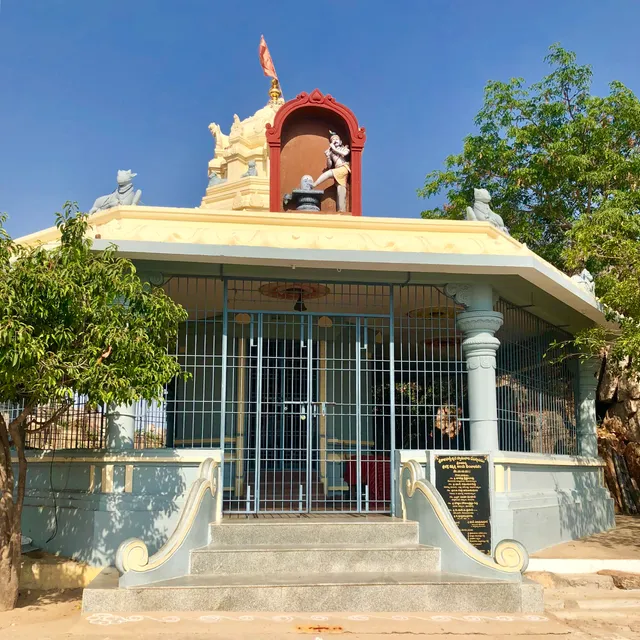
Srikalahasti Temple — Attraction in Andhra Pradesh

Name
Srikalahasti Temple
Description
Nearby attractions
Kannappa Nayanar Temple
PMXX+QMX, Kondamitta, Srikalahasti, Andhra Pradesh 517644, India
Bharadwaja Theertham
3/371, Bazaar St, Bahadur Pet, Srikalahasti, Andhra Pradesh 517644, India
Nearby restaurants
Shree Kalahasti Temple Staying N Food
PMXW+HW3, Srikalahasti, Andhra Pradesh 517644, India
Saravana Bhavan Veg Hotel
PMXW+JW3, Bazaar St, Srikalahasti, Andhra Pradesh 517644, India
Mgm Restaurant
Sannidhi St, Srikalahasti, Andhra Pradesh 517644, India
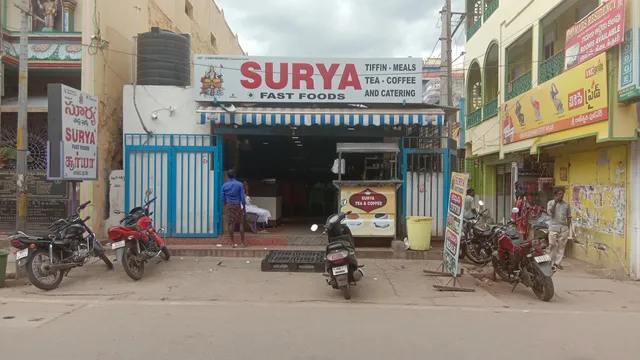
Surya Fast Foods
3/371, Bazaar St, Bahadur Pet, Srikalahasti, Andhra Pradesh 517644, India
Sri Kalahasteeswara Aarya Vysya Vasavi Nityanna Sathram Trust
4/235B, Sannidhi St, beside SSR Residency, Srikalahasti, Andhra Pradesh 517644, India
Sri Navayuga Hotel
Nagari St, Bahadur Pet, Srikalahasti, Andhra Pradesh 517644, India
Trinetra Restaurant
Temple Rd, 4th Gate, Srikalahasti, Andhra Pradesh 517644, India
saravana
Kondamitta, Srikalahasti, Andhra Pradesh 517644, India
HFC Restaurant
Agraharam Cross, Panagal Rd, Srikalahasti, Andhra Pradesh 517640, India
SK Food Court
SRIRAM NAGAR COLONY, 16/754/1, VINAYAKA STREET, Srikalahasti, Andhra Pradesh 517640, India
Nearby hotels
Hotel Vijaya Grand
Opp 4th Gate, Sannidhi Street, Srikalahasti Devasthanam, Tirupati District, Srikalahasti, Andhra Pradesh 517644, India
Hotel Bluestone 2
4-540/19, Sannidhi St, Srikalahasti, Andhra Pradesh 517644, India
K P R Residency
3/546, Bazaar St, Bahadur Pet, Srikalahasti, Andhra Pradesh 517644, India
Trinethra Guest House
PMXX+46W, Temple Rd, Bahadur Pet, Srikalahasti, Andhra Pradesh 517644, India
Pickurstay Shubhanga Residency
3/371, Bazaar St, Bahadur Pet, Srikalahasti, Andhra Pradesh 517644, India
Srikalahasthi Vasavi Nithya Anna Santharpana Samstha
3/366, Bazaar St, Kondamitta, Srikalahasti, Andhra Pradesh 517644, India
ACR residency
QM2X+9WC, Bahadur Pet, Srikalahasti, Andhra Pradesh 517644, India
SSR HOTEL SRIKALAHASTI
PMWW+FW9 4/235B, 4/235 B, Sannidhi St, near 4th gate of Sri kalahastswara temple, Srikalahasti, Andhra Pradesh 517644, India
SKV Residency
Sannidhi St, Srikalahasti, Andhra Pradesh 517644, India
The Lotus Park Hotel
vidhi, Devasthanam 4th Gate, Sannidhi, Temple Rd, Backside, Srikalahasti, Andhra Pradesh 517644, India
Related posts
Keywords
Srikalahasti Temple tourism.Srikalahasti Temple hotels.Srikalahasti Temple bed and breakfast. flights to Srikalahasti Temple.Srikalahasti Temple attractions.Srikalahasti Temple restaurants.Srikalahasti Temple travel.Srikalahasti Temple travel guide.Srikalahasti Temple travel blog.Srikalahasti Temple pictures.Srikalahasti Temple photos.Srikalahasti Temple travel tips.Srikalahasti Temple maps.Srikalahasti Temple things to do.
Srikalahasti Temple things to do, attractions, restaurants, events info and trip planning
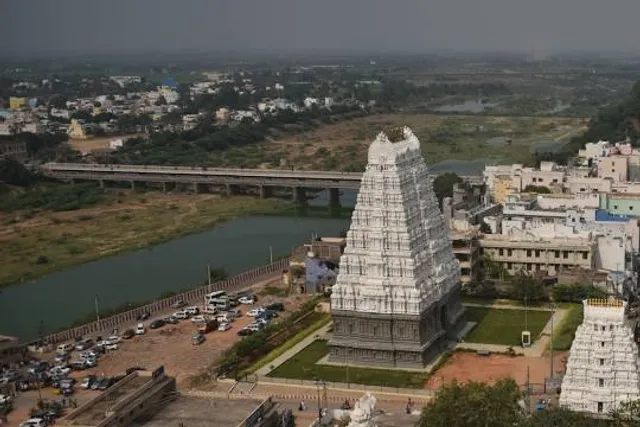
Srikalahasti Temple
IndiaAndhra PradeshSrikalahasti Temple

Basic Info

Srikalahasti Temple

Srikalahasti, Andhra Pradesh 517644, India
4.7(35.6K)
Closed
Save
spot

Ratings & Description

Info

Cultural
Accessibility
attractions: Kannappa Nayanar Temple, Bharadwaja Theertham, restaurants: Shree Kalahasti Temple Staying N Food, Saravana Bhavan Veg Hotel, Mgm Restaurant, Surya Fast Foods, Sri Kalahasteeswara Aarya Vysya Vasavi Nityanna Sathram Trust, Sri Navayuga Hotel, Trinetra Restaurant, saravana, HFC Restaurant, SK Food Court
logoLearn more insights from Wanderboat AI.
Website
srikalahasthitemple.com
Open hoursSee all hours
Sat6 AM - 9 PMClosed

Plan your stay

hotel
Pet-friendly Hotels in Andhra Pradesh
Find a cozy hotel nearby and make it a full experience.
hotel
Affordable Hotels in Andhra Pradesh
Find a cozy hotel nearby and make it a full experience.
hotel
The Coolest Hotels You Haven't Heard Of (Yet)
Find a cozy hotel nearby and make it a full experience.
hotel
Trending Stays Worth the Hype in Andhra Pradesh
Find a cozy hotel nearby and make it a full experience.

Reviews

Nearby attractions of Srikalahasti Temple

Kannappa Nayanar Temple

Bharadwaja Theertham

Kannappa Nayanar Temple

Kannappa Nayanar Temple

4.5

(172)

Open 24 hours
Click for details
Bharadwaja Theertham

Bharadwaja Theertham

4.4

(634)

Closed
Click for details

Nearby restaurants of Srikalahasti Temple

Shree Kalahasti Temple Staying N Food

Saravana Bhavan Veg Hotel

Mgm Restaurant

Surya Fast Foods

Sri Kalahasteeswara Aarya Vysya Vasavi Nityanna Sathram Trust

Sri Navayuga Hotel

Trinetra Restaurant

saravana

HFC Restaurant

SK Food Court

Shree Kalahasti Temple Staying N Food

Shree Kalahasti Temple Staying N Food

4.5

(280)

Click for details
Saravana Bhavan Veg Hotel

Saravana Bhavan Veg Hotel

2.9

(271)

Click for details
Mgm Restaurant

Mgm Restaurant

3.8

(214)

Click for details
Surya Fast Foods

Surya Fast Foods

3.8

(208)

Click for details
Get the Appoverlay
Get the AppOne tap to find yournext favorite spots!
Wanderboat LogoWanderboat

Your everyday Al companion for getaway ideas

CompanyAbout Us
InformationAI Trip PlannerSitemap
SocialXInstagramTiktokLinkedin
LegalTerms of ServicePrivacy Policy

Get the app

© 2025 Wanderboat. All rights reserved.
logo

Reviews of Srikalahasti Temple

4.7
(35,611)
avatar
5.0
34w

The Sri Kalahasti Temple, also known as Srikalahasteeswara Temple, is a renowned Hindu temple dedicated to Lord Shiva. It is located in the town of Srikalahasti in the Tirupati district of Andhra Pradesh, India. Here's a detailed overview of the temple:

Deity and Significance:

The primary deity is Lord Shiva, worshipped as Kalahasteeswara, representing the Vayu Lingam (wind element), one of the Pancha Bhoota Sthalams (five elements).

His consort, Goddess Parvati, is worshipped as Gnanaprasunambika (the giver of knowledge).

The temple is considered "Dakshina Kailasam" (Southern abode of Shiva) and "Kashi of the South" due to its immense religious significance.

It is particularly famous as a Rahu-Ketu Kshetra, where special poojas are performed to mitigate the astrological effects of these celestial bodies.

Legend and History:

The name Srikalahasti is derived from three ardent devotees of Lord Shiva: a spider (Sri), a serpent (Kala), and an elephant (Hasti), who attained Moksha (liberation) for their unwavering devotion. Their stories are depicted within the temple.

Another significant legend is that of Kannappa, a hunter who offered his eyes to stop the bleeding from the Shiva Lingam, demonstrating his extreme devotion.

The inner temple is believed to have been constructed around the 5th century during the Pallava period.

The main structure and outer temple were largely built in the 11th century by the Chola emperor, Rajendra Chola I.

The magnificent Gopurams (entrance towers) were constructed by Kulottunga Chola I during the 11th century.

The Vijayanagara dynasty, particularly King Krishnadevaraya in 1516 AD, also made significant contributions, including the 100-pillared hall.

Architecture:

The temple showcases the Dravidian architectural style, characterized by intricate carvings and sculptures.

It is situated at the base of a hill, with the Swarnamukhi River flowing nearby.

The main entrance faces south, and the sanctum sanctorum faces west.

The Shiva Lingam is made of white stone and is said to be self-manifested (Swayambhu). It has markings representing the spider, serpent, and elephant.

The temple complex has several Mandapams (halls) with intricately carved pillars, including the 100-pillared hall.

There are shrines dedicated to various other deities, including Ganesha, Gnanaprasunambika, and others.

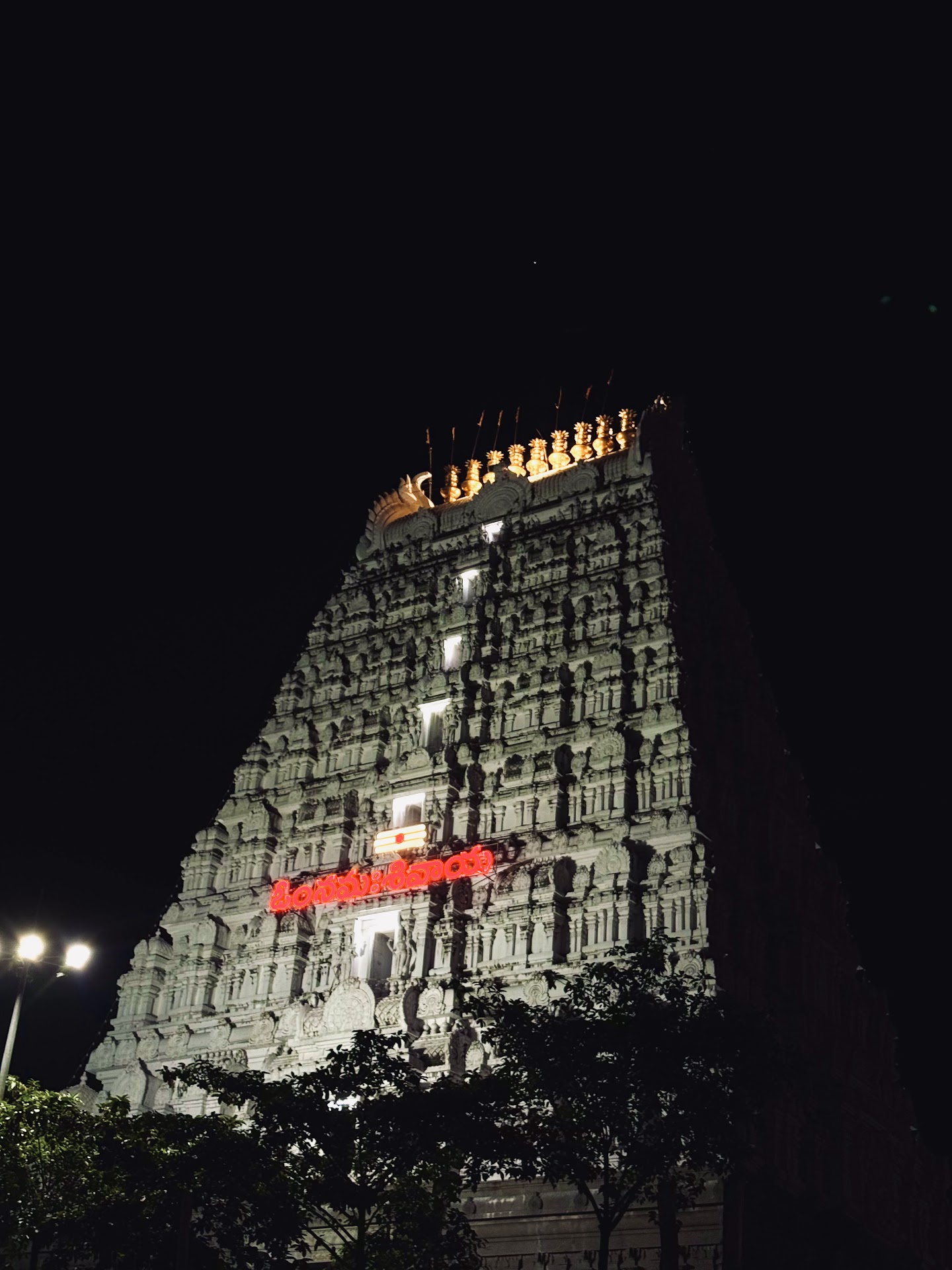
The temple has three main Gopurams, with the main Rajagopuram reaching a height of approximately 120 feet.

Unique Aspects:

Vayu Lingam: The Lingam is worshipped as the embodiment of wind, and devotees can feel subtle movements even when there is no apparent breeze. A lamp inside the sanctum is also said to flicker constantly despite the absence of wind.

Rahu-Ketu Pooja: This temple is renowned for its powerful Rahu-Ketu Pooja, believed to alleviate negative astrological effects.

Eternal Flame: An eternal flame near the Akasha Linga (representing space) is said to burn continuously without external fuel.

Unchanging Structure: Some believe that the temple's structure remains largely unchanged over long periods.

River Swarnamukhi: The river is considered sacred and is believed to cleanse devotees of their sins.

Other Notable Points:

The temple is mentioned in the works of Tamil poets like Nakkeerar and Telugu poets like Dhoorjati, highlighting its ancient significance.

It is one of the Paadal Petra Sthalams, revered in the Tevaram hymns of Saivite saints.

The temple remains open even during solar and lunar eclipses, unlike most other temples.

Visiting the Sri Kalahasti Temple offers a profound spiritual experience and a chance to witness remarkable architecture steeped in rich history and...

   Read more
avatar
5.0
49w

Review of Srikalahasti Temple

The Srikalahasti Temple, located in the town of Srikalahasti in Andhra Pradesh, is a revered spiritual site dedicated to Lord Shiva. Renowned as one of the Panchabhoota Sthalas representing the element of air (Vayu), this temple holds immense religious and historical significance. The temple attracts thousands of devotees and tourists year-round, particularly those seeking blessings and performing rituals like Rahu-Ketu dosha nivarana pooja.

The temple architecture is awe-inspiring, showcasing the Dravidian style with intricate carvings, towering gopurams, and meticulously detailed sculptures that depict mythological stories. The main sanctum houses the presiding deity, Lord Shiva as Kalahasteeswara, and Goddess Parvati as Gnana Prasunambika. The sanctity of the temple is further enhanced by its association with ancient legends, particularly the story of a spider, a snake, and an elephant who worshipped Lord Shiva here.

One of the key highlights of the temple is the Rahu-Ketu pooja, a unique ritual performed by devotees to overcome planetary afflictions. The temple staff is generally well-organized in guiding pilgrims through the process. However, the pooja areas can become crowded, especially during peak days, making it challenging for some visitors to participate comfortably.

The temple’s location amidst natural surroundings adds to its serene ambiance. The nearby Swarnamukhi River enhances the spiritual charm of the area. Many pilgrims also take a dip in the river before entering the temple, a practice believed to purify the soul.

Basic facilities such as parking, seating, and restrooms are available but could benefit from better maintenance. The queue system is generally well-managed, although during festivals like Maha Shivaratri, the temple experiences an overwhelming crowd, which can test the patience of visitors. Accessibility for elderly and differently-abled devotees is limited, and the temple authorities could make improvements in this regard.

The nearby marketplace is vibrant, offering a variety of souvenirs, flowers, and pooja items. Local eateries provide decent options for refreshments, though hygiene standards may vary. For those seeking a more comprehensive experience, guided tours are available, offering detailed insights into the temple’s history and spiritual significance.

Overall, Srikalahasti Temple is a must-visit destination for anyone interested in spirituality, history, and architecture. Its unique rituals, serene environment, and rich heritage make it a profound experience for devotees and tourists alike. While the temple does face challenges in terms of crowd management and infrastructure, its spiritual essence and cultural grandeur remain unparalleled. A visit to this temple is truly a journey of faith...

   Read more
avatar
5.0
25w

⭐️⭐️⭐️⭐️⭐️ Spiritually Powerful Experience at Srikalahasti Temple 🙏

Hi all, Me and my friend visited the Srikalahasti Temple on 01-06-2025 early morning at 6:22 AM. I had a personal spiritual intention and wanted to perform the Special Rahu-Kethu Sarpa Dosha Nivarana Pooja.

🕉️ About the Pooja: I opted for the ₹1500 ticket. With this ticket, the temple provided a pooja samagri kit, which included:

A sacred silver snake (used during the ritual)

Turmeric powder, Kumkum

Jasmine and rose flowers

Black cloth and black lentils (for Rahu)

Red cloth and brown moong dal (for Ketu)

The pooja was done inside the temple at Gate No: 4 and lasted around 15–20 minutes. It was well-organized despite the crowd. After the pooja, I used the same ₹1500 ticket for darshan, which allowed us entry via the ₹200 line, without needing a separate darshan ticket. Even though there was a huge crowd of devotees, darshan was completed in 15 minutes, which was quite surprising and satisfying.

🍛 Annaprasadam: We also had free food (Annaprasadam) at the backside of the temple, Gate No: 04. It was simple, hot, and spiritually fulfilling.

🎟️ Ticket Prices for Rahu-Kethu Pooja: Here are the available options depending on location and budget:

Ticket Price Location ₹500 Hall outside temple premises ₹750 A/C Hall within temple premises ₹1500 Inside temple (Gate No: 4) ₹2500 Inside temple (closer to sanctum) ₹5000 Special VIP location (inside temple)

🛕 Temple History & Significance: The Srikalahasti Temple is one of the most important Shiva temples in South India, especially known for Rahu-Ketu Poojas and its spiritual power to remove doshas (curses).

Historical Timeline:

Foundation: Linked to sage Kalahasti’s penance and Shiva’s manifestation as a Vayu Lingam (air element).

5th Century: Inner sanctum built during Pallava reign.

11th Century: Chola Emperor Rajendra Chola I expanded the temple; magnificent Gopurams added by Kulottunga Chola I.

16th Century: The towering Rajagopuram (120 ft high) constructed by the Vijayanagara Empire.

Pancha Bhoota Stalam: Represents Air (Vayu) among the five elements.

Legends: Named after Sri (spider), Kala (snake), and Hasti (elephant) who worshipped Lord Shiva and attained moksha.

Cultural Mentions: Referenced in Tamil and Telugu literature by poets Nakkeerar and Dhoorjati, proving its ancient spiritual presence.

🙏 Final Thoughts: ✨ Truly a divine experience – the temple radiates power and peace. 👍 The staff were helpful, and the pooja process was systematic. ✅ Would definitely recommend anyone struggling with Rahu-Ketu doshas or seeking spiritual clarity to visit. 📸 Also, don’t forget to explore the temple’s rich architecture and historical essence.

Thank you, Srikalahasti Temple, for the divine grace. 🙏 Om...

   Read more
Page 1 of 7
Previous
Next

Posts

Kishore DKKishore DK
Review of Srikalahasti Temple The Srikalahasti Temple, located in the town of Srikalahasti in Andhra Pradesh, is a revered spiritual site dedicated to Lord Shiva. Renowned as one of the Panchabhoota Sthalas representing the element of air (Vayu), this temple holds immense religious and historical significance. The temple attracts thousands of devotees and tourists year-round, particularly those seeking blessings and performing rituals like Rahu-Ketu dosha nivarana pooja. The temple architecture is awe-inspiring, showcasing the Dravidian style with intricate carvings, towering gopurams, and meticulously detailed sculptures that depict mythological stories. The main sanctum houses the presiding deity, Lord Shiva as Kalahasteeswara, and Goddess Parvati as Gnana Prasunambika. The sanctity of the temple is further enhanced by its association with ancient legends, particularly the story of a spider, a snake, and an elephant who worshipped Lord Shiva here. One of the key highlights of the temple is the Rahu-Ketu pooja, a unique ritual performed by devotees to overcome planetary afflictions. The temple staff is generally well-organized in guiding pilgrims through the process. However, the pooja areas can become crowded, especially during peak days, making it challenging for some visitors to participate comfortably. The temple’s location amidst natural surroundings adds to its serene ambiance. The nearby Swarnamukhi River enhances the spiritual charm of the area. Many pilgrims also take a dip in the river before entering the temple, a practice believed to purify the soul. Basic facilities such as parking, seating, and restrooms are available but could benefit from better maintenance. The queue system is generally well-managed, although during festivals like Maha Shivaratri, the temple experiences an overwhelming crowd, which can test the patience of visitors. Accessibility for elderly and differently-abled devotees is limited, and the temple authorities could make improvements in this regard. The nearby marketplace is vibrant, offering a variety of souvenirs, flowers, and pooja items. Local eateries provide decent options for refreshments, though hygiene standards may vary. For those seeking a more comprehensive experience, guided tours are available, offering detailed insights into the temple’s history and spiritual significance. Overall, Srikalahasti Temple is a must-visit destination for anyone interested in spirituality, history, and architecture. Its unique rituals, serene environment, and rich heritage make it a profound experience for devotees and tourists alike. While the temple does face challenges in terms of crowd management and infrastructure, its spiritual essence and cultural grandeur remain unparalleled. A visit to this temple is truly a journey of faith and devotion.
Shiva PrasadShiva Prasad
⭐️⭐️⭐️⭐️⭐️ Spiritually Powerful Experience at Srikalahasti Temple 🙏 Hi all, Me and my friend visited the Srikalahasti Temple on 01-06-2025 early morning at 6:22 AM. I had a personal spiritual intention and wanted to perform the Special Rahu-Kethu Sarpa Dosha Nivarana Pooja. 🕉️ About the Pooja: I opted for the ₹1500 ticket. With this ticket, the temple provided a pooja samagri kit, which included: A sacred silver snake (used during the ritual) Turmeric powder, Kumkum Jasmine and rose flowers Black cloth and black lentils (for Rahu) Red cloth and brown moong dal (for Ketu) The pooja was done inside the temple at Gate No: 4 and lasted around 15–20 minutes. It was well-organized despite the crowd. After the pooja, I used the same ₹1500 ticket for darshan, which allowed us entry via the ₹200 line, without needing a separate darshan ticket. Even though there was a huge crowd of devotees, darshan was completed in 15 minutes, which was quite surprising and satisfying. 🍛 Annaprasadam: We also had free food (Annaprasadam) at the backside of the temple, Gate No: 04. It was simple, hot, and spiritually fulfilling. 🎟️ Ticket Prices for Rahu-Kethu Pooja: Here are the available options depending on location and budget: Ticket Price Location ₹500 Hall outside temple premises ₹750 A/C Hall within temple premises ₹1500 Inside temple (Gate No: 4) ₹2500 Inside temple (closer to sanctum) ₹5000 Special VIP location (inside temple) 🛕 Temple History & Significance: The Srikalahasti Temple is one of the most important Shiva temples in South India, especially known for Rahu-Ketu Poojas and its spiritual power to remove doshas (curses). Historical Timeline: Foundation: Linked to sage Kalahasti’s penance and Shiva’s manifestation as a Vayu Lingam (air element). 5th Century: Inner sanctum built during Pallava reign. 11th Century: Chola Emperor Rajendra Chola I expanded the temple; magnificent Gopurams added by Kulottunga Chola I. 16th Century: The towering Rajagopuram (120 ft high) constructed by the Vijayanagara Empire. Pancha Bhoota Stalam: Represents Air (Vayu) among the five elements. Legends: Named after Sri (spider), Kala (snake), and Hasti (elephant) who worshipped Lord Shiva and attained moksha. Cultural Mentions: Referenced in Tamil and Telugu literature by poets Nakkeerar and Dhoorjati, proving its ancient spiritual presence. 🙏 Final Thoughts: ✨ Truly a divine experience – the temple radiates power and peace. 👍 The staff were helpful, and the pooja process was systematic. ✅ Would definitely recommend anyone struggling with Rahu-Ketu doshas or seeking spiritual clarity to visit. 📸 Also, don’t forget to explore the temple’s rich architecture and historical essence. Thank you, Srikalahasti Temple, for the divine grace. 🙏 Om Namah Shivaya!
Vikas SinghVikas Singh
Pancha Bhoota Stalam refers to the five Shiva temples each representing the manifestation of the five prime elements of nature - earth, water, air, sky and fire. Pancha indicates five, Bhoota means elements and Stala means place. All these temples are located in South India with four of these temples at Tamil Nadu and one at Andhra Pradesh. The five manifestations are Prithivi Lingam (representing earth) at Ekambareswarar Temple, Kanchipuram, Appu Lingam representing water at Jambukeswarar Temple near Trichy, Vayu Lingam representing air at Srikalahasti Temple, Akaya Lingam representing sky at Thillai Nataraja Temple, Chidambaram and Agni Lingam representing fire at Arunachaleswara Temple, Tiruvannamalai. This temple is considered "Kashi of the South. This is the only temple in India which remains open during Solar and lunar eclipses, while, all other temples are closed. The Srikalahasti temple was built by Rajendra Chola I. The 120 feet main gopuram and the 100 pillar mandapam were constructed by Krishnadevaraya, the Vijayanagar king in 1516. The presiding image of Shiva in the form of Linga is made of white stone in a shape resembling trunk of elephant. The temple faces south, while the sanctum faces west. The temple is located on the foothills of a hill, while there is also a belief that the temple was carved out of a monolithic hill. There is a rock cut shrine of Vinayaka, 9 ft below the ground level. Vallaba Ganapathi, Mahalakshmi Ganapathi and Sahasra Lingeswara are some of the rare images found in the temple. There is a large shrine of Jnanaprasanammba, the consort of Kalahatisvara. There are smaller shrines in the temple for Kasi Viswanatha, Annapurna, Suryanarayana, Sadyoganapathi and Subramanya. There are two large halls namely Sadyogi Mandapa and Jalkoti Mandapa. There are two water bodies associated with the temple namely, Surya Pushkarani and Chandra Pushkarani The 136 feet tall Raja gopuram was built in 15th century by Vijayanagar King Sri Krishnadevaraya in commemoration of his visit to the shrine after success in battle. It collapsed in 2010. A new 144-feet-tall gopuram with 35 feet high base and 22 storeys was later built and opened in 2017.
See more posts
See more posts
hotel
Find your stay

Pet-friendly Hotels in Andhra Pradesh

Find a cozy hotel nearby and make it a full experience.

Review of Srikalahasti Temple The Srikalahasti Temple, located in the town of Srikalahasti in Andhra Pradesh, is a revered spiritual site dedicated to Lord Shiva. Renowned as one of the Panchabhoota Sthalas representing the element of air (Vayu), this temple holds immense religious and historical significance. The temple attracts thousands of devotees and tourists year-round, particularly those seeking blessings and performing rituals like Rahu-Ketu dosha nivarana pooja. The temple architecture is awe-inspiring, showcasing the Dravidian style with intricate carvings, towering gopurams, and meticulously detailed sculptures that depict mythological stories. The main sanctum houses the presiding deity, Lord Shiva as Kalahasteeswara, and Goddess Parvati as Gnana Prasunambika. The sanctity of the temple is further enhanced by its association with ancient legends, particularly the story of a spider, a snake, and an elephant who worshipped Lord Shiva here. One of the key highlights of the temple is the Rahu-Ketu pooja, a unique ritual performed by devotees to overcome planetary afflictions. The temple staff is generally well-organized in guiding pilgrims through the process. However, the pooja areas can become crowded, especially during peak days, making it challenging for some visitors to participate comfortably. The temple’s location amidst natural surroundings adds to its serene ambiance. The nearby Swarnamukhi River enhances the spiritual charm of the area. Many pilgrims also take a dip in the river before entering the temple, a practice believed to purify the soul. Basic facilities such as parking, seating, and restrooms are available but could benefit from better maintenance. The queue system is generally well-managed, although during festivals like Maha Shivaratri, the temple experiences an overwhelming crowd, which can test the patience of visitors. Accessibility for elderly and differently-abled devotees is limited, and the temple authorities could make improvements in this regard. The nearby marketplace is vibrant, offering a variety of souvenirs, flowers, and pooja items. Local eateries provide decent options for refreshments, though hygiene standards may vary. For those seeking a more comprehensive experience, guided tours are available, offering detailed insights into the temple’s history and spiritual significance. Overall, Srikalahasti Temple is a must-visit destination for anyone interested in spirituality, history, and architecture. Its unique rituals, serene environment, and rich heritage make it a profound experience for devotees and tourists alike. While the temple does face challenges in terms of crowd management and infrastructure, its spiritual essence and cultural grandeur remain unparalleled. A visit to this temple is truly a journey of faith and devotion.
Kishore DK

Kishore DK

hotel
Find your stay

Affordable Hotels in Andhra Pradesh

Find a cozy hotel nearby and make it a full experience.

Get the Appoverlay
Get the AppOne tap to find yournext favorite spots!
⭐️⭐️⭐️⭐️⭐️ Spiritually Powerful Experience at Srikalahasti Temple 🙏 Hi all, Me and my friend visited the Srikalahasti Temple on 01-06-2025 early morning at 6:22 AM. I had a personal spiritual intention and wanted to perform the Special Rahu-Kethu Sarpa Dosha Nivarana Pooja. 🕉️ About the Pooja: I opted for the ₹1500 ticket. With this ticket, the temple provided a pooja samagri kit, which included: A sacred silver snake (used during the ritual) Turmeric powder, Kumkum Jasmine and rose flowers Black cloth and black lentils (for Rahu) Red cloth and brown moong dal (for Ketu) The pooja was done inside the temple at Gate No: 4 and lasted around 15–20 minutes. It was well-organized despite the crowd. After the pooja, I used the same ₹1500 ticket for darshan, which allowed us entry via the ₹200 line, without needing a separate darshan ticket. Even though there was a huge crowd of devotees, darshan was completed in 15 minutes, which was quite surprising and satisfying. 🍛 Annaprasadam: We also had free food (Annaprasadam) at the backside of the temple, Gate No: 04. It was simple, hot, and spiritually fulfilling. 🎟️ Ticket Prices for Rahu-Kethu Pooja: Here are the available options depending on location and budget: Ticket Price Location ₹500 Hall outside temple premises ₹750 A/C Hall within temple premises ₹1500 Inside temple (Gate No: 4) ₹2500 Inside temple (closer to sanctum) ₹5000 Special VIP location (inside temple) 🛕 Temple History & Significance: The Srikalahasti Temple is one of the most important Shiva temples in South India, especially known for Rahu-Ketu Poojas and its spiritual power to remove doshas (curses). Historical Timeline: Foundation: Linked to sage Kalahasti’s penance and Shiva’s manifestation as a Vayu Lingam (air element). 5th Century: Inner sanctum built during Pallava reign. 11th Century: Chola Emperor Rajendra Chola I expanded the temple; magnificent Gopurams added by Kulottunga Chola I. 16th Century: The towering Rajagopuram (120 ft high) constructed by the Vijayanagara Empire. Pancha Bhoota Stalam: Represents Air (Vayu) among the five elements. Legends: Named after Sri (spider), Kala (snake), and Hasti (elephant) who worshipped Lord Shiva and attained moksha. Cultural Mentions: Referenced in Tamil and Telugu literature by poets Nakkeerar and Dhoorjati, proving its ancient spiritual presence. 🙏 Final Thoughts: ✨ Truly a divine experience – the temple radiates power and peace. 👍 The staff were helpful, and the pooja process was systematic. ✅ Would definitely recommend anyone struggling with Rahu-Ketu doshas or seeking spiritual clarity to visit. 📸 Also, don’t forget to explore the temple’s rich architecture and historical essence. Thank you, Srikalahasti Temple, for the divine grace. 🙏 Om Namah Shivaya!
Shiva Prasad

Shiva Prasad

hotel
Find your stay

The Coolest Hotels You Haven't Heard Of (Yet)

Find a cozy hotel nearby and make it a full experience.

hotel
Find your stay

Trending Stays Worth the Hype in Andhra Pradesh

Find a cozy hotel nearby and make it a full experience.

Pancha Bhoota Stalam refers to the five Shiva temples each representing the manifestation of the five prime elements of nature - earth, water, air, sky and fire. Pancha indicates five, Bhoota means elements and Stala means place. All these temples are located in South India with four of these temples at Tamil Nadu and one at Andhra Pradesh. The five manifestations are Prithivi Lingam (representing earth) at Ekambareswarar Temple, Kanchipuram, Appu Lingam representing water at Jambukeswarar Temple near Trichy, Vayu Lingam representing air at Srikalahasti Temple, Akaya Lingam representing sky at Thillai Nataraja Temple, Chidambaram and Agni Lingam representing fire at Arunachaleswara Temple, Tiruvannamalai. This temple is considered "Kashi of the South. This is the only temple in India which remains open during Solar and lunar eclipses, while, all other temples are closed. The Srikalahasti temple was built by Rajendra Chola I. The 120 feet main gopuram and the 100 pillar mandapam were constructed by Krishnadevaraya, the Vijayanagar king in 1516. The presiding image of Shiva in the form of Linga is made of white stone in a shape resembling trunk of elephant. The temple faces south, while the sanctum faces west. The temple is located on the foothills of a hill, while there is also a belief that the temple was carved out of a monolithic hill. There is a rock cut shrine of Vinayaka, 9 ft below the ground level. Vallaba Ganapathi, Mahalakshmi Ganapathi and Sahasra Lingeswara are some of the rare images found in the temple. There is a large shrine of Jnanaprasanammba, the consort of Kalahatisvara. There are smaller shrines in the temple for Kasi Viswanatha, Annapurna, Suryanarayana, Sadyoganapathi and Subramanya. There are two large halls namely Sadyogi Mandapa and Jalkoti Mandapa. There are two water bodies associated with the temple namely, Surya Pushkarani and Chandra Pushkarani The 136 feet tall Raja gopuram was built in 15th century by Vijayanagar King Sri Krishnadevaraya in commemoration of his visit to the shrine after success in battle. It collapsed in 2010. A new 144-feet-tall gopuram with 35 feet high base and 22 storeys was later built and opened in 2017.
Vikas Singh

Vikas Singh

See more posts
See more posts