Some details:-
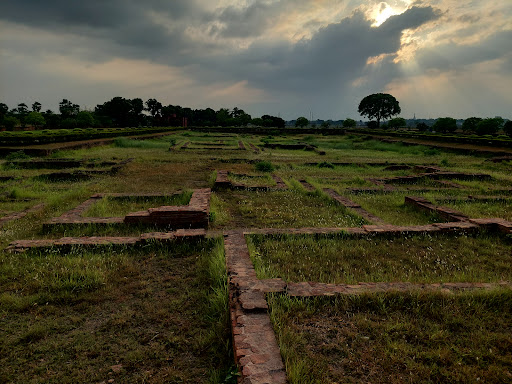
The ruins of the fort of the Lichhavi in Vaishali, located in the present-day Indian state of Bihar, offer a glimpse into an ancient civilization that was influential during the early historic period of India. The Lichhavis were a prominent clan and part of the Vajji Mahajanapada, a republic that flourished around the 6th century BCE.
Vaishali holds significant historical and archaeological importance for several reasons:
Historical Significance: Vaishali is considered one of the world's first republics, predating even ancient Greece. It was the capital of the Lichhavi clan and played a critical role in the political landscape of ancient India.
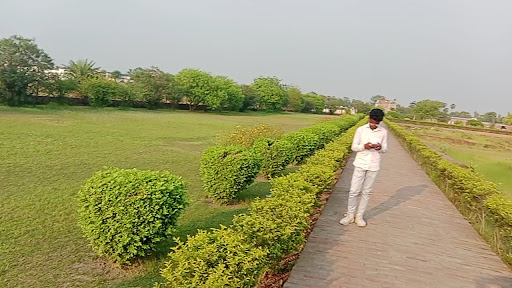
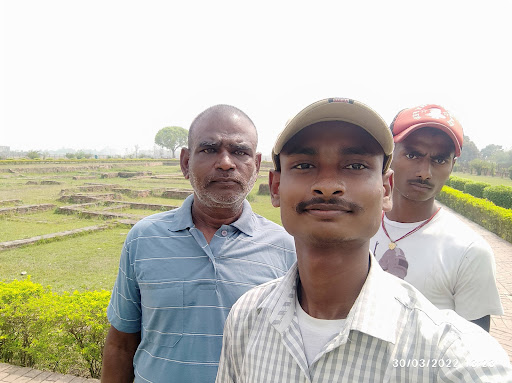
Archaeological Findings: The ruins include remnants of the ancient fortifications, which indicate advanced urban planning and construction techniques. Excavations have revealed walls, gates, and other structural components that provide insights into the defensive strategies and architectural styles of the period.
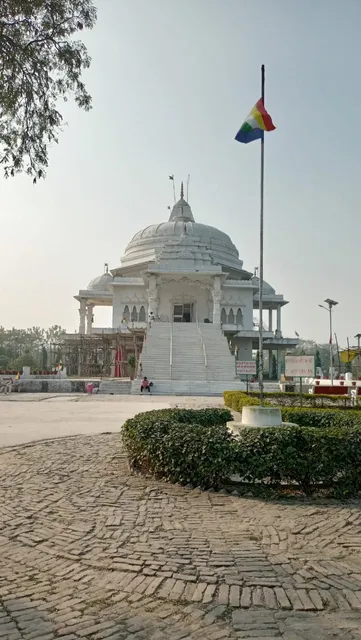
Religious Importance: Vaishali is also a significant site for both Buddhism and Jainism. It is believed to be the place where the Buddha delivered his last sermon and announced his impending Parinirvana. The site contains the Ananda Stupa and the Ashokan Pillar, erected by Emperor Ashoka to commemorate these events. For Jains, Vaishali is important as the birthplace of Lord Mahavira, the 24th Tirthankara.
Artifacts: Numerous artifacts, such as pottery, coins, and sculptures, have been unearthed, providing insights into the daily life, economy, and culture of the Lichhavi period. These items indicate a high level of craftsmanship and trade.
Monuments and Stupas: Besides the fort ruins, Vaishali is home to several stupas and monasteries, which highlight its importance as a center of learning and religious activity. The Kesariya Stupa, one of the tallest and largest Buddhist stupas in the world, is located nearby.
Overall, the ruins of the fort of Lichhavi in Vaishali offer a rich tapestry of historical, cultural, and religious heritage, making it a valuable site for scholars and visitors interested in the ancient...
Read moreBelieved to be the mother of Democracy, Vaishali Garh was once the parliament house of Licchavi’s where more than seven thousand representatives of the federal assembly gathered to legislate and discuss the problems of the day. Historians maintain that one of the world’s first democratic republics with an elected assembly of representatives flourished here in the 6th century B.C. in the time of the Vajjis and the Lichchavis. To the north of Vaishali, an ancient city in the state of Bihar, India, is located a huge mound of 6 ft x 10 ft high, known as Raja Vishal Ka Garh. Maintained by the Archaeological Survey of India (ASI), the Raja Vishal Ka Garh is as a protected monument. Raja Vishal ka Garh, spread over 81 acres and which has a mound near Vaishali village that is believed to be the remains of an ancient parliament house, has thrown up some more remarkable secrets recently: a 50-metre-long and 21-metre-high mud rampart built in the late phase of the Mauryan period (321-185 BC) and Shunga period (185-73 BC) and a brick fortification that runs above the rampart. The excavation has revealed clear traces of human settlement till the Shunga period (185-73 BC), ASI has found terracotta figurines, shiny pottery shards and punched copper coins, which could date back to 600 BC when Vaishali used to be a power centre of the Lichchhavi Republic.Excavations at the site have unearthed evidence of a drainage system and a small ring well from the Kushan period, which may have been used to dispose garbage. The excavation has also yielded terracotta figurines of snakes, elephants and dogs, of deer horns belonging to the Gupta, Kushan and Shunga periods. A cylindrical gold bead from the Kushan period has also been discovered. Here, you can also see one of the first parliaments of ancient India.”
The Ramayana talks of King Vishal who ruled here before the Lichchhavis. Vaishali was once also the centre for trade...
Read moreBelieved to be the mother of Democracy, Vaishali Garh was once the parliament house of Licchavi’s where more than seven thousand representatives of the federal assembly gathered to legislate and discuss the problems of the day.
Historians maintain that one of the world’s first democratic republics with an elected assembly of representatives flourished here in the 6th century B.C. in the time of the Vajjis and the Lichchavis.
To the north of Vaishali, an ancient city in the state of Bihar, India, is located a huge mound of 6 ft x 10 ft high, known as Raja Vishal Ka Garh. Maintained by the Archaeological Survey of India (ASI), the Raja Vishal Ka Garh is as a protected monument. Raja Vishal ka Garh, spread over 81 acres and which has a mound near Vaishali village that is believed to be the remains of an ancient parliament house, has thrown up some more remarkable secrets recently: a 50-metre-long and 21-metre-high mud rampart built in the late phase of the Mauryan period (321-185 BC) and Shunga period (185-73 BC) and a brick fortification that runs above the rampart.
The excavation has revealed clear traces of human settlement till the Shunga period (185-73 BC), ASI has found terracotta figurines, shiny pottery shards and punched copper coins, which could date back to 600 BC when Vaishali used to be a power centre of the Lichchhavi Republic.Excavations at the site have unearthed evidence of a drainage system and a small ring well from the Kushan period, which may have been used to dispose garbage. The excavation has also yielded terracotta figurines of snakes, elephants and dogs, of deer horns belonging to the Gupta, Kushan and Shunga periods. A cylindrical gold bead from the Kushan period has also...
Read more