HTML SitemapExplore
logo
Find Things to DoFind The Best Restaurants

Adilabad Fort, Delhi — Attraction in Delhi

Name
Adilabad Fort, Delhi
Description
Nearby attractions
Tughlakabad District Park
G759+R73, Mehrauli - Badarpur Rd, Tughlaqabad Village, Tughlakabad, New Delhi, Delhi 110044, India
Tughlakabad Fort, Delhi
G766+9W9, Tughlaqabad Fort, Tughlakabad, New Delhi, Delhi 110044, India
Ghiyasuddin Tughlaq's Tomb
Fort Main Entrance, opposite Tughlakabad, Airforce Residential Quarters, Tughlakabad, New Delhi, Delhi 110044, India
Nearby restaurants
Pushpendra Fast Food Corner
A/55, Tughlaqabad Village, Laxmi Nagar, New Delhi, Delhi 110044, India
MR. MOMOS
Shop no, 3, Bazar Mohalla, Tughlaqabad Village, Tughlakabad, New Delhi, Delhi 110044, India
Apna Thapa Fast Food
Unnamed Road, Tughlaqabad Village, Tughlakabad, New Delhi, Delhi 110044, India
Nearby hotels
Related posts
Keywords
Adilabad Fort, Delhi tourism.Adilabad Fort, Delhi hotels.Adilabad Fort, Delhi bed and breakfast. flights to Adilabad Fort, Delhi.Adilabad Fort, Delhi attractions.Adilabad Fort, Delhi restaurants.Adilabad Fort, Delhi travel.Adilabad Fort, Delhi travel guide.Adilabad Fort, Delhi travel blog.Adilabad Fort, Delhi pictures.Adilabad Fort, Delhi photos.Adilabad Fort, Delhi travel tips.Adilabad Fort, Delhi maps.Adilabad Fort, Delhi things to do.
Adilabad Fort, Delhi things to do, attractions, restaurants, events info and trip planning
Adilabad Fort, Delhi
IndiaDelhiAdilabad Fort, Delhi

Basic Info

Adilabad Fort, Delhi

G749+63M, Tughlakabad, New Delhi, Delhi 110044, India
4.2(146)
Open 24 hours
Save
spot

Ratings & Description

Info

Cultural
Outdoor
Adventure
Family friendly
Off the beaten path
attractions: Tughlakabad District Park, Tughlakabad Fort, Delhi, Ghiyasuddin Tughlaq's Tomb, restaurants: Pushpendra Fast Food Corner, MR. MOMOS, Apna Thapa Fast Food
logoLearn more insights from Wanderboat AI.

Plan your stay

hotel
Pet-friendly Hotels in Delhi
Find a cozy hotel nearby and make it a full experience.
hotel
Affordable Hotels in Delhi
Find a cozy hotel nearby and make it a full experience.
hotel
The Coolest Hotels You Haven't Heard Of (Yet)
Find a cozy hotel nearby and make it a full experience.
hotel
Trending Stays Worth the Hype in Delhi
Find a cozy hotel nearby and make it a full experience.

Reviews

Nearby attractions of Adilabad Fort, Delhi

Tughlakabad District Park

Tughlakabad Fort, Delhi

Ghiyasuddin Tughlaq's Tomb

Tughlakabad District Park

Tughlakabad District Park

4.2

(644)

Open until 12:00 AM
Click for details
Tughlakabad Fort, Delhi

Tughlakabad Fort, Delhi

4.2

(5.4K)

Open 24 hours
Click for details
Ghiyasuddin Tughlaq's Tomb

Ghiyasuddin Tughlaq's Tomb

4.2

(613)

Open 24 hours
Click for details

Things to do nearby

Old Delhi Food-Temples-Spice Market & Rickshaw
Tue, Dec 9 • 10:00 AM
New Delhi, Delhi, 110006, India
View details
Same Day Taj Mahal Tour from Delhi by Car
Tue, Dec 9 • 2:30 AM
New Delhi, Delhi, 110001, India
View details
The Chef - Indian Cooking Class
Tue, Dec 9 • 11:30 AM
New Delhi, Delhi, 110063, India
View details

Nearby restaurants of Adilabad Fort, Delhi

Pushpendra Fast Food Corner

MR. MOMOS

Apna Thapa Fast Food

Pushpendra Fast Food Corner

Pushpendra Fast Food Corner

4.0

(1)

Click for details
MR. MOMOS

MR. MOMOS

5.0

(2)

Click for details
Apna Thapa Fast Food

Apna Thapa Fast Food

4.9

(6)

Click for details
Get the Appoverlay
Get the AppOne tap to find yournext favorite spots!
Wanderboat LogoWanderboat

Your everyday Al companion for getaway ideas

CompanyAbout Us
InformationAI Trip PlannerSitemap
SocialXInstagramTiktokLinkedin
LegalTerms of ServicePrivacy Policy

Get the app

© 2025 Wanderboat. All rights reserved.
logo

Reviews of Adilabad Fort, Delhi

4.2
(146)
avatar
5.0
7y

Adilabad Fort, Delhi

The one place that every child visiting Delhi is dragged to, is, of course, the Red fort. It is a monument that attracts one of the highest footfalls in the country. That’s perhaps because it used to be the power-center of a greater part of India less than a century ago. But what of the numerous other fortresses strewn around this country? Did you know there are several others in Delhi itself? Seven cities were raised in the capital one after the other, and more than seven forts were built to protect the palaces and the monarchy in each case. Much of that splendor is gone today, but the stones that remain in some parts of Delhi bear testimony to the immense military power of the kings that ruled here once. Let me take you on a visit to one of the smaller, lesser known forts in the city today.

In the south east fringes of Delhi, very close to the better known Tughlaqabad Fort, lies a fortress of almost identical features but smaller proportions, Adilabad. Like Tughlaqabad, it lies in fascinating ruins today… Young boys play cricket in the meadows around it, and except for locals, visitors to the place are few and far between.

It was in 1321 when the first Tughlaq ruler had seized power from the Khiljis that ruled before him. Ghiyasuddin Tughlaq was an able administrator and a shrewd military commander, and he had his dream fort,the massive Tughlaqabad, built in 6 years to keep out the menace of the Mongols. Tughlaqabad, however, never flourished as a city, and the curse that was its undoing is an enticing story in itself. In any case, after Ghiyasuddin’s death, his son Muhammad bin Tughlaq inherited the throne. Muhammad was a brilliant man, his ideas far ahead of his time… to the point that many still think he was a crazy man. Among the many projects he took up was the building of the walled city of Jahanpanah. In effect, instead of creating a new city again, this king consolidated all the previous forts inside one great wall- from Lal kot near Qutb Minar, to Siri in South Delhi, all the way to his father’s abandoned fort, the mighty Tughlaqabad in the south east. In the words of famous Moroccan traveller Ibn Batuta, who was visting Tughlaq’s court in those days,

“Dilli the metropolis is a vast and magnificent city, uniting beauty with strength. It is surrounded by a wall that has no equal in the world, and is the largest city in the entire Muslim Orient.”

So far so good. But if the kingdom of Jahanpanah was so well consolidated, and the fort of Tughlaqabad couldn’t be properly settled for lack of drinking water in the area, what led the king to build another fort in its vicinity? No one can tell. Perhaps it was built as a transitory palace between Tughlaqabad and Jahanpanah? Or perhaps it was the prince’s private palace when his father was king? All we know is that Muhammad named it Adilabad after himself, Adil being his assumed title. To add to the confusion, there’s yet another fortress in the distance, tinier and even more ruined, also said to have been built by Muhammad bin Tughlaq. Not much more than a wall remains there, but its name is intriguing: Nai ka Kot (Barber’s fort). Historians haven’t been able to find out much about this place.

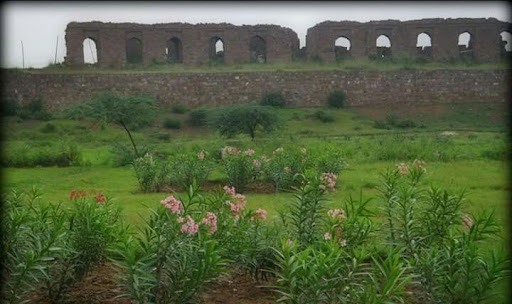
Adilabad was originally connected to Tughlaqabad via a causeway. Today there is no direct connection, but you can drive right up to it through ‘kuchha’ roads. Not far away is the well preserved tomb of Ghiyasuddin Tughlaq, where, it is said, Muhammad bin Tughlaq is also buried beside his father. Though his fortress is in ruins today, its basic structure is still intact. When I went there just after the rains, the ASI (Archaeological Survey of India) seemed to have done some beautification of the area. The grass was fresh green, and colorful flowers against the broken rubble walls made a strangely poignant scene. Do visit once. Surely this mysterious fort deserves...

   Read more

avatar
5.0
7y

ADILABAD FORT

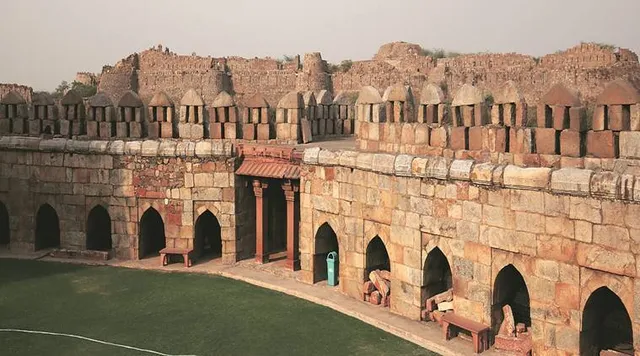
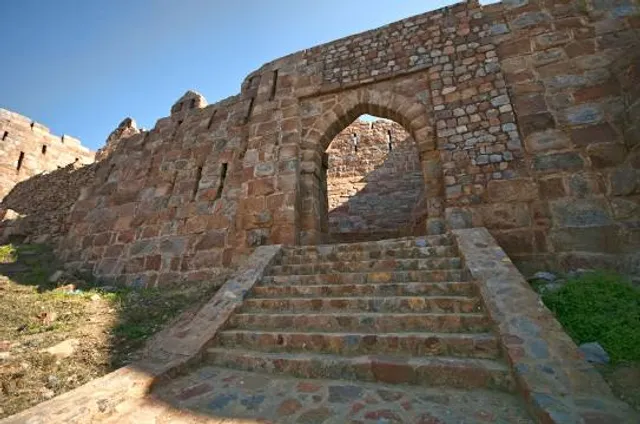
The Fortress of Adilabad lies on the south-eastern part of Tughlaqabad on the Mehrauli-Badarpur road in Delhi and was built a few years later connected to Tughlaqabad Fort via a kilometre long causeway. This fort was constructed by Sultan Muhammed Bin Tughlaq, son of Sultan Ghiyaas-Ud-Din Tughlaq that was designed to imitate the fort of Tughlaq and depicts ancient architecture of huge sloping walls with bare surface, crenulations and a corbelled archway which is nothing in comparison with the grandeur of the Tughlaqabad Fort and is a smaller version of it.

Historically, Muhammed Bin Tughlaq was also very fond of beautiful forts and spent most of his time planning the layout of his new found city named 'Tughlaqabad'. Like his father, he continued the construction of this fort and later extended his city over huge acres of land smeared in abundant greenery and enclosing the space that was left unused by the previous ruler Alla-ud-din Khilji of the Khilji dynasty lying between 'Siri Fort', 'Tughlaqabad City and the Qutb Complex in Mehrauli in Delhi that formed the new 'Jahan Panah' city of the Sultan and his dynasty.

The Fourth city of the Sultan unfortunately did not materialise due to his erratic decision of shifting the Turkic Empire from Delhi to Daulatabad that lies in the Deccan region of India forcing all administrative offices along with his people to move along. This new capital was found lacking many amenities for a normal population to survive and hence, upon realisation, after two years, the Sultan shifted his capital back to Delhi in Tughlaqabad but unfortunately lost most of his people on the way back due to lack of travel necessities and food arrangements which caused a great deal of to his kingdom and eventually collapsed. Even today many still wonder what made him take such a drastic step as he was known for his scholarly aptitude and even introduced coins during his reign because of this one decision, he is also still known as one of the most unconventional and controversial Ruler of India and sometimes called as the 'Mad King' by locals.

The Adilabad Fort took shape as a very small fort compared to the majestic Fort of Tughlaqabad and slowly took shape when fortified walls were built to protect the city and its people from untoward attacks. Upon completion of the massive walls, a citadel Palace was constructed that housed the Royal Family of the Turkic dynasty and Royal Courtiers along with a few Administrative Halls.

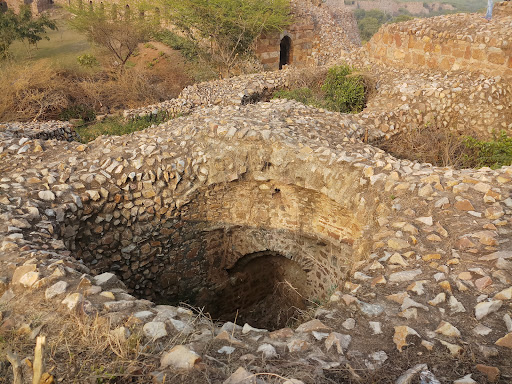
The Adilabad Fort houses the legendary 'Palace of a thousand Pillars' or 'Qasrr-i-Hazaar Satun' in Urdu language making it one of the best sites to visit. The idea to create a masterpiece structure was very popular during that era and is seen in many places including the famous Tombs like the 'Taj Mahal' to name one. Today, one can only get a glimpse of its ruined walls and gravels of a fragmented structure in complete ruins which made it a very inviting and popular tourist site.

Tourist can reach this site via cars, Buses and Auto Rickshaws. Entry into this site is free of cost and opened to public viewing from 0930 hours to 1800...

   Read more
avatar
5.0
6y

The Fortress of Adilabad lies on the south-eastern part of Tughlaqabad on the Mehrauli-Badarpur road in Delhi and was built a few years later connected to Tughlaqabad Fort via a kilometre long causeway. This fort was constructed by Sultan Muhammed Bin Tughlaq, son of Sultan Ghiyaas-Ud-Din Tughlaq that was designed to imitate the fort of Tughlaq and depicts ancient architecture of huge sloping walls with bare surface, crenulations and a corbelled archway which is nothing in comparison with the grandeur of the Tughlaqabad Fort and is a smaller version of it.

Historically, Muhammed Bin Tughlaq was also very fond of beautiful forts and spent most of his time planning the layout of his new found city named 'Tughlaqabad'. Like his father, he continued the construction of this fort and later extended his city over huge acres of land smeared in abundant greenery and enclosing the space that was left unused by the previous ruler Alla-ud-din Khilji of the Khilji dynasty lying between 'Siri Fort', 'Tughlaqabad City and the Qutb Complex in Mehrauli in Delhi that formed the new 'Jahan Panah' city of the Sultan and...

   Read more
Page 1 of 7
Previous
Next

Posts

Sheikh HaashimSheikh Haashim
Adilabad Fort, Delhi The one place that every child visiting Delhi is dragged to, is, of course, the Red fort. It is a monument that attracts one of the highest footfalls in the country. That’s perhaps because it used to be the power-center of a greater part of India less than a century ago. But what of the numerous other fortresses strewn around this country? Did you know there are several others in Delhi itself? Seven cities were raised in the capital one after the other, and more than seven forts were built to protect the palaces and the monarchy in each case. Much of that splendor is gone today, but the stones that remain in some parts of Delhi bear testimony to the immense military power of the kings that ruled here once. Let me take you on a visit to one of the smaller, lesser known forts in the city today. In the south east fringes of Delhi, very close to the better known Tughlaqabad Fort, lies a fortress of almost identical features but smaller proportions, Adilabad. Like Tughlaqabad, it lies in fascinating ruins today… Young boys play cricket in the meadows around it, and except for locals, visitors to the place are few and far between. It was in 1321 when the first Tughlaq ruler had seized power from the Khiljis that ruled before him. Ghiyasuddin Tughlaq was an able administrator and a shrewd military commander, and he had his dream fort,the massive Tughlaqabad, built in 6 years to keep out the menace of the Mongols. Tughlaqabad, however, never flourished as a city, and the curse that was its undoing is an enticing story in itself. In any case, after Ghiyasuddin’s death, his son Muhammad bin Tughlaq inherited the throne. Muhammad was a brilliant man, his ideas far ahead of his time… to the point that many still think he was a crazy man. Among the many projects he took up was the building of the walled city of Jahanpanah. In effect, instead of creating a new city again, this king consolidated all the previous forts inside one great wall- from Lal kot near Qutb Minar, to Siri in South Delhi, all the way to his father’s abandoned fort, the mighty Tughlaqabad in the south east. In the words of famous Moroccan traveller Ibn Batuta, who was visting Tughlaq’s court in those days, “Dilli the metropolis is a vast and magnificent city, uniting beauty with strength. It is surrounded by a wall that has no equal in the world, and is the largest city in the entire Muslim Orient.” So far so good. But if the kingdom of Jahanpanah was so well consolidated, and the fort of Tughlaqabad couldn’t be properly settled for lack of drinking water in the area, what led the king to build another fort in its vicinity? No one can tell. Perhaps it was built as a transitory palace between Tughlaqabad and Jahanpanah? Or perhaps it was the prince’s private palace when his father was king? All we know is that Muhammad named it Adilabad after himself, Adil being his assumed title. To add to the confusion, there’s yet another fortress in the distance, tinier and even more ruined, also said to have been built by Muhammad bin Tughlaq. Not much more than a wall remains there, but its name is intriguing: Nai ka Kot (Barber’s fort). Historians haven’t been able to find out much about this place. Adilabad was originally connected to Tughlaqabad via a causeway. Today there is no direct connection, but you can drive right up to it through ‘kuchha’ roads. Not far away is the well preserved tomb of Ghiyasuddin Tughlaq, where, it is said, Muhammad bin Tughlaq is also buried beside his father. Though his fortress is in ruins today, its basic structure is still intact. When I went there just after the rains, the ASI (Archaeological Survey of India) seemed to have done some beautification of the area. The grass was fresh green, and colorful flowers against the broken rubble walls made a strangely poignant scene. Do visit once. Surely this mysterious fort deserves a few guests.
AMOL NAKVEAMOL NAKVE
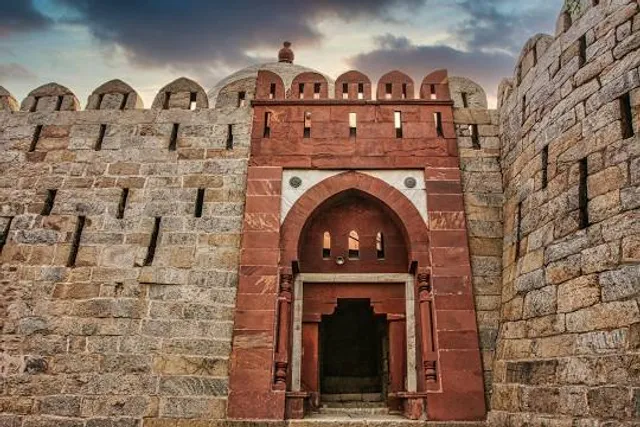
Adilabad Fort was built by Muhammad Bin Tughlaq second ruler of Tughlaq dynesty. Adilabad Fort derived it name of sobriquet of Muhammad Bin Tughlaq, Adil. The fort is forth fort in Delhi others being Red Fort, Old Fort, Tughlaqabad. It's just small replica of Tughlaqabad Fort which were built by Ghayasuddin Tughlaq. The fort is built in opposite fortress area of Tughlaqabad Fort. Earlier both forts connected by causeway in between canal and lake. Remaining ruins of the fort depicts it's glory. Having two massive gates, bastions and triangular arches on walls, sloping walls, outer boundary walls. Made it difficult for mangol enemies to conquer. The sole objective of constructing this fort by Muhammad Bin Tughalaq could have been to establish his own monument to register his name in history. Fort is opens at 9:30 am and closed at 6:00 pm. And there won't be any entry charges by administration. It takes around 2 hour to complete the visit. Best place of photography. One must enjoy the glory of heritage in walk.
Barun GhoshBarun Ghosh
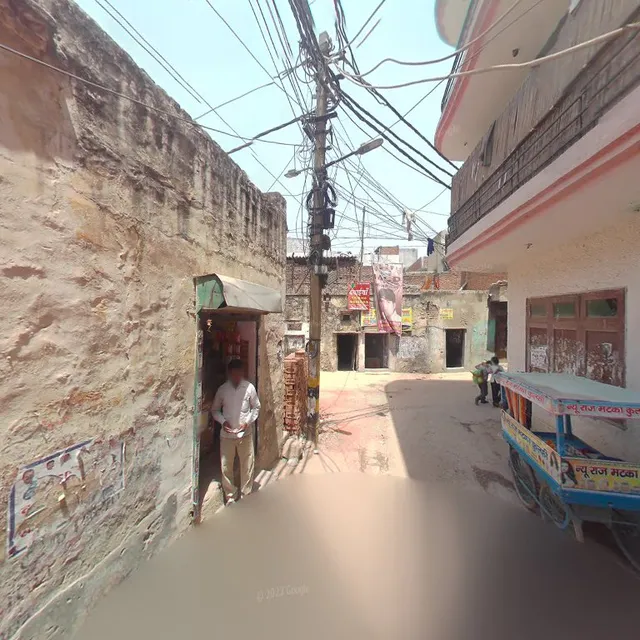
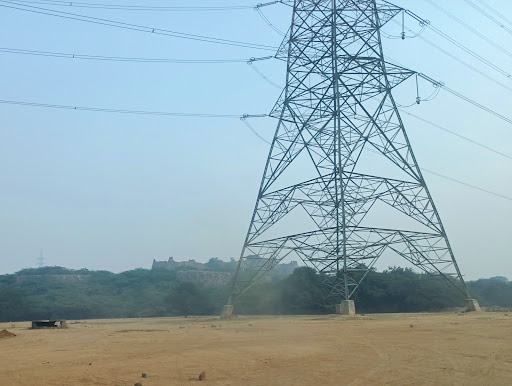
I couldn't believe that within the borders of Delhi lies this seven hundred year old fort built by Mohammad Bin Tughlaq. Very difficult to locate as there are no clear roads or signs but there is a delapidated boundary wall following which you'll end up at the entrance. Not a place for persons of reduced mobility and women shouldn't go alone or in the late afternoon even with some male companions as the area is infested with unsocial elements. There is a guard of ASI but he never asked for our ticket and let us explore what little remains on our own. Climbing steep steps was tough especially since the ascent was on a steep incline. From the top you can see Tughlaqabad Fort and the tomb of Ghiyasuddin Tughlaq in the distance. Not much remains inside the fort complex but it is well maintained so you can sit and relax for a while.
See more posts
See more posts
hotel
Find your stay

Pet-friendly Hotels in Delhi

Find a cozy hotel nearby and make it a full experience.

Adilabad Fort, Delhi The one place that every child visiting Delhi is dragged to, is, of course, the Red fort. It is a monument that attracts one of the highest footfalls in the country. That’s perhaps because it used to be the power-center of a greater part of India less than a century ago. But what of the numerous other fortresses strewn around this country? Did you know there are several others in Delhi itself? Seven cities were raised in the capital one after the other, and more than seven forts were built to protect the palaces and the monarchy in each case. Much of that splendor is gone today, but the stones that remain in some parts of Delhi bear testimony to the immense military power of the kings that ruled here once. Let me take you on a visit to one of the smaller, lesser known forts in the city today. In the south east fringes of Delhi, very close to the better known Tughlaqabad Fort, lies a fortress of almost identical features but smaller proportions, Adilabad. Like Tughlaqabad, it lies in fascinating ruins today… Young boys play cricket in the meadows around it, and except for locals, visitors to the place are few and far between. It was in 1321 when the first Tughlaq ruler had seized power from the Khiljis that ruled before him. Ghiyasuddin Tughlaq was an able administrator and a shrewd military commander, and he had his dream fort,the massive Tughlaqabad, built in 6 years to keep out the menace of the Mongols. Tughlaqabad, however, never flourished as a city, and the curse that was its undoing is an enticing story in itself. In any case, after Ghiyasuddin’s death, his son Muhammad bin Tughlaq inherited the throne. Muhammad was a brilliant man, his ideas far ahead of his time… to the point that many still think he was a crazy man. Among the many projects he took up was the building of the walled city of Jahanpanah. In effect, instead of creating a new city again, this king consolidated all the previous forts inside one great wall- from Lal kot near Qutb Minar, to Siri in South Delhi, all the way to his father’s abandoned fort, the mighty Tughlaqabad in the south east. In the words of famous Moroccan traveller Ibn Batuta, who was visting Tughlaq’s court in those days, “Dilli the metropolis is a vast and magnificent city, uniting beauty with strength. It is surrounded by a wall that has no equal in the world, and is the largest city in the entire Muslim Orient.” So far so good. But if the kingdom of Jahanpanah was so well consolidated, and the fort of Tughlaqabad couldn’t be properly settled for lack of drinking water in the area, what led the king to build another fort in its vicinity? No one can tell. Perhaps it was built as a transitory palace between Tughlaqabad and Jahanpanah? Or perhaps it was the prince’s private palace when his father was king? All we know is that Muhammad named it Adilabad after himself, Adil being his assumed title. To add to the confusion, there’s yet another fortress in the distance, tinier and even more ruined, also said to have been built by Muhammad bin Tughlaq. Not much more than a wall remains there, but its name is intriguing: Nai ka Kot (Barber’s fort). Historians haven’t been able to find out much about this place. Adilabad was originally connected to Tughlaqabad via a causeway. Today there is no direct connection, but you can drive right up to it through ‘kuchha’ roads. Not far away is the well preserved tomb of Ghiyasuddin Tughlaq, where, it is said, Muhammad bin Tughlaq is also buried beside his father. Though his fortress is in ruins today, its basic structure is still intact. When I went there just after the rains, the ASI (Archaeological Survey of India) seemed to have done some beautification of the area. The grass was fresh green, and colorful flowers against the broken rubble walls made a strangely poignant scene. Do visit once. Surely this mysterious fort deserves a few guests.
Sheikh Haashim

Sheikh Haashim

hotel
Find your stay

Affordable Hotels in Delhi

Find a cozy hotel nearby and make it a full experience.

Get the Appoverlay
Get the AppOne tap to find yournext favorite spots!
Adilabad Fort was built by Muhammad Bin Tughlaq second ruler of Tughlaq dynesty. Adilabad Fort derived it name of sobriquet of Muhammad Bin Tughlaq, Adil. The fort is forth fort in Delhi others being Red Fort, Old Fort, Tughlaqabad. It's just small replica of Tughlaqabad Fort which were built by Ghayasuddin Tughlaq. The fort is built in opposite fortress area of Tughlaqabad Fort. Earlier both forts connected by causeway in between canal and lake. Remaining ruins of the fort depicts it's glory. Having two massive gates, bastions and triangular arches on walls, sloping walls, outer boundary walls. Made it difficult for mangol enemies to conquer. The sole objective of constructing this fort by Muhammad Bin Tughalaq could have been to establish his own monument to register his name in history. Fort is opens at 9:30 am and closed at 6:00 pm. And there won't be any entry charges by administration. It takes around 2 hour to complete the visit. Best place of photography. One must enjoy the glory of heritage in walk.
AMOL NAKVE

AMOL NAKVE

hotel
Find your stay

The Coolest Hotels You Haven't Heard Of (Yet)

Find a cozy hotel nearby and make it a full experience.

hotel
Find your stay

Trending Stays Worth the Hype in Delhi

Find a cozy hotel nearby and make it a full experience.

I couldn't believe that within the borders of Delhi lies this seven hundred year old fort built by Mohammad Bin Tughlaq. Very difficult to locate as there are no clear roads or signs but there is a delapidated boundary wall following which you'll end up at the entrance. Not a place for persons of reduced mobility and women shouldn't go alone or in the late afternoon even with some male companions as the area is infested with unsocial elements. There is a guard of ASI but he never asked for our ticket and let us explore what little remains on our own. Climbing steep steps was tough especially since the ascent was on a steep incline. From the top you can see Tughlaqabad Fort and the tomb of Ghiyasuddin Tughlaq in the distance. Not much remains inside the fort complex but it is well maintained so you can sit and relax for a while.
Barun Ghosh

Barun Ghosh

See more posts
See more posts