HTML SitemapExplore
logo
Find Things to DoFind The Best Restaurants

Tughlakabad Fort, Delhi — Attraction in Delhi

Name
Tughlakabad Fort, Delhi
Description
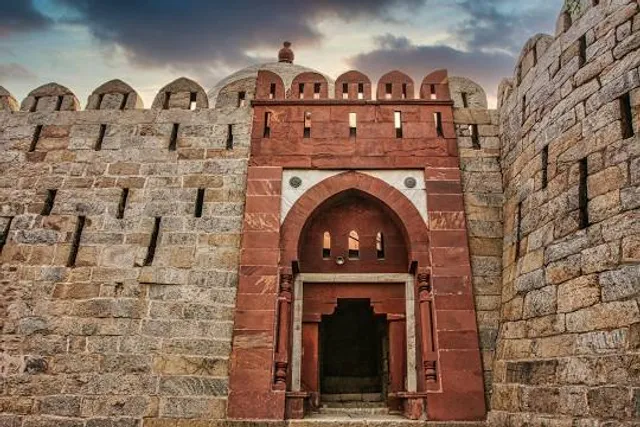
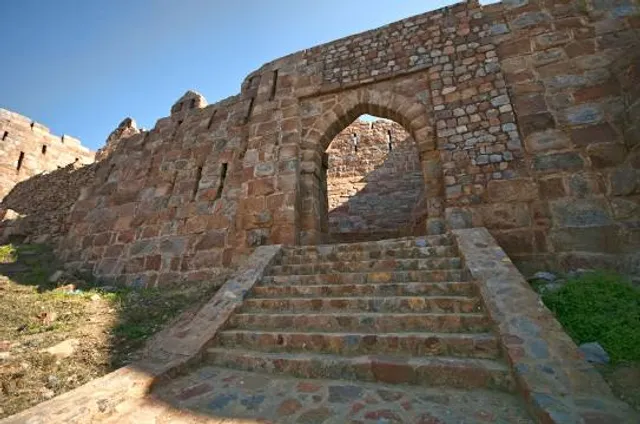
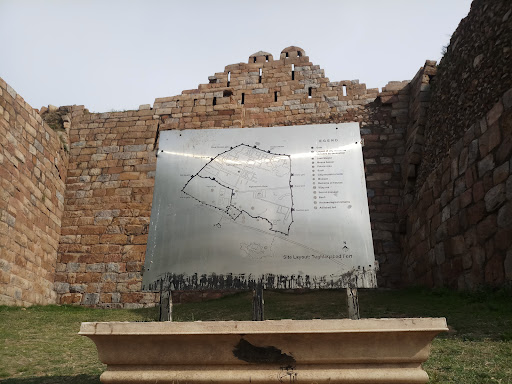
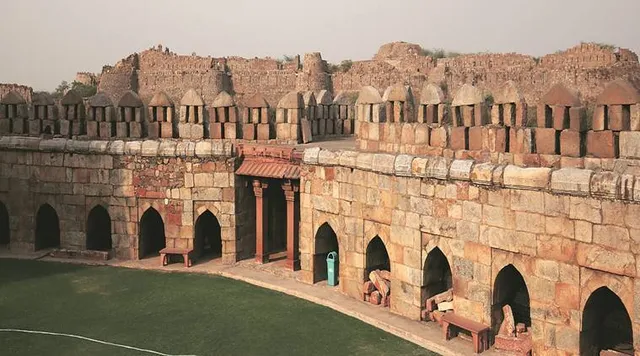
Tughluqabad Fort is a ruined fort in Delhi, India. It was constructed by Ghiyasuddin Tughluq, the founder of the Tughlaq dynasty, of the Delhi Sultanate in 1321 as he established the third historic city of Delhi, but it was later abandoned in 1327.
Nearby attractions
Ghiyasuddin Tughlaq's Tomb
Fort Main Entrance, opposite Tughlakabad, Airforce Residential Quarters, Tughlakabad, New Delhi, Delhi 110044, India
Tughlakabad District Park
G759+R73, Mehrauli - Badarpur Rd, Tughlaqabad Village, Tughlakabad, New Delhi, Delhi 110044, India
Adilabad Fort, Delhi
G749+63M, Tughlakabad, New Delhi, Delhi 110044, India
Nearby restaurants
Apna Thapa Fast Food
Unnamed Road, Tughlaqabad Village, Tughlakabad, New Delhi, Delhi 110044, India
Pushpendra Fast Food Corner
A/55, Tughlaqabad Village, Laxmi Nagar, New Delhi, Delhi 110044, India
Pea Cock Restaurant.
RZ, Gali Number 35, Sector 6, Tughlakabad, New Delhi, Delhi 110019, India
MR. MOMOS
Shop no, 3, Bazar Mohalla, Tughlaqabad Village, Tughlakabad, New Delhi, Delhi 110044, India
Uttarakhand Cuisine
B1/180, Gali No 6, Near, Durga Mata Mandir Road, Block B 1, New Ashok Nagar, New Delhi, Delhi 110044, India
Panditji Samose Pakode wale Shop
Durga Mandir Marg, Gali Number 17, Tughlaqabad Village, Tughlakabad, New Delhi, Delhi 110044, India
NEW OVEN PIZZA RESTAURANT
Shop no. 3, RZ483-A, Gali Number 13, near Dr. Shankar mandal and Bikaner sweets, Tughlaqabad Village, Tughlakabad, New Delhi, Delhi 110044, India
Peacock Restaurant
GROUND FLOOR,RZ-35/36,,GALI NO-6, MAIN, Okhla Rd, A Block, Talimabad, Tughlakabad, New Delhi, Delhi 110019, India
The pizza point
House No 333, Street No 12, Block G, Talimabad, Sangam Vihar, New Delhi, Delhi 110080, India
Nearby hotels
Related posts
Keywords
Tughlakabad Fort, Delhi tourism.Tughlakabad Fort, Delhi hotels.Tughlakabad Fort, Delhi bed and breakfast. flights to Tughlakabad Fort, Delhi.Tughlakabad Fort, Delhi attractions.Tughlakabad Fort, Delhi restaurants.Tughlakabad Fort, Delhi travel.Tughlakabad Fort, Delhi travel guide.Tughlakabad Fort, Delhi travel blog.Tughlakabad Fort, Delhi pictures.Tughlakabad Fort, Delhi photos.Tughlakabad Fort, Delhi travel tips.Tughlakabad Fort, Delhi maps.Tughlakabad Fort, Delhi things to do.
Tughlakabad Fort, Delhi things to do, attractions, restaurants, events info and trip planning
Tughlakabad Fort, Delhi
IndiaDelhiTughlakabad Fort, Delhi

Basic Info

Tughlakabad Fort, Delhi

G766+9W9, Tughlaqabad Fort, Tughlakabad, New Delhi, Delhi 110044, India
4.2(5.4K)
Open 24 hours
Save
spot

Ratings & Description

Info

Tughluqabad Fort is a ruined fort in Delhi, India. It was constructed by Ghiyasuddin Tughluq, the founder of the Tughlaq dynasty, of the Delhi Sultanate in 1321 as he established the third historic city of Delhi, but it was later abandoned in 1327.

Cultural
Outdoor
Adventure
attractions: Ghiyasuddin Tughlaq's Tomb, Tughlakabad District Park, Adilabad Fort, Delhi, restaurants: Apna Thapa Fast Food, Pushpendra Fast Food Corner, Pea Cock Restaurant., MR. MOMOS, Uttarakhand Cuisine, Panditji Samose Pakode wale Shop, NEW OVEN PIZZA RESTAURANT, Peacock Restaurant, The pizza point
logoLearn more insights from Wanderboat AI.

Plan your stay

hotel
Pet-friendly Hotels in Delhi
Find a cozy hotel nearby and make it a full experience.

hotel
Affordable Hotels in Delhi
Find a cozy hotel nearby and make it a full experience.

hotel
The Coolest Hotels You Haven't Heard Of (Yet)
Find a cozy hotel nearby and make it a full experience.

hotel
Trending Stays Worth the Hype in Delhi
Find a cozy hotel nearby and make it a full experience.

Reviews

Nearby attractions of Tughlakabad Fort, Delhi

Ghiyasuddin Tughlaq's Tomb

Tughlakabad District Park

Adilabad Fort, Delhi

Ghiyasuddin Tughlaq's Tomb

Ghiyasuddin Tughlaq's Tomb

4.2

(613)

Open 24 hours
Click for details
Tughlakabad District Park

Tughlakabad District Park

4.2

(644)

Open until 12:00 AM
Click for details
Adilabad Fort, Delhi

Adilabad Fort, Delhi

4.2

(146)

Open 24 hours
Click for details

Things to do nearby

Candlelight: Tribute to Kishore Kumar
Sat, Dec 13 • 6:00 PM
Apparel House, Ground, Fortis Hospital Road, Sector 44, Gurugram, 122003
View details
Old Delhi Food-Temples-Spice Market & Rickshaw
Tue, Dec 9 • 10:00 AM
New Delhi, Delhi, 110006, India
View details
Same Day Taj Mahal Tour from Delhi by Car
Tue, Dec 9 • 2:30 AM
New Delhi, Delhi, 110001, India
View details

Nearby restaurants of Tughlakabad Fort, Delhi

Apna Thapa Fast Food

Pushpendra Fast Food Corner

Pea Cock Restaurant.

MR. MOMOS

Uttarakhand Cuisine

Panditji Samose Pakode wale Shop

NEW OVEN PIZZA RESTAURANT

Peacock Restaurant

The pizza point

Apna Thapa Fast Food

Apna Thapa Fast Food

4.9

(6)

Click for details
Pushpendra Fast Food Corner

Pushpendra Fast Food Corner

4.0

(1)

Click for details
Pea Cock Restaurant.

Pea Cock Restaurant.

3.9

(167)

Click for details
MR. MOMOS

MR. MOMOS

5.0

(2)

Click for details
Get the Appoverlay
Get the AppOne tap to find yournext favorite spots!
Wanderboat LogoWanderboat

Your everyday Al companion for getaway ideas

CompanyAbout Us
InformationAI Trip PlannerSitemap
SocialXInstagramTiktokLinkedin
LegalTerms of ServicePrivacy Policy

Get the app

© 2025 Wanderboat. All rights reserved.
logo

Reviews of Tughlakabad Fort, Delhi

4.2
(5,406)
avatar
5.0
7y

Tughlaqabad Fort, Delhi

Once upon a time, many centuries ago, the mighty military rulers of the Tughlaq dynasty built a fort in Delhi. They called it Tughlaqabad. And although it had walls as thick as can be- standing sternly, majestically, almost menacingly, to this day- the ravages of time have badly crumbled up the buildings within it, until all that remains in the 21st century is some rubble and a few odd stories to bring it to life…. The Fort stands on the south-eastern fringes of Delhi. A metro stop on the Violet line today commemorates the center of power of the 14th century. But the fort itself is long forgotten by a people far more obsessed with the future than reminiscent about its past. That is as it should be, of course, for we are an emerging nation, single-mindedly marching towards further progress and upliftment. But in the process, somewhere, we are forgetting the whispers of the rich past…

Surely this one is a royal bath or hammam? And these are perhaps stables for the royal horses? That stone there must have been a grain-crusher surely! I can almost imagine a strong ox walking slowly around to help crush the grain. And this structure! Must be the remains of a mosque where the faithful offered their prayers. But most enigmatic of the remains was an innocuous looking opening in the underbrush. It sloped downwards and out of sight…to God knows what treasures? Shalabh enticed me to enter it, and full of the thrill of adventure, I did. Who doesn’t want to find out where a secret passage leads to? All my sense disappeared at the prospect of an unsolved mystery! I am sure I would have reconsidered my plan had my crafty companion told me more about the passage he had traversed earlier. For now, I was just thrilled to be following in the footsteps of the Tughlaq soldiers. Who knows, maybe even the king had used this passage! I went scrambling down, with Shalabh right in front…the tunnel was dark but thankfully whatever I touched happened to be loose stones, no rat or snake or anything else to scare the life out of me. When we emerged at the other end, relieved at the burst of sunlight, we were standing on a ledge on the ramparts of the fort. My first exhilaration at having found an escape route out of the fort was soon replaced by dismay….a sharp 10 meter drop to the ground below! There was no question of going back into the fort by that passage, it would be a nightmare going uphill through that! So, after much name-calling and shrieking (on my part), and many excuses and sly laughter (on my so-called friend’s part!), we managed to scramble over the fort wall and back into the fort in single piece. Relief. For a long time after we admired the military bent of mind of the Tughlaqs. Their fort was no delicate mesh of jalis and marble domes like the more popular Red Fort (which we explore here) built three hundred years later. The Tughlaq empire was still being consolidated…..the fierce Mongols were a very real threat (that manifested itself not many years later as an attack by the ruthless Timur Lane). So Ghiyasuddin Tughlaq, the founder of the Tughlaq dynasty and the builder of this massive fort, had one and only one thing on his mind: defence. And that is plainly visible from the huge ramparts, the thick sloping walls, the deep moat surrounding the fort, and the mysterious escape route. Ghiyasuddin even built his own mausoleum nearby, connected to the fort by a causeway, like a little fort surrounded by water! Ghiyasuddin’s Tomb is a beautiful monument preserved to this day, but more about that some other time... In his worry about the safety of his kingdom, Ghiyasuddin got the fort built at a frenetic pace, completing it in 4 years. And for a city with a circumference of 6.5 km and an age when huge blocks of stone had to be cut by hand, this is no mean feat. But unfortunately the life of the fort was limited to only 6 years, some say on account of acute...

   Read more
avatar
4.0
6y

Tughlaqabad Fort

Tughlaqabad fort was established by Ghiyasuddin Tughlaq in 1321 AD. The fort remains are in situated at southest part of Delhi, capital city of India. Let me tell you the brief history of Tughlaqabad Fort.

Ghazi Malik was honest associate of Khilji ruler. While on long walk at south hillock with his king, Ghazi Malik suggested the king to built massive fort on to prevent and defend Mangols. King sarcastically laugh and told Ghazi Malik to ‘once he become king and start building the fort for himself'. That was the point of ignition of Tughlaq dynasty and fall of Khilji Empire.

Upon acquiring the throne Ghazi Malik renamed himself as Ghiyasuddin Tughlaq and started construction of his dream project. He ordered all labourer of Delhi to work on constructing the fort. While during the same time a saint Nizzamuddin Aulia was working upon building at well ‘baoli’ in his premises. The kings rough order deeply saddened him as his work of construction had been stopped and saint uttered a curse upon him. ‘ya rahay ujjar, ya rahay gujjars' means ‘either remain inhabited or would live gujjars'. On lines of this course local gujjars have acquired the fort and started living there. That’s was the sole reason, the place has been consider as haunted fort in Delhi. The fort was the stepping stone of Tughlaq dynesty. The fort is connected to Ghiyassuddin’s tomb where his grave is marvellously mounted by causway. A lake once flowing in-between fort and tomb.

The fort itself consisting of three part the citadel, city and royal residency. Once fortress had 52 gates massive bastions, fort walls bazaars, mosque. Now only beautiful remains are speaking the fable of early glory. It takes around two hours to witness the past in remains of Tughlaq king. Meena bazar was center of attraction for me with underground well built cells indicating the gathering of Byers and Sellers.

Preserve and well managed by Archeological Survey of India. Generally opens on every day between 9:30 am to 6:00 pm. No tickets for persons with special abilities. Very good place for photography. And beware of monkeys.

Happy to help and visit Tughalaqabad fort some other...

   Read more
avatar
5.0
31w

Recently, I had the opportunity to visit Tughlakabad Fort in New Delhi, and it turned out to be an unforgettable experience that blended history, architecture, and a sense of timeless grandeur.

Built in 1321 by Ghiyas-ud-din Tughlaq, the founder of the Tughlaq dynasty, this fort was envisioned as a stronghold against Mongol invasions. It served both as a fortress and a city, showcasing the ruler’s ambition and military foresight.

The fort is spread across a massive area, once boasting thick stone walls, massive bastions, and a complex layout that made it nearly impenetrable. Even today, despite being in ruins, the sheer scale and strength of the structure left me in awe.

One fascinating aspect of Tughlakabad’s history is the curse associated with Saint Nizamuddin Auliya, who allegedly cursed the fort saying "Ya rahe ujjar, ya basey gujjar" ("It will remain deserted or be inhabited by shepherds"). Walking through the ruins, I could feel the eerie, mysterious aura that still lingers.

I was particularly impressed by the monumental gateways, stone corridors, and the remnants of the royal palace and secret passages. Every corner seemed to whisper tales of battles, betrayals, and royal grandeur.

Another highlight of my visit was seeing the Ghiyas-ud-din Tughlaq’s Tomb, connected to the main fort via a causeway. The tomb, surrounded by gardens, is a beautiful example of Indo-Islamic architecture.

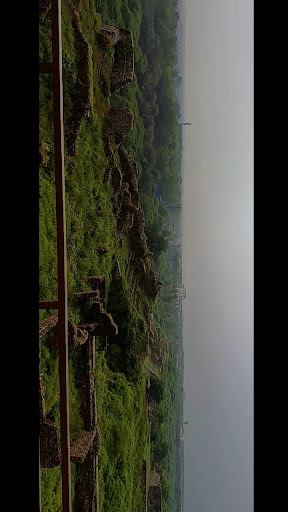
The fort's elevated position gave me panoramic views of the surrounding landscape, and I could easily imagine how this strategic location offered advantages for defense centuries ago.

The experience was a mix of admiration for the architectural brilliance and reflection on how time slowly reclaims even the mightiest of human creations.

I would recommend wearing comfortable shoes, carrying water, and being ready to explore for a few hours, as the fort complex is vast and rugged.

Overall, visiting Tughlakabad Fort was like taking a step back into the 14th century. It deepened my appreciation for Delhi’s layered history and the incredible stories hidden within its...

   Read more
Page 1 of 7
Previous
Next

Posts

Sheikh HaashimSheikh Haashim
Tughlaqabad Fort, Delhi Once upon a time, many centuries ago, the mighty military rulers of the Tughlaq dynasty built a fort in Delhi. They called it Tughlaqabad. And although it had walls as thick as can be- standing sternly, majestically, almost menacingly, to this day- the ravages of time have badly crumbled up the buildings within it, until all that remains in the 21st century is some rubble and a few odd stories to bring it to life…. The Fort stands on the south-eastern fringes of Delhi. A metro stop on the Violet line today commemorates the center of power of the 14th century. But the fort itself is long forgotten by a people far more obsessed with the future than reminiscent about its past. That is as it should be, of course, for we are an emerging nation, single-mindedly marching towards further progress and upliftment. But in the process, somewhere, we are forgetting the whispers of the rich past… Surely this one is a royal bath or hammam? And these are perhaps stables for the royal horses? That stone there must have been a grain-crusher surely! I can almost imagine a strong ox walking slowly around to help crush the grain. And this structure! Must be the remains of a mosque where the faithful offered their prayers. But most enigmatic of the remains was an innocuous looking opening in the underbrush. It sloped downwards and out of sight…to God knows what treasures? Shalabh enticed me to enter it, and full of the thrill of adventure, I did. Who doesn’t want to find out where a secret passage leads to? All my sense disappeared at the prospect of an unsolved mystery! I am sure I would have reconsidered my plan had my crafty companion told me more about the passage he had traversed earlier. For now, I was just thrilled to be following in the footsteps of the Tughlaq soldiers. Who knows, maybe even the king had used this passage! I went scrambling down, with Shalabh right in front…the tunnel was dark but thankfully whatever I touched happened to be loose stones, no rat or snake or anything else to scare the life out of me. When we emerged at the other end, relieved at the burst of sunlight, we were standing on a ledge on the ramparts of the fort. My first exhilaration at having found an escape route out of the fort was soon replaced by dismay….a sharp 10 meter drop to the ground below! There was no question of going back into the fort by that passage, it would be a nightmare going uphill through that! So, after much name-calling and shrieking (on my part), and many excuses and sly laughter (on my so-called friend’s part!), we managed to scramble over the fort wall and back into the fort in single piece. Relief. For a long time after we admired the military bent of mind of the Tughlaqs. Their fort was no delicate mesh of jalis and marble domes like the more popular Red Fort (which we explore here) built three hundred years later. The Tughlaq empire was still being consolidated…..the fierce Mongols were a very real threat (that manifested itself not many years later as an attack by the ruthless Timur Lane). So Ghiyasuddin Tughlaq, the founder of the Tughlaq dynasty and the builder of this massive fort, had one and only one thing on his mind: defence. And that is plainly visible from the huge ramparts, the thick sloping walls, the deep moat surrounding the fort, and the mysterious escape route. Ghiyasuddin even built his own mausoleum nearby, connected to the fort by a causeway, like a little fort surrounded by water! Ghiyasuddin’s Tomb is a beautiful monument preserved to this day, but more about that some other time... In his worry about the safety of his kingdom, Ghiyasuddin got the fort built at a frenetic pace, completing it in 4 years. And for a city with a circumference of 6.5 km and an age when huge blocks of stone had to be cut by hand, this is no mean feat. But unfortunately the life of the fort was limited to only 6 years, some say on account of acute water shortage…
AMOL NAKVEAMOL NAKVE
Tughlaqabad Fort Tughlaqabad fort was established by Ghiyasuddin Tughlaq in 1321 AD. The fort remains are in situated at southest part of Delhi, capital city of India. Let me tell you the brief history of Tughlaqabad Fort. Ghazi Malik was honest associate of Khilji ruler. While on long walk at south hillock with his king, Ghazi Malik suggested the king to built massive fort on to prevent and defend Mangols. King sarcastically laugh and told Ghazi Malik to ‘once he become king and start building the fort for himself'. That was the point of ignition of Tughlaq dynasty and fall of Khilji Empire. Upon acquiring the throne Ghazi Malik renamed himself as Ghiyasuddin Tughlaq and started construction of his dream project. He ordered all labourer of Delhi to work on constructing the fort. While during the same time a saint Nizzamuddin Aulia was working upon building at well ‘baoli’ in his premises. The kings rough order deeply saddened him as his work of construction had been stopped and saint uttered a curse upon him. ‘ya rahay ujjar, ya rahay gujjars' means ‘either remain inhabited or would live gujjars'. On lines of this course local gujjars have acquired the fort and started living there. That’s was the sole reason, the place has been consider as haunted fort in Delhi. The fort was the stepping stone of Tughlaq dynesty. The fort is connected to Ghiyassuddin’s tomb where his grave is marvellously mounted by causway. A lake once flowing in-between fort and tomb. The fort itself consisting of three part the citadel, city and royal residency. Once fortress had 52 gates massive bastions, fort walls bazaars, mosque. Now only beautiful remains are speaking the fable of early glory. It takes around two hours to witness the past in remains of Tughlaq king. Meena bazar was center of attraction for me with underground well built cells indicating the gathering of Byers and Sellers. Preserve and well managed by Archeological Survey of India. Generally opens on every day between 9:30 am to 6:00 pm. No tickets for persons with special abilities. Very good place for photography. And beware of monkeys. Happy to help and visit Tughalaqabad fort some other day. Faith Amol
Anuj MishraAnuj Mishra
Recently, I had the opportunity to visit Tughlakabad Fort in New Delhi, and it turned out to be an unforgettable experience that blended history, architecture, and a sense of timeless grandeur. Built in 1321 by Ghiyas-ud-din Tughlaq, the founder of the Tughlaq dynasty, this fort was envisioned as a stronghold against Mongol invasions. It served both as a fortress and a city, showcasing the ruler’s ambition and military foresight. The fort is spread across a massive area, once boasting thick stone walls, massive bastions, and a complex layout that made it nearly impenetrable. Even today, despite being in ruins, the sheer scale and strength of the structure left me in awe. One fascinating aspect of Tughlakabad’s history is the curse associated with Saint Nizamuddin Auliya, who allegedly cursed the fort saying "Ya rahe ujjar, ya basey gujjar" ("It will remain deserted or be inhabited by shepherds"). Walking through the ruins, I could feel the eerie, mysterious aura that still lingers. I was particularly impressed by the monumental gateways, stone corridors, and the remnants of the royal palace and secret passages. Every corner seemed to whisper tales of battles, betrayals, and royal grandeur. Another highlight of my visit was seeing the Ghiyas-ud-din Tughlaq’s Tomb, connected to the main fort via a causeway. The tomb, surrounded by gardens, is a beautiful example of Indo-Islamic architecture. The fort's elevated position gave me panoramic views of the surrounding landscape, and I could easily imagine how this strategic location offered advantages for defense centuries ago. The experience was a mix of admiration for the architectural brilliance and reflection on how time slowly reclaims even the mightiest of human creations. I would recommend wearing comfortable shoes, carrying water, and being ready to explore for a few hours, as the fort complex is vast and rugged. Overall, visiting Tughlakabad Fort was like taking a step back into the 14th century. It deepened my appreciation for Delhi’s layered history and the incredible stories hidden within its ancient walls.
See more posts
See more posts
hotel
Find your stay

Pet-friendly Hotels in Delhi

Find a cozy hotel nearby and make it a full experience.

Tughlaqabad Fort, Delhi Once upon a time, many centuries ago, the mighty military rulers of the Tughlaq dynasty built a fort in Delhi. They called it Tughlaqabad. And although it had walls as thick as can be- standing sternly, majestically, almost menacingly, to this day- the ravages of time have badly crumbled up the buildings within it, until all that remains in the 21st century is some rubble and a few odd stories to bring it to life…. The Fort stands on the south-eastern fringes of Delhi. A metro stop on the Violet line today commemorates the center of power of the 14th century. But the fort itself is long forgotten by a people far more obsessed with the future than reminiscent about its past. That is as it should be, of course, for we are an emerging nation, single-mindedly marching towards further progress and upliftment. But in the process, somewhere, we are forgetting the whispers of the rich past… Surely this one is a royal bath or hammam? And these are perhaps stables for the royal horses? That stone there must have been a grain-crusher surely! I can almost imagine a strong ox walking slowly around to help crush the grain. And this structure! Must be the remains of a mosque where the faithful offered their prayers. But most enigmatic of the remains was an innocuous looking opening in the underbrush. It sloped downwards and out of sight…to God knows what treasures? Shalabh enticed me to enter it, and full of the thrill of adventure, I did. Who doesn’t want to find out where a secret passage leads to? All my sense disappeared at the prospect of an unsolved mystery! I am sure I would have reconsidered my plan had my crafty companion told me more about the passage he had traversed earlier. For now, I was just thrilled to be following in the footsteps of the Tughlaq soldiers. Who knows, maybe even the king had used this passage! I went scrambling down, with Shalabh right in front…the tunnel was dark but thankfully whatever I touched happened to be loose stones, no rat or snake or anything else to scare the life out of me. When we emerged at the other end, relieved at the burst of sunlight, we were standing on a ledge on the ramparts of the fort. My first exhilaration at having found an escape route out of the fort was soon replaced by dismay….a sharp 10 meter drop to the ground below! There was no question of going back into the fort by that passage, it would be a nightmare going uphill through that! So, after much name-calling and shrieking (on my part), and many excuses and sly laughter (on my so-called friend’s part!), we managed to scramble over the fort wall and back into the fort in single piece. Relief. For a long time after we admired the military bent of mind of the Tughlaqs. Their fort was no delicate mesh of jalis and marble domes like the more popular Red Fort (which we explore here) built three hundred years later. The Tughlaq empire was still being consolidated…..the fierce Mongols were a very real threat (that manifested itself not many years later as an attack by the ruthless Timur Lane). So Ghiyasuddin Tughlaq, the founder of the Tughlaq dynasty and the builder of this massive fort, had one and only one thing on his mind: defence. And that is plainly visible from the huge ramparts, the thick sloping walls, the deep moat surrounding the fort, and the mysterious escape route. Ghiyasuddin even built his own mausoleum nearby, connected to the fort by a causeway, like a little fort surrounded by water! Ghiyasuddin’s Tomb is a beautiful monument preserved to this day, but more about that some other time... In his worry about the safety of his kingdom, Ghiyasuddin got the fort built at a frenetic pace, completing it in 4 years. And for a city with a circumference of 6.5 km and an age when huge blocks of stone had to be cut by hand, this is no mean feat. But unfortunately the life of the fort was limited to only 6 years, some say on account of acute water shortage…
Sheikh Haashim

Sheikh Haashim

hotel
Find your stay

Affordable Hotels in Delhi

Find a cozy hotel nearby and make it a full experience.

Get the Appoverlay
Get the AppOne tap to find yournext favorite spots!
Tughlaqabad Fort Tughlaqabad fort was established by Ghiyasuddin Tughlaq in 1321 AD. The fort remains are in situated at southest part of Delhi, capital city of India. Let me tell you the brief history of Tughlaqabad Fort. Ghazi Malik was honest associate of Khilji ruler. While on long walk at south hillock with his king, Ghazi Malik suggested the king to built massive fort on to prevent and defend Mangols. King sarcastically laugh and told Ghazi Malik to ‘once he become king and start building the fort for himself'. That was the point of ignition of Tughlaq dynasty and fall of Khilji Empire. Upon acquiring the throne Ghazi Malik renamed himself as Ghiyasuddin Tughlaq and started construction of his dream project. He ordered all labourer of Delhi to work on constructing the fort. While during the same time a saint Nizzamuddin Aulia was working upon building at well ‘baoli’ in his premises. The kings rough order deeply saddened him as his work of construction had been stopped and saint uttered a curse upon him. ‘ya rahay ujjar, ya rahay gujjars' means ‘either remain inhabited or would live gujjars'. On lines of this course local gujjars have acquired the fort and started living there. That’s was the sole reason, the place has been consider as haunted fort in Delhi. The fort was the stepping stone of Tughlaq dynesty. The fort is connected to Ghiyassuddin’s tomb where his grave is marvellously mounted by causway. A lake once flowing in-between fort and tomb. The fort itself consisting of three part the citadel, city and royal residency. Once fortress had 52 gates massive bastions, fort walls bazaars, mosque. Now only beautiful remains are speaking the fable of early glory. It takes around two hours to witness the past in remains of Tughlaq king. Meena bazar was center of attraction for me with underground well built cells indicating the gathering of Byers and Sellers. Preserve and well managed by Archeological Survey of India. Generally opens on every day between 9:30 am to 6:00 pm. No tickets for persons with special abilities. Very good place for photography. And beware of monkeys. Happy to help and visit Tughalaqabad fort some other day. Faith Amol
AMOL NAKVE

AMOL NAKVE

hotel
Find your stay

The Coolest Hotels You Haven't Heard Of (Yet)

Find a cozy hotel nearby and make it a full experience.

hotel
Find your stay

Trending Stays Worth the Hype in Delhi

Find a cozy hotel nearby and make it a full experience.

Recently, I had the opportunity to visit Tughlakabad Fort in New Delhi, and it turned out to be an unforgettable experience that blended history, architecture, and a sense of timeless grandeur. Built in 1321 by Ghiyas-ud-din Tughlaq, the founder of the Tughlaq dynasty, this fort was envisioned as a stronghold against Mongol invasions. It served both as a fortress and a city, showcasing the ruler’s ambition and military foresight. The fort is spread across a massive area, once boasting thick stone walls, massive bastions, and a complex layout that made it nearly impenetrable. Even today, despite being in ruins, the sheer scale and strength of the structure left me in awe. One fascinating aspect of Tughlakabad’s history is the curse associated with Saint Nizamuddin Auliya, who allegedly cursed the fort saying "Ya rahe ujjar, ya basey gujjar" ("It will remain deserted or be inhabited by shepherds"). Walking through the ruins, I could feel the eerie, mysterious aura that still lingers. I was particularly impressed by the monumental gateways, stone corridors, and the remnants of the royal palace and secret passages. Every corner seemed to whisper tales of battles, betrayals, and royal grandeur. Another highlight of my visit was seeing the Ghiyas-ud-din Tughlaq’s Tomb, connected to the main fort via a causeway. The tomb, surrounded by gardens, is a beautiful example of Indo-Islamic architecture. The fort's elevated position gave me panoramic views of the surrounding landscape, and I could easily imagine how this strategic location offered advantages for defense centuries ago. The experience was a mix of admiration for the architectural brilliance and reflection on how time slowly reclaims even the mightiest of human creations. I would recommend wearing comfortable shoes, carrying water, and being ready to explore for a few hours, as the fort complex is vast and rugged. Overall, visiting Tughlakabad Fort was like taking a step back into the 14th century. It deepened my appreciation for Delhi’s layered history and the incredible stories hidden within its ancient walls.
Anuj Mishra

Anuj Mishra

See more posts
See more posts