HTML SitemapExplore
logo
Find Things to DoFind The Best Restaurants

1857 Mutiny Memorial — Attraction in Fruit Market

Name
1857 Mutiny Memorial
Description
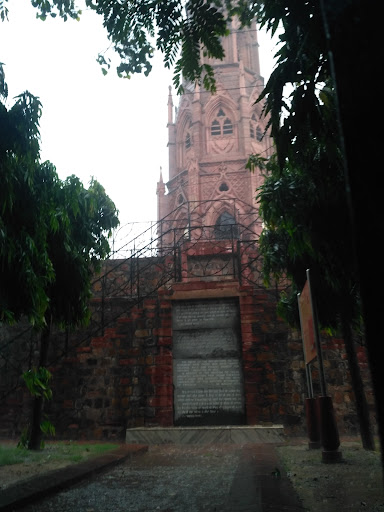
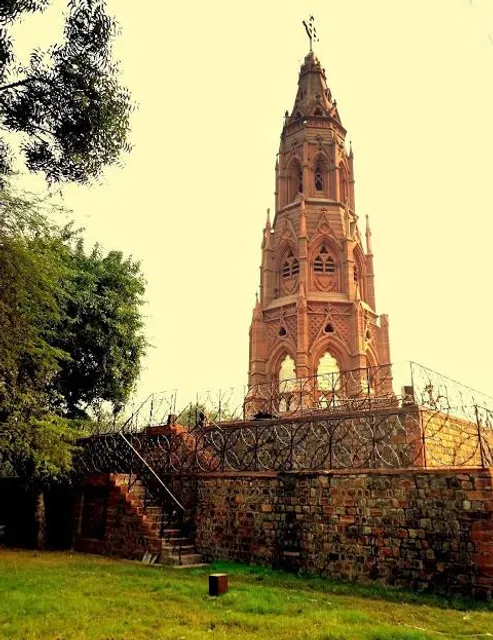
The Mutiny Memorial, now known as Ajitgarh, is a memorial situated on the Ridge New Delhi. It was built in memory of all those who had fought in the Delhi Field Force, British and Indian, during the Indian Revolt of 1857.
Nearby attractions
Malka Ganj Chowk
2148, Ghanta Ghar Chowk, Kamla Nagar, Shora Kothi, Jawahar Nagar, Subzi Mandi, Delhi, 110007, India
Nearby restaurants
Fateh ki Kachori
13, Rajpur Rd, Ludlow Castle, Civil Lines, Delhi, 110054, India
Subway Malka Ganj
Shop No2-29, Dr Bhim Rao Ambedkar Marg, Malka Ganj, Kamla Nagar, Delhi, 110007, India
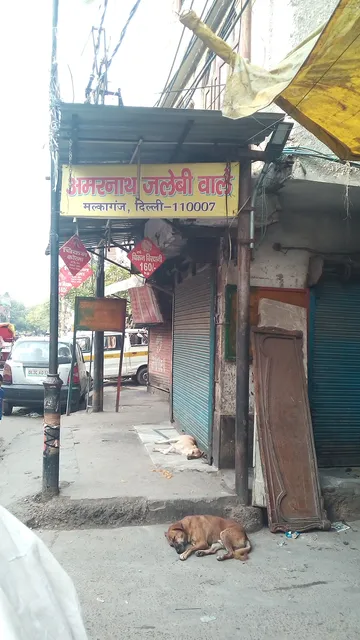
Amarnath jalebi wala
Dr Bhim Rao Ambedkar Marg, Block N, Malka Ganj, Delhi, 110007, India
Amritsariya Restaurant
13, Rajpur Rd, Ludlow Castle, Civil Lines, Delhi, 110054, India
sharma ji paratha wala Delhi 6
2758, gali ram Roop, near Robin cinama, Sabzi Mandi Old, Delhi, 110007, India
Raaj Chaat Bhandar
12, Rajpur Rd, Ludlow Castle, Civil Lines, New Delhi, Delhi, 110007, India
Haseen Mahal
M674+WQJ, Ram Bagh Rd, Naya Mohalla, Nawabganj, Tis Hazari, New Delhi, Delhi, 110006, India
Ricos, Kamla Nagar
24, Block UA, Jawahar Nagar, Kamla Nagar, Delhi, 110007, India
Jindal Bedmi Puri
Shop No. 8434, 2, Roshanara Rd, Kherian Mohalla, Sabzi Mandi Old, New Delhi, Delhi, 110007, India
prince chinese fast food
shop no - t2, indera market, Sabzi Mandi Old, New Delhi, Delhi, 110007, India
Nearby hotels
The Twenties Hotel Kamla Nagar
B1 23, Near, Malka Ganj Post Office Roundabout, near Hansraj College, Malka Ganj, Delhi, 110007, India
Hotel University stay
1827, Malka Ganj Road, 1825, Main Road, Malka Ganj, New Delhi, Delhi 110007, India
Kandh Brothers Homes
Roshanara Rd, near Pulbangash Metro Station, Aram Ganj, Sabzi Mandi Old, Delhi, 110007, India
Ivy League House Pyramid Residency
7802, 12, Roshanara Rd, Kherian Mohalla, Subzi Mandi, New Delhi, Delhi, 110007, India
Hotel Green Snapper
Valmiki mandir, 1825, Malka Ganj Road, Balmiki Mandir, Block G, Malka Ganj, Delhi, 110007, India
Flagship Du Rooms Near Pul Bangash Metro Station
Tehsil, 1825, Block G, Civil Lines, Delhi, 110007, India
OYO Kashish Residency
Shop No 26-A, Block UA, UAJawahar Nagar, Malka Ganj, Delhi, 110007, India
Related posts
Keywords
1857 Mutiny Memorial tourism.1857 Mutiny Memorial hotels.1857 Mutiny Memorial bed and breakfast. flights to 1857 Mutiny Memorial.1857 Mutiny Memorial attractions.1857 Mutiny Memorial restaurants.1857 Mutiny Memorial travel.1857 Mutiny Memorial travel guide.1857 Mutiny Memorial travel blog.1857 Mutiny Memorial pictures.1857 Mutiny Memorial photos.1857 Mutiny Memorial travel tips.1857 Mutiny Memorial maps.1857 Mutiny Memorial things to do.
1857 Mutiny Memorial things to do, attractions, restaurants, events info and trip planning
1857 Mutiny Memorial
IndiaDelhiFruit Market1857 Mutiny Memorial

Basic Info

1857 Mutiny Memorial

Kamla Nehru Ridge, Civil Lines, Delhi, 110007, India
4.3(263)
Open 24 hours
Save
spot

Ratings & Description

Info

The Mutiny Memorial, now known as Ajitgarh, is a memorial situated on the Ridge New Delhi. It was built in memory of all those who had fought in the Delhi Field Force, British and Indian, during the Indian Revolt of 1857.

Cultural
Scenic
Family friendly
attractions: Malka Ganj Chowk, restaurants: Fateh ki Kachori, Subway Malka Ganj, Amarnath jalebi wala, Amritsariya Restaurant, sharma ji paratha wala Delhi 6, Raaj Chaat Bhandar, Haseen Mahal, Ricos, Kamla Nagar, Jindal Bedmi Puri, prince chinese fast food
logoLearn more insights from Wanderboat AI.

Plan your stay

hotel
Pet-friendly Hotels in Fruit Market
Find a cozy hotel nearby and make it a full experience.
hotel
Affordable Hotels in Fruit Market
Find a cozy hotel nearby and make it a full experience.
hotel
The Coolest Hotels You Haven't Heard Of (Yet)
Find a cozy hotel nearby and make it a full experience.
hotel
Trending Stays Worth the Hype in Fruit Market
Find a cozy hotel nearby and make it a full experience.

Reviews

Nearby attractions of 1857 Mutiny Memorial

Malka Ganj Chowk

Malka Ganj Chowk

Malka Ganj Chowk

3.9

(86)

Open 24 hours
Click for details

Things to do nearby

Old Delhi Food-Temples-Spice Market & Rickshaw
Tue, Dec 9 • 10:00 AM
New Delhi, Delhi, 110006, India
View details
Same Day Taj Mahal Tour from Delhi by Car
Tue, Dec 9 • 2:30 AM
New Delhi, Delhi, 110001, India
View details
The Chef - Indian Cooking Class
Tue, Dec 9 • 11:30 AM
New Delhi, Delhi, 110063, India
View details

Nearby restaurants of 1857 Mutiny Memorial

Fateh ki Kachori

Subway Malka Ganj

Amarnath jalebi wala

Amritsariya Restaurant

sharma ji paratha wala Delhi 6

Raaj Chaat Bhandar

Haseen Mahal

Ricos, Kamla Nagar

Jindal Bedmi Puri

prince chinese fast food

Fateh ki Kachori

Fateh ki Kachori

4.3

(1.1K)

Click for details
Subway Malka Ganj

Subway Malka Ganj

4.0

(254)

Closed
Click for details
Amarnath jalebi wala

Amarnath jalebi wala

3.9

(34)

$

Click for details
Amritsariya Restaurant

Amritsariya Restaurant

4.2

(229)

Click for details
Get the Appoverlay
Get the AppOne tap to find yournext favorite spots!
Wanderboat LogoWanderboat

Your everyday Al companion for getaway ideas

CompanyAbout Us
InformationAI Trip PlannerSitemap
SocialXInstagramTiktokLinkedin
LegalTerms of ServicePrivacy Policy

Get the app

© 2025 Wanderboat. All rights reserved.
logo

Reviews of 1857 Mutiny Memorial

4.3
(263)
avatar
5.0
51w

One tower is in south Delhi. It came up in early 13th century. The whole world knows of it. After all, Qutub Minar is an UNESCO World Heritage monument, the first great experiment in Indo-Islamic architecture.

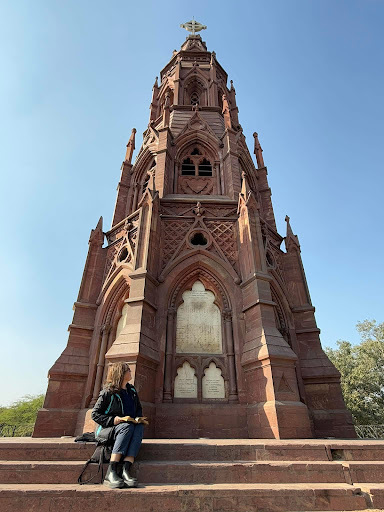
The other red sandstone tower came up 600 years later, in north Delhi. The world doesn’t know it that well. Originally called the Mutiny Memorial, the neo-Gothic minar is tall, tapering, speckled with long, lancet windows.

The British-era red sandstone tower stands atop a hilly ridge dense with trees and bushes. It is arrayed on all sides with marble plaques. The inscriptions on the white slabs summon up a significant segment of recent Indian history. One plaque commemorates “the memory of the officers and soldiers of British and Native of the Delhi Field Force who were killed in action or died of wounds or diseases between the 30th of May and 20th September 1857.”

This sunny noon, the tower is deserted except for a lone visitor. The desolate landmark is surrounded by a sweeping vista of treetops, which are surrounded by the vistas of an endless Delhi. Loitering around the stone edifice gives a bird’s eye perspective of the megacity’s daily life: the millions of roofs, the steel-grey metro trains sliding along the overland tracks, the many national flags hoisted across the landscape, the serpentine roads shimmering river-like under the noon sunlight. A devotional bhajan is playing somewhere on a speaker, probably far away. But it is being carried along to this remote tower on the day’s strong breeze.

Some of the tower’s arched plaques distinguish certain British fighters by invoking their names: Brigadier General J. Nicholson, Colonel C. Chester, Captain R.C. Facan, Lieutenant F.S. Tandy, etc. One plaque lists the numbers of “killed,” “wounded,” and “missing,” with separate entries for “British” and “Native.” Then there’s a tall plaque listing the “actions fought at or near Delhi.” That includes “Battle of Nujufgurh,’ “Capture of the Palace,” and “Action of the Subzee Mundi.” The last line on the plaque says: “City finally evacuated by the enemy.”

The “city” was certainly our Delhi. But who was the “enemy”?

A stand-alone plaque outside the tower responds to this curiosity: “The ‘enemy’ of the inscriptions on this monument were those who rose against colonial rule and fought bravely for national...

   Read more
avatar
5.0
6y

Delhi—the city of Djinns, teeming with a rich historical legacy is peppered with majestic monuments that have long stood the test of time. Situated in front of the Old Telegraph Building, the Mutiny Memorial is reminiscent of India’s Sepoy Mutiny (First War of Independence) in 1857 against the British rule. The monument was constructed in 1863 by the Public Works Department at government expenses, during British-ruled India. It was erected by the British to commemorate the lives lost during the First War of Indian Independence. On the 25th anniversary of India’s independence in 1972, the monument was hailed as a tribute to all the martyrs of India’s freedom struggle and was rechristened as Ajitgarh by the then government. During the First War of Independence, a large number of soldiers belonging to the Delhi Field Force sacrificed their lives to win back freedom for their country. Apart from soldiers, people from all other walks of life fought fearlessly. The names of thousands such martyrs whose existence is symbolic of their invincible spirit are etched in the walls of the Mutiny Memorial. The use of Victorian Gothic architecture spells magnificence. The tower is of octagonal shape on the exterior and circular in shape from the interior. The plaques on the surrounding walls and the red sandstone base are engraved with the names of soldiers and their ranks. Within 200 metres from the Mutiny Memorial lies the Ashokan Pillar.

Just like any other Ashokan edict, even this pillar was sandstone rocks. Standing tall opposite the entrance of the Bara Hindu Rao Hospital, close to the Delhi University Campus, the pillar is often termed as the Delhi-Meerut Pillar. It was built by emperor Ashoka but transported to Delhi by Feroze Shah. The second such Ashokan Pillar is at the Feroze Shah Kotla grounds. The pillar has many inscriptions on it, since these have not been deciphered, one can aver that these contain Ashoka’s message of Buddhism and dhamma.

You can reach the mutiny memorial either from the side of Bara Hindu Rao or Kamla Nagar, the Ridge road from Raj Pur Road or the...

   Read more
avatar
5.0
2y

The Mutiny Memorial in Delhi is a four-tiered Gothic-style sandstone spire that was built in 1863 to commemorate the British and Indian soldiers who died during the Indian Rebellion of 1857. The memorial is located on the Northern Ridge, about 2.4 kilometers from the Kashmiri Gate metro station.

The memorial is a relatively small structure, but it is well-maintained and easy to find. The base of the memorial is octagonal, and each of the eight faces is inscribed with the names of the soldiers who died in the rebellion. The top of the memorial is a tapering spire, which is topped with a cross.

The Mutiny Memorial is a quiet and peaceful place to reflect on the events of 1857. The memorial is also a reminder of the sacrifices that were made by both British and Indian soldiers during the rebellion.

Here are some of the pros and cons of visiting the Mutiny Memorial:

Pros:

The memorial is well-maintained and easy to find. The inscriptions on the base of the memorial provide a sobering reminder of the events of 1857. The memorial is a quiet and peaceful place to reflect.

Cons:

The memorial is relatively small and may not be of interest to everyone. There is no admission fee, but there is a small donation box at the entrance.

Overall, I would recommend visiting the Mutiny Memorial if you are interested in learning about the Indian Rebellion of 1857. The memorial is a small but significant historical site, and it is a quiet and peaceful place to reflect.

Here are some tips for visiting the Mutiny Memorial:

The memorial is open from 9am to 5pm, seven days a week. There is no admission fee. The memorial is located on the Northern Ridge, about 2.4 kilometers from the Kashmiri Gate metro station. There is a small donation box at the entrance.

I...

   Read more
Page 1 of 7
Previous
Next

Posts

Hammad Ul HassanHammad Ul Hassan
One tower is in south Delhi. It came up in early 13th century. The whole world knows of it. After all, Qutub Minar is an UNESCO World Heritage monument, the first great experiment in Indo-Islamic architecture. The other red sandstone tower came up 600 years later, in north Delhi. The world doesn’t know it that well. Originally called the Mutiny Memorial, the neo-Gothic minar is tall, tapering, speckled with long, lancet windows. The British-era red sandstone tower stands atop a hilly ridge dense with trees and bushes. It is arrayed on all sides with marble plaques. The inscriptions on the white slabs summon up a significant segment of recent Indian history. One plaque commemorates “the memory of the officers and soldiers of British and Native of the Delhi Field Force who were killed in action or died of wounds or diseases between the 30th of May and 20th September 1857.” This sunny noon, the tower is deserted except for a lone visitor. The desolate landmark is surrounded by a sweeping vista of treetops, which are surrounded by the vistas of an endless Delhi. Loitering around the stone edifice gives a bird’s eye perspective of the megacity’s daily life: the millions of roofs, the steel-grey metro trains sliding along the overland tracks, the many national flags hoisted across the landscape, the serpentine roads shimmering river-like under the noon sunlight. A devotional bhajan is playing somewhere on a speaker, probably far away. But it is being carried along to this remote tower on the day’s strong breeze. Some of the tower’s arched plaques distinguish certain British fighters by invoking their names: Brigadier General J. Nicholson, Colonel C. Chester, Captain R.C. Facan, Lieutenant F.S. Tandy, etc. One plaque lists the numbers of “killed,” “wounded,” and “missing,” with separate entries for “British” and “Native.” Then there’s a tall plaque listing the “actions fought at or near Delhi.” That includes “Battle of Nujufgurh,’ “Capture of the Palace,” and “Action of the Subzee Mundi.” The last line on the plaque says: “City finally evacuated by the enemy.” The “city” was certainly our Delhi. But who was the “enemy”? A stand-alone plaque outside the tower responds to this curiosity: “The ‘enemy’ of the inscriptions on this monument were those who rose against colonial rule and fought bravely for national liberation in 1857.”
Mr. knowMr. know
My experience was so scary I was in my collage so classmates are talking on mutiny house and many more hunted placese then me and my two friends diside that let's go and check this place after collage time is near 3 o'Clock we are on bike first things is a old gate is locked with big chain then we start seeing inside through the gate after some time a very old man is inside the mutiny house with a wooden stick was coming there , he ask us who are you and why are you here we told him about us then he unlocked the gate we start going inside all surrounding is so scary there is old stairs to go in the real building Its so big structure as compare its pictures we are so scared to touch the building walls we was happy about there is no ghost and making fun about this monument and start going back to home then suddenly that old man see us continuously then we move to go out of here that old man start following us we ask him why are you following us he is not answering it was very scared situation for us because there is no one is there to save us with in 3 km we start running to go out main is windup with big iron chain but that is is just horrible news for us. But chain was not locked so can unwind it time is around 6 o clock then we try to unwind the chain but its to big. That old man was disappear from there after open the gate we go to the bike and go out from this place with out seeing back ... I advice you to don't go there after 4 oclock .......
Saiyed Sabia AliSaiyed Sabia Ali
Silent peaceful alone mark of mutiny The Gothic style tower in red sandstone is the memorial built by the British in 1863 in memory of European soldiers who died during the 1857 revolt. It has an inscription mentioning the names of British soldiers. After independence in 1972, Indian government have changed its name to Ajitgarh and added the note that the 'enemy' mentioned on the memorials were 'immortal martyrs for Indian freedom'. “The memorial consists of a tapering tower of Gothic design raised on a high base of local hard stone paved with red sandstone. The tower measures 29.50 meters from the upper platform which is at a height of 5meter from ground level. The tower is entered through an arched opening on the west and a flight of winding staircase leads up to the top which is crowned by a red sandstone spire surmounted by a marble cross. Names of the soldiers are inscribed on the marble tablets on all sides of the façade.” Sourced from information board of memorial. It is in good Condition with fair maintenance. It remains open for public but because of the lonely location and very less awareness of the structure (and some ghost stories at nearby places like khooni jheel) the place is not so secure. Also due to heavy vegetation the monument and approach roads are not so secure and visible. Some parts have started getting converted to slums.
See more posts
See more posts
hotel
Find your stay

Pet-friendly Hotels in Fruit Market

Find a cozy hotel nearby and make it a full experience.

One tower is in south Delhi. It came up in early 13th century. The whole world knows of it. After all, Qutub Minar is an UNESCO World Heritage monument, the first great experiment in Indo-Islamic architecture. The other red sandstone tower came up 600 years later, in north Delhi. The world doesn’t know it that well. Originally called the Mutiny Memorial, the neo-Gothic minar is tall, tapering, speckled with long, lancet windows. The British-era red sandstone tower stands atop a hilly ridge dense with trees and bushes. It is arrayed on all sides with marble plaques. The inscriptions on the white slabs summon up a significant segment of recent Indian history. One plaque commemorates “the memory of the officers and soldiers of British and Native of the Delhi Field Force who were killed in action or died of wounds or diseases between the 30th of May and 20th September 1857.” This sunny noon, the tower is deserted except for a lone visitor. The desolate landmark is surrounded by a sweeping vista of treetops, which are surrounded by the vistas of an endless Delhi. Loitering around the stone edifice gives a bird’s eye perspective of the megacity’s daily life: the millions of roofs, the steel-grey metro trains sliding along the overland tracks, the many national flags hoisted across the landscape, the serpentine roads shimmering river-like under the noon sunlight. A devotional bhajan is playing somewhere on a speaker, probably far away. But it is being carried along to this remote tower on the day’s strong breeze. Some of the tower’s arched plaques distinguish certain British fighters by invoking their names: Brigadier General J. Nicholson, Colonel C. Chester, Captain R.C. Facan, Lieutenant F.S. Tandy, etc. One plaque lists the numbers of “killed,” “wounded,” and “missing,” with separate entries for “British” and “Native.” Then there’s a tall plaque listing the “actions fought at or near Delhi.” That includes “Battle of Nujufgurh,’ “Capture of the Palace,” and “Action of the Subzee Mundi.” The last line on the plaque says: “City finally evacuated by the enemy.” The “city” was certainly our Delhi. But who was the “enemy”? A stand-alone plaque outside the tower responds to this curiosity: “The ‘enemy’ of the inscriptions on this monument were those who rose against colonial rule and fought bravely for national liberation in 1857.”
Hammad Ul Hassan

Hammad Ul Hassan

hotel
Find your stay

Affordable Hotels in Fruit Market

Find a cozy hotel nearby and make it a full experience.

Get the Appoverlay
Get the AppOne tap to find yournext favorite spots!
My experience was so scary I was in my collage so classmates are talking on mutiny house and many more hunted placese then me and my two friends diside that let's go and check this place after collage time is near 3 o'Clock we are on bike first things is a old gate is locked with big chain then we start seeing inside through the gate after some time a very old man is inside the mutiny house with a wooden stick was coming there , he ask us who are you and why are you here we told him about us then he unlocked the gate we start going inside all surrounding is so scary there is old stairs to go in the real building Its so big structure as compare its pictures we are so scared to touch the building walls we was happy about there is no ghost and making fun about this monument and start going back to home then suddenly that old man see us continuously then we move to go out of here that old man start following us we ask him why are you following us he is not answering it was very scared situation for us because there is no one is there to save us with in 3 km we start running to go out main is windup with big iron chain but that is is just horrible news for us. But chain was not locked so can unwind it time is around 6 o clock then we try to unwind the chain but its to big. That old man was disappear from there after open the gate we go to the bike and go out from this place with out seeing back ... I advice you to don't go there after 4 oclock .......
Mr. know

Mr. know

hotel
Find your stay

The Coolest Hotels You Haven't Heard Of (Yet)

Find a cozy hotel nearby and make it a full experience.

hotel
Find your stay

Trending Stays Worth the Hype in Fruit Market

Find a cozy hotel nearby and make it a full experience.

Silent peaceful alone mark of mutiny The Gothic style tower in red sandstone is the memorial built by the British in 1863 in memory of European soldiers who died during the 1857 revolt. It has an inscription mentioning the names of British soldiers. After independence in 1972, Indian government have changed its name to Ajitgarh and added the note that the 'enemy' mentioned on the memorials were 'immortal martyrs for Indian freedom'. “The memorial consists of a tapering tower of Gothic design raised on a high base of local hard stone paved with red sandstone. The tower measures 29.50 meters from the upper platform which is at a height of 5meter from ground level. The tower is entered through an arched opening on the west and a flight of winding staircase leads up to the top which is crowned by a red sandstone spire surmounted by a marble cross. Names of the soldiers are inscribed on the marble tablets on all sides of the façade.” Sourced from information board of memorial. It is in good Condition with fair maintenance. It remains open for public but because of the lonely location and very less awareness of the structure (and some ghost stories at nearby places like khooni jheel) the place is not so secure. Also due to heavy vegetation the monument and approach roads are not so secure and visible. Some parts have started getting converted to slums.
Saiyed Sabia Ali

Saiyed Sabia Ali

See more posts
See more posts