HTML SitemapExplore
Find Things to DoFind The Best Restaurants

Archaeological Site Museum, Lothal — Attraction in Gujarat

Name
Archaeological Site Museum, Lothal
Description
Nearby attractions
Lothal, Archaeological remains of a Harappa Port-Town
Lothal, Taluka, Saragwala, Dholka, Gujarat 382230, India
Nearby restaurants
Nearby hotels
Related posts
Keywords
Archaeological Site Museum, Lothal tourism.Archaeological Site Museum, Lothal hotels.Archaeological Site Museum, Lothal bed and breakfast. flights to Archaeological Site Museum, Lothal.Archaeological Site Museum, Lothal attractions.Archaeological Site Museum, Lothal restaurants.Archaeological Site Museum, Lothal travel.Archaeological Site Museum, Lothal travel guide.Archaeological Site Museum, Lothal travel blog.Archaeological Site Museum, Lothal pictures.Archaeological Site Museum, Lothal photos.Archaeological Site Museum, Lothal travel tips.Archaeological Site Museum, Lothal maps.Archaeological Site Museum, Lothal things to do.
Archaeological Site Museum, Lothal things to do, attractions, restaurants, events info and trip planning
Archaeological Site Museum, Lothal
IndiaGujaratArchaeological Site Museum, Lothal

Basic Info

Archaeological Site Museum, Lothal

Lothal, Saragwala, Gujarat 382230, India
4.3(343)
Open 24 hours
Save
spot

Ratings & Description

Info

Cultural
Outdoor
Family friendly
Accessibility
attractions: Lothal, Archaeological remains of a Harappa Port-Town, restaurants:
logoLearn more insights from Wanderboat AI.

Plan your stay

hotel
Pet-friendly Hotels in Gujarat
Find a cozy hotel nearby and make it a full experience.

hotel
Affordable Hotels in Gujarat
Find a cozy hotel nearby and make it a full experience.

hotel
The Coolest Hotels You Haven't Heard Of (Yet)
Find a cozy hotel nearby and make it a full experience.

hotel
Trending Stays Worth the Hype in Gujarat
Find a cozy hotel nearby and make it a full experience.

Reviews

Nearby attractions of Archaeological Site Museum, Lothal

Lothal, Archaeological remains of a Harappa Port-Town
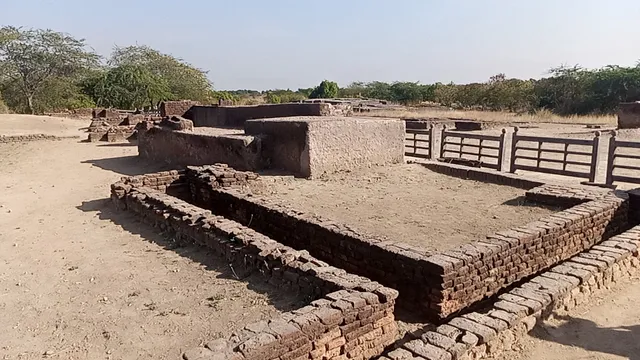
Lothal, Archaeological remains of a Harappa Port-Town

Lothal, Archaeological remains of a Harappa Port-Town

4.3

(2K)

Open 24 hours
Click for details
Get the Appoverlay
Get the AppOne tap to find yournext favorite spots!
Wanderboat LogoWanderboat

Your everyday Al companion for getaway ideas

CompanyAbout Us
InformationAI Trip PlannerSitemap
SocialXInstagramTiktokLinkedin
LegalTerms of ServicePrivacy Policy

Get the app

© 2025 Wanderboat. All rights reserved.

Reviews of Archaeological Site Museum, Lothal

4.3
(343)
avatar
4.0
41w

Lothal: Walking Through Ancient Footsteps

The midday sun beat down relentlessly as I made my way through Lothal, but the discomfort of the heat quickly faded into insignificance against the weight of history surrounding me.

The walk through the site is surprisingly short, taking less than an hour to explore the main structures. Yet standing where the first inhabitants of this area stood 4,000 years ago is nothing short of amazing. There's something profoundly moving about placing your feet on the same earth where an advanced civilization once thrived.

The ancient dock, still visible after millennia, speaks to the ingenuity of these early engineers. Walking along its edges, I couldn't help but imagine the bustling port activity that once animated this now-quiet landscape. The carefully planned streets and sophisticated drainage systems reveal a society far more advanced than I had expected.

What struck me most was the sense of connection across time. Looking at the remnants of homes where families once lived their daily lives created an unexpected emotional response. These weren't just historical artifacts but the remains of a living, breathing community.

The small museum houses treasures that bring the ancient inhabitants to life through their craftsmanship and artistic expression. I found myself lingering over the intricate seals and delicate jewelry, marveling at their preservation.

Despite the heat, Lothal delivers an experience that transcends mere sightseeing. It's a journey through time that leaves you with a profound appreciation for our shared human heritage. Just remember to bring plenty of water and perhaps visit during the cooler morning hours...

   Read more
avatar
4.0
4y

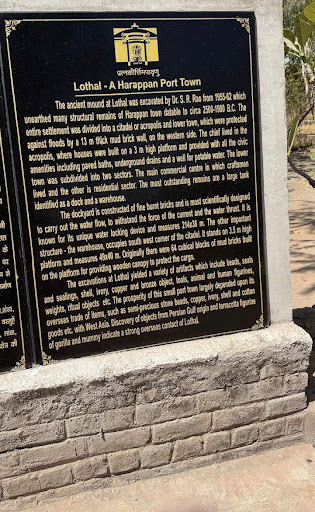
Lothal is believed to be 3,700 years old and is the only major port-town of the IVC, discovered so far. Remarkably, Lothal is home to what is believed to be one of the oldest docks in the world.

First discovered in 1954, Lothal was excavated from 1955-1960 by S R Rao of the Archaeological Survey of India.

Interestingly, the name ‘Lothal’ comes from the local name of the place, roughly translated to ‘Mound of the Dead’ in Gujarati; Mohenjo-daro, 670 km from Lothal, means the same in Sindhi.

The site itself is small, at 7 hectares, and is 18 times smaller than Mohenjo-daro. It displays many of the features that make the Harappan Civilization distinct, like the division of the town into two sections – the Upper Town and Lower Town – and advanced town planning.

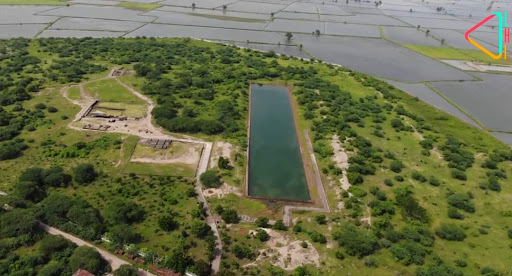
What really sets Lothal apart is its dock. At the northern end of the town is a basin with a vertical wall, an inlet and outlet channels. This has been identified as a ‘tidal dockyard’.

The basin exhibits a remarkable knowledge of hydraulics and tides, which further supports the assumption that this was a dock and not an irrigation tank, as some archaeologists contend.

Archaeologists have also identified the remains of stone anchors, marine shells and seals, which can be traced to the Persian Gulf. These, along with a structure identified as a warehouse, strongly suggest that Lothal was a port with a dock.

DidYouKnow: Lothal is one of the many sites in Gujarat. During the exploration in 1950s by the Archaeological Survey of India, many sites were found strewn across Delhi, Rajasthan, Haryana and Gujarat, and 50 of them were concentrated in Gujarat alone!

#worldheritage...

   Read more
avatar
5.0
5y

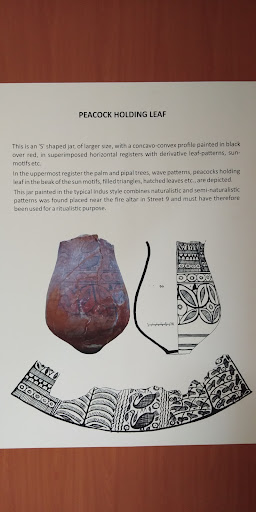
Compared to many other museums, the archaeological museum at Lothal is far better one, but can be lot better. The entry fee is very nominal. Given the archaeological importance of the site, especially for international archaeology & Indian history, the museum is a disappointment. The different objects obtained are categorised into groups based on the possibility of their use in the Harappan culture. For ex, the ritual objects are all grouped together. This consists of terracotta spoons, ladles, & terracotta cakes. The toys excavated at Lothal form an impressive set. There are terracotta tops, toy carts pulled by animals and a set of terracotta games pieces which “simulate modern chess pieces”. The weight measures which form an important aspect of Lothal have been displayed with explanations. It informs us that there were three series of weights: the first one meant for weighing lighter articles and the second for measuring heavier objects and the third for weighing system. The uniformity and accuracy of stone weights of the first two series and gold discs of the third series are remarkable for the age. There is a multimedia room in the museum. The person in charge is courteous. There are shows about Harappan culture in English & Hindi. The show is good albeit monotonous. It can be made more...

   Read more
Page 1 of 7
Previous
Next

Posts

Anshuman SinghAnshuman Singh
Lothal is believed to be 3,700 years old and is the only major port-town of the IVC, discovered so far. Remarkably, Lothal is home to what is believed to be one of the oldest docks in the world. First discovered in 1954, Lothal was excavated from 1955-1960 by S R Rao of the Archaeological Survey of India. Interestingly, the name ‘Lothal’ comes from the local name of the place, roughly translated to ‘Mound of the Dead’ in Gujarati; Mohenjo-daro, 670 km from Lothal, means the same in Sindhi. The site itself is small, at 7 hectares, and is 18 times smaller than Mohenjo-daro. It displays many of the features that make the Harappan Civilization distinct, like the division of the town into two sections – the Upper Town and Lower Town – and advanced town planning. What really sets Lothal apart is its dock. At the northern end of the town is a basin with a vertical wall, an inlet and outlet channels. This has been identified as a ‘tidal dockyard’. The basin exhibits a remarkable knowledge of hydraulics and tides, which further supports the assumption that this was a dock and not an irrigation tank, as some archaeologists contend. Archaeologists have also identified the remains of stone anchors, marine shells and seals, which can be traced to the Persian Gulf. These, along with a structure identified as a warehouse, strongly suggest that Lothal was a port with a dock. DidYouKnow: Lothal is one of the many sites in Gujarat. During the exploration in 1950s by the Archaeological Survey of India, many sites were found strewn across Delhi, Rajasthan, Haryana and Gujarat, and 50 of them were concentrated in Gujarat alone! #worldheritage #indiantourism
Vinay JayaramVinay Jayaram
Compared to many other museums, the archaeological museum at Lothal is far better one, but can be lot better. The entry fee is very nominal. Given the archaeological importance of the site, especially for international archaeology & Indian history, the museum is a disappointment. The different objects obtained are categorised into groups based on the possibility of their use in the Harappan culture. For ex, the ritual objects are all grouped together. This consists of terracotta spoons, ladles, & terracotta cakes. The toys excavated at Lothal form an impressive set. There are terracotta tops, toy carts pulled by animals and a set of terracotta games pieces which “simulate modern chess pieces”. The weight measures which form an important aspect of Lothal have been displayed with explanations. It informs us that there were three series of weights: the first one meant for weighing lighter articles and the second for measuring heavier objects and the third for weighing system. The uniformity and accuracy of stone weights of the first two series and gold discs of the third series are remarkable for the age. There is a multimedia room in the museum. The person in charge is courteous. There are shows about Harappan culture in English & Hindi. The show is good albeit monotonous. It can be made more detailed & exciting.
Het VachhaniHet Vachhani
Lothal is a fascinating archaeological site that offers a deep insight into the advanced civilization of the Indus Valley. Located in Gujarat, India, this ancient city, dating back to around 2400 BCE, showcases remarkable urban planning, a sophisticated drainage system, and one of the world's earliest known dockyards. One of the most impressive aspects of Lothal is its meticulously designed dockyard, which highlights the city's role as a major trade hub. The well-planned streets, bead-making workshops, and remains of a thriving marketplace indicate a highly organized society with impressive craftsmanship. Visitors to Lothal can explore its well-preserved ruins and the on-site museum, which displays artifacts like pottery, seals, and jewelry, offering a glimpse into the daily life of its inhabitants. The site’s historical significance, combined with its peaceful surroundings, makes it a must-visit for history enthusiasts and archaeology lovers. Lothal stands as a testament to the ingenuity and sophistication of the Harappan civilization, making it one of India’s most important and underrated heritage sites.
See more posts
See more posts
hotel
Find your stay

Pet-friendly Hotels in Gujarat

Find a cozy hotel nearby and make it a full experience.

Lothal is believed to be 3,700 years old and is the only major port-town of the IVC, discovered so far. Remarkably, Lothal is home to what is believed to be one of the oldest docks in the world. First discovered in 1954, Lothal was excavated from 1955-1960 by S R Rao of the Archaeological Survey of India. Interestingly, the name ‘Lothal’ comes from the local name of the place, roughly translated to ‘Mound of the Dead’ in Gujarati; Mohenjo-daro, 670 km from Lothal, means the same in Sindhi. The site itself is small, at 7 hectares, and is 18 times smaller than Mohenjo-daro. It displays many of the features that make the Harappan Civilization distinct, like the division of the town into two sections – the Upper Town and Lower Town – and advanced town planning. What really sets Lothal apart is its dock. At the northern end of the town is a basin with a vertical wall, an inlet and outlet channels. This has been identified as a ‘tidal dockyard’. The basin exhibits a remarkable knowledge of hydraulics and tides, which further supports the assumption that this was a dock and not an irrigation tank, as some archaeologists contend. Archaeologists have also identified the remains of stone anchors, marine shells and seals, which can be traced to the Persian Gulf. These, along with a structure identified as a warehouse, strongly suggest that Lothal was a port with a dock. DidYouKnow: Lothal is one of the many sites in Gujarat. During the exploration in 1950s by the Archaeological Survey of India, many sites were found strewn across Delhi, Rajasthan, Haryana and Gujarat, and 50 of them were concentrated in Gujarat alone! #worldheritage #indiantourism
Anshuman Singh

Anshuman Singh

hotel
Find your stay

Affordable Hotels in Gujarat

Find a cozy hotel nearby and make it a full experience.

Get the Appoverlay
Get the AppOne tap to find yournext favorite spots!
Compared to many other museums, the archaeological museum at Lothal is far better one, but can be lot better. The entry fee is very nominal. Given the archaeological importance of the site, especially for international archaeology & Indian history, the museum is a disappointment. The different objects obtained are categorised into groups based on the possibility of their use in the Harappan culture. For ex, the ritual objects are all grouped together. This consists of terracotta spoons, ladles, & terracotta cakes. The toys excavated at Lothal form an impressive set. There are terracotta tops, toy carts pulled by animals and a set of terracotta games pieces which “simulate modern chess pieces”. The weight measures which form an important aspect of Lothal have been displayed with explanations. It informs us that there were three series of weights: the first one meant for weighing lighter articles and the second for measuring heavier objects and the third for weighing system. The uniformity and accuracy of stone weights of the first two series and gold discs of the third series are remarkable for the age. There is a multimedia room in the museum. The person in charge is courteous. There are shows about Harappan culture in English & Hindi. The show is good albeit monotonous. It can be made more detailed & exciting.
Vinay Jayaram

Vinay Jayaram

hotel
Find your stay

The Coolest Hotels You Haven't Heard Of (Yet)

Find a cozy hotel nearby and make it a full experience.

hotel
Find your stay

Trending Stays Worth the Hype in Gujarat

Find a cozy hotel nearby and make it a full experience.

Lothal is a fascinating archaeological site that offers a deep insight into the advanced civilization of the Indus Valley. Located in Gujarat, India, this ancient city, dating back to around 2400 BCE, showcases remarkable urban planning, a sophisticated drainage system, and one of the world's earliest known dockyards. One of the most impressive aspects of Lothal is its meticulously designed dockyard, which highlights the city's role as a major trade hub. The well-planned streets, bead-making workshops, and remains of a thriving marketplace indicate a highly organized society with impressive craftsmanship. Visitors to Lothal can explore its well-preserved ruins and the on-site museum, which displays artifacts like pottery, seals, and jewelry, offering a glimpse into the daily life of its inhabitants. The site’s historical significance, combined with its peaceful surroundings, makes it a must-visit for history enthusiasts and archaeology lovers. Lothal stands as a testament to the ingenuity and sophistication of the Harappan civilization, making it one of India’s most important and underrated heritage sites.
Het Vachhani

Het Vachhani

See more posts
See more posts