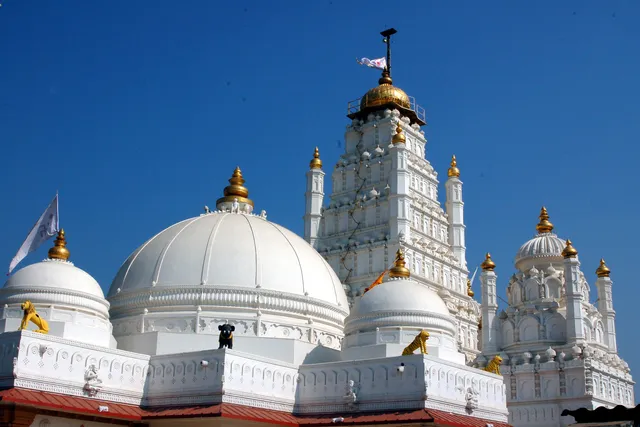
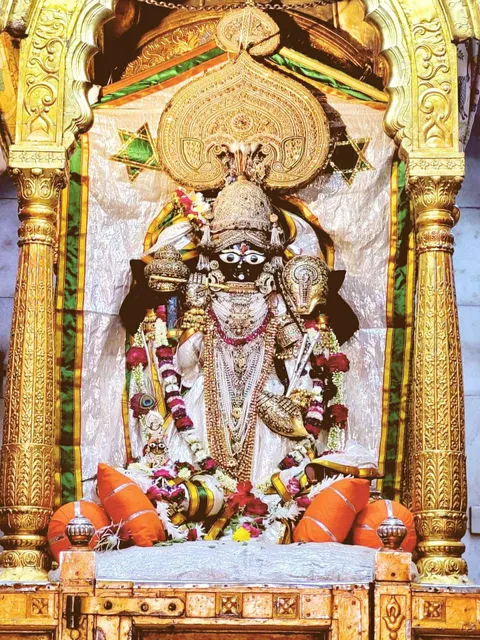
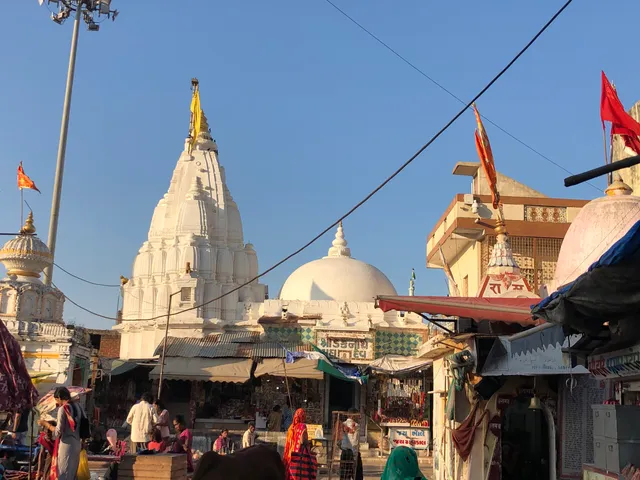
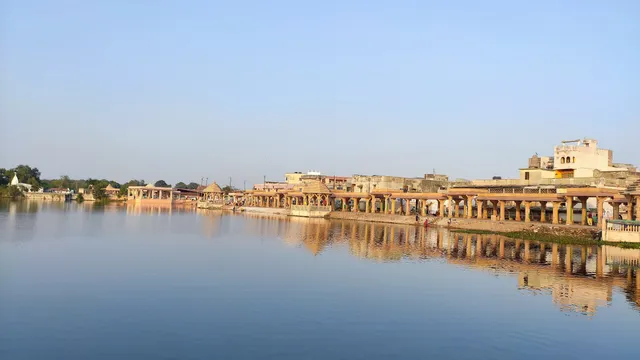
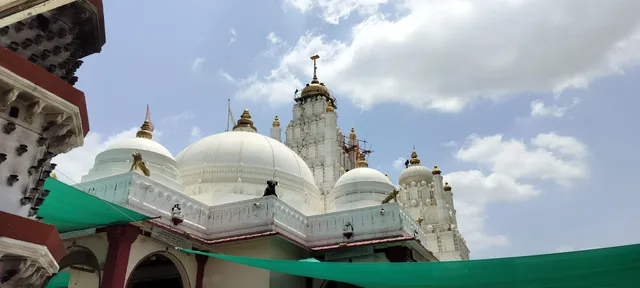
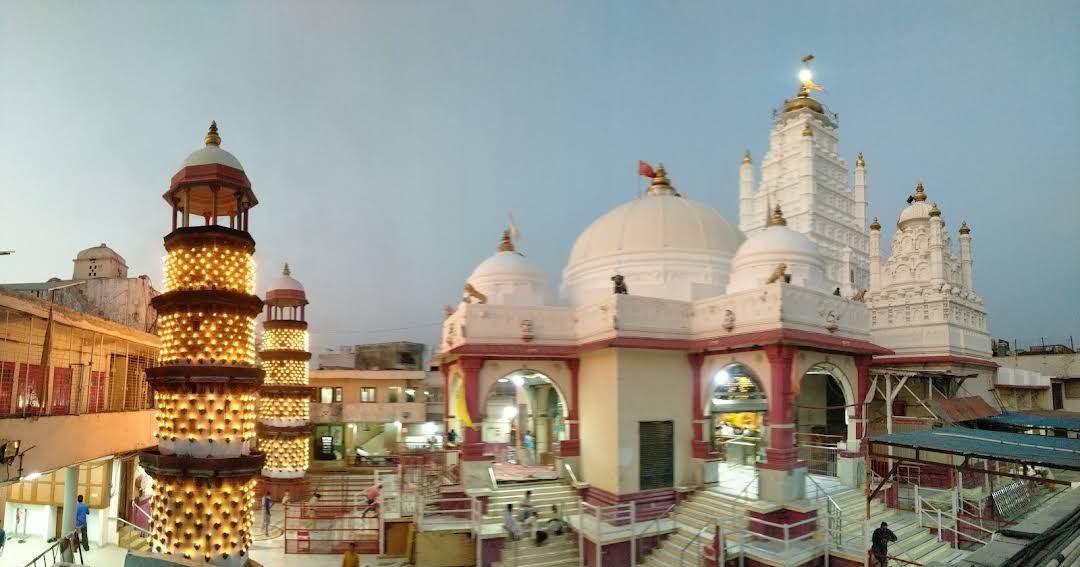
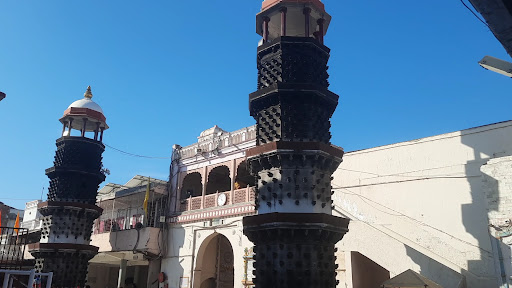
In the Mahabharata era, Dakor, known as Dankor, was a jungle called Hidamba van, rich in streams and lakes, attracting sages to establish hermitages. Dank Rishi's hermitage was here, and Lord Shiva, pleased with his penance, left behind a Linga (Danknath Mahadev) in his place. The area was also known as Khakhariya due to the abundance of Khakhra (palash) trees. Dakor's history, particularly regarding the Ranchhodraiji temple, is linked to the legend of Bodana, a devotee of Lord Krishna. It is believed that Lord Krishna came from Dwaraka to Dakor to give darshan to Bodana, who was unable to travel to Dwaraka due to old age. The temple is set on a high platform in a medieval style. The temple holds festivals on Kartik, Phalgun, Chaitra, and Ashwin Purnimas, attracting large crowds. Other Vaishnava festivals like Holi, Janmashtami, and Rathyatra are also celebrated. Dakor, also known as Dankor or Khakhariya, is now a prominent location in Gujarat, known for its Ranchhodraiji temple and associated legends. ncient Roots & Early Legends Dakor’s origins trace back to the Mahabharata era, when the area was known as ‘Hidamba van’, a dense, serene forest that attracted sages. It was here that Dank Rishi performed penance, and Lord Shiva, pleased with him, manifested as Danknath Mahadev in the form of a lingam. Hence, the place was initially known as ‘Dankor’. A pivotal legend centers around Vijayanand Bodana, a devout native who faithfully offered Tulsi leaves to Lord Krishna in Dwarka, journeying on foot every six months for darshan. Eventually, due to his devotion, Krishna appeared in a dream and guided him to bring the Lord to Dakor in a bullock cart. In a miraculous journey, Bodana returned with the idol, which he hid in Gomati Lake during confrontation with Dwarka priests. Tragically, Bodana was struck down by a spear, and the surrounding water turned red—a divine spectacle marking his sacrifice. The priests demanded payment equal to the idol's weight in gold. Bodana’s widow, Gangabai, offered a single nose-ring—yet it magically outweighed the deity, thus fulfilling the demand miraculously. As Krishna directed, a replica of the idol appeared later in Dwarka (in Sevaradhan Vav), while the original remained in Dakor—a testament to divine will and devotion. The present temple was constructed in 1772 AD by Gopal Jagannath Tambekar, a Peshwa court banker, at a cost of one lakh rupees. Rising on a granite plinth (168×151 ft), the temple boasts 8 domes and 24 turrets, with the central dome soaring approximately 27 meters—making it the tallest in the district. Its architecture draws upon Maharashtrian influences, evident in the dome structure and cupola styling. The idol of Ranchhodraiji (a form of Krishna meaning “he who fled the battlefield”) is carved from black touchstone, standing about 1 m tall and 45 cm wide, lavishly adorned with jewels, gold, and garments. Its ornate throne, plated in silver and gold, was a gift from the Gaekwad of Baroda. Inside the temple, the Jagmohan (audience hall) features paintings of Krishna’s life and, until recently, a polished dome ceiling adorned with Rasa-lila scenes in Bundi style, later replaced by intricate mirror inlay work. The Nagarkhana (music chamber) atop the gate resonates with devotional shehnai and drum music regularly. Dakor has grown into one of Gujarat’s foremost Vaishnavite pilgrimage centers, drawing 70–80 lakh pilgrims annually and designated as a key site by the state’s Yatradham Vikas Board. Around 35 festivals are held each year along with major celebrations on Kartik, Phalgun, Chaitra, and Ashwin Purnimas. Festivals such as Annakoot, Holi, Janmashtami, Rathyatra, Hindola and Palna are celebrated. The Ranchhodraiji Temple in Dakor beautifully blends mythology, devotion, and architecture. From its ancient hermitage roots and the heart-touching legend of Bodana, to its majestic 18th-century construction, the temple stands as a powerful symbol of faith. Its ornate structure, vibrant worship, and continuing festivals make it a profound spiritual...
Read moreThe temple of Raṇchoḍrāyjī houses a mūrtī of the Vishnu-Trivikram class. The temple rituals are under the influence of Vallabhite Vaishnavism. The name "Raṇchoḍ" refers to when Kr̥ṣṇa fled the battlefield by running away from Jarāsandha to Dvārkā
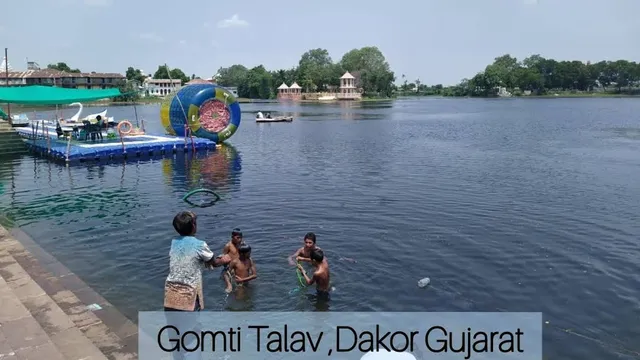
According to the Ḍākor-māhātmya, a Rajput named Boḍāṇo aka Vijayasiṁha used to visit Dvārkādhīś at Dvārkā, but lived in Ḍākor. In 1151, when Boḍāṇā reached the age of eighty years, God told Boḍāṇā that he would join him in Ḍākor. Boḍāṇā borrowed a cart and bullocks from a local cowherd and sold his utensils to feed them, and made for Dvārakā. When he reached Dvārakā, the Gugalīs (temple priests of Dvārakā) suspected his intentions and put additional locks on the temple. However Dvārkānāth now named Raṇchoḍ himself slipped out of the temple and awoke Boḍāṇā and told him to drive away with him. When they left the city gates Raṇchoḍ himself drove the cart while Boḍāṇā slept. When the Gugalīs awoke in the morning to find Dvāraknāth missing, they chased Boḍāṇā back to Ḍākor, where he had hidden Raṇachoḍ in the Gomatī reservoir. Raṇchoḍ told Boḍāṇā to meet the Gugalīs and give them presents of curds, but the Gugalīs threw a lance at him. According to the mahātmya the lance instead landed on Raṇachoḍjī whose blood bloodied the waters of the Gomatī and revealed his location. The Gugalīs then tried to remove the image from the waters but were unsuccessful. The Gugalīs became repentant and began fasting to try remove their guilt. Boḍāṇā's wife Gaṅgā could not bear to see this sight, so when she was giving Raṇchoḍ his daily evening roṭalā, she offered to give him lāḍus if he bestowed grace on the Gugalīs and to not give him anything he did not. Raṇachoḍ told her that the Gugalīs were not missing him, but the gold and money his presence brought them. He told Gaṅgā to ask the Gugalīs if they would accept his weight in gold, and proceeded to gobble all the lāḍus. The Gugalīs agreed to this contract, but it was miracously discovered that Gaṅgā's gold nose-ring weighed more Raṇchoḍ, from when the Gugalīs left. The mūrti in Dvārkā was replaced miraculously.2 The Ḍaṅka Purāṇa or Ḍaṅkapura-māhātmya was written at the end of the 17th century.4] The current temple was built by Gopāl Tāṁbvekar, a Dakṣiṇī Brahmin from Poona, who was a devotee of Veṅkaṭeśa. Construction began in AD 1769-70 and Raṇchoḍjī was moved into the new temple by Rāmasing, descendant of Boḍāṇā in 1770-71. Tāṁbvekar also was granted Dakor by Peśvā Mādhava Rāō.[7 According to tradition when the temple was built Raṇachoḍ told Lakṣmī that the original temple should remain inhabited by her, and that he would visit her every Ekadaśī and Friday in the form of Bāla-Kr̥ṣṇa. Accordingly on those days the icon of Gopāla Lāl is taken on elephant or carriage from the (current) Nija temple to Lakṣmījī's temple. The current Nija temple also contains images of Lakṣmī, Satyabhāmā, and Gopāla Lāl, the three of which are taken to the Sajjā temple at night.[6]
After the region came under the control of the Gaekwads of Baroda, the rulers patronized the temple and its sevaks.
During English rule the temple's ownership of the village of Ḍākor was confirmed. In the 1860s and 1870, Vaiṣṇava Mahārājas Bhaṭṭajī and Maṭujī visited Dakor and served Raṇāchoḍarāy and patronized the temple. Much wealth was owned in the name of Raṇachoḍarāy and managed by the sevaks, including a banking firm called Gopāla Lālajī and cows. The sevaks in that era played a keen interest in the maintenance of prosperity of the temple through gifts, as well as maintaining orthodox beliefs, such as when a police commissioner named Hykoop was assaulted for trying to enter the temple which would have been considered ritual defilement.[8]
Dakor (Gujarati: ISO 15919: Ḍākōr) is a small city and a municipality in Kheda district in the state of Gujarat, India. It is prominent for its temple of Raṇchoḍrāyjī. From 6:45 AM To 12:00 PM in the morning and from 4:00 PM To 07:30 PM in the evening are the darshan timings at Shree Ranchhodraiji...
Read moreRanchhodray Temple Dakor Ranchhodraiji Maharaj Mandir situated in Dakor city resided in the Kheda district of Gujarat. The temple is one of the popular temples of Dakor. This temple is the popular pilgrimage centre also the boating facility available at the lake in front of the temple stands as the major attraction to the temple. The temple is dedicated to Lord Krishna. Devotees throng to the temple especially during the aarti to seek darshan of Lord Krishna. The temple of Lord Krishna is also popular for the various Bhog and Prasad, especially Laddu and Rasmalayi. The temple has a unique culture, where only women’s are allowed to offer food (Prasad) and flowers to the Lord
History of this Temple In the Mahabharata period, the area around Dakor was called ‘Hidamba’ forest. It was a very dense forest. It was pleasant and rich with rivers and lakes. Establishing his ashram for penance had become an attraction for the sages. Similarly, the hermitage of Dank Rishi was also in this area. Lord Shiva was pleased with him during penance and asked him to ask for something. Thereafter, Dank Rishi requested Lord Shiva to stay permanently in his ashram.
Lord Shiva agreed to their request. He disappeared and left behind his replica in the form of Linga, which is known as Danknath Mahadev. Thus, in ancient times Dakor was known as ‘Dankor’ after the name of Danknath Mahadev. It was also known as Khakharia because of the many Khakhra (Palash) trees in the vicinity. akor in Kheda District of Gujarat is prominent for its grand temple of Shree Krishna which have a historical significance. An interesting legend relates how Lord Krishna came to reveal himself at Dakor (Kaira District) leaving his Dwarka abode. In olden times a Krishna devotee named Bholanath used to walk all the way to Dwarka from Dakor on every full moon night to worship his beloved Krishna. The all-knowing God noticed the difficulties which his devotee was undergoing. The god told Bholanath when he was visiting Dwarka that he need not walk all the way to distant Dwarka as he had decided to stay at Dakor (Dhankpuri of olden times). So God accompanied him to Dakor.
The priests at Dwarka temple were naturally upset at the turn of events. They somehow or other wanted to get backthe stone-idol of Ranchhodrai (Krishna). Both at Dwarka and Dakor Krishna is known Ranchhodrai. It is said that he ran away from battle when Kalyavan attacked him as an ally of Jarasandh. So Krishna is called Ranchhodrai - one who ran away from the battle. The priest of Dwarka knew that Bholanath was a poor man. So they told him that he should either pay for the stone idol in gold or return it. The only golden ornament the poor devotee had was his wife's nose ring. When the idol and the nose ring were placed in the scales they were found to be equal in weight. That is how Krishna changed his residence from Dwarka to Dakor for the convenience of a devotee. The belief is the Krishna idol of Dakor was originally from Dwarka.
There is a carnival or fair which takes place at Dakor around February and March, (during festival of Holi).On the day of Sharad Purnima (Full moon day) which comes after end of navratri is the day believed on which lord krishna come to Dakor as Ranchodrai with his great devotee known as Badona. Thus, he fulfilled his promise. Also the temple is visited by devotees during...
Read more