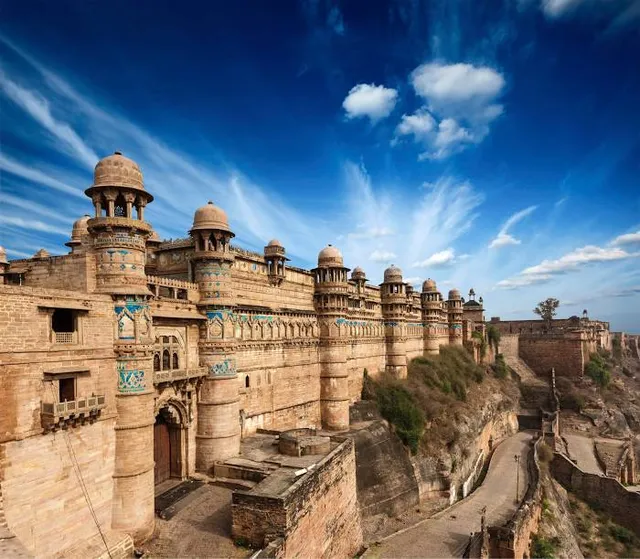
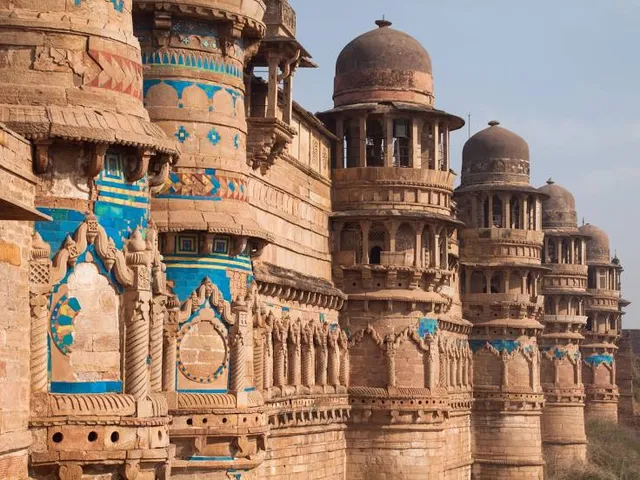
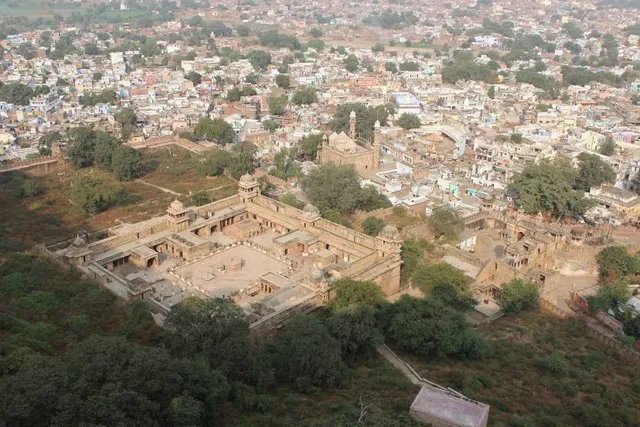
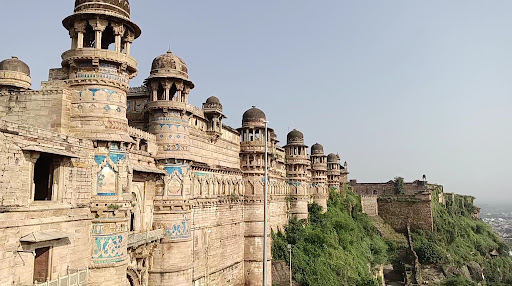
Key PointsGwalior Fort, located in Madhya Pradesh, is a historic hill fort over 1,000 years old, known for its architectural grandeur and rich history.It has been ruled by various dynasties, including the Tomars, Mughals, and Marathas, each contributing to its structure.The fort features notable structures like Raja Man Singh Palace, Siddhanchal Jain Statues, and Chaturbhuj Temple, famous for the earliest inscription of zero.Visitors can enjoy panoramic views, a light and sound show, and explore the Gwalior Fort Museum.OverviewGwalior Fort, perched atop a sandstone hill in Gwalior, Madhya Pradesh, is a magnificent testament to India's historical and architectural heritage. Dating back to the 6th century, it has witnessed the rise and fall of numerous dynasties, making it a significant cultural landmark.Historical SignificanceThe fort's history is steeped in legend, with its name derived from a sage, Gwalipa, who cured King Suraj Sen of leprosy. It has been under the control of dynasties like the Tomars, Mughals, Marathas, and British, each leaving a unique mark on its architecture and history.Architectural HighlightsSpanning 3 square kilometers, the fort blends Rajput, Mughal, and Hindu styles. Key attractions include:Raja Man Singh Palace: Known for blue glazed tiles and its use as a state prison.Siddhanchal Rock Cut Jain Statues: Features a 58.4-foot-tall idol of Lord Rishabhanatha.Chaturbhuj Temple: Houses the earliest known inscription of the number 'zero'.Other notable structures include Teli Ka Mandir and Saas Bahu Mandir, showcasing diverse architectural influences.Visitor ExperienceVisitors can explore the fort via gates like Urvai Gate, enjoy panoramic city views, and experience the evening light and sound show, which narrates its history. The Gwalior Fort Museum offers insights into the region's past through artefacts.For more details, visit:Madhya Pradesh Tourism - Gwalior FortWikipedia - Gwalior FortIncredible India - Gwalior FortDetailed Survey Note on Gwalior FortGwalior Fort, located in the heart of Gwalior City, Madhya Pradesh, is a historic hill fort that stands as a testament to India's rich cultural and architectural heritage. Perched atop a steep mass of sandstone, it dominates the cityscape and has been a significant monument for over a millennium. This survey note provides a comprehensive overview of its history, architecture, and visitor experience, drawing from extensive research conducted as of July 19, 2025.Historical ContextThe fort's origins are traced back to the 6th century, with some inscriptions suggesting an even earlier existence. Local legend attributes its foundation to King Suraj Sen, who was cured of leprosy by a sage named Gwalipa, leading to the fort being named after him. Historically, it has been known by names like Gopgiri, Gop Parvat, and Gopachala Durg, reflecting its ancient roots. Over the centuries, it has passed through the hands of various dynasties, including the Kushanas, Nagas, Guptas, Hunas, Pratiharas, Kachhwahas, Tomaras, Pathans, Surs, Mughals, English, Jats, and Marathas, particularly the Scindia dynasty. Significant events include its use as a prison during the Mughal era, notably for Sikh Guru Hargobind (1609–1612), and its role in the 1857 uprising, where 6,500 sepoys rebelled before British control was reestablished by 1858. The fort was finally handed to the Scindias in 1886, ruling until India's independence in 1947.The Mughal invasion in 1527, led by Babur, had a notable impact, with his army defacing Jain statues, fragments of which are still visible within the fort. Earlier, Mahmud of Ghazni besieged it in 1022 CE, and Iltutmish recaptured it in 1232 CE, marking its turbulent history.Architectural GrandeurGwalior Fort covers an area of 3 square kilometers, rising 11 meters, with ramparts around the edge featuring six bastions, reflecting its irregular profile due to undulating ground. Constructed primarily from Vindhyan sandstone and lime mortar, it is known for its robust and impenetrable walls, standing 35 feet high and stretching two...
Read moreThe historic fortress of Gwalior, was initiated by Raja Sourya Sena who finished the fortification system around the plateau in 773CE. As per its strategic location on the basalt rock hills, it is mentioned as ‘Gopachala, Gopagiri’ and other allied names all meaning ‘cowherds’ hill in the old Sanskrit Inscriptions. The modern name Gwalior appears to have been derived from ‘Gopalikera’, one of the ancient names.
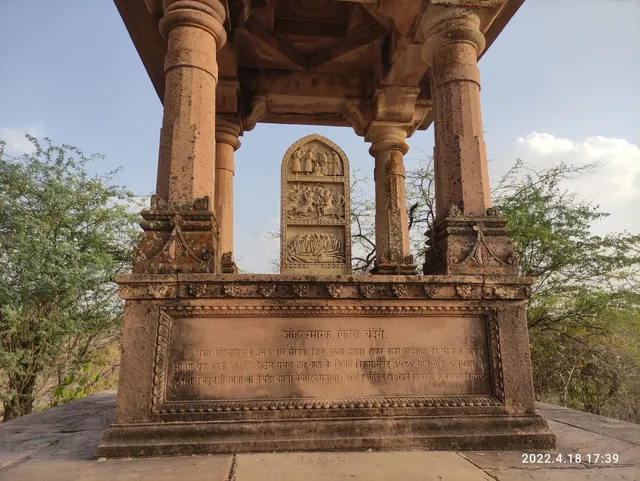
The Gwalior Fort has a long history dating back to the Stone Age, as evidenced by the numerous artifacts discovered in Gupteshwar, 3 km west of Gwalior. Early rulers of this region included the Mauryas, Sungas, Kushanas, and Nagas, who held power there until the fourth century CE. Guptas ruled over this place till the last quarter of the 5th century CE. In 525 CE Mihira Kula was ruling over the region which was referred from the inscriptions found on Sun temple on fort. The next historical record on the fort are the two inscriptions on the Chaturbhuja temple, dated in 875 and 876 CE, which shows that Gwalior was included in the kingdom Kanauj. From 1398 AD -1516 CE Gwalior came under the Rajput Dynasty OF Tomars and was extensively constructed in the reign of Raja Mansingh Tomar. Shortly after his death, the fortress fell to Ibrahim Lodi and passed over to the Mughal Sultanate when the latter succeeded the Lodi dynasty at Delhi. The fort was recovered by Akbar in 1550 CE from Sher Shah Suri. With the decline and fall of the Mughal empire, Gwalior passed into the hands of the rising Maratha power represented by Scindias in Central India. General White bombarded and captured the fort during the second Maratha War but an agreement signed in the 1805 CE gave it back to Scindia until 1857. It was in British occupation till 1886 CE when it was finally restored to the Scindias in exchange for Jhansi. After India gained independence in 1947 CE, Gwalior, along with the fort, became a part of the newly formed Indian state. The Scindia dynasty's association with the fort and Gwalior continued, but it came under the protected monuments under the Archaeological Survey of India and the Madhya Pradesh State Archaeology. Because of the chequered history the fort has a wide range of structures, both in terms of style and typologies.
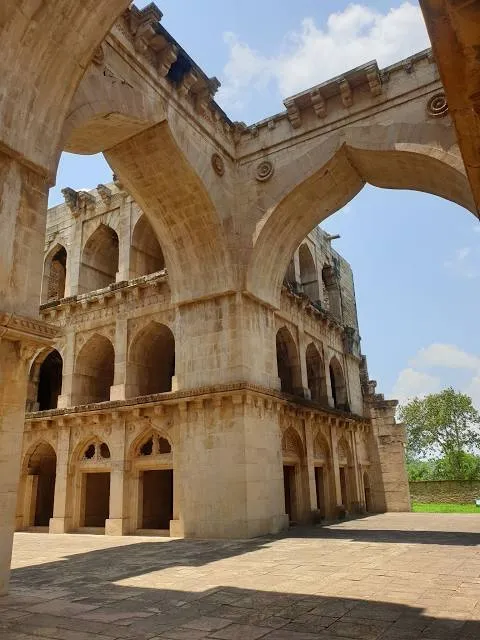
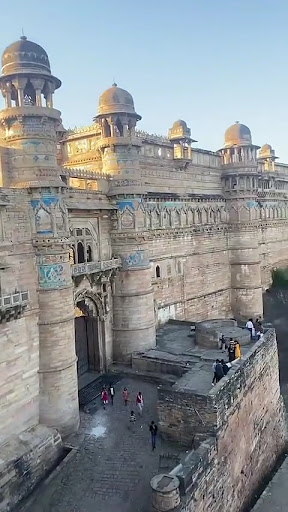
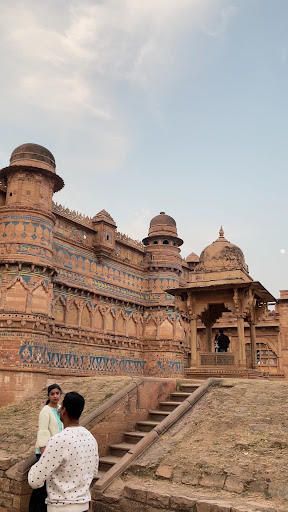
Among the Palace Structures in the fort, Man Mandir Palace and Gujari Mahal were built by Raja Man Singh Tomar in 15th century. Vestiges of the Bagh Paintings are found on the glazed tiles adorning the façade of the palace of Man Mandir. Domed turrets, a row of elegantly carved brackets supporting the eaves, and a few horizontal bands of carved moulding that are inlaid with enameled tiles break up the simple and massive facade of Gujari Mahal. Karan Mandir was built between 1454 CE -79 CE by the second King of the Tomar dynasty, Kirti Singh. Vikram Mahal was built in 1516 CE by Vikramaditya Singh (the eldest son of Man Singh tomar), this lies between the Man Singh Palace and the Karan Mahal. The Fort also houses impressive palace structures constructed later by the Sultanate and Mughal rulers; Jahangir Mahal was called Sher Mahal as it was built by Sher Shah. Shahjahan constructed the Shahjahan Mahal, which is directly across from Jehangir Mahal. It is constructed in the Mughal style, but it is considerably less ornate than other Mughal palaces of the time.
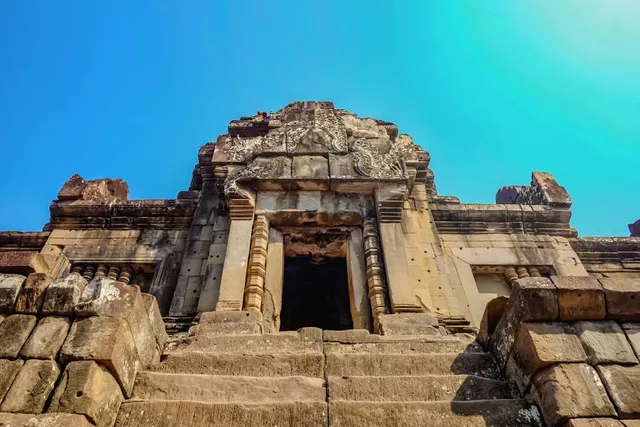
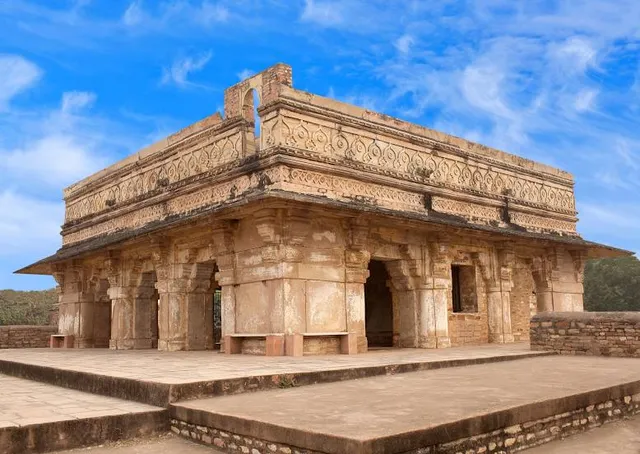
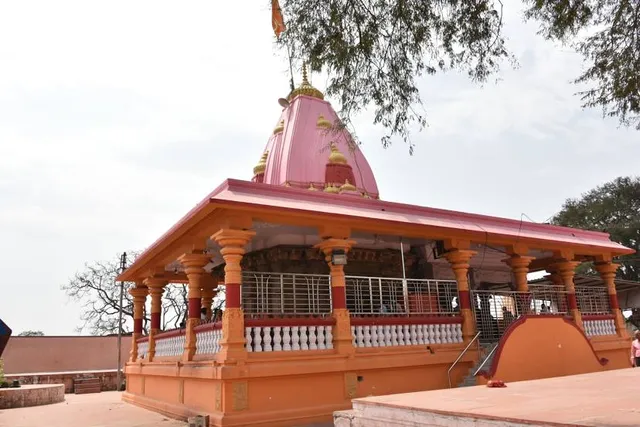
Among the Ancient Temples, the Gwalior fort includes the Teli ka Mandir, dedicated to lord Shiva, Vishnu, and Matrikas. The Chaturbhuj temple holds a position of significance because of its mathematical connection where the second oldest reference to zero in mathematics is seen in a carving. The adjoining twin temples are known as Sas Bahu temples. The larger Sas Bahu temple which is a Hindu temple dedicated to Vishnu has an inscription...
Read moreGwalior Fort stands tall atop a sandstone hill, with a legacy spanning over 1,400 years. Mughal emperor Babur famously described it as the "pearl amongst the fortresses of Hind" for its grandeur and strategic strength
Highlights
Architectural Marvels The sprawling complex includes several distinct structures: Man Mandir (Painted Palace), Gujari Mahal (within Gwalior Fort Museum), Jahangir Mahal, Vikram Mahal, the striking Jain sculptures of Siddhachal Caves, Teli ka Mandir, and the sacred Gurdwara Data Bandi Chhor Sahib. The Jain rock-cut statues—especially the colossal figures carved into the cliff—are awe-inspiring in scale and artistry. The unusual rectangular sanctum and the Nagara-Varabhī style of Teli ka Mandir are architectural standouts that impart historical depth.
Gujari Mahal (Fort Museum) Once a royal residence commissioned by Raja Man Singh Tomar for his wife Mrignayani, today it houses an archaeological museum with rare artifacts — including very early examples of Hindu and Jain sculptures, terracotta pieces, and even replicas of ancient frescoes.
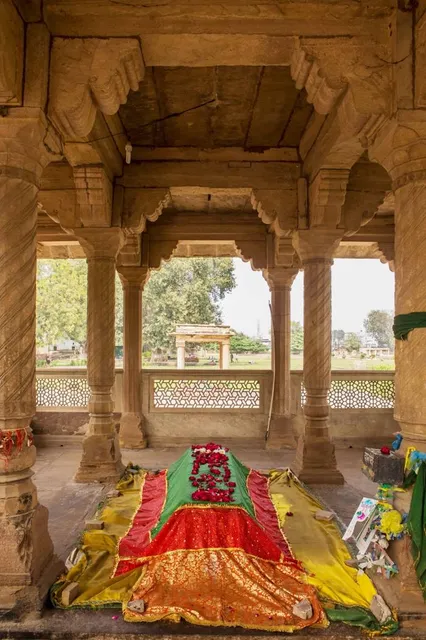
Cultural and Spiritual Sites The white-marble Gurdwara Data Bandi Chhor Sahib, marking Guru Hargobind Ji’s release in 1619, adds a serene and spiritual dimension to the fort visit.
Visitor Impressions
Jahangir Mahal Google Maps reviews rate it around 4.3 / 5 for its Mughal–Rajput styling, ornate carvings, and scenic balconies. Some visitors appreciate the breathtaking views and historical architecture, while others point out that infrastructure and safety features could be improved.
Vikram Mahal Holds a 4.1 / 5 rating. Visitors highlight its ornate interiors, regal aura, and peaceful surroundings.
Practical Tips
Tip Advice
Wear comfortable footwear The fort complex is vast, with uneven terrain and many stairs. Visit early or late in the day Morning or evening hours offer better light and cooler weather. Be cautious with infrastructure Some areas like stairs and signboards need improvement. Consider a guided tour wisely Official guides are worth hiring, but be wary of unauthorized ones offering inaccurate or “masala”-style stories.
Rating & Verdict
Overall Rating: 4.5 / 5
Pros:
Rich mix of centuries-old architecture—from Gupta-period relics to Mughal and Maratha renovations.
Intricate artistry, spiritual sites, and historical depth make it a meaningful experience.
Excellent vantage points for city panoramas and photo opportunities.
Areas for Improvement:
On-site infrastructure needs better maintenance and clearer signage.
Some areas lack proper safety measures (e.g., railings).
Visitor facilities, including toilets, could be upgraded.
Sample Google Maps–Style Review
"One of India’s oldest and most impressive hill forts. The palaces, Jain carvings, and temples offer incredible architectural and spiritual variety. Gwalior Fort truly feels like walking through layers of Indian history—with each palace and gateway telling its own tale."
"Plan for at least half a day. The ambiance is unmatched, but wear good shoes and be prepared for some uneven paths and minimal infrastructure."
Would you like this review adapted for a tourism brochure, travel blog feature, or a more casual...
Read more