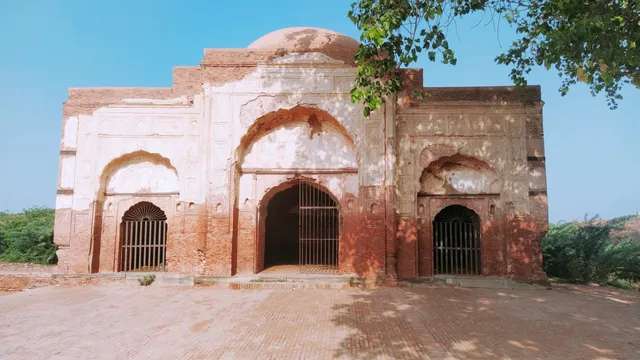
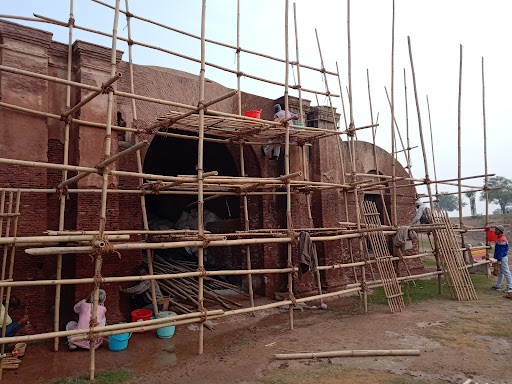
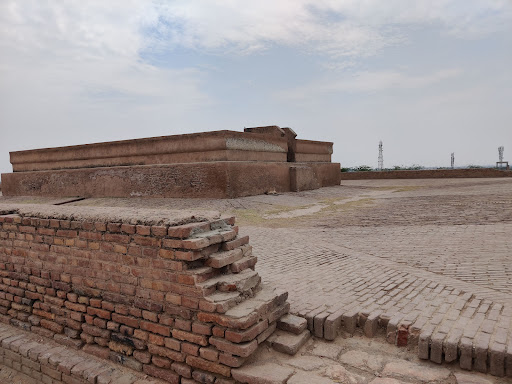
Asigarh Fort, also called Hansi Fort is located on the eastern bank of Amti lake in Hansi town of Haryana, India. It is also known as Prithviraj Chauhan's Fort or Prithvi Raj Chauhan Ka Qila and has been declared a centrally protected monument by ASI. It has completely been converted into a mound. There is one intact monument as you enter the premises i.e Ghora Ghar (घोड़ा घर) this structure shows the art and culture of 12th century. It has parabola shaped terrace. These days it is being treated and cleaned by Archaeological Survey of India Chandigarh. This fort is Spread over 30 acres, in its prime days this fort use to be in control of 80 forts in the area around it. Likely built by emperor Harshvadhana's dynasty, it passed to Tomar and then Chuahan kings before falling in the hands of Delhi Sultanate, Maratha Empire, Jat Sikhs, independent European adventurers and British Raj.Hansi fort or Asigarh Fort has long history with little clarity about earlier period. The excavation of ancient coins belong to the BCE period shows that there have been long history of settlements on the mound on which fort is built. It is believed that original fort was built by the famous emperor Harshvardhana or his grandfather emperor Prabhakarvardhana of Pushyabhuti dynasty(Vardhana). The present fort was built with materials of earlier fort of a period about 7th century C.E.In February 1982, a large hoard of Jaina bronzes including idols belonging to the Gupta period (319 to 605 CE) and 7th–8th centuries (a period belonging to the emperor Harshavardhana's Pushyabhuti dynasty, c. 500 to 647 CE)...
Read moreLocally, this large fort is known as ‘Prithiviraj Chauhan’s Fort’, but in all likelihood Prithviraj Chauhan was only one of the many rulers, of different dynasties and ethnicities, who at some time or the other held this fort. There is no clear evidence of how old the fort is, but it would originally have been much smaller, and would date back to pre-Rajput days. Over the centuries, it was held by various rulers, including the Marathas, the Irish George Thomas ‘the Raja of Hansi’, and the British. The famous Anglo-Indian James Skinner, who founded the regiment known as Skinner’s Horse, also had his headquarters here for a while.
The high gate of the fort, an unusual brick one, was built by George Thomas; inside, too, one of the first buildings you will see is a half-underground pillared chamber known as the baradari. This is supposed to have been used as an ammunition store during the 19th century.
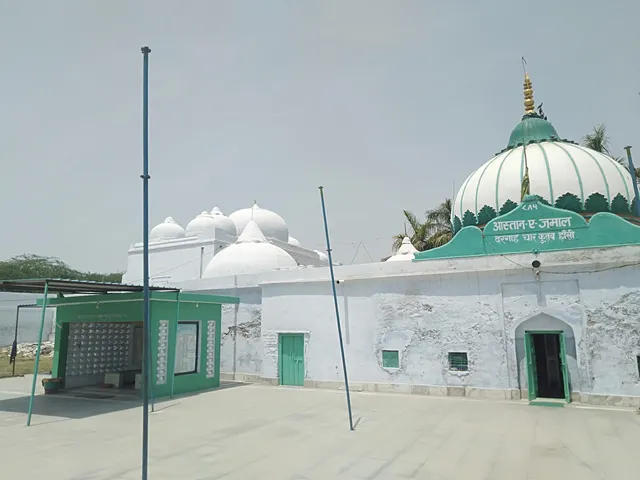
Further on from the baradari, there is a water reservoir which is now closed off. Even further beyond lies a small complex with several buildings. The two domed buildings here are mosques: the larger one is the Jama Masjid, the smaller one is the Moti Masjid. Beside the Moti Masjid is a freshly painted (and still venerated tomb) of a local saint called Miran Sahib. Beside the Jama Masjid, you can see signs (especially old carved pillars and an arched gateway) of what was once a sarai.
There is nothing by way of signboards or other information at the fort, and nobody to guide you. But it’s an interesting fort, and...
Read moreAsigarh Fort is one of the oldest forts of India and there is little clarity about who built the fort. Asigarh Fort or Hansi Fort, as per British library, was built by the Tomara Dynasty ruler Anangpala Tomar. However, as evidenced by some excavations there were settlements on the mounds of the fort long before it was believed to be built. King Harshavardhana of Pushyabhuti dynasty is believed to the one who built the fort initially. The Asigarh fort was used by various rulers from the Chauhan Dynasty, Delhi Sultanate, Tomar Dynasty, Jat Sikhs, Maratha Empire, and even Britishers. It gets it to name from the words – Asi (Sword) and Garh (Fort). As the name would suggest, this fort was the heart of sword making for Ancient Hindu rulers. The most notable name amongst its rulers is of Prithviraj Chauhan as he reconstructed the fort to a great extent in the 12th century.
The Asigarh fort has walls that are 52ft high and 37ft thick. Whilst the maingate has inscriptions of birds, animals, and Hindu deities, it also houses a mosque in its complex. There is also an inscription that reads that the fort was repaired by Khilji Dynasty’s most famous ruler Alauddin Khilji in 1304. It also has a long pillar-like structure known as Baradari situated on the top of its mound. Although the Asigarh fort is situated less than 150 km from Delhi and is in Haryana’s one of the most populous district of Hisar, it doesn’t attract many tourists. Archaeological Survey of India has declared it a centrally...
Read more