A hotel’s food-and-beverage program presents a unique opportunity for hoteliers to drive revenue; however, there will be a quick demise if you cut corners or reduce the operation to an afterthought. F&B programs are highly dynamic operations that can teeter anywhere between growing lucrative and becoming a lost cause. As such, hotels interested in remaining competitive within this functional area must be willing to invest accordingly into human capital and program development. Such an investment is critical in driving overall asset value, not only because F&B revenues increase, but also because hoteliers are able to leverage F&B to position a property within its market and drive revenues in the rooms division.
But what does that investment look like? With limited resources, minimal margins and fast currents of culinary trends, it can be a challenge to identify when and where to allocate your investment. To help you navigate the tricky terrain, we’ve outlined the top five do’s and do not’s of F&B management.
Do Not Hire Aimlessly
Hoteliers will often simply hire warm bodies for F&B positions, but they do so at great risk. You need to take as much care as you do with hiring the rest of the team in order for your F&B outlet to thrive. Likewise, many hoteliers will hire a one-dimensional F&B director with no front-of-house experience, or no kitchen experience. A great F&B director needs to be well rounded in all F&B operations if he or she is going to lead the team to success.
Do Not Slack on Training
Hiring the right people doesn’t mean much if you aren’t going to properly train them. When proper training isn’t forethought, bad habits are learned and become part of the culture. It’s not enough for new employees to simply mirror established employees. That’s a poor practice because it can never ensure proper training. A lack of training translates to higher turnover, higher operational cost, lower employee morale and a diminished guest experience.
Do Not Skip Stand-ups
These crucial daily meetings are often overlooked in the F&B space, but they are important so that the entire team can be on the same page. Communication about the menu and any changes or specials, along with upselling opportunities, should be discussed during this time. Uniform and appearance should be checked. Reservations, special groups and VIP’s should be reviewed as well as to ensure the team has a complete understanding of the day’s activity.
Do Not Forget to Taste
Servers need to taste every menu item. Your guests inevitably will have questions about the menu, and servers need to be able to answer...
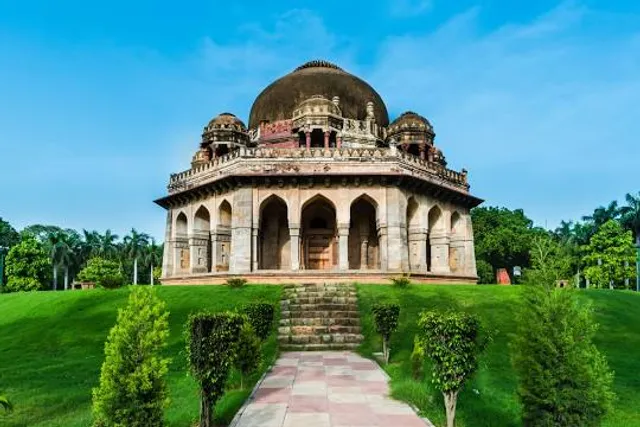
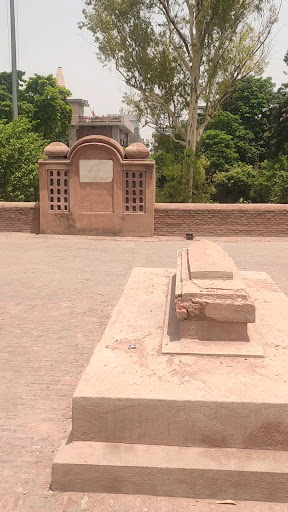
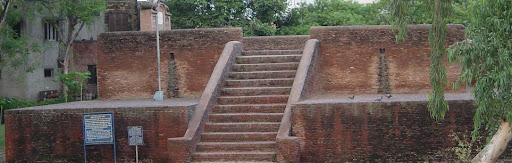
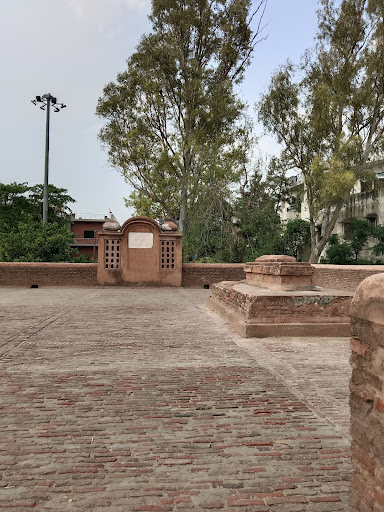
Read moreIbrahim Lodi's tomb is often mistaken to be the Shisha Gumbad within Lodi Gardens Delhi. Rather Ibrahim Lodi's tomb is actually situated near the tehsil office in Panipat, close to the Dargah of Sufi saint Bu Ali Shah Qalandar.13] It is a simple rectangular structure on a high platform approached by a flight of steps.Ibrahim Lodi became the Sultan of Delhi in 1517 after the death of his father Sikandar. He was the last ruler of the Lodi dynasty, reigning for nine years between 1517 until being defeated and killed at the battle of Panipat by Babur's invading army in 1526, giving way to the emergence of the Mughal Empire in India.[4
Ibrahim was an ethnic Pashtun. He attained the throne upon the death of his father, Sikandar, but was not blessed with the same ruling capability. He faced a number of rebellions. The Mewar ruler Rana Sangram Singh extended his empire right up to western Uttar Pradesh and threatened to attack Agra. There was rebellion in the East also. Ibrahim Lodi also displeased the nobility when he replaced old and senior commanders by younger ones who were loyal to him. His Afghan nobility eventually invited Babur to invade India.
In 1526, the Mughal forces of Babur, the king of Kabulistan (Kabul, Afghanistan), defeated Ibrahim's much larger army in the Battle of Panipat. Ibrahim was killed during the battle at Panipat and his tomb now lies there. It is estimated that Babur's forces numbered around 25,000–30,000 men and had between 20 and 24 pieces of field artillery. Ibrahim Lodi had around 30,000–40,000 men along with at least 100 elephants. After the end of Lodi dynasty, the era of Mughal...
Read moreI recently had the opportunity to visit the Tomb of Ibrahim Lodhi in Panipat, and it was a memorable experience. The site holds immense historical significance, being the resting place of the last Sultan of the Lodhi dynasty, who was defeated by Babur in the First Battle of Panipat.
The architectural style is simple yet carries the weight of history. The surrounding area, especially the Panipat Junction, adds a unique charm to the visit. For history enthusiasts and students, this spot offers a chance to connect with India's rich past.
However, one noticeable concern is the lack of proper cleanliness and maintenance. The site could be much more appealing if the government or local authorities paid more attention to its preservation, cleanliness, and beautification. It deserves to be maintained with the same respect as other national heritage sites. If restored and properly showcased, it can become a great tourist attraction and a source of pride for Panipat and India.
In conclusion, visiting Ibrahim Lodhi’s tomb was a pleasant and insightful experience, but there is certainly room for improvement, especially in terms of cleanliness and care. Such historical treasures should be protected and promoted to preserve our rich cultural legacy for future generations.
Rating: 3.5/5 Recommended for history lovers, but improvements in...
Read more