Morni is a village and tourist attraction in the Morni Hills at the height of 1,267 metres (4,157 ft) in the Panchkula district of the Indian state of Haryana. It is located around 45 kilometres (28 mi) from Chandigarh, 35 kilometres (22 mi) from Panchkula city and is known for its Himalayan views, flora, and lakes.1] The name of Morni is believed to derive from a queen who once ruled the area two thousand years back. She was a just and noble ruler of her Queendom.
The Haryana Government has constructed the Mountain Quail Resort for tourists,[1] along with a motorable road to connect the Morni Hills with the Haryana State Highway near Panchkula. Three further roads connect Morni to Chandigarh and other nearby towns.
AccommodationEdit
Haryana Tourism runs the Mountain Quail tourist resort at Tikkar Taal, grounds of which also have dormitory style camping accommodation for campers.[1] Indian Forest Department rest house named Lal Munia and a PWD rest house have also been constructed to accommodate tourists and trekkers. The resort includes playgrounds for children, along with a roller skating rink and a swimming pool.[1] Tikker taal itself has large camping and picnic ground with outdoor seats, cobbled paths, a very high fountain, picnic facilities, boating, paragliding, cafe, adventure park for kids built in 2013.
FortsEdit
Morni Fort MuseumEdit
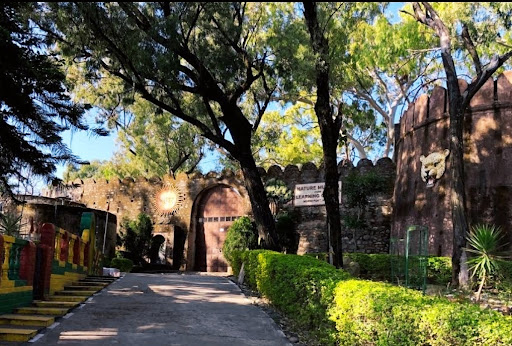
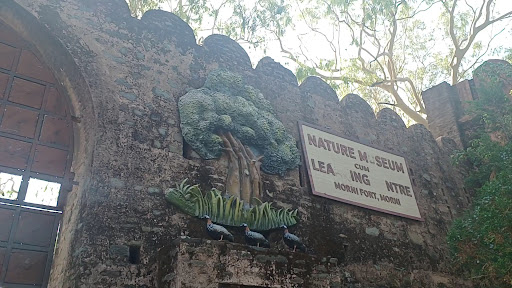
There is an old fort in the Morni area, which is now in ruins. The hills are covered by pine trees, and are popular trekking locations.[1] The fort also has a museum built in fy 2017-18.[2]
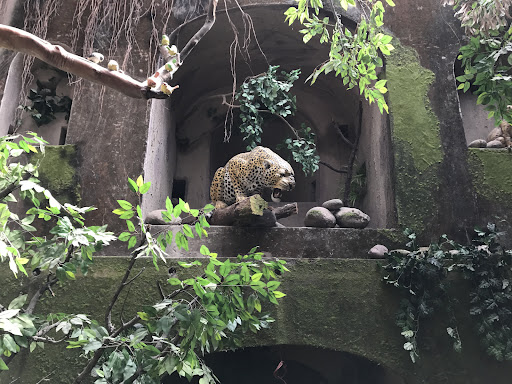
Forests Department of Haryana has converted the fort into a museum and nature study centre which houses old photographs of the fort, endangered birds and animals, awareness of dangers of plastic, etc.[3]
Garhi Kotaha FortEdit
Garhi Kotaha is a fort on NH1 which lies 27 km south of the Morni Fort and 3 km east of Raipur Rani tehsil headquarter. It now lie in ruins since it was partially demolished by the British Raj after the Indian Rebellion of 1857.[4] Mir muslims of Kotaha ruled from Garhi Kotaha Fort with smaller forts at Morni and Massompur.[4]
Masoompur FortEdit
Masoompur Fort is a smaller outpost fort with thick stone-brick masonry walls on a mud hillock. It is northeast of Massompur village which is 5km from the main Garhi Kotaha Fort via road passing through Rehana village. It was built to control the access route to Samlotha temple, which lies northeast of the fort, to collect the hefty jizya (religious ransom tax)from the Hindus pilgrimage.[4]
Twin lakes of Tikkar Taal: Bhim Taal and Draupdi TaalEdit
A hill divides the two lakes, the larger one is called Bhim Taal or just Tikkar Taal which is 550 meter wide and 460 meter long[5 and the smaller one is called Draupdi Taal or Chota Tikkar Taal (meaning the little tikkar lake) is 365 meter wide and long,6 as the legend goes there is a hidden channel linking them, as the water level of two lakes remains roughly the same. Morni locals look upon the lakes as sacred.7]
Morni Hill WaterfallEdit
Waterfall, access via a track in the forest, is active in the rainy season.[5
Morni Pheasant Breeding CenterEdit

Red junglefowl.

Kalij pheasant, male.
See also: Pinjore Jatayu Conservation Breeding Centre and Kalesar Elephant Rehabilitation Centre
Morni Pheasant Breeding Center focuses on the breeding of red junglefowls and kalij pheasants, and regularly releases birds raised in captivity into the wild every year. Red junglefowl had become extinct from most of its range and there are concerns of loss of its genetic purity due to breeding with other related species of fowls. Consequently, in 1991-92 a pheasant breeding center at Morni Hills was established with 6 aviaries and a walk-in a aviary to preserve the wild breed.[8]
Morni Hill Archaeological Temple SiteEdit
Thakur Dwar temple, dedicated to lord Krishna,[9] at the banks of Tikkar Taal is built on the site of 10th Century temple. Excavations in 1970 found Hindu sculptures dating back to Pratihara era (7th to 11th century CE), some of which...
Read moreMorni is a village and tourist attraction in the Morni Hills at the height of 1,267 metres (4,157 ft) in the Panchkula district of the Indian state of Haryana. It is located around 45 kilometres (28 mi) from Chandigarh, 35 kilometres (22 mi) from Panchkula city and is known for its Himalayan views, flora, and lakes. The name of Morni is believed to derive from a queen who once ruled the area. The Morni Hills are offshoots of the Shivalik range of the Himalayas, which run in two parallel ranges. The village of Morni lies on the mountainside, at 1,220 metres (4,000 ft) above mean sea level. Among the spurs of the hills lie two lakes, the larger of these being about 550 metres (1,800 ft) long and 460 metres (1,510 ft) broad, and the smaller around 365 metres (1,198 ft) either way. Haryana Tourism's Hotel Mountain Quail The Haryana Government has constructed the Mountain Quail Resort for tourists, along with a motorable road to connect the Morni Hills with the Haryana State Highway near Panchkula. Three further roads connect Morni to Chandigarh and other nearby town. Haryana Tourism runs the Mountain Quail tourist resort at Tikkar Taal, grounds of which also have dormitory style camping accommodation for campers. Indian Forest Department rest house named Lal Munia and a PWD rest house have also been constructed to accommodate tourists and trackers. The resort includes playgrounds for children, along with a roller skating rink and a swimming pool. Tikker taal itself has large camping and picnic ground with outdoor seats, cobbled paths, a very high fountain, picnic facilities, boating, paragola, cafe, adventure park for kids built in 2013.
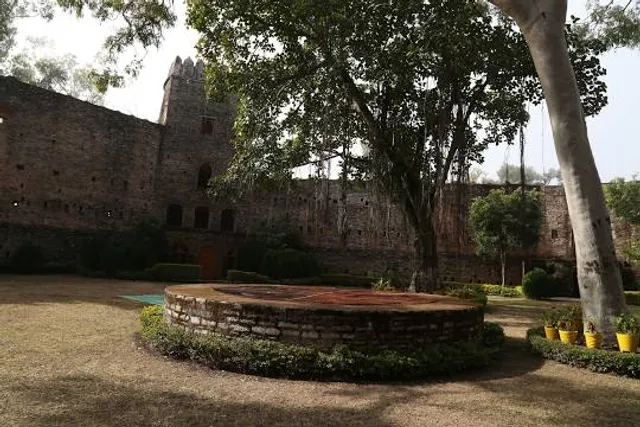
Morni Hill Fort and museum Edit There is an old fort in the Morni area, which is now in ruins. The hills are covered by pine trees, and are popular trekking locations.The fort also has a museum built in fy 2017-18. There were two other smaller forts at Garhi Kotaha and further 5 km at Massompur village hillock (both in Raipur Rani tehsil of Panchkula district), which now lie in ruins after these were partially demolished by the British Raj after the Indian Rebellion of 1857.
Twin lakes of Tikkar Taal: Bhim Taal and Draupdi Taal Edit A hill divides the two lakes, the larger one is called Bhim Taal or just Tikkar Taal which is 550 meter wide and 460 meter long and the smaller one is called Draupdi Taal or Chota Tikkar Taal (meaning the little tikkar lake) is 365 meter wide and long,as the legend goes there is a hidden channel linking them, as the water level of two lakes remains roughly the same. Morni locals look upon the lakes as sacred. Waterfall, access via a track in the forest, is active in the rainy season. Morni Pheasant Breeding Center focuses on the breeding of red junglefowls and kalij pheasants, and regularly releases birds raised in captivity into the wild every year. Red junglefowl had become extinct from most of its range and there are concerns of loss of its genetic purity due to breeding with other related species of fowls. Consequently, in 1991-92 a pheasant breeding center at Morni Hills was established with 6 aviaries and a walk-in a aviary to preserve the wild breed.
Morni Hill Archaeological Temple Site Edit Thakur Dwar temple, dedicated to lord Krishna,at the...
Read moreThe Morni Fort, located in the Morni Hills of the Panchkula district in Haryana, India, is a historical and scenic destination that attracts tourists and history enthusiasts alike. Situated on the Panchkula-Badiyal Road, near the village of Bhoj Balig, the fort is surrounded by lush greenery and offers panoramic views of the Shivalik Hills.
Historical Significance: The Morni Fort is believed to have been built during the reign of the Mughal Empire, though its exact origins remain unclear. It is said to have been a strategic outpost for monitoring and controlling the surrounding regions. The fort's architecture reflects the typical Mughal style, with sturdy walls and intricate designs, though much of it has deteriorated over time due to neglect and weathering.
Scenic Beauty: The fort is nestled in the Morni Hills, which are part of the Shivalik range. The area is known for its natural beauty, with dense forests, serene lakes, and diverse flora and fauna. The fort itself offers breathtaking views of the surrounding valleys and hills, making it a popular spot for photography and nature walks.
Tourist Experience: Visitors to the Morni Fort can explore the ruins and imagine its former grandeur. The fort's location makes it an ideal spot for trekking and hiking, with several trails leading through the hills. Nearby attractions include the Tikkar Taal lakes, which are perfect for boating and picnics, and the Morni Hills Adventure Park, which offers activities like zip-lining and rock climbing.
Accessibility: The fort is easily accessible by road from Panchkula, which is approximately 35 kilometers away. The drive to the fort is scenic, with winding roads and picturesque landscapes. Public transport options are limited, so it's advisable to hire a taxi or drive your own vehicle.
Challenges: One of the main challenges for visitors is the lack of proper maintenance and facilities at the fort. The site could benefit from better preservation efforts and the development of tourist amenities like guided tours, informational signage, and basic facilities like restrooms and seating areas.
Overall Impression: The Morni Fort is a hidden gem in Haryana, offering a blend of history and natural beauty. While it may not be as well-preserved as some other historical sites in India, its serene environment and stunning views make it a worthwhile visit for those interested in exploring off-the-beaten-path destinations. With proper conservation and development, the fort has the potential to become a major tourist attraction...
Read more