HTML SitemapExplore
logo
Find Things to DoFind The Best Restaurants

Kangra Fort — Attraction in Himachal Pradesh

Name
Kangra Fort
Description
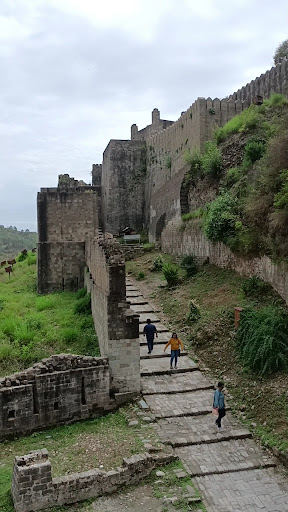
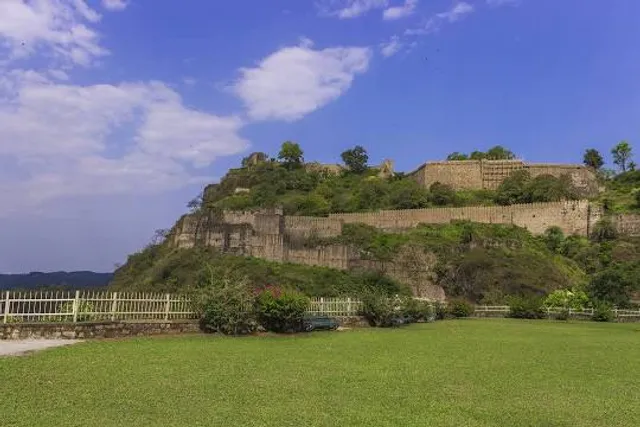
The Kangra fort is a historic fort located in the Kangra district of the Himachal Pradesh state, India. This fort is also known as 'Nagarkot' and 'Kot Kangra'. This fort stands on a hillock between two rivers, among the foothills of the Dhauladhar range.
Nearby attractions
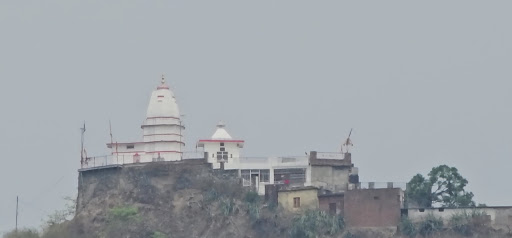
Jayanti Mata Mandir
36VW+HVM, Himachal Pradesh 176001, India
Nearby restaurants
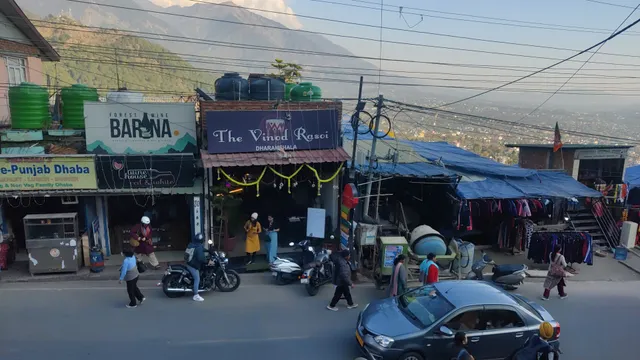
The vinods rasoi
art museum, opp. kangra, Old Kangra, Kangra, Himachal Pradesh 176001, India
KFC fast food
Samela, Himachal Pradesh 176038, India
DUGGAL'S New Luxmi Sweets
bus stand, Near old, Kangra, Himachal Pradesh 176001, India
Nearby hotels
Related posts
Keywords
Kangra Fort tourism.Kangra Fort hotels.Kangra Fort bed and breakfast. flights to Kangra Fort.Kangra Fort attractions.Kangra Fort restaurants.Kangra Fort travel.Kangra Fort travel guide.Kangra Fort travel blog.Kangra Fort pictures.Kangra Fort photos.Kangra Fort travel tips.Kangra Fort maps.Kangra Fort things to do.
Kangra Fort things to do, attractions, restaurants, events info and trip planning
Kangra Fort
IndiaHimachal PradeshKangra Fort

Basic Info

Kangra Fort

37P3+WHF, Old Kangra, Kangra, Himachal Pradesh 176001, India
4.4(4.3K)
Closed
Save
spot

Ratings & Description

Info

The Kangra fort is a historic fort located in the Kangra district of the Himachal Pradesh state, India. This fort is also known as 'Nagarkot' and 'Kot Kangra'. This fort stands on a hillock between two rivers, among the foothills of the Dhauladhar range.

Cultural
Family friendly
attractions: Jayanti Mata Mandir, restaurants: The vinods rasoi, KFC fast food, DUGGAL'S New Luxmi Sweets
logoLearn more insights from Wanderboat AI.
Website
kangragroup.com
Open hoursSee all hours
Tue9 AM - 5 PMClosed

Plan your stay

hotel
Pet-friendly Hotels in Himachal Pradesh
Find a cozy hotel nearby and make it a full experience.
hotel
Affordable Hotels in Himachal Pradesh
Find a cozy hotel nearby and make it a full experience.
hotel
The Coolest Hotels You Haven't Heard Of (Yet)
Find a cozy hotel nearby and make it a full experience.
hotel
Trending Stays Worth the Hype in Himachal Pradesh
Find a cozy hotel nearby and make it a full experience.

Reviews

Nearby attractions of Kangra Fort

Jayanti Mata Mandir

Jayanti Mata Mandir

Jayanti Mata Mandir

4.7

(106)

Open 24 hours
Click for details

Things to do nearby

Hilloferry - Ride through scenic lower Dharamshala
Sat, Dec 13 • 8:00 AM
Yol, Himachal Pradesh, 176052, India
View details
Nature Walk - hills, mountain village, locals
Sun, Dec 14 • 2:00 PM
Kangra, Himachal Pradesh, 176215, India
View details
Cultural CityTour-Ancient Dharamshala with a local
Tue, Dec 9 • 9:30 AM
Kangra, Himachal Pradesh, 176219, India
View details

Nearby restaurants of Kangra Fort

The vinods rasoi

KFC fast food

DUGGAL'S New Luxmi Sweets

The vinods rasoi

The vinods rasoi

4.8

(3)

Click for details
KFC fast food

KFC fast food

5.0

(2)

Click for details
DUGGAL'S New Luxmi Sweets

DUGGAL'S New Luxmi Sweets

4.0

(5)

Click for details
Get the Appoverlay
Get the AppOne tap to find yournext favorite spots!
Wanderboat LogoWanderboat

Your everyday Al companion for getaway ideas

CompanyAbout Us
InformationAI Trip PlannerSitemap
SocialXInstagramTiktokLinkedin
LegalTerms of ServicePrivacy Policy

Get the app

© 2025 Wanderboat. All rights reserved.
logo

Reviews of Kangra Fort

4.4
(4,332)
avatar
5.0
2y

People ask me what you prefer mountain or beaches.... Lakes or rivers.. summer or winter or rainy season.... Hill tops or plain fields...... I say forts and castles even though a storm is around the corner......

Exploring Himachal Pradesh...... Kangra valley......at Kangra fort......... With Dholadhar ranges in the backdrop and Banganga and Majhi rivers surrounding it.....

Kangra Fort, Kangra Overview....

Situated on the outskirts of the town of Kangra, in the state of Himachal Pradesh, the Kangra Fort is witness to thousands of years of grandeur, invasion, war, wealth and evolution. This mighty fort traces its origins to the ancient Trigarta Kingdom, which is mentioned in the Mahabharata epic. It is the largest fort in the Himalayas and probably the oldest dated fort in India. Occupying the lower valley of the Beas and its tributaries, it was one of the leading hill stations of Punjab and Himachal earlier. The Kangra Fort was built by the Katoch dynasty who was then a royal Rajput family of the state of Kangra. The fort is located just near the Kangra town and lies in the Old Kangra or Purana Kangra region which opens up to a beautiful valley. It is built right at the ‘Sangam i.e. the confluence of two rivers which are the Banganga and Majhi rivers.. It is said that the Kangra fort was built by Maharaja Susharma Chandra from the Katoch dynasty around 3500 years ago.The Maharaja Shushant Sharma fought in the Battle of Kurukshetra mentioned in the Mahabharata, alongside the Kauravas. After being defeated, he took Trigarta under his control and built the Kangra fort. "You must pass through the gate leg first. Never lead with your head because if there is an enemy on the other side, you might lose your head". This tip by Tikaraj Aishwarya Katoch (present scion of the Katoch dynasty) indicates at the heavy security in the fort maintained by the kings to protect the unimaginable treasures inside. There’s a saying - “He who holds the Kangra Fort, holds the hills”. It was believed that the fort is a treasure island! People say that Hindu and other rulers, used to send precious jewels, golds and silvers for the presiding deity at the fort temple as offerings, and the treasure kept piling up. Though the tales of these treasures are nothing but stories in this ruined fort now, there was a time when the sanctum sanctorum of the Kangra Fort held unimaginable riches which were offered to the large idol in the Brijeshwari temple inside the fort. Perhaps because of these treasures, this colossal fort has been attacked many times. Almost every ruler, be it an invader or a native ruler have tried to lay control over the Kangra fort.

According to the historical records, Raja of Kashmir Shreshta was the first king to attack the Kangra Fort in 470 A.D. Even Mahmud of Ghazni unleashed his forces on the fort in pursuit of its enchanting wealth around 1000 AD. It is believed that the fort has 21 treasure wells with each well being 4 m deep and 2.5 m wide in circumference. The ruler of Ghazni managed to loot 8 wells, while the British rulers looted five wells during the 1890s. It is said that the fort still retains 8 more wells full of treasures that are yet to be unearthed.

The Mughal Army led by Akbar made 52 failed attempts to capture this fort in the early 17th centuryHowever, Akbar’s son Jehangir successfully subdued the fort in 1620, forcing the submission of the Raja of Chamba, “the greatest of all the rajas in the region”.Mughal Emperor Jahangir with the help of Suraj Mal garrisoned with his troops. After Jahangir mercilessly captured the fort in1622, it was Raja Sansar Chand-II who finally succeeded in recovering the ancient fort of his ancestors from the Mughals in 1789. The Katoch Kings repeatedly looted Mughal controlled regions, weakening the Mughal control and with the decline of Mughal power, Raja Sansar Chand-II succeeded in recovering the ancient fort of his ancestors, in 1789. Maharaja Sansar Chand fought multiple battles with Gurkhas on one side and Sikh King Maharaja Ranjit Singh...

   Read more
avatar
5.0
28w

Kangra Fort – A Timeless Sentinel of the Himalayas Visited on: 6th May 2025

On 6th May 2025, we embarked on a journey to explore the majestic Kangra Fort, located approximately 20 km from Dharamshala in Himachal Pradesh. Perched strategically at the confluence of the Banganga and Manjhi rivers, this ancient fort stands as a testament to India's rich historical tapestry. Believed to have been constructed around 3,500 years ago by Maharaja Susharma Chandra of the Katoch dynasty, it is reputed to be the oldest fort in India and the largest in the Himalayan region.

Historical Significance: Kangra Fort has witnessed numerous invasions and has been a coveted prize for many rulers due to its strategic location and wealth. It was first mentioned in recorded history during the invasion by Mahmud of Ghazni in 1009 A.D. Subsequent rulers, including the Mughals under Emperor Jahangir, also laid claim to it. The fort's architecture showcases a blend of ancient Indian and Islamic styles, reflecting its diverse history.

Exploration Experience

Our visit began at the Ranjit Singh Gate, leading us through a series of imposing gates and ramparts. The fort's layout is designed to confuse and deter invaders, with narrow passages and sharp turns. As we ascended, we encountered the Ambika Mata Temple, a revered shrine still in use today. Further inside, the Jain temple houses an idol of Lord Rishabhanatha, dating back to 854 CE, highlighting the fort's religious significance across different faiths.

The summit offers a panoramic view of the Dhauladhar mountain range, with the rivers below adding to the picturesque landscape. Despite the summer heat, the fort's stone structures provided a cool respite, and the gentle breeze at the top was refreshing.

Ticket Purchase Details:

Entry to Kangra Fort is reasonably priced at:

Indian Nationals: ₹25 per person

Foreign Nationals: ₹300 per person

Tickets can be purchased on-site at the entrance, or from the website of the Archeological Society of India. Voice-guided tours are available inside the museum free of cost.

Visitor Tips: Best Time to Visit: Early morning or late afternoon to avoid the midday heat.

Duration: Allocate at least 2 hours to explore the fort thoroughly.

Footwear: Wear comfortable shoes suitable for uneven and rocky terrain.

Amenities: Limited facilities are available; carry water and snacks.

Photography: Permitted; the fort offers numerous scenic spots for photography.

Conclusion: Kangra Fort is a captivating blend of history, architecture, and natural beauty. Its storied past, coupled with the breathtaking vistas it offers, makes it a must-visit for history enthusiasts and nature lovers alike. Our visit on 6th May 2025 was both enlightening and memorable, providing a deep appreciation for India's...

   Read more
avatar
5.0
8y

The Kangra Fort is located 20 kilometers from the town of Dharamsala on the outskirts of the town of Kangra, India.The Kangra Fort was built by the royal Rajput family of Kangra State (the Katoch dynasty), which traces its origins to the ancient Trigarta Kingdom, mentioned in the Mahabharata epic. It is the largest fort in the Himalayas and probably the oldest dated fort in India.

The fort of Kangra resisted Akbar's siege in 1615. However, Akbar's son Jahangir successfully subdued the fort in 1620. Kangra was at the time ruled by Raja Hari Chand Katoch of Kangra (also known as Raja Hari Chand II)Mughal Emperor Jahangir with the help of Suraj Mal garrisoned with his troops.

The Katoch Kings repeatedly looted Mughal controlled regions, weakening the Mughal control, aiding in the decline of Mughal power, Raja Sansar Chand II succeeded in recovering the ancient fort of his ancestors, in 1789. Maharaja Sansar Chand fought multiple battles with Gurkhas on one side and Sikh King Maharaja Ranjit Singh on the other. Sansar Chand used to keep his neighboring Kings jailed, and this led to conspiracies against him. During a battle between the Sikhs and Katochs, the gates of the fort had been kept open for supplies. The fort is right next to Kangra town. 32.1°N 76.27°E The fort stands on a steep rock in Purana Kangra (translates to Old Kangra) dominating the surrounding valley, built strategically at the "sangam" confluence (places where two rivers meet) of Banganga and Majhi rivers. It is said that Kangra belongs to one who owns the fort.

Also near to old Kangra is the famous Jayanti Mata temple on a hill top. The Temple was built by the General of the Gorkha Army, Bada Kaji Amar Singh Thapa. Also close to entrance is a small museum which exhibits the history of Kangra fort.

Adjoining the Fort is the Maharaja Sansar Chand Katoch Museum run by the Royal Family of Kangra. The Museum also provides audio guides for the fort and the museum and has...

   Read more
Page 1 of 7
Previous
Next

Posts

Saurabh MashelkarSaurabh Mashelkar
People ask me what you prefer mountain or beaches.... Lakes or rivers.. summer or winter or rainy season.... Hill tops or plain fields...... I say forts and castles even though a storm is around the corner...... Exploring Himachal Pradesh...... Kangra valley......at Kangra fort......... With Dholadhar ranges in the backdrop and Banganga and Majhi rivers surrounding it..... Kangra Fort, Kangra Overview.... Situated on the outskirts of the town of Kangra, in the state of Himachal Pradesh, the Kangra Fort is witness to thousands of years of grandeur, invasion, war, wealth and evolution. This mighty fort traces its origins to the ancient Trigarta Kingdom, which is mentioned in the Mahabharata epic. It is the largest fort in the Himalayas and probably the oldest dated fort in India. Occupying the lower valley of the Beas and its tributaries, it was one of the leading hill stations of Punjab and Himachal earlier. The Kangra Fort was built by the Katoch dynasty who was then a royal Rajput family of the state of Kangra. The fort is located just near the Kangra town and lies in the Old Kangra or Purana Kangra region which opens up to a beautiful valley. It is built right at the ‘Sangam i.e. the confluence of two rivers which are the Banganga and Majhi rivers.. It is said that the Kangra fort was built by Maharaja Susharma Chandra from the Katoch dynasty around 3500 years ago.The Maharaja Shushant Sharma fought in the Battle of Kurukshetra mentioned in the Mahabharata, alongside the Kauravas. After being defeated, he took Trigarta under his control and built the Kangra fort. "You must pass through the gate leg first. Never lead with your head because if there is an enemy on the other side, you might lose your head". This tip by Tikaraj Aishwarya Katoch (present scion of the Katoch dynasty) indicates at the heavy security in the fort maintained by the kings to protect the unimaginable treasures inside. There’s a saying - “He who holds the Kangra Fort, holds the hills”. It was believed that the fort is a treasure island! People say that Hindu and other rulers, used to send precious jewels, golds and silvers for the presiding deity at the fort temple as offerings, and the treasure kept piling up. Though the tales of these treasures are nothing but stories in this ruined fort now, there was a time when the sanctum sanctorum of the Kangra Fort held unimaginable riches which were offered to the large idol in the Brijeshwari temple inside the fort. Perhaps because of these treasures, this colossal fort has been attacked many times. Almost every ruler, be it an invader or a native ruler have tried to lay control over the Kangra fort. According to the historical records, Raja of Kashmir Shreshta was the first king to attack the Kangra Fort in 470 A.D. Even Mahmud of Ghazni unleashed his forces on the fort in pursuit of its enchanting wealth around 1000 AD. It is believed that the fort has 21 treasure wells with each well being 4 m deep and 2.5 m wide in circumference. The ruler of Ghazni managed to loot 8 wells, while the British rulers looted five wells during the 1890s. It is said that the fort still retains 8 more wells full of treasures that are yet to be unearthed. The Mughal Army led by Akbar made 52 failed attempts to capture this fort in the early 17th centuryHowever, Akbar’s son Jehangir successfully subdued the fort in 1620, forcing the submission of the Raja of Chamba, “the greatest of all the rajas in the region”.Mughal Emperor Jahangir with the help of Suraj Mal garrisoned with his troops. After Jahangir mercilessly captured the fort in1622, it was Raja Sansar Chand-II who finally succeeded in recovering the ancient fort of his ancestors from the Mughals in 1789. The Katoch Kings repeatedly looted Mughal controlled regions, weakening the Mughal control and with the decline of Mughal power, Raja Sansar Chand-II succeeded in recovering the ancient fort of his ancestors, in 1789. Maharaja Sansar Chand fought multiple battles with Gurkhas on one side and Sikh King Maharaja Ranjit Singh on the other.
Vishwas BorseVishwas Borse
Kangra Fort – A Timeless Sentinel of the Himalayas Visited on: 6th May 2025 On 6th May 2025, we embarked on a journey to explore the majestic Kangra Fort, located approximately 20 km from Dharamshala in Himachal Pradesh. Perched strategically at the confluence of the Banganga and Manjhi rivers, this ancient fort stands as a testament to India's rich historical tapestry. Believed to have been constructed around 3,500 years ago by Maharaja Susharma Chandra of the Katoch dynasty, it is reputed to be the oldest fort in India and the largest in the Himalayan region. Historical Significance: Kangra Fort has witnessed numerous invasions and has been a coveted prize for many rulers due to its strategic location and wealth. It was first mentioned in recorded history during the invasion by Mahmud of Ghazni in 1009 A.D. Subsequent rulers, including the Mughals under Emperor Jahangir, also laid claim to it. The fort's architecture showcases a blend of ancient Indian and Islamic styles, reflecting its diverse history. Exploration Experience Our visit began at the Ranjit Singh Gate, leading us through a series of imposing gates and ramparts. The fort's layout is designed to confuse and deter invaders, with narrow passages and sharp turns. As we ascended, we encountered the Ambika Mata Temple, a revered shrine still in use today. Further inside, the Jain temple houses an idol of Lord Rishabhanatha, dating back to 854 CE, highlighting the fort's religious significance across different faiths. The summit offers a panoramic view of the Dhauladhar mountain range, with the rivers below adding to the picturesque landscape. Despite the summer heat, the fort's stone structures provided a cool respite, and the gentle breeze at the top was refreshing. Ticket Purchase Details: Entry to Kangra Fort is reasonably priced at: Indian Nationals: ₹25 per person Foreign Nationals: ₹300 per person Tickets can be purchased on-site at the entrance, or from the website of the Archeological Society of India. Voice-guided tours are available inside the museum free of cost. Visitor Tips: Best Time to Visit: Early morning or late afternoon to avoid the midday heat. Duration: Allocate at least 2 hours to explore the fort thoroughly. Footwear: Wear comfortable shoes suitable for uneven and rocky terrain. Amenities: Limited facilities are available; carry water and snacks. Photography: Permitted; the fort offers numerous scenic spots for photography. Conclusion: Kangra Fort is a captivating blend of history, architecture, and natural beauty. Its storied past, coupled with the breathtaking vistas it offers, makes it a must-visit for history enthusiasts and nature lovers alike. Our visit on 6th May 2025 was both enlightening and memorable, providing a deep appreciation for India's rich heritage.
Sachin PurvajSachin Purvaj
The Kangra Fort is located 20 kilometers from the town of Dharamsala on the outskirts of the town of Kangra, India.The Kangra Fort was built by the royal Rajput family of Kangra State (the Katoch dynasty), which traces its origins to the ancient Trigarta Kingdom, mentioned in the Mahabharata epic. It is the largest fort in the Himalayas and probably the oldest dated fort in India. The fort of Kangra resisted Akbar's siege in 1615. However, Akbar's son Jahangir successfully subdued the fort in 1620. Kangra was at the time ruled by Raja Hari Chand Katoch of Kangra (also known as Raja Hari Chand II)Mughal Emperor Jahangir with the help of Suraj Mal garrisoned with his troops. The Katoch Kings repeatedly looted Mughal controlled regions, weakening the Mughal control, aiding in the decline of Mughal power, Raja Sansar Chand II succeeded in recovering the ancient fort of his ancestors, in 1789. Maharaja Sansar Chand fought multiple battles with Gurkhas on one side and Sikh King Maharaja Ranjit Singh on the other. Sansar Chand used to keep his neighboring Kings jailed, and this led to conspiracies against him. During a battle between the Sikhs and Katochs, the gates of the fort had been kept open for supplies. The fort is right next to Kangra town. 32.1°N 76.27°E The fort stands on a steep rock in Purana Kangra (translates to Old Kangra) dominating the surrounding valley, built strategically at the "sangam" confluence (places where two rivers meet) of Banganga and Majhi rivers. It is said that Kangra belongs to one who owns the fort. Also near to old Kangra is the famous Jayanti Mata temple on a hill top. The Temple was built by the General of the Gorkha Army, Bada Kaji Amar Singh Thapa. Also close to entrance is a small museum which exhibits the history of Kangra fort. Adjoining the Fort is the Maharaja Sansar Chand Katoch Museum run by the Royal Family of Kangra. The Museum also provides audio guides for the fort and the museum and has a cafeteria.
See more posts
See more posts
hotel
Find your stay

Pet-friendly Hotels in Himachal Pradesh

Find a cozy hotel nearby and make it a full experience.

People ask me what you prefer mountain or beaches.... Lakes or rivers.. summer or winter or rainy season.... Hill tops or plain fields...... I say forts and castles even though a storm is around the corner...... Exploring Himachal Pradesh...... Kangra valley......at Kangra fort......... With Dholadhar ranges in the backdrop and Banganga and Majhi rivers surrounding it..... Kangra Fort, Kangra Overview.... Situated on the outskirts of the town of Kangra, in the state of Himachal Pradesh, the Kangra Fort is witness to thousands of years of grandeur, invasion, war, wealth and evolution. This mighty fort traces its origins to the ancient Trigarta Kingdom, which is mentioned in the Mahabharata epic. It is the largest fort in the Himalayas and probably the oldest dated fort in India. Occupying the lower valley of the Beas and its tributaries, it was one of the leading hill stations of Punjab and Himachal earlier. The Kangra Fort was built by the Katoch dynasty who was then a royal Rajput family of the state of Kangra. The fort is located just near the Kangra town and lies in the Old Kangra or Purana Kangra region which opens up to a beautiful valley. It is built right at the ‘Sangam i.e. the confluence of two rivers which are the Banganga and Majhi rivers.. It is said that the Kangra fort was built by Maharaja Susharma Chandra from the Katoch dynasty around 3500 years ago.The Maharaja Shushant Sharma fought in the Battle of Kurukshetra mentioned in the Mahabharata, alongside the Kauravas. After being defeated, he took Trigarta under his control and built the Kangra fort. "You must pass through the gate leg first. Never lead with your head because if there is an enemy on the other side, you might lose your head". This tip by Tikaraj Aishwarya Katoch (present scion of the Katoch dynasty) indicates at the heavy security in the fort maintained by the kings to protect the unimaginable treasures inside. There’s a saying - “He who holds the Kangra Fort, holds the hills”. It was believed that the fort is a treasure island! People say that Hindu and other rulers, used to send precious jewels, golds and silvers for the presiding deity at the fort temple as offerings, and the treasure kept piling up. Though the tales of these treasures are nothing but stories in this ruined fort now, there was a time when the sanctum sanctorum of the Kangra Fort held unimaginable riches which were offered to the large idol in the Brijeshwari temple inside the fort. Perhaps because of these treasures, this colossal fort has been attacked many times. Almost every ruler, be it an invader or a native ruler have tried to lay control over the Kangra fort. According to the historical records, Raja of Kashmir Shreshta was the first king to attack the Kangra Fort in 470 A.D. Even Mahmud of Ghazni unleashed his forces on the fort in pursuit of its enchanting wealth around 1000 AD. It is believed that the fort has 21 treasure wells with each well being 4 m deep and 2.5 m wide in circumference. The ruler of Ghazni managed to loot 8 wells, while the British rulers looted five wells during the 1890s. It is said that the fort still retains 8 more wells full of treasures that are yet to be unearthed. The Mughal Army led by Akbar made 52 failed attempts to capture this fort in the early 17th centuryHowever, Akbar’s son Jehangir successfully subdued the fort in 1620, forcing the submission of the Raja of Chamba, “the greatest of all the rajas in the region”.Mughal Emperor Jahangir with the help of Suraj Mal garrisoned with his troops. After Jahangir mercilessly captured the fort in1622, it was Raja Sansar Chand-II who finally succeeded in recovering the ancient fort of his ancestors from the Mughals in 1789. The Katoch Kings repeatedly looted Mughal controlled regions, weakening the Mughal control and with the decline of Mughal power, Raja Sansar Chand-II succeeded in recovering the ancient fort of his ancestors, in 1789. Maharaja Sansar Chand fought multiple battles with Gurkhas on one side and Sikh King Maharaja Ranjit Singh on the other.
Saurabh Mashelkar

Saurabh Mashelkar

hotel
Find your stay

Affordable Hotels in Himachal Pradesh

Find a cozy hotel nearby and make it a full experience.

Get the Appoverlay
Get the AppOne tap to find yournext favorite spots!
Kangra Fort – A Timeless Sentinel of the Himalayas Visited on: 6th May 2025 On 6th May 2025, we embarked on a journey to explore the majestic Kangra Fort, located approximately 20 km from Dharamshala in Himachal Pradesh. Perched strategically at the confluence of the Banganga and Manjhi rivers, this ancient fort stands as a testament to India's rich historical tapestry. Believed to have been constructed around 3,500 years ago by Maharaja Susharma Chandra of the Katoch dynasty, it is reputed to be the oldest fort in India and the largest in the Himalayan region. Historical Significance: Kangra Fort has witnessed numerous invasions and has been a coveted prize for many rulers due to its strategic location and wealth. It was first mentioned in recorded history during the invasion by Mahmud of Ghazni in 1009 A.D. Subsequent rulers, including the Mughals under Emperor Jahangir, also laid claim to it. The fort's architecture showcases a blend of ancient Indian and Islamic styles, reflecting its diverse history. Exploration Experience Our visit began at the Ranjit Singh Gate, leading us through a series of imposing gates and ramparts. The fort's layout is designed to confuse and deter invaders, with narrow passages and sharp turns. As we ascended, we encountered the Ambika Mata Temple, a revered shrine still in use today. Further inside, the Jain temple houses an idol of Lord Rishabhanatha, dating back to 854 CE, highlighting the fort's religious significance across different faiths. The summit offers a panoramic view of the Dhauladhar mountain range, with the rivers below adding to the picturesque landscape. Despite the summer heat, the fort's stone structures provided a cool respite, and the gentle breeze at the top was refreshing. Ticket Purchase Details: Entry to Kangra Fort is reasonably priced at: Indian Nationals: ₹25 per person Foreign Nationals: ₹300 per person Tickets can be purchased on-site at the entrance, or from the website of the Archeological Society of India. Voice-guided tours are available inside the museum free of cost. Visitor Tips: Best Time to Visit: Early morning or late afternoon to avoid the midday heat. Duration: Allocate at least 2 hours to explore the fort thoroughly. Footwear: Wear comfortable shoes suitable for uneven and rocky terrain. Amenities: Limited facilities are available; carry water and snacks. Photography: Permitted; the fort offers numerous scenic spots for photography. Conclusion: Kangra Fort is a captivating blend of history, architecture, and natural beauty. Its storied past, coupled with the breathtaking vistas it offers, makes it a must-visit for history enthusiasts and nature lovers alike. Our visit on 6th May 2025 was both enlightening and memorable, providing a deep appreciation for India's rich heritage.
Vishwas Borse

Vishwas Borse

hotel
Find your stay

The Coolest Hotels You Haven't Heard Of (Yet)

Find a cozy hotel nearby and make it a full experience.

hotel
Find your stay

Trending Stays Worth the Hype in Himachal Pradesh

Find a cozy hotel nearby and make it a full experience.

The Kangra Fort is located 20 kilometers from the town of Dharamsala on the outskirts of the town of Kangra, India.The Kangra Fort was built by the royal Rajput family of Kangra State (the Katoch dynasty), which traces its origins to the ancient Trigarta Kingdom, mentioned in the Mahabharata epic. It is the largest fort in the Himalayas and probably the oldest dated fort in India. The fort of Kangra resisted Akbar's siege in 1615. However, Akbar's son Jahangir successfully subdued the fort in 1620. Kangra was at the time ruled by Raja Hari Chand Katoch of Kangra (also known as Raja Hari Chand II)Mughal Emperor Jahangir with the help of Suraj Mal garrisoned with his troops. The Katoch Kings repeatedly looted Mughal controlled regions, weakening the Mughal control, aiding in the decline of Mughal power, Raja Sansar Chand II succeeded in recovering the ancient fort of his ancestors, in 1789. Maharaja Sansar Chand fought multiple battles with Gurkhas on one side and Sikh King Maharaja Ranjit Singh on the other. Sansar Chand used to keep his neighboring Kings jailed, and this led to conspiracies against him. During a battle between the Sikhs and Katochs, the gates of the fort had been kept open for supplies. The fort is right next to Kangra town. 32.1°N 76.27°E The fort stands on a steep rock in Purana Kangra (translates to Old Kangra) dominating the surrounding valley, built strategically at the "sangam" confluence (places where two rivers meet) of Banganga and Majhi rivers. It is said that Kangra belongs to one who owns the fort. Also near to old Kangra is the famous Jayanti Mata temple on a hill top. The Temple was built by the General of the Gorkha Army, Bada Kaji Amar Singh Thapa. Also close to entrance is a small museum which exhibits the history of Kangra fort. Adjoining the Fort is the Maharaja Sansar Chand Katoch Museum run by the Royal Family of Kangra. The Museum also provides audio guides for the fort and the museum and has a cafeteria.
Sachin Purvaj

Sachin Purvaj

See more posts
See more posts