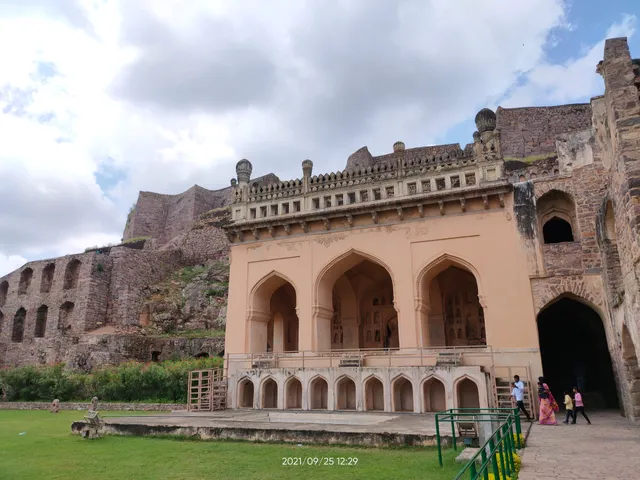
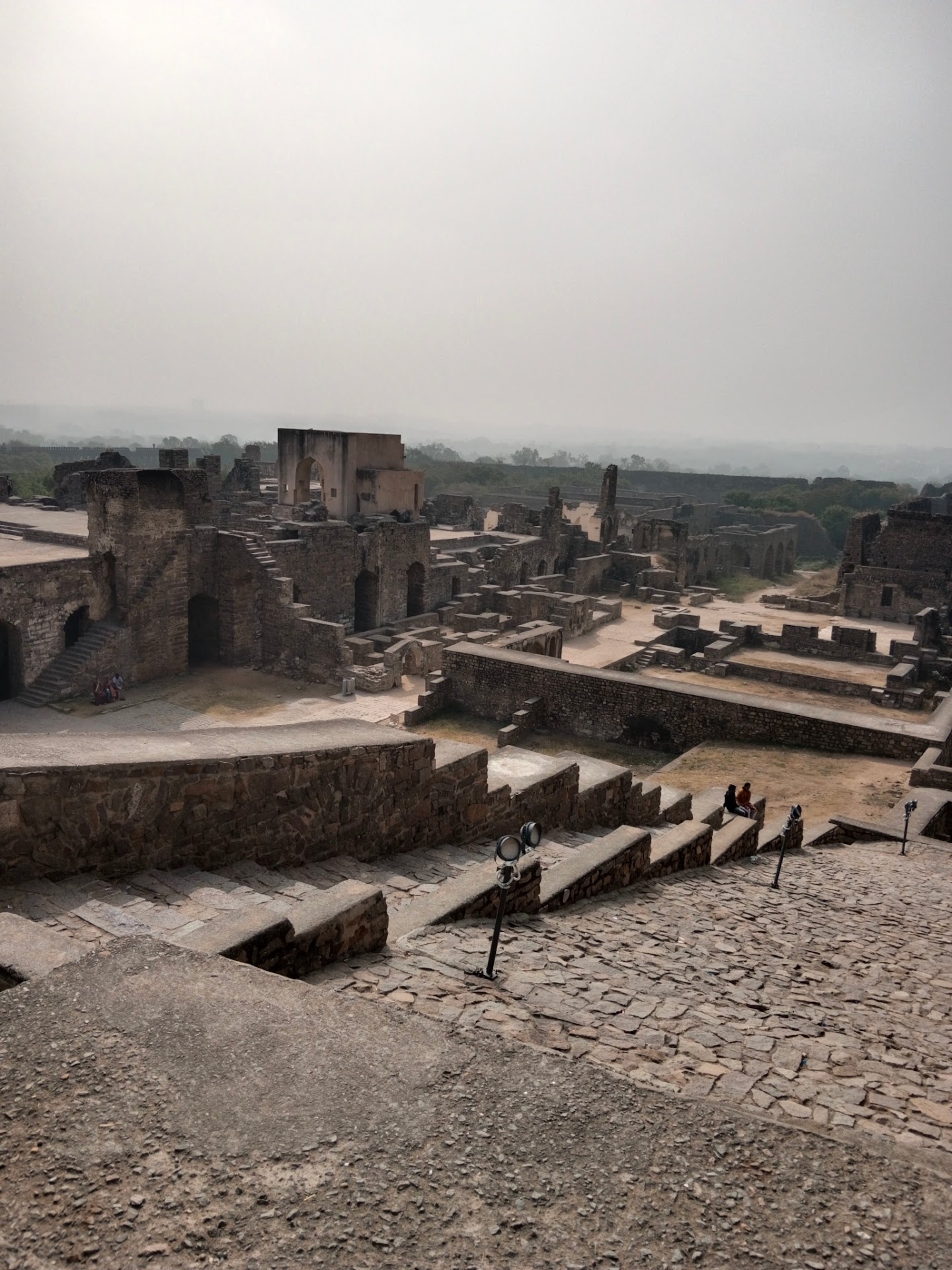
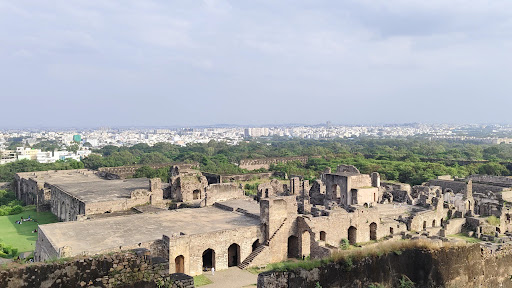
As a student who loves exploring new places, Golconda Fort in Hyderabad was an absolute highlight of my travels! This 16th-century fortress is a stunning blend of history, architecture, and jaw-dropping views that left me in awe. From the moment I entered through the massive Fateh Darwaza (Victory Gate), I could feel the grandeur of the Qutb Shahi dynasty. The fort’s sprawling layout, with its ancient walls, mosques, and royal chambers, is like stepping into a time machine.The climb to the Baradari at the top is a bit steep (around 380 steps!), but trust me, the panoramic view of Hyderabad’s skyline is worth every step. I was blown away by the mix of greenery and cityscape—perfect for photography enthusiasts like me! The acoustic system is another mind-blowing feature; clap at the entrance, and the sound travels all the way to the top—such a cool engineering marvel from centuries ago!I highly recommend the evening sound and light show (check timings before you go). It’s narrated beautifully and tells the fort’s story in a way that’s both engaging and educational. I learned so much about Golconda’s role in trade, diamonds (yes, the Koh-i-Noor came from here!), and its defense strategies.Tips for visitors:Wear comfortable shoes; the fort is huge, and you’ll walk a lot.Carry water and a hat, especially if visiting during the day—Hyderabad can get hot!Go early in the morning to beat the crowds and enjoy cooler weather.Entry fee is super affordable (₹25 for Indians, ₹300 for foreigners, as of my visit), and guides are available if you want deeper insights.Keep an eye out for the intricate stucco work and arches—perfect for architecture nerds!Golconda Fort is a must-visit for anyone exploring Hyderabad. Whether you’re a history buff, a casual traveler, or just love epic views, this place has something for everyone. Can’t wait to explore more forts and share my adventures!"
Golconda Fort, located in Hyderabad, India, is a historic citadel renowned for its architectural grandeur and historical significance. Here's a concise overview of its history:Origins (11th–13th Century): The fort's origins trace back to the Kakatiya dynasty, which ruled the region in the 11th century. Initially, it was a mud fort built around 1143 CE by the Kakatiya rulers in Warangal. A legend suggests that a shepherd boy found an idol, prompting the construction of a fort by the Kakatiya king at Golconda, named after "Golla Konda" (Shepherd’s Hill).Bahmani Sultanate (14th Century): In 1363, the region came under the Bahmani Sultanate after the Kakatiyas' decline. The fort was strengthened and served as a key stronghold.Qutb Shahi Dynasty (1518–1687): The fort gained prominence under the Qutb Shahi dynasty, which ruled Golconda from 1518 to 1687. Sultan Quli Qutb-ul-Mulk, a governor appointed by the Bahmanis, declared independence and established the Qutb Shahi dynasty. The fort was expanded into a massive granite structure with advanced acoustics, water systems, and defensive walls.Key rulers like Ibrahim Qutb Shah and Muhammad Quli Qutb Shah fortified the structure and developed Golconda as a thriving trade center, especially for diamonds sourced from nearby mines (including the famous Koh-i-Noor).The Qutb Shahis built palaces, mosques, and the iconic Fateh Darwaza, known for its acoustic effects. The fort became a symbol of wealth and culture.Mughal Conquest (1687): The Mughal emperor Aurangzeb besieged Golconda in 1687 after an eight-month campaign. The fort fell due to betrayal by a Qutb Shahi official, Abdullah Khan, who opened the gates. This marked the end of the Qutb Shahi dynasty, and Golconda came under Mughal control.Decline and British Era (18th–19th Century): After the Mughal decline, the fort came under the control of the Nizam of Hyderabad in the early 18th century. However, its importance waned, and it fell into ruin during the British colonial period.Modern Era: Today, Golconda Fort is a major tourist attraction and a protected monument under the Archaeological Survey of India.
The fortified structure that you see today was built much later. Before the fortification existed a mud fort built on a granite hill. Let's travel back in time and go to the time when it all began. According to the legends, back in the 12th century, a shepherd boy found this hilltop with an idol. When the information was conveyed to the then Kakatiya ruler, it was then that he laid the foundation of Golconda Fort, hence the name “Golla Konda '' meaning the shepherd’s hill. The Kakatiya king had the place under possession for about 200 years and then went to Bahamani Qutub Shahi rulers and finally to the Mughals. Now you must have heard about the famous Kohinoor diamond but do you know that it was here, in the Golconda Fort, that the Kohinoor diamond was kept safe for many years from enemies and foreign attacks. Cool, aint it?
Yet another interesting fact about this marvelous fort is its acoustics. Believe it or not but if you clap your hands at the fort’s base, the echoes that it produces are audible till the hilltop. Legends believe that this technique was used by the inhabitants to alert others of any potential threats at the time. The acoustic ability at Bala Hissar Gate is not just any coincidence, this sheer brilliance, an architectural wonder. Now we know why, Golconda Fort is known to be one of the best tourist places in Hyderabad.
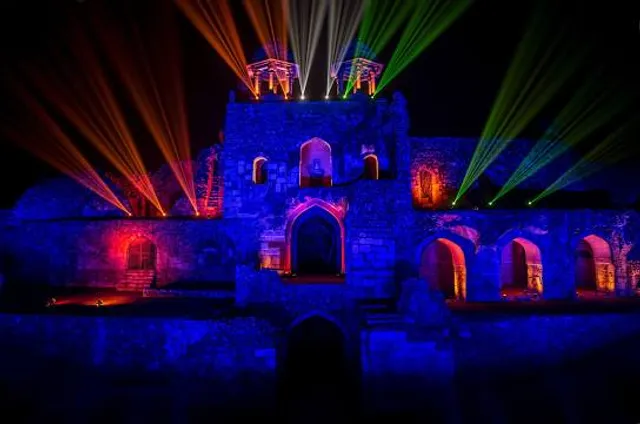
Did you know India has 38 diamond mines and out of those 38, about 23 mines are present near the Golconda Fort, hence the name ‘Diamond Capital of India’. Some of the most famous and valuable diamonds like Daria-i-Noor, Koh-i-Noor, and Hope Diamond are believed to have been unearthed at the Golconda Mines. Well, you won’t be able to visit these mines today, but experiencing their glory firsthand is something that won’t disappoint you. Visiting Golconda Fort ain’t complete until you witness the famous et son lumiere here. This show is voiced by the legendary actor Amitabh Bachhan, one of the biggest names in bollywood. His voice adds the oomph factor to the overall show. The show mesmerizes the audience by its amazing background scores and storytelling. After you’ve explored the ruins of Golconda, it's only fair to see this show and witness the history of Golconda Fort. The total duration of this show is 50 minutes and is performed in Telugu and English. The colorful laser lights, the excellent soundtrack and the overall ambience of this place will give you goosebumps. Well, we cannot think of a better way to put an amazing evening to an end. After this you can enjoy dinner at one of the nearby restaurants and get back to your hotel in Hyderabad.
Golconda Fort is located in the western part of Hyderabad city and is about 9 km from the Hussain Sagar Lake. Ticket counter is open from 5:30 PM Note : Golconda Fort Timings: 9:00 AM to 5:00 PM. The outer fort occupies an area of three square kilometers, which is 4.8 kilometers in length.
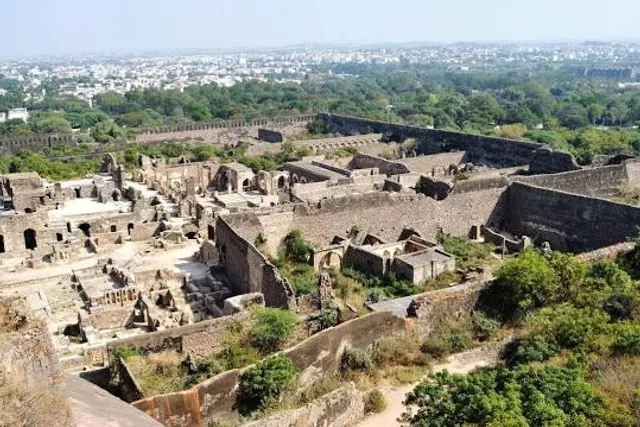
It was originally known as Mankal, and built on a hilltop in the year 1143. It was originally a mud fort under the reign of Rajah of Warangal. Later it was fortified between 14th and 17th centuries by the Bahmani Sultans and then the ruling Qutub Shahi dynasty. Golconda was the principal capital of the Qutub Shahi kings. The inner fort contains ruins of palaces, mosques and a hill top pavilion, which rises about 130 meters high and gives a bird’s eye view of other buildings.
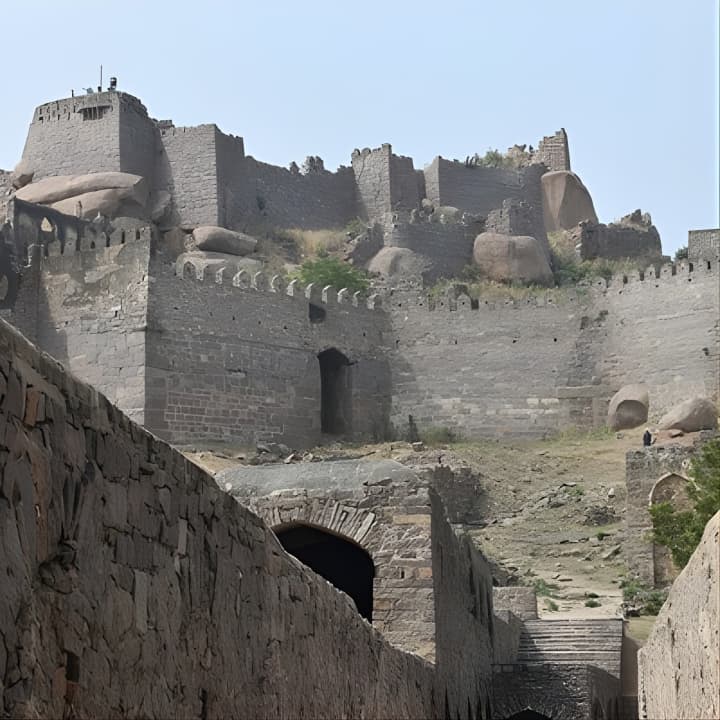
Golconda fort is undoubtedly one of most magnificent fortress complexes in India. The history of Golconda Fort goes back to early 13th century, when it was ruled by the Kakatiya’s followed by Qutub Shahi kings, who ruled the region in 16th and 17th century. The fortress rests on a granite hill 120 meters high while huge crenellated ramparts surround this structure.
It was initially called Shepherd’s Hill, meaning Golla Konda in Telugu while according to legend, on this rocky hill a shepherd boy had come across an idol and the information was conveyed to the ruling Kakatiya king at that time. The king constructed a mud fort around this holy spot and after 200 years, Bahamani rulers took possession of the place. Later the Qutub Shahi kings converted this into massive granite fort extending 5km in circumference. The fort is considered a mute witness to historic events. The Qutub Shahis reign at Golconda ended in 1687 when it was run over by Mughal emperor Aurangzeb, who intentionally left it in ruins
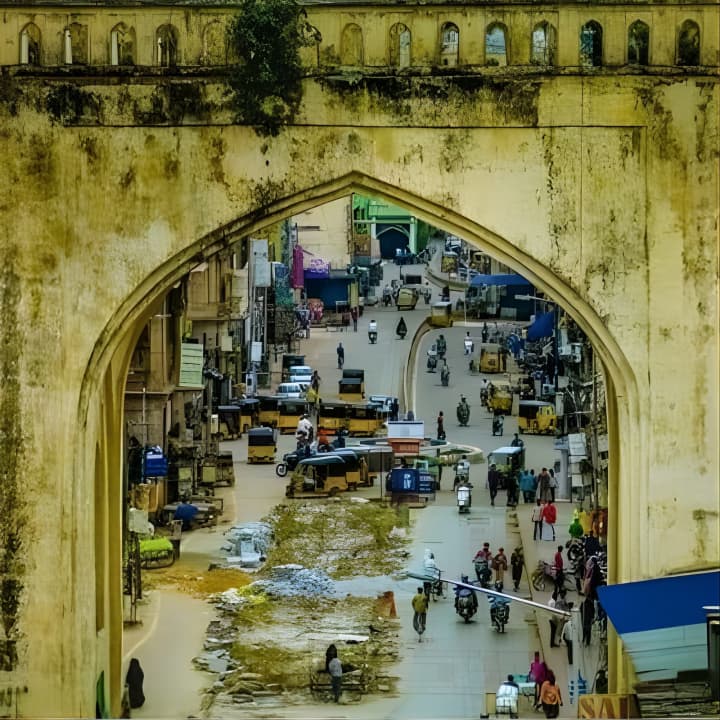
Golconda still boasts of mounted cannons, four drawbridges, eight gateways, and majestic halls, magazines, stables etc. The outermost enclosure is called Fateh Darwaza meaning Victory gate, after Aurangzeb’s army marched successfully through this gate. At Fateh Darwaza one can witness fantastic acoustical effects, which is one among the many famous engineering marvels at Golconda. Clapping your hand at a certain point near the dome entrance reverberates which is heard clearly at the hill top pavilion, almost one kilometer away. This served as a warning note to the inhabitants of the fort of any impending danger, Ofcourse it now amuses visitors. The fort gains an impressive place among the architectural marvels and heritage structures of India and is a testimony to Hyderabad’s glorious past.