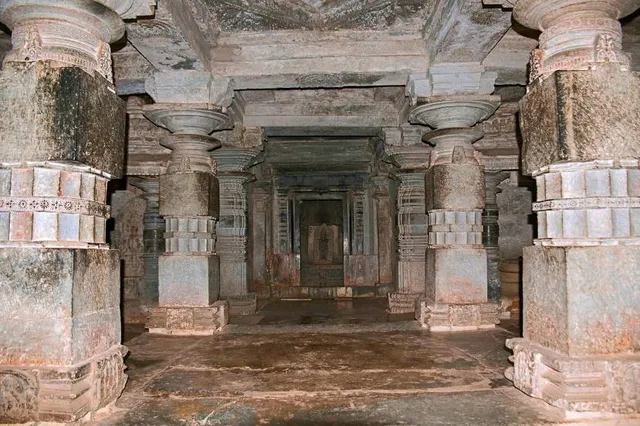
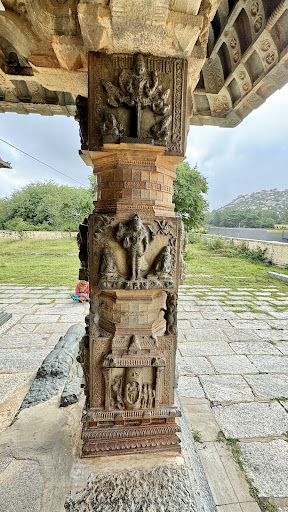
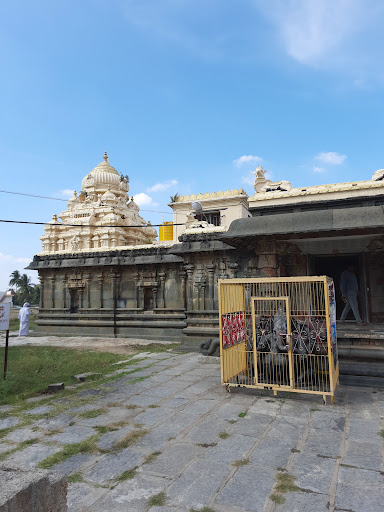
Someshwara Temple is located in the heart of the Kolar city and is one of the famous temples in this town. The temple was built by the Cholas who ruled this region in the 11th century who were then dethroned by the Chalukyas. The temple was later expanded by the Vijayanagara Empire and is a fine example of the Vijayanagara style of architecture. The carvings on the inner pillars of the temple have an international connection which depicts the importance and value of trade to the King. The temple is every architect’s delight considering the beauty of Dravidian architecture. The huge gopura on the entrance stands testimony to the hand of the Cholas in the construction of this temple. The temple has heavy Prakara walls, a Kalyana Mantapa (Wedding hall), a Mukha Mandapa with massive pillars, a Vasantha Mantapa (Marriage Podium) and a shrine for goddess Parvati Devi. The Kalyana Mandapa has 64 - 16 sided pillars, a few depicting men, riding horses and others represent mythological stories. The carvings on the pillars bear influence of the European, Chinese and Thai style. The Kalyana Mantapa’s top portion depicts a Chinese style of architecture and the temple tower boasts of stucco figures. Apart from this, the Vijanagara inscriptions are found on the walls of the yagashala and temple store room which date back to the 15th century A.D. The door frame of this magnificent temple is carved in pure Vijanagara style with the dwarapalas (guards). There is a granite bull carved at the entrance of the temple. The temple also has a large stepped tank in Vijayanagar style...
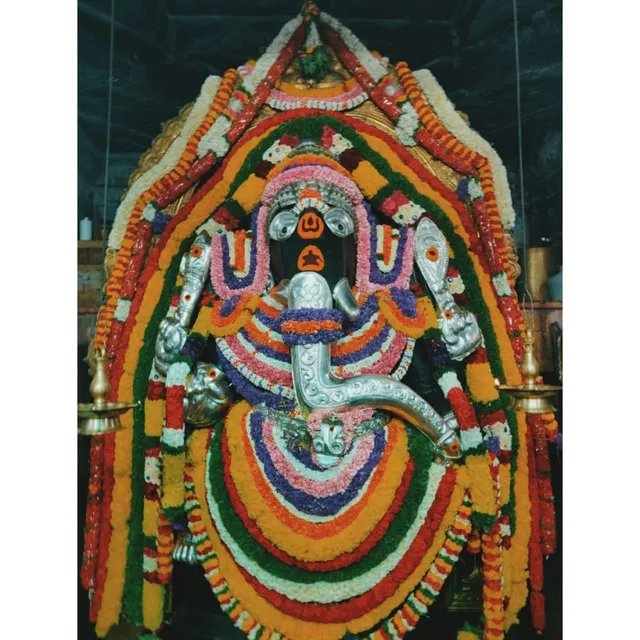
Read moreLocated at a distance of 11 kilometres from Mulabagal in the Kolar district of Karnataka, Kurudumale is renowned for its two temples, the Sri Maha Ganapathi Temple and the Someswara Temple.
According to the temple priest, it is believed to be an ancient Shiva temple that dates back 1330 years and was constructed by Raja Raja Chola. The installation of the idol is attributed to the revered sage Koundinya Maharishi. Interestingly, the temple showcases two distinct architectural styles due to the contributions of both 'Jakkanna Chari' and his son, 'Dankkana Chari.' The Chola architectural style is prominently displayed, and the temple is built on a rock without a foundation, adding to its uniqueness.
The main deity of the Someswara Temple is Lord Shiva, worshipped as "Someshwara" in the form of a linga within the main sanctum sanctorum. The temple hall houses a series of revered deities. The first idol is that of 'Kalabhirava,' believed to mitigate the ill effects of 'Kala sarpa dosha.' Depicted stepping on a serpent, the idol symbolically represents this concept. The next idol is that of 'Guru Dakshina Murthi,' followed by 'Lord Venkatachalapathi' along with 'Sridevi and Bhoodevi.' Additionally, a small idol of Lord Anjaneya can be found. Notably, the temple also features an idol of "Koundinya Maharshi" within its premises, with another carving of the sage adorning a pillar.
Exploring this temple provides a glimpse into the past and allows for a deeply...
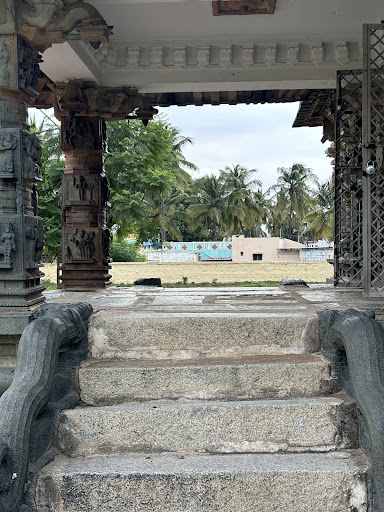
Read moreA 12-13th century temple - maintained in a spic and span condition! There are 3 structures in this complex. You can walk around the complete area and enjoy the views it offers. The village itself is a very small quaint place. It looks like most of the structure were restored. But many of the pillars are immaculate! Spent a lot of time just admiring them. There are few inside as well - which we could not take pictures of. The main temple is functional and the pujari spoke about the place for a bit. Beyond the compound, at the back you can see two more structures which are abandoned. As soon as you enter through the steps - you can see this amazing Ganesha idol - it is now barricaded as tourists must be damaging it. Beyond this there are two more temples close by. These two are more popular than the ancient temple complex. All the three places are walking distance to each other. There is a lake behind the temple - very short ride to it. The weather was beautiful when we went there and we soaked in all that...
Read more