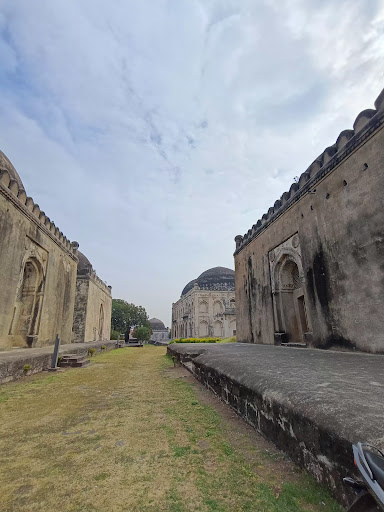
Historical Significance: The Haft Gumbad is a collection of seven imposing tombs that stand as a testament to the rich history of the region. These tombs served as the final resting places for prominent figures from the Bahmani dynasty, which ruled the Deccan region during the medieval period. The Bahmani Sultanate was known for its cultural and architectural contributions, and the Seven Tombs are a prime example of their legacy.
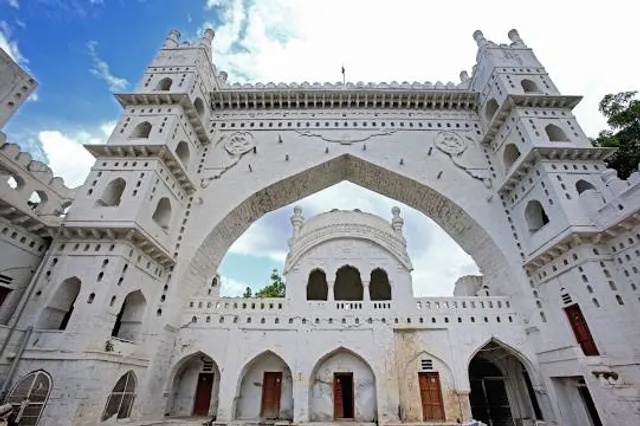
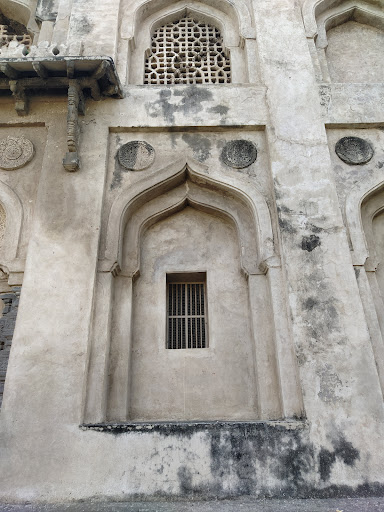
Architectural Marvel: The architecture of the Haft Gumbad is awe-inspiring. Each tomb is a masterpiece of Indo-Islamic design, featuring a blend of Persian and Deccani architectural styles. The structures are primarily constructed from stone, with elaborately adorned domes and intricate carvings. The pointed arches, intricate stucco work, and geometric patterns showcase the artistic prowess of the craftsmen of that era.
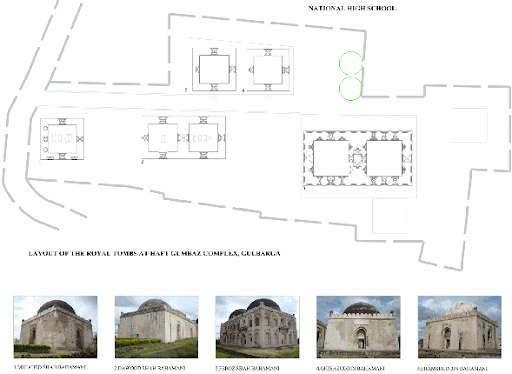
Layout and Features: The seven tombs are spread across the complex, and while they share similar architectural elements, each tomb has its unique design and size. The central tomb is often considered the most prominent and is believed to be the resting place of Sultan Firuz Shah Bahmani. The other tombs in the complex are dedicated to various Bahmani rulers and dignitaries.
Cultural Heritage: The Haft Gumbad serves as a valuable cultural heritage site, providing insights into the historical and architectural achievements of the Bahmani Sultanate. It's a place where visitors can connect with the past and appreciate the cultural richness of the Deccan region during the medieval period.
Potential for Revenue Generation and Enhancement of Gulbarga's Glory: The Haft Gumbad, with its historical and architectural significance, has the potential to generate substantial revenue and enhance the prestige of Gulbarga as a tourist destination. With the right investments in preservation, maintenance, and promotion, this historical complex could become a major attraction drawing tourists from far and wide. This influx of tourists could stimulate the local economy by creating jobs, supporting businesses, and increasing tourism-related revenue.
Concerns about Government Care: However, there have been concerns among locals and enthusiasts about the level of care and attention the government has provided to the Haft Gumbad. While efforts have been made to improve the site, there is a sentiment that more could be done. Preservation and restoration efforts, proper signage, guided tours, and promotional campaigns could help unlock the full potential of this historical treasure. It is hoped that with increased focus and investment, the government can fully realize the cultural and economic benefits that the Haft Gumbad has to offer, bringing both glory and prosperity to Gulbarga.
In conclusion, the Haft Gumbad, or Seven Tombs, in Gulbarga, Karnataka, is a historical and architectural gem that showcases the glory of the Bahmani dynasty. Its beautifully designed tombs, with their intricate details and cultural significance, make it a must-visit destination for history enthusiasts and tourists alike, allowing them to step back in time and appreciate the rich heritage of the...
Read moreHaft Gumbaz, a group of seven tombs (also called Saat (Seven) Gumbaz, situated on the eastern end of the town and on the way to the Khaja Bande Nawaz Darga consists of the tombs of some of the rulers and military commanders of the Bahmani Kingdom (14th – 15th Century AD). There is a small gate through which one can enter the complex. Nice lawns have been setup inside which adds to the serenity of the tombs. All of the tombs are barred from entrance. As I peeped through a couple of them, I did not notice any inner decorations but the outer structure of a couple are good. The plain ones of the early Tughlaq style constructions.
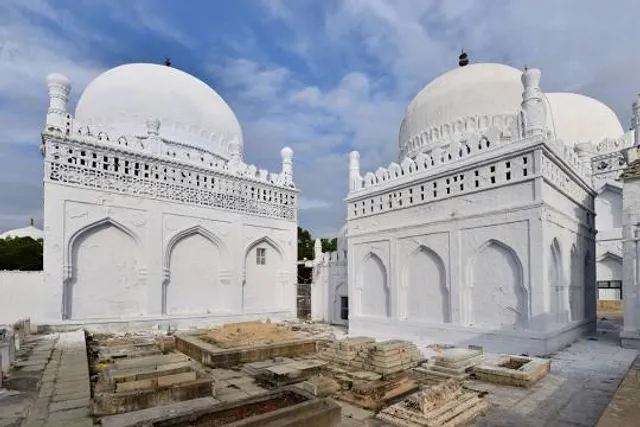
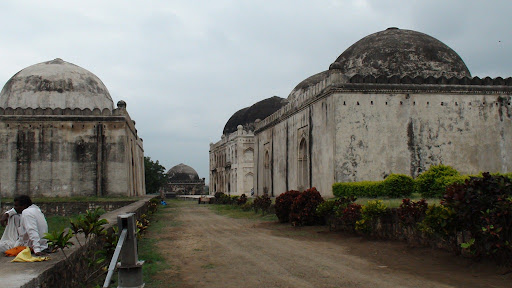
The complex extends from east to west. From the west, Mujahid Shah (third Sultan, 1375-78), and Daud Shah (fourth Sultan, 1378). To the northeast of these are the tombs of Ghiyath al Din Shah (sixth Sultan, 1397) and Shams al Din Shah (seventh Sultan, 1397). To the southeast of these is Firoz Shah (eighth Sultan, 1397-1422), and to the south and northeast there are some anonymous tombs. Most of the tombs are very plain in architecture with a large dome and square constructions.
Some of the structures contain more than one tomb belonging to the wife or children of the Sultan. The tomb of Mujahid Shah is the best looking of the lot having curved designs all around it. It also has an upper level from inside which looks like a balcony. The entrance is intricately carved on plaster. An interesting aspect is the usage of granite in some parts of the construction which clearly look like Hindu style of art. We can infer that some of the monuments were either constructed on the same area as any Hindu structure or stones from any Hindu monument were used in this construction after desecration of the former.
Even though this is a short post, I am ending it here as a logical conclusion. We will visit the Fort and its various aspects in the...
Read moreFiruz Shah Bahmani ka maqbara sabse bara aur shandar hai -
Afsos ke sath, is maqam ko encroachments ne nuqsan pohanchaya hai, magar phir bhi yeh jagah ek tariqhi virsa (heritage) hai jo zaroor dekhne laayak hai.
Ek pur-sukoon jagah, jahan pathar bhi kahaniyaan sunate hain...
The Haft Gumbaz or 'Seven Domes' contain the tombs of 4 monarchs of the Bahmani dynasty.
The earliest of the group belong to Mujahid Bahman who died in 1378, and shows strong Tughluqian influences. These include battered walls, sunken arches, fluted corner finials, heavy battlemented parapet and low dome.
The other three tombs are similar to Mujahid's tomb in architectural style but represent a unique structural arrangement in building the tomb in a double form of two conjoined mortuary chambers, one containing the cenotaph of the king and the other those of his family.
The finest example of this type of tomb is that of Taj-ud-Din Firuz, the last Bahmani sultan who was considered the greatest of his dynasty and who died in 1422.
The tomb building measures 158' X 78' and its walls are 42' high including the parapet, above which rise two hemispherical domes to a further 30'.
The elevation is in two storeys, each containing an arcade of recessed arches, some ornamented with perforated screens.
Over the parapet are foliated merlons, and there is a short fluted finial at each corner while the drum of the dome is encircled with foliations.
In the interior, the walls of each square mortuary chamber are divided into two stories of arcading, the corner arch of the upper level being carried across the angle to...
Read more