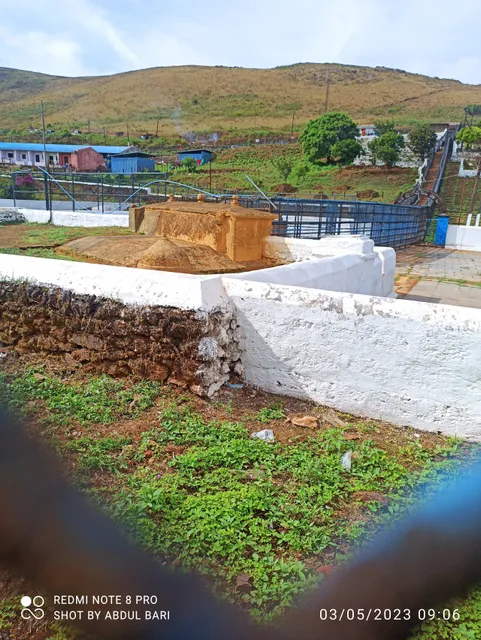
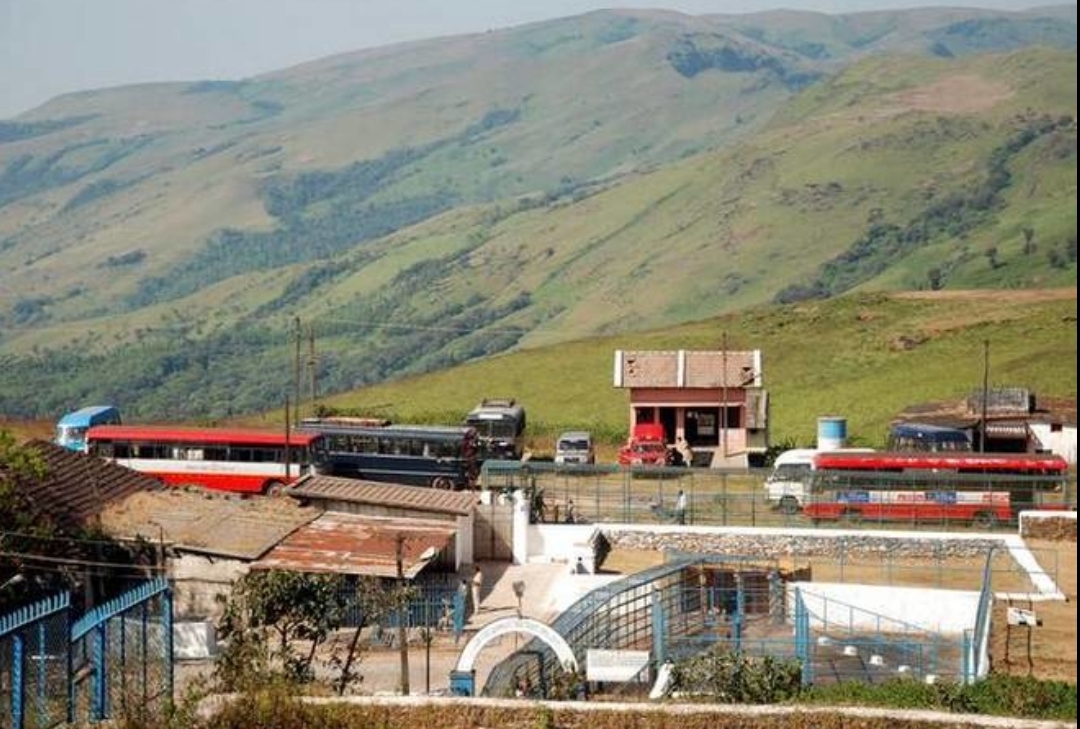
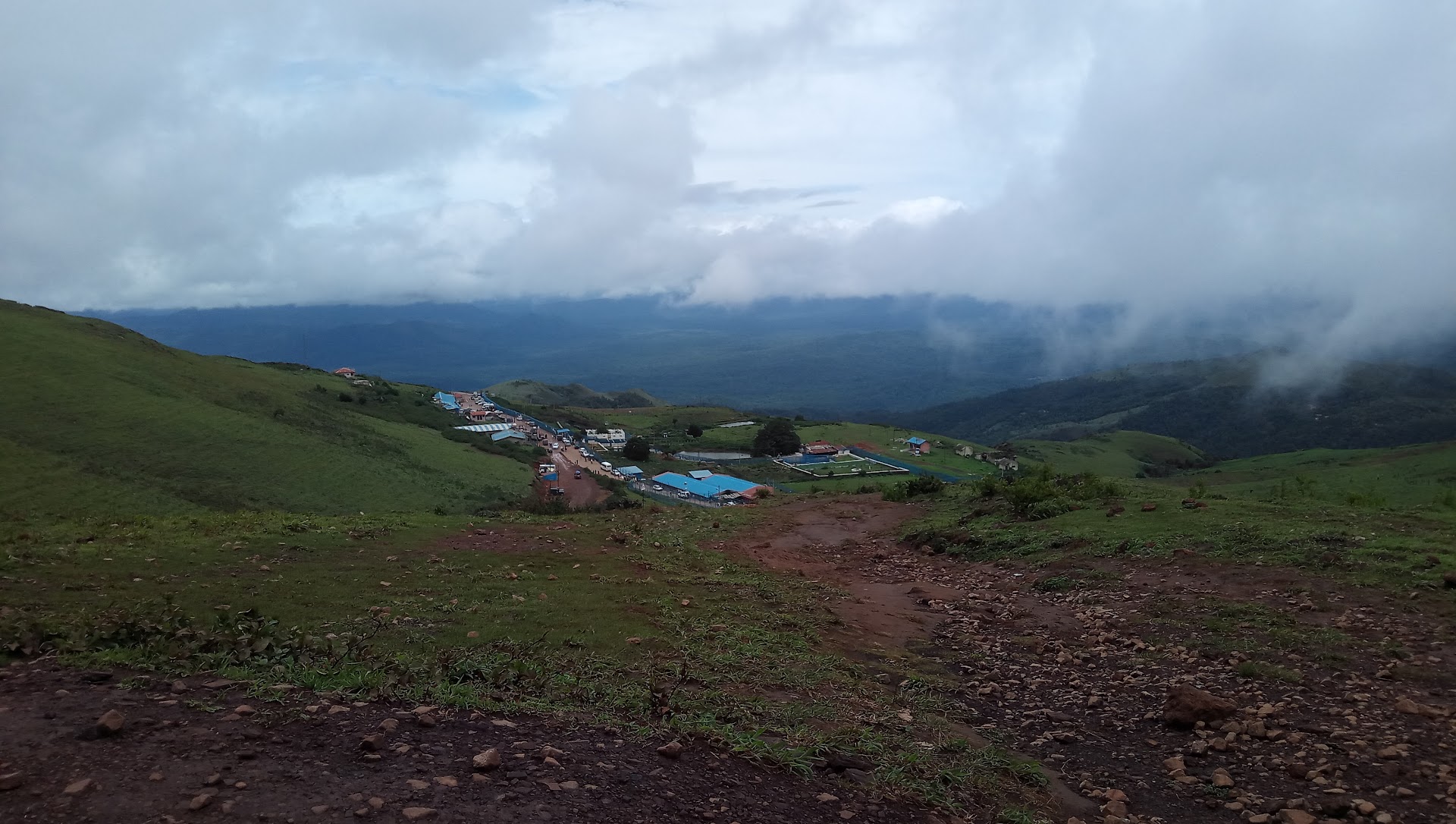
Baba Budangiri shrine - shrine named after the saint Sufi saint Baba Budan (also called Guru Dattatreya), who is revered by both Muslims and Hindus. Its origin appears to be a syncretization of reverence for an 11th-century Sufi, Dada Hayath (Hazrat Shaikh Abdul Aziz Makki); for the 17th century Sufi Baba Budan, said to have brought coffee to India; and forDattatreya, an incarnation of Shiva (or of Brahma, Shiva and Vishnu). Hazrat Shaikh Abdul Aziz Makki, also called Dada Hayat Mir Qalandhar, migrated to South India from Arabia some thirteen centuries ago and took up residence in a Cave in the thick forests of the hills of Chikmagalur, some 250 kilometres West of Bangalore. Then, in the seventeenth century, another Arab Sufi, Baba Budan, arrived in the region from Yemen. He settled down in Dada Hayat’s Cave and made it his centre to spread Islam and Sufi teachings among the local population The shrine also represents the seat of Dattareya, an incarnation of the Hindu deity Vishnu, and son of Atreya Rishi, one of the Sapta Rishis or seven seers of ancient times. It is said that Dattatreya performed penance in this cave. The pair of silver sandals and a lamp that are preserved in one corner of the shrine are, so the story goes, the sacred symbols of Dattatreya, and the raised platform inside the cave the seat of Dattatreya’s four disciples. On the other hand, local Muslims dismiss this story as concocted and claim that the platform houses the graves of Baba Budan and his disciples including Malik Tujan, Malik Wazir, Malik Kabau and Malik Safir. Despite these different stories about the dargah, the Baba Budan Shrine has for centuries been a common place of veneration for both Hindus as well as Muslims, and a striking illustration of the harmonious co-existence of different traditions. For many centuries it has remained in the custody of a family of Muslims Sajjada Nishins who trace their descent to one Syed Shah Tanaluddin Alamgaribi, who had been appointed as the custodian of the shrine during the reign of Adil Shah of Bijapur. The sacred Gawi Mubarak or Cave or Chilla Shareef of Hazrath Dada Hayath Qalandar (QAS) is known as Dargah shareef of Dada Pahad. In this Gawi or Dargah Shareef, there are several Mazar-e-Mubaraks of Mureedains or Disciples of Hazrath Dada Hayath Qalandar (QAS) and chilla mubaraks.In the Gawi Mubarak sacred water of Gawi Shareef is distributed to the people who visit the Gawi Mubarak of Dada Hayath Mir Qalandar (QAS).A few kilometres from Gawi Mubarak, there is a famous Talab known as Palang Talab, near to which, there is a Sacred Chilla of Hazrat Dada Hayath Qalandar. There is the famous Muqham where Roti Baji Ke Fateha is performed because of Quran Shareef's importance. This is a sacred Muqham where Hazrat Dada Peer (RA) taught Quran-e-kareem and gave spiritual teachings to Mama Jigni (RA) in a short span of 40 days and this is also known as the sacred muqham of Chilla of Hazrat Mama Jigni (RA). Since the place is very famous, Fateha of Roti and Baji is performed daily here. The Roti and Baji are preferred by the residents of this area itself. From top hills, one has to step down and come in the green gardens and then reach mazars in Jannat nagar to perform ziyarat of these two Mazar Shareefs in this area, known as the Mazar-e-Shareefs of Shaheeds. On the way to Jannat Nagar, there are foot prints and Chilla Mubarak of Hazrat Dada Peer (RA), which is a very sacred place in this isolated area. Also one can drink the water coming from the hills while going to jannat nagar. Manik Dharah falls is also a scared place in the area. Many Auliyas have reported regarding the karamath of water of manik dharah which is coming from centuries due to the karamaths of Hazrat Dada Peer (RA). Also the auliyas and sufi saints have taken bath from this sacred water which is non stop. Many researches have been conducted by foreigners around this falls area as to assess how the water flows uninterruptedly and continuously but they couldn't locate the fact till date and their efforts went in vain....
Read moreDada Pahad is a beautiful and spiritual place in India that I have had the pleasure of visiting every year since I was born. It is a Muslim holy site, but people of all faiths are welcome to visit and experience its peaceful and uplifting energy.
The name Dada Pahad literally means "grandfather's mountain." The mountain is said to be the resting place of a revered Muslim saint, and it is a place where people come to pray, meditate, and seek spiritual guidance.
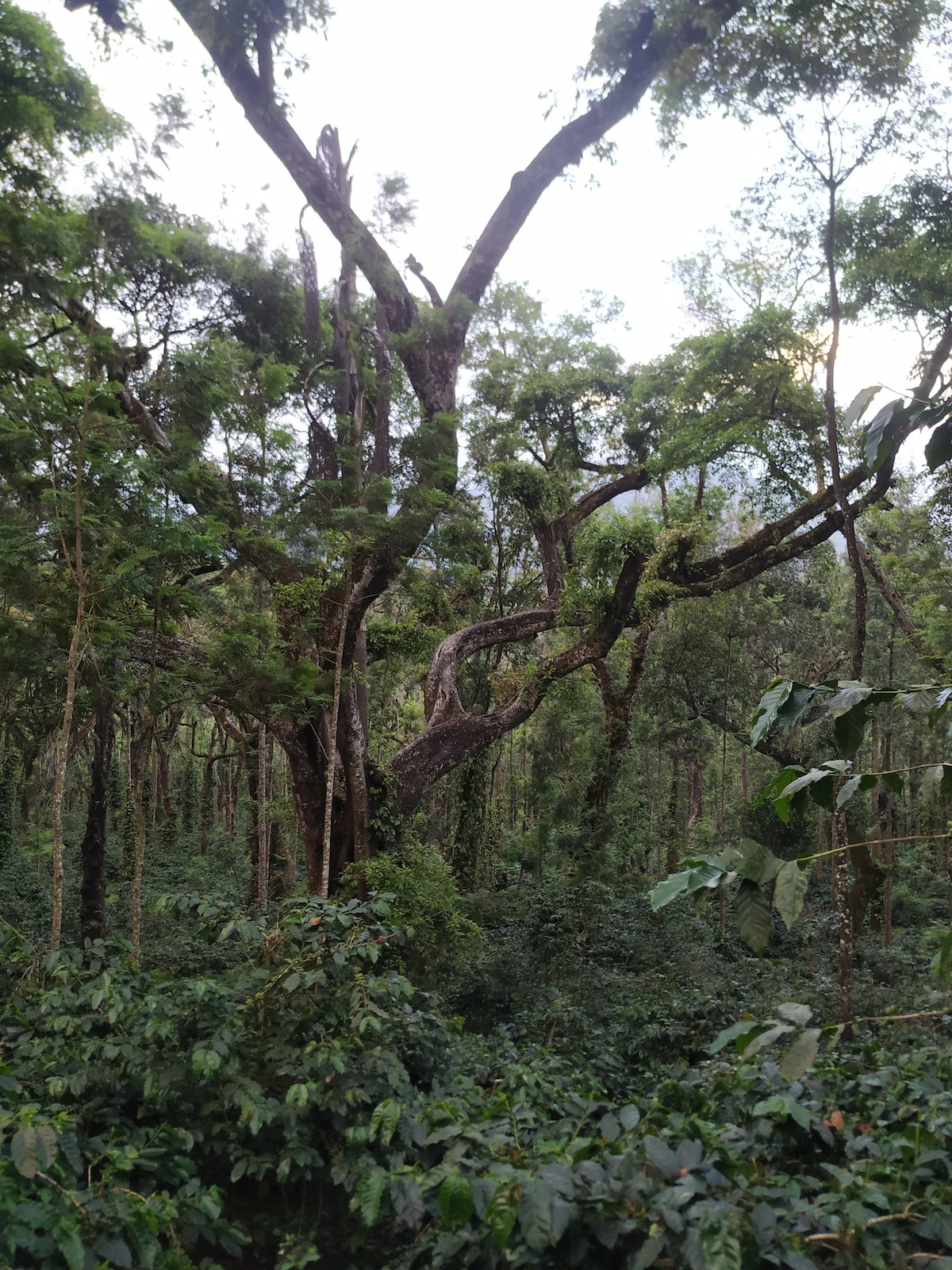
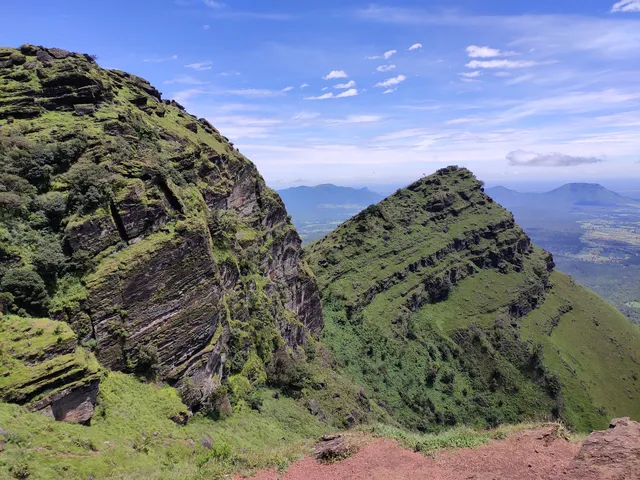
The mountain itself is a breathtaking sight. It is covered in lush greenery and dotted with waterfalls and streams. The air is fresh and clean, and the views from the top of the mountain are simply stunning.
In addition to its natural beauty, Dada Pahad is also home to a number of religious and historical sites. There is a mosque, a dargah (shrine), and a number of other important places for Muslims to worship and pray.
I have always found Dada Pahad to be a very peaceful and uplifting place. It is a place where I can go to relax and rejuvenate my spirit. I highly recommend visiting Dada Pahad to anyone who is looking for a spiritual experience or simply a beautiful place to escape the hustle and bustle of everyday life.
Here are some specific things that I love about Dada Pahad:
The peaceful and serene atmosphere. The stunning natural beauty. The welcoming and inclusive community. The rich religious and historical significance. The sense of spirituality and inner peace that I find there. If you are ever in India, I highly recommend visiting Dada Pahad. It is a truly special place that will stay with you long...
Read moreDada Hayath is a revered Muslim saint who is believed to have lived in the 16th century CE in the Indian subcontinent. He is also known by the names of Hazrat Hayat Shah, Hayathudeen Shah, and Dada Hayat Mir Khalil.
According to legend, Dada Hayath was a mystic who devoted his life to spreading the teachings of Islam and helping the poor and needy. He is said to have performed many miracles and possessed spiritual powers, which earned him a large following of devotees.
Dada Hayath's tomb, located in the town of Channapatna in the Indian state of Karnataka, is a popular pilgrimage site for Muslims and Hindus alike. It is believed that he died while praying and that his body was found in a state of deep meditation. The site is also known for the annual Urs (death anniversary) celebration, during which thousands of devotees gather to offer prayers and pay their respects.
Dada Hayath is revered for his message of universal brotherhood, love, and compassion. His teachings emphasize the importance of inner spiritual purification and selflessness, and he is seen as a symbol of unity and harmony among people of different faiths...
Read more