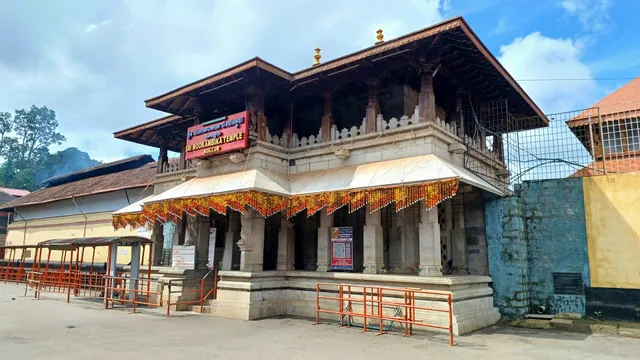
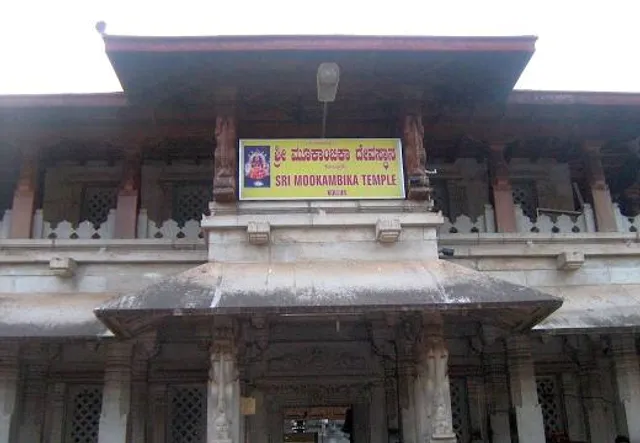
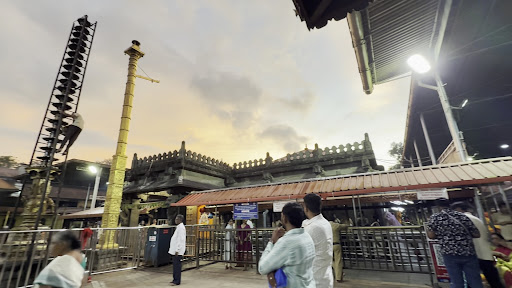
The Kollur “Shree Kshethram”, situated in the Udupi Disctrict of Karnataka State, is one among the seven abodes of Salvation, in the creation of Parashurama. The Shree Kshethram is set up by Adi Shankaracharya. This is an abode where the Goddess Shakthi is worshiped.
Devi Mookambike is worshiped here as the Shakthi Devatha. The Monster or troll Kaumhaasura, known as Mooka was put to death in this Kshethra. Mookambike is an Adi Shakthi as the Linga has integrated on it’s left side ” MahaKali”, Maha lakshmi” and Maha Saraswathi”. The Adi Shakthi in this form can be seen only here. In the form of Udhbhavalinga, Mookambike has also integrated Brahma, Vishnu and Shiva on the right side.
A gold Chain is dividing this Jyothirlinga into left and right portion. The left side of the Linga represents the Shakthi and right represents Shiva. Since Devi had appeared in his devine sight during his meditation, Adi Shankara had set up the statue of Devi on “SriChakra Yantra”. Shri Shankaracharya’s Peetha is on the western side of the Sactum Sanctorum of the Temple. Even today the worshiping ritual is being continued as per the Vijayagama system formulated by Adi Shankaracharya.
Every day morning at 5.00 am “Nirmalya Pooja” takes place and during that time the Devotees have an opportunity to see the Swayambhoo Lingam. Every day Trikala Pooja is performed in the Temple. Thousands of devotees visit the temple to find solace, from their problems, pains and difficulties or to dedicate their religious vows or to enjoy the natural scenic beauty of the environment. Thousands of devotees from various states are visiting the Shree Kshethra on every Tuesday, Friday, and during the month of Shravana or on the Moola Nakshathra day of the months of Phalguna (Which is the birthday of Shree Devi) Important Politicians (Representatives of People) Film Stars, major Industrialists etc are visiting this Temple regularly. The famous singer Mr. Jesudas is performs Chandika Homa seva and “darshan” of Devi, every year on his birthday. The Temple celebrates all traditional Hindu Festivals and during the days of Navarathri Festival the visits of the Devotees reaches the peak.
“D. Ella Vyalle” has written that being the abode of Mookambike, Kollur has become one of the important pilgrimage Centre. This place is very sacred and devotees from within and outside the Nation are visiting this place on pilgrimage and perform penance and other religious worships and return with protected feelings. About 50% of the devotees visiting this Temple are from Kerala and 25% are from Tamilnadu and 25% are from Karnataka. Devotees from Andhra and Maharashtra are also visiting the Temple.
The Temple is undertaking major social works. Many Highschools and Pre-University Colleges are maintained by the Temple around Kollur. Good lodges and Parks are set up for the benefit and comforts of the Devotees visiting the Temple.
Temple History As per ancient Scriptures and inscriptions, along with other proofs found in the locality, it is clear that the Kollur Mookambika Temple has been an abode of Devi Shakthi’s worship for centuries. In an ancient inscription (dated 1481 A D) found here, the source of the Shakthi has been described. Shree Mookambika Devi in the form of Linga is the Adi Shakthi, the Creator and the protector of all forms of life.
Many of the local Kings have given lots of donations to this Temple. Prominent among them are the Kings of the “Keladi Dynasty”. They have been offering a variety of worships to the Goddess. Prominent Kings of the Keladi Dynasty, Sankanna Nayaka and Shivappa Nayaka had renovated the Temple and gave donations for the maintenance of the Temple. The Kings of Keladi Nayak Dynasty had believed that the Goddess is the symbol of victory. As such whenever they would win a war or drive away their enemies they were devoting the victory and celebrating it before...
Read moreWriting a review on the world famous Kolloor Mookambika Temple, the Deity, rituals etc. will be a meaning less effort. So insted of wring a review, I am trying to share some information.
As per the information gained by me, following are the general timings of temple. However, timings may vary according to special occasions.
5.00am Opening
6:30 pm Pooja starting time
7:15 am Danta Dhavan Mangala Aarati
7:30 am Panchamrutha Abhishekam
8:00 am Mangala Aarati
8:15 am Udaya Bali Pooja
(11.00-11.30 no darsan)
11:30 am Noon Pooja
12:30 pm Maha Mangala Aarati
12:45 pm Noon Bali Pooja
1:30 pm Closing
3:00 pm Reopening
6:30 pm Mangala Aarati
8:45 pm Kashaya Mangala Aarati
9:00 pm Closing.
Prime purpose of many devotees coming to this temple is the 'Vidyarambham' of kids. It will be held in forenoon session. For this we have to take receipt from counter functioning on the right hand side (Facing Daity) in the outer circumbulating path and then move to Saraswathi mandapam ( a small stage) situated on the other side left hand corner. You need not carry anything in particular except a gold ring to write letters on the tongue of kid (using by you is sufficient). Vidyarambham can be performed by father or any one as desired by you ( Temple authorities not deputed any body for it). At a time 10-12 elder with the kid in their lap can sit and perform. We have to follow the direction given by the preist. This function for a group will last for about 10-15 minutes only. Some others want to perform dance, music etc here. They will be allowed in the after noon session only and no body will be there to direct or regulate the performers. No payment is to be made for it.
As mentioned in timings, Kashaya pooja is the last pooja of a general day. After that, the prasada (Kashsya - a medicated hot liqid) will be supplied to devotees free of cost in the vessel brouht by them. It is better to bring small steel jar with handle (to avoid burns) or bottle. Please avoid plastic - the hot prasada will melt plastic. Though prasada, molten plastic may harm your health. To get this prasada, you have to stand in long que well in advance.
Small shrines of Pranalingeswara, Partheswara, Panchamukhi Ganapathi, Chandra mouleeswara, Nanjundeswara, Anjaneya, Venkita ramana, Veerabhadra, Subramanya are also positioned along the outer circumbulating path. You can also see very small idol of Srikrishna in a very very small structure situated near the Veerabhadra sreekovil.
You can worship Dasamukha Ganapathy on western side of main Sanctum sanctoram. Naga idol on South West wall and Adisankara peetom on wester side are also in the inner circumbulating path.
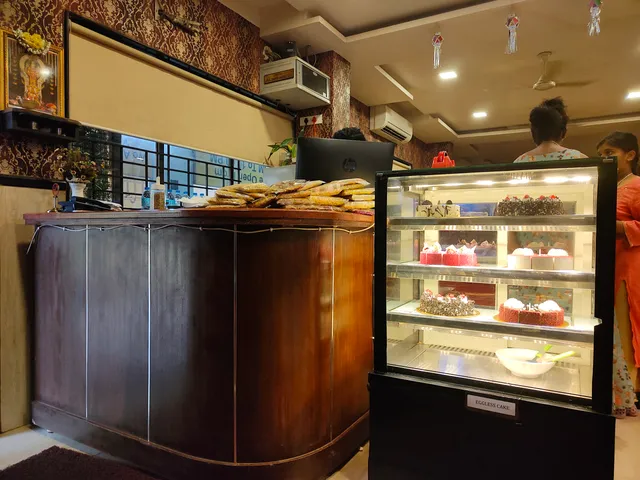
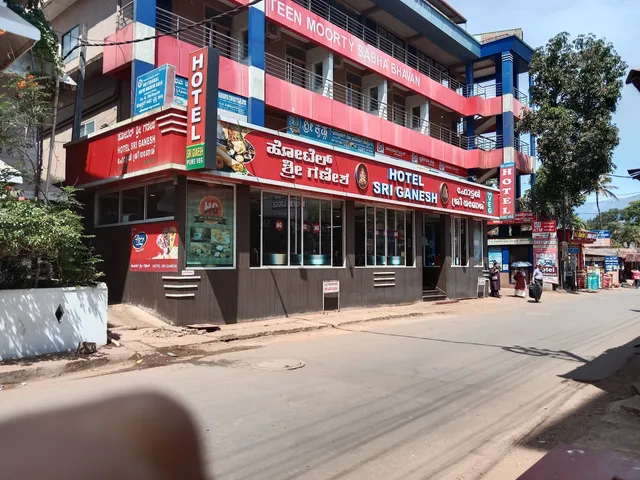
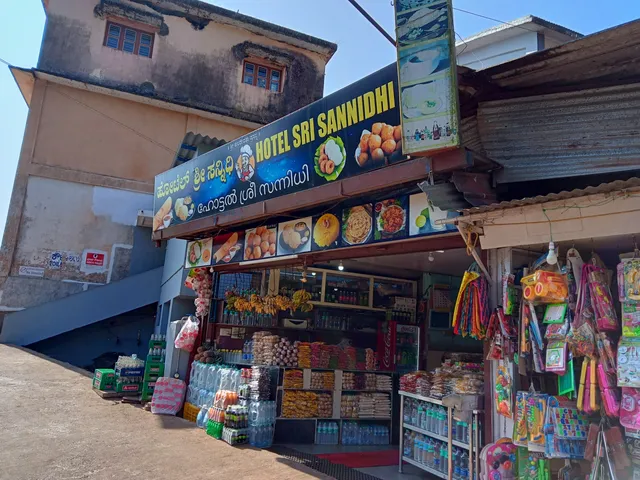
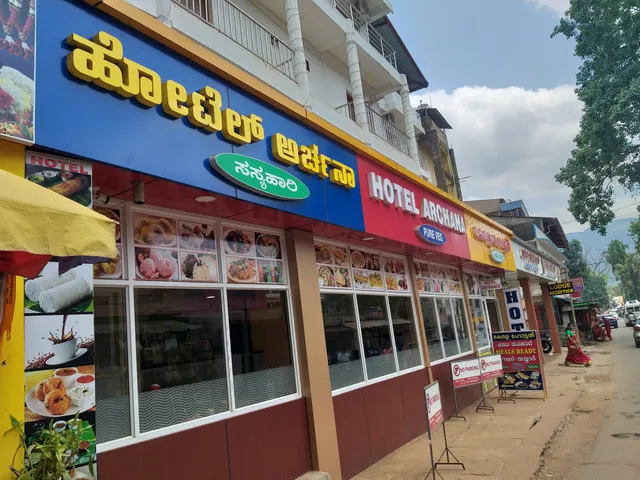
Lot of accommodation facilities suite your budget up to three star are available around the Temple. Many restaurants are also avilable here. But, it is very difficult to get some traditional Kannada dishes here.
Have a visit to Kudajadry for which off road hired jeep ride and walk required. Also visit Souparnika river.
At noon (from 12.30) and night (8 pm) free meals will be served to devotees in neat and vast dining hall adjacent to temple.
On way to Dining hall you can see a shrine of Chodeshwari on your left hand side. I could not see any symptoms of Pooja or even lighting of lamp here.
With best of my memory,all the Pasadas was distributing in eco friendly container/packets in the past. Though 'plastic prohibited' board is available everywhere, the Panchamrita etc. are now distributing in plastic tins.
Nearest Railway station and town are Byndoor, about 30km from the temple. One bus is leaving the temple bus stand to Byndoor and back at every half an hour between 6.am and 6 pm. You can avail Auto rikshaw,...
Read moreThe Kollur Sree Mookambika Temple is one of the most revered and ancient pilgrimage sites in Southern India. Located in the village of Kollur, in the Udupi district of Karnataka, it is a significant center of worship for Hindus, especially devotees of the Divine Mother.
Here is a detailed overview of the temple, its history, and key information for visitors:
The Main Deity and Significance
Deity:The presiding deity is Goddess Mookambika, who is revered as a manifestation of Shakti (the divine feminine energy). She is a composite form of the three major goddesses: Mahalakshmi, Mahasaraswati, and Mahakali. She is believed to be the Adishakti (primeval energy) herself. Unique Iconography:The main sanctum houses a magnificent panchaloha (five-metal alloy) idol of the goddess, seated in the Padmasana posture. A unique feature of the temple is the Jyotirlinga (a divine lingam) which is believed to be the confluence of the divine light of Shiva and Shakti. This lingam is split by a golden line, representing the left portion as the Trinity (Brahma, Vishnu, and Shiva) and the right as the three goddesses (Mahasaraswati, Mahalakshmi, and Mahakali). Adi Shankaracharya's Connection:The temple's fame is largely attributed to the great philosopher and theologian Adi Shankaracharya, who is believed to have visited Kollur and consecrated the idol of the goddess here. According to legend, the goddess appeared before him, and he requested her to move to a more accessible location for her devotees, which led to the establishment of the temple at its present site.
Key Attractions and Features Mookambika-Saraswati Mandapam: This is a very sacred spot where Adi Shankaracharya is said to have meditated. The famous Vidhyarambhamceremony, where children are initiated into the world of letters, is performed here. Many devotees believe that a visit to the temple will bestow upon them a divine blessing of knowledge and arts. The Souparnika River:The temple is situated on the banks of the holy Souparnika River, which is believed to have been formed from the prayers and penance of a mythical eagle (Garuda's mother). Devotees consider a dip in this river to be highly auspicious. Sub-temples:The temple complex also has sub-shrines dedicated to other deities, including Lord Ganesh, Lord Subramanya, and a majestic Dwajastambha (flagpole). Chandi Homa:The temple is a famous venue for the performance of Chandi Homa and other sacred rituals dedicated to the goddess.
Visiting Information
Location: Kollur is a small town located in the Udupi district of Karnataka, surrounded by the lush green Western Ghats. Best Time to Visit:The post-monsoon and winter seasons, from September to March, are the best times to visit when the weather is pleasant. The temple's most significant festival, Navaratri, is celebrated with great pomp and draws lakhs of devotees. Temple Timings: The temple is generally open from 5:00 AM to 1:30 PM and then reopens from 3:00 PM to 9:00 PM. However, timings for special rituals and festivals can vary. Dress Code:As with most temples in the region, a traditional dress code is followed. Men are expected to wear dhotis, lungis, or pajamas, and women should wear sarees, churidars, or other traditional attire that covers their shoulders and legs. How to Reach: By Air:The nearest airport is Mangalore (IXE), which is about 130 km away. By Rail: The nearest railway stations are Kundapura (KUDA) (approx. 35 km) and Byndoor Mookambika Road (BYNR) (approx. 27 km). From there, you can take a bus or taxi. By Road: Kollur is well-connected by road and has frequent bus services from major cities in Karnataka and Kerala, including Mangalore, Udupi, Shivamogga,...
Read more