Banashankari Devi Temple :
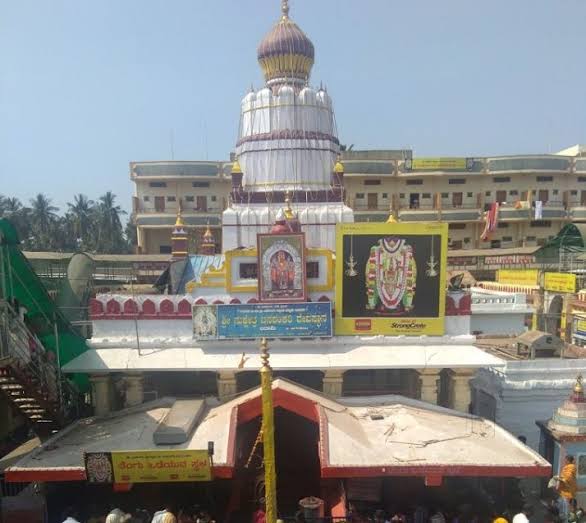
Banashankari Temple) is a Hindu temple located at Cholchagudda near Badami in Bagalkot district of Karnataka, India. This temple is called 'Shakambhari' 'Banashankari or Vanashankari' as Tilakaranya is in the forest. The goddess of the temple is also known as the incarnation of vegetable goddess Parvati.
This temple attracts devotees in Karnataka as well as Maharashtra. The original temple was built by 7th century Badami Chalukya Rajas, who worshipped the Goddess Banashankari. The temple celebrates annual festival named Banashankari Jatre in January or February. The festivals include cultural programs, boat festivals, as well as Rath Yatra, while the temple goddess is seen around the city through the chariot. Banshakhari is a form of Maa Shakambhari Devi whose true, main and ancient temple is located in Saharanpur district of Uttar Pradesh. She is also known as Shaktipeeth Shakambhari Devi. Along with mother there are idols of Bhim, Bhramari, Shatakshi and Ganesha.
Banashankari or Vanshankari are made up of two Sanskrit words: Van ("Van") and Shankari ("Shiva's wife, Parvati"). This temple is called Vanshankari because of Tilakaranya in the forest. Transforming arrow to arrow converts common debt words of Sanskrit words in Kannada. The second popular name given is Shakambhari, which means "Vegetables goddess". Shaq and Ambari two words combination makes it. Doubt in Sanskrit is vegetables or vegetarian food and ambari is "who wears or tolerates the hungry". Another discretion is that the "vegetables" comes from the root filled (suspicion = vegetables or food and root filled = nutrition)
Locals also call the goddess of the temple as Balavwa, Bandavwa, Sunkavwa, Shirvanti, Chaudamma and Vandurga. It is said that Banashankari is the sixth incarnation of the warrior-devi fort.
Historians have voted that the original temple would have been built in the 7th century - from Kalyani Chalukya Kal to Jagdekamalla I to 603 AD (according to inscription) which had established the image of the Goddess. The current renovated temple was built by Maratha Sardar Parushram Agale in 1750.
The original temple existed even before the career of drivers who gave royal recognition to the faith of Vaishnav, Shaiv, Jain and Shakt Dharmiya, it is also said. He worshiped the power of Banashankari, as his supreme goddess. The inscription mentioned that Jagdekamalla Pratham has restored the temple with several pairs. Another inscription in Kannada language on the north side of the temple in 1019, describes the bravery of Rashrakoot King Bhimdev. Lamp pillars (lamp pillars) can be seen at the entrance of the temple; According to an inscription, this construction is credited to warrior Ketimiah.
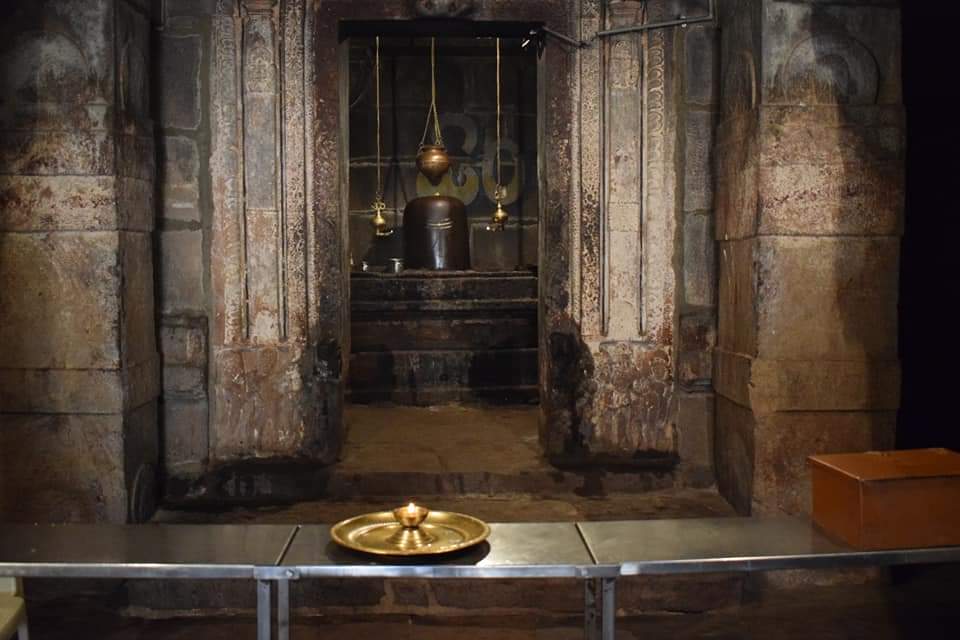
This temple was initially built in Dravid architectural style. The reconstructed structure is in Vijaynagar architectural style. The temple is surrounded by high walls on all sides. The main structure has face mantap (portico), half mantap ( entrance/ pavilion) and the womb ( tower). There is an image of Devi Banashankari in the main depth of the temple. The goddess sitting on a lioness in a black rock sculpture is portrayed of a monster trampling under her feet. The Goddess has eight hands and has a trishul (trishul), damru (hand drum), hair sheet (cup of kavati), bell (war bell), vedic texture, sword-kheta (sword and shield) and the devil's scattered head. This goddess was the Kuldevi (teacher goddess) of the drivers. Devi Banashankari is the deity who teaches the Devanga community. Devanga weaver community holds this goddess with utmost respect. Banashankari is also the deity of some country Brahmins.
There is a 360 feet (109.7 meters) square water stitches in front of the temple entrance, called Haridra Teerth in local language, a version named Harishchandra Teerth. The lake is closed by the stone porch (hall) on three sides. There's a south or south way around the tank.
Jai shree ram
follow me...
Read more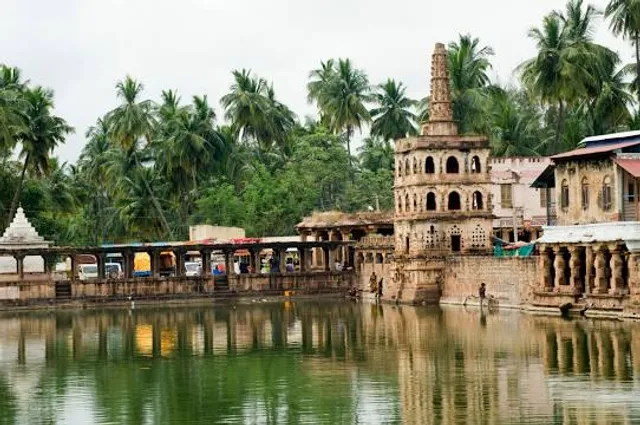
 Learn more insights from Wanderboat AI.