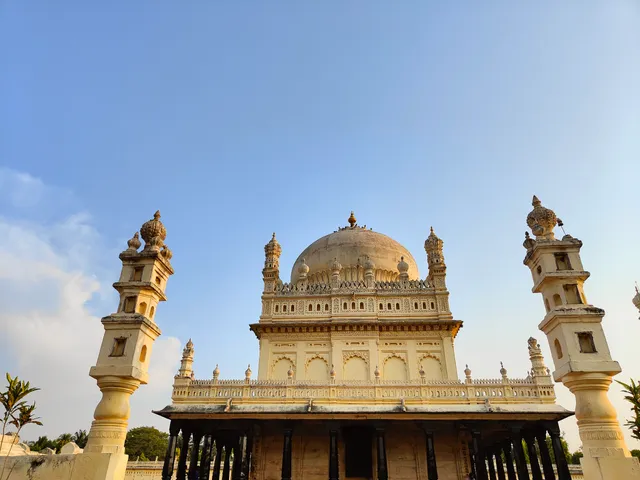
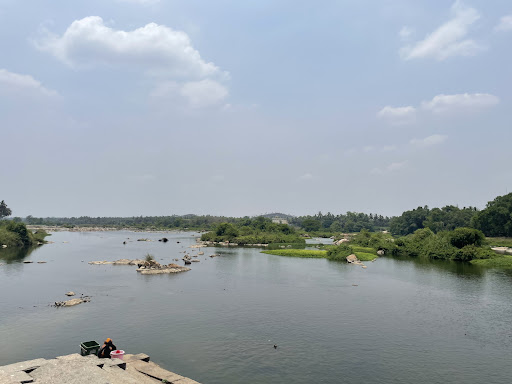
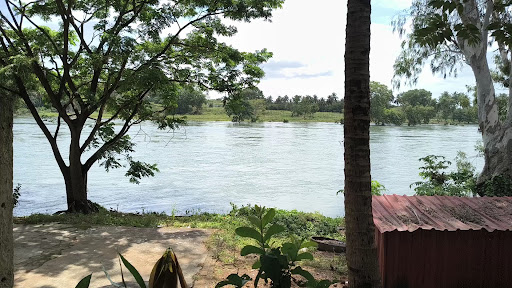
Tirumakudalu Narasipura (Tirumakūḍalu Narasīpura) the temple city of Karnataka, commonly known as T. Narasipura or T.N. Pura,[2] is a town in Mysore district in the Indian state of Karnataka. The first name refers to the land at the confluence, (trimakuta in Sanskrit (citation needed) at the confluence of the Kaveri, Kabini and Spatika Sarovara (a mythical lake or spring, also named Gupta Gamini).
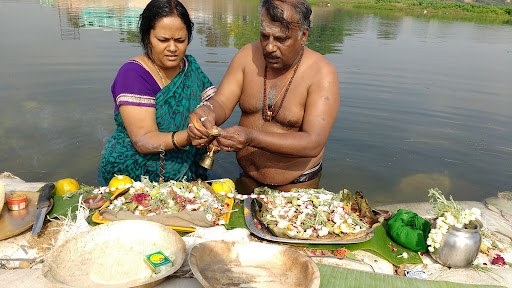
This is the place in South India where Kumbhamela is held every three years. It finds a mention in the Skanda Purana as one of the Trimakuta Kshetras (holy places at the confluence of three rivers).[3] The word 'Narasipura' is the name of the town, which is derived from the famous Gunja Narasimhaswamy temple that is located on the right bank of the Kabini river. Considered as sacred as Prayag (confluence of the Ganges, the Yamuna and the Saraswati at Prayag – Varanasi - Kashi in North India), it is also known as Dakshina Kashi The town finds mention in tourism guides, both as a tourist place and a pilgrimage centre.
T. Narasipura and its surrounding areas are prehistoric sites where many Neolithic sites have been unearthed by the Department of Archeology and Museums of Karnataka. The rich and fertile areas of the taluka cultivated by the Kaveri and its tributaries, has been the source of continued uninhibited human habitation, over the centuries, as verified by the ancient archeological evidences discovered in the area. The ancient sites excavated in the late fifties and up to mid-sixties (between 1959 and 1965) on the left bank of the Kaveri near the Bhiksheswara Temple, opposite to Narasipura town, which form part of the Upper Kaveri basin, has established the Neolithic phase in the region claiming a date from the first half of second millennium BC which saw the gradual evolution of the peasants into food producing and settled communities responsible for the growth of civilization. The systematic ground excavations comprising burial ground remnants, potteries, graffiti, stone implements, metal objects, beads and bangles, animal remains, human remains, wood remains, etc. examined in depth and in great detail have revealed four cultural phases at the sites, but the most outstanding phase has been deduced as the Neolithic phase
Pancha lingas of T Narasipura region: Agasthyeshwara temple is another famous ancient temple in the town, predating Gunja Narasimha Swamy temple. (Agastya founded and sanctified the Agasthyeshwara temple. This temple complex contains many monuments belonging to the Ganga, Chola, Hoysala and Vijayanagara periods at Thirumakudlu, and also at the Bhiksheswara temple, the Moolasthaneshwara temple and the Anandeswara temple in the surrounding area.[3] It is said that Tirumakudalu is where Rishi Agasthya had visualised it as 'Dakshina Kashi' long ago. When he travelled down south to Narsipur, the town was a thick forest. Enamoured by the confluence of the three rivers - Kaveri, Kapila and the undercurrent of Spatika Sarovara - he wanted to install a Shiva Linga there and asked Hanuman to get him a linga from Kashi. Since the auspicious period lasting three-and-a-three-fourths of a galige was fast approaching and Hanuman failed to get the linga on time, the sage created a sand linga himself and consecrated it. An insulted Hanuman, who returned soon, cut off the top portion of the sand linga consecrated by Agasthya. Ever since this incident a perennial presence of water which is believed to be the water of Ganga can be found in the axed summit of the linga, and the same is offered as thirtha (holy water) to the pilgrims. The linga that Hanuman brought was consecrated a little distance away and is called the Hanuman Linga. The Someshwara and Markandeshwara lingams in T Narsipur and the Gargeshwara Lingam at Gargeshwari village, along with the Agasthyeshwara and the Hanuman lingam, form the panchalingas of T Narsipur, just like the five lingams...
Read more
 Learn more insights from Wanderboat AI.