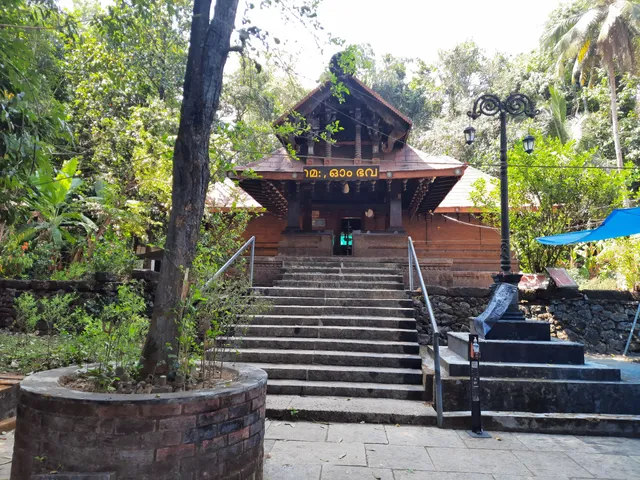
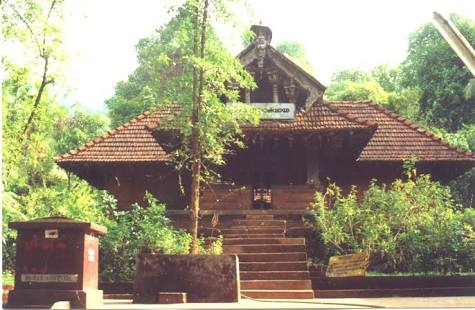
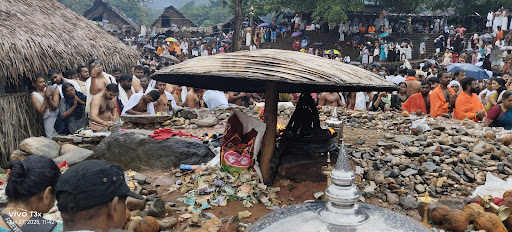
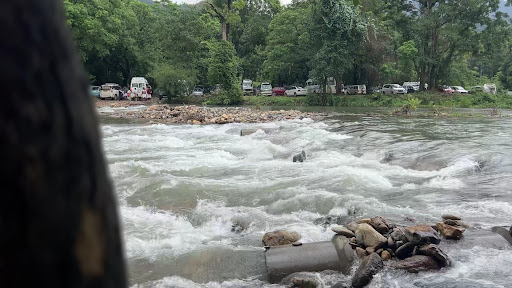
At Kottiyoor, there are two temples - Akkare Kottiyur and Ikkare Kottiyur, located on the opposite banks of Bavali river. Akkare Kottiyur is open during the Kottiyoor Vaisakha Maholsavam festival only. The temple is situated on the beautiful Sahya mountain range valley and is blessed with abundant natural beauty. The Bavali river with her medicinal waters flow from the Wayanad ghats on the banks of the temple. On the northern side of the river bank, there is a small lake known as Thiruvanchira and here in the midst of this lake is this temple sans temple. The temple has a Shiva linga believed to be a swayambhu. Swayambhu means born on his own or not man made. The small heap where this Shiva linga is worshipped is known as Manithara. The abhishekam for the Shiva linga is with milk, ghee (clarified butter) and karikku (tender coconut water). In the same lake, there is another heap Ammarakallu where Sree Parvati Devi is worshipped. This way, at Kottiyoor you get the blessings of both Shiva and Shakthi. Kottiyoor is also known by the names Kudiyoor, Dakshina Kashi. Thricherumana, Vdakkumkaavu, Kizhakkumkaavu and Vadakeeswaram.Kottiyoor or Kottiyur is a famous Hindu pilgrim center devoted to Lord Shiva and Goddess Parvati. The proper name of the temple here is Sri Kottiyoor Mahadeva Kshetram. Kottiyoor temple is located near Kelakam in Kannur district of the southern state Kerala. Sri Kottiyoor temple is also known as the Dakshina Kashi or Varanasi of the South and attracts lakhs of devotees every year during the Vaisakha Maholsavam celebrations. Kottiyoor is totally different from any other temple. Set amidst the jungle, nourished by a flowing river in serene surroundings, you will feel the divine energy the moment you step on this mythical land. The temple is situated on the beautiful Sahya mountain range valley and is blessed with abundant natural beauty. The Bavali river with her medicinal waters flow from the Wayanad ghats on the banks of the temple. On the northern side of the river bank, there is a small lake known as Thiruvanchira and here in the midst of this lake is this temple sans temple. The temple has a Shiva linga believed to be a swayambhu. Swayambhu means born on his own or not man made. The small heap where this Shiva linga is worshipped is known as Manithara. The abhishekam for the Shiva linga is with milk, ghee (clarified butter) and karikku (tender coconut water). In the same lake, there is another heap Ammarakallu where Sree Parvati Devi is worshipped. This way, at Kottiyoor you get the blessings of both Shiva and Shakthi. Kottiyoor is also known by the names Kudiyoor, Dakshina Kashi. Thricherumana, Vdakkumkaavu, Kizhakkumkaavu and Vadakeeswaram.
Vaisakha Maholsavam
The Vaisakha Maholsavam festival is held every year during the months of May - June. The twenty eight day festival commences with the Neyyattam ritual on the Swati Day in Edavam and concludes with the Thrikkalashaattu.
The Vaisakha Maholsavam celebrations begin with the ritual of bringing a sword from Muthirerikavu from Wayanad. On the following day, on Visakham star Bhandaram Ezhunnallath ritual is held. Gold, Silver vessels, heavenly ornaments etc are brought from nearby Manathana village to Kottiyoor.
An important ritual during the festival is the Elaneer Vayppu or submitting tender coconuts before the swayambhu Shiva linga. On this special day, thousands of tender coconuts carried from different parts of Malabar by the devotees are submitted. The following day, the main priest of the temple, pours the collected coconut water on to the idol which is known as 'Elaneeraattam'.
Rohini Aaradhana is a very important ritual which is not seen in any other temple. The priest embraces the swayambhu Shiva linga as part of the ritual. The belief behind this ritual is that Brahma himself worships Lord Shiva to pacify for the...
Read moreKottiyoor or Kottiyur is an ancient Hindu pilgrim center devoted to Lord Shiva and Goddess Parvati in Kannur district, Kerala. The temple is situated on the beautiful Sahya mountain range valley and is blessed with abundant natural beauty. The Bavali river with her medicinal waters flow from the Wayanad ghats on the banks of the temple. On the northern side of the river bank, there is a small lake known as 'Thiruvanchira' and here in the midst of this lake is this temple sans temple.
The temple has a Shiva linga believed to be a 'swayambhu'. Swayambhu means born on his own or not man made. The small heap where this Shiva linga is worshipped is known as 'Manithara'. The abhishekam for the Shiva linga is with milk, ghee (clarified butter) and karikku (tender coconut water). In the same lake, there is another heap 'Ammarakallu' where Sree Parvati Devi is worshipped. This way, at Kottiyoor you get the blessings of both Shiva and Shakthi.
Kottiyoor is also known by the names Kudiyoor, Dakshina Kashi. Thricherumana, Vdakkumkaavu, Kizhakkumkaavu and Vadakeeswaram.
At Kottiyoor, there are two temples - Akkare Kottiyur and Ikkare Kottiyur, located on the opposite banks of Bavali river. Akkare Kottiyur is open during the Kottiyoor Vaisakha Maholsavam festival only.
Kottiyoor temple mythology, History of Sri Kottiyoor Mahadeva temple
Daksha is son of Brahma and one of the Prajapatis. Sati, the consort of Shiva was the daughter of Daksha. Sati had married Shiva against the wishes of her father. The vain Daksha performed a great yagna/ yaga(with the sole aim of insulting Shiva), to which he invited all of the gods and goddesses except his son in law Lord Shiva. Against Shiva's wishes, Sati attended this yagna and was insulted by her father. Unable to bear this insult, Sati immolated herself in the yagna fire.
Enraged at the loss of Satidevi, Shiva opened his third eye. Then appeared Veerabhadra with a 1000 arms and carrying weapons in each hand. He destroyed Daksha's sacrifice and cut off Daksha's head.
Since the yaga was stopped, the Gods feared that many difficulties may arise in the future. The Gods along with Brahma and Vishnu went to Kailas and sought Shiva's help. Shiva was pacified and all of them reached the yaga place and restored the yaga. The dead were brought back to life. Daksha's head was destroyed in the yaga fire and was replaced by a goats head. Daksha pleaded to Shiva for his arrogance and was given Moksha.
After the yaga, every one went back and Lord Shiva took the form of the swayambhu linga next to where Sati immolated herself in the yagna fire. Since all the Trimoorthies or the Hindu trinity of Brahma, Vishnu and Shiva met together at this place, it was known as Koodiyoor (Koodi in malayalam means meet or join). Koodiyoor became Kottiyoor.
So Kottiyoor is believed to be the spot of the ancient Dakshayaga. The auda flowers/ odapoo is considered as the...
Read moreThe Kottiyoor Temple, A beautiful temple where nature, man, and God come together is located in Kannur district of Kerala, India, is ancient and highly revered Shiva temple with deep connections to mythology, history, and Kerala's traditional rituals. It is known primarily for the Kottiyoor Vysakha Mahotsavam, a unique and elaborate annual pilgrimage and ritual festival. Kottiyoor is traditionally associated with the Daksha Yaga. Sati attended the Yaga uninvited and self-immolated in protest of her father's insult. In rage, Shiva destroyed the Yaga and decapitated Daksha. This place is believed to be the site where Daksha Yaga occurred.The deity is the Swayambhoo surrounded by Thiruvanchira. During the Daksha sacrifice, Shiva’s beard was torn off, scattering over the spot. Odapoo honors that symbolism. Odapoo is crafted from reed or bamboo fibers—natural, lightweight, and traditionally white in color. Traditionally it is taken home by devotees as a token of blessings, believed to bring prosperity and protection. They’re often hung in prayer rooms or households for over a year.
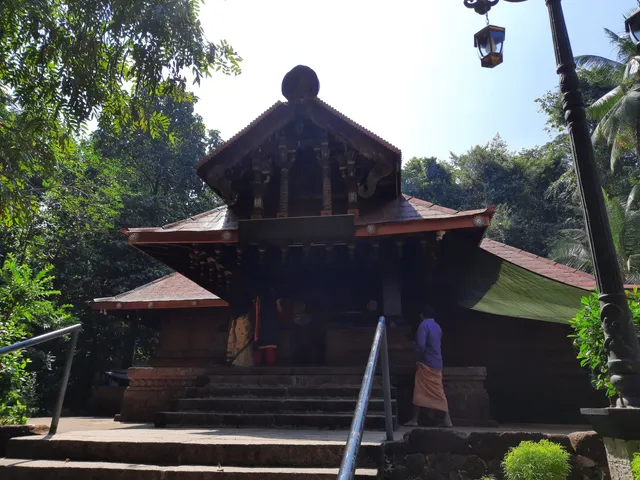
There are two temples in kottiyoor. Akkare kottiyoor and ikkare kottiyoor. Akkare kottiyoor is active only during the 28-day Vysakha Mahotsavam festival.
Those coming from Mangalore side should get down at Kannur Railway Station and those coming from Kozhikode side should get down at Thalassery Railway Station.There are private buses and KSRTC special buses from there. Once the Vaisakha Maholsavam festival begins, it is always crowded. Those coming from faraway places should avoid weekends as much as possible.There is darshan from 5 am onwards.Those who come on special days should book a room at Kottiyoor Devasthanam or book a room in nearby towns like Peravoor,Kelakam or Iritty and arrive in the morning for darshan. The temple, which receives an average of over 10,000 visitors per day has poor infrastructure.Parking is scarce, so finding it is a bit difficult. There are many counters for prasad so there is no problem with that. There is Annadhana in morning and noon at the temple.
There are paid centers just before crossing the bridge to Akkare kottiyoor to store bags and shoes.
Strictly follow the instructions of the volunteers and police present at the temple. As the flow of the Bavali River is unpredictable, only enter the river after checking with the police or volunteers there. May everyone have the opportunity to experience this 28-day Vaishakh festival at least once in their lives.
Let our government expand its roads and infrastructure to accommodate the growing pilgrimage...
Read more