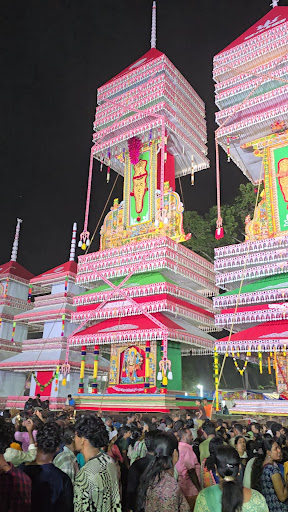
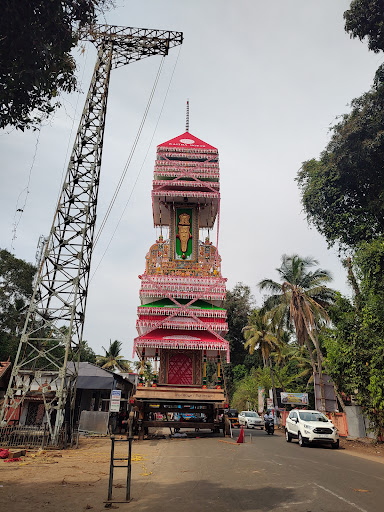
The temple has 13 "Karas", or territories. The temple is at the centre of the oldest four Karas (Erezha South, Erezha North, Kaitha South and Kaitha North) and the rest of the Karas (Kannamangalam South, Kannamangalam North, Pela, Kadavoor, Anjilipra, Mattam North, Mattam South, Menampally and Nadakkavu) surround the temple, which is believed to be 1,200 years old.
The Thantric rights of the temple belongs to Plackudy Illom, With its Tharavadu (Base) in Ambalapuzha. Plackudy is one among the ancient Thantric families of Kerala. The Present temple Thanthric charge is for Brahmasri. Plackudy Unnikrishnan Namboothiri.
Recently UNESCO collected details about the temple and its customs (Kuthiyottam, Kumbha Bharani) in order to examine whether the temple is eligible for inclusion in the UNESCO World Heritage List.
This is the second largest temple in terms of income under the control of Travancore Devaswom Board, second only next to Sabarimala.[1] It is estimated that the temple has earnings worth many crores per year. In 2009 it earned around 1.7 crore Rupees from a single type of offering called "Chanthattam". A major part of the Nellu (whole rice grain) offered to the Bhagavathi is also used to make Appam and Aravana prasadams at Sabarimala. The income from the temple is also helpful to run the daily rituals and Poojas at various temples under the Travancore Devaswom Board.
Kuthiramoottil kanji and Therummoottil kanji, are major offerings at Chettikulangara Devi temple, which received the Geographical Indication (GI) tags. Ten other names associated with the temple have been registered under the trademark and patents regime. These include Chettikulangara Amma, Chettikulangara Kumbha Bharani, Chettikulangara Kettukazhcha, Kuthiyottam, and Chooralmuriyal. The registration under the rules of protection of intellectual property rights has been made in the name of Sree Devi Vilasam Hindu Matha Convention, Chettikulangara, an organisation of 13 karas or regional societies. The organisation has also applied for design patent for kuthira and theru as well as Jeevatha, the deity's palanquin. There are Similar Kettukazhcha at various temples in this Onattukara Area. Kumabha Bharani festival of this temple is being attracted by lakhs of people every year.
From the moment you step into the temple premises, you are welcomed by a tranquil yet powerful ambiance. The wide open spaces, the sacred banyan trees, and the traditional temple architecture all add to a sense of divine presence. There is a distinct energy here — a mix of devotion, tradition, and community spirit that is rarely found elsewhere.
The Kumbha Bharani festival, held in the Malayalam month of Kumbham (Feb–March), is one of the most spectacular events in Kerala. The highlight is the Kettukazhcha, a procession of massive, decorated structures resembling temple cars and mythological figures, created by the Karas. It is a visual feast and a powerful expression of community devotion. Equally captivating is the Meenam Aswathy festival, where offerings like kanji (rice gruel), muthirappuzhukku (boiled horse gram with coconut), and konjum mangayum (tender mango pieces) are prepared and shared among devotees. These humble, traditional offerings carry deep spiritual meaning and symbolize gratitude and simplicity in devotion.
A visit to Chettikulangara Bhagavathy Temple is not just a spiritual experience — it’s a cultural immersion. Whether you're drawn by faith or fascinated by Kerala's traditions, this temple will leave a lasting impression...
Read moreChettikulangara Devi Temple is believed to be one of the five Ambalayas built by Parasurama after his creation of Kerala.The temple is dedicated to Goddess Mahakali originated from the third eye of Lord Siva to kill the demon Daruka.The history of the temple goes back to about 1200 years.It is also believed that the consecration of the temple was done in 823 AD by Padnmapadacharyar one of the famous disciples of Adi Shankaracharyar.
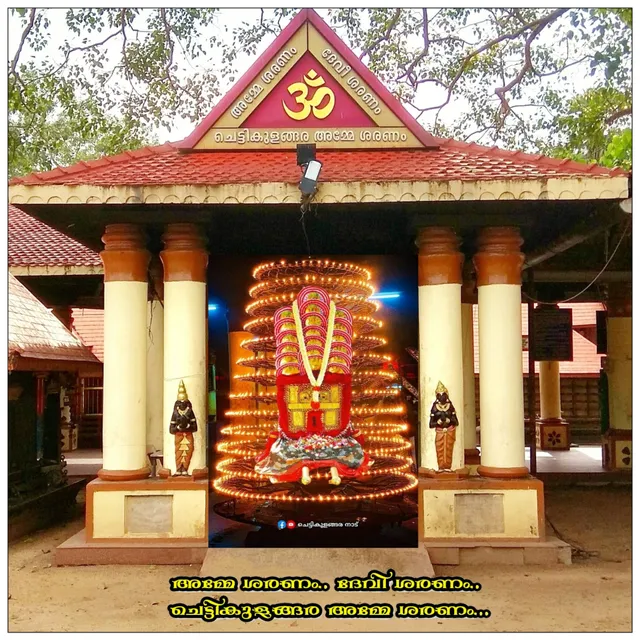
The very important festival of the temple is Kumbha Bharani Maholsavam when the world famous Kuthiyottam and Kettukazhcha are performed. Kuthira moottil Kanji and Therum moottil Kanji are the important offerings to the Goddess.Temple and the surroundings are very celestial. A"Kavu"is maintained for the worship of Naggadevathas A Karimbana and Chembakam trees are also places of worship of sub deities like Yakshi and Gandharva. Devi is the tutelary deity of the thirteen "Karas" (localities) and presides over for the welfare of all the people of Onattukara and bless the devotees.
""""""""""""""""""""""""""""”"""""""""""""""""""""""""""""""""""""""""""""""""""""""""""""''"""""""""""""""""""""""""""""""""""""""""""""""""""""'""""
Chettikulangara Temple and Kodungallur Bhagavathy
Kodungallur Bhagavathy is irrevocably related with the origin of Chettikulangara Temple It is believed that some of the Chieftains of the area wished to construct a Devi Temple in their locality. For the accomplishment they reached Kodungallur and sat bhajan for twelve days. Devi appeared in their dreams and promised to reach Chettikulangara soon. Feeling blessed they returned with a sacred sword which the Vilichappad gave them and began the civil works of the temple.
A few days later, late in the evening an old lady sought the help of the boatman of nearby Karipuzha rivulet to ferry across and go to Chettikulangara.The boatman agreed and continued the journey.On their way they took rest under a tree and brought food from the nearby washermans house. The boatman fell asleep and in the early morning when he woke up the old lady had disappeared.He described the mysterious incident which is believed to be the arrival Kodungallur Bhagavathi. ( 1. Puthussery ambalam is now housed at the place where they took rest..2 .The washerman family is given the right for washing the attires of Devi. 3.The boatman who belonged to a Christian family has the right of performing the ritual fire works in the temple.)
On the next day, maintenance of the thatched roof of an Illam was going on near the present temple. The Antharjanam of the family was serving Kanji,Muthirappuzhukku and Asthram to the workers when a strange old lady joined them for the lunch. After the food the old lady vanished with a glow.Seeing this the antharjanam became unconscious and elaborated the incident when recovered. On the same day Devi showed her presence to the Chieftains and the astrologers confirmed the divine presence of Kodungallur Bhagavathi.
It is also believed that Chettikulangara Devi is the daughter of Kodungallur Bhagavathi sent for the welfare of all people of Onattukara. The Aswathy Ulsavam celebrated in the month of Meenam which falls in March/April is very unique in its rituala.It is really a celebration of send off given by the devotees on Devi's journey to meet her mother Kodungallur Bhagavathi and to attend the celebrations at Kodungallur. On completion of the rituals the temple is closed...
Read moreChettikulangara Bharani is a spectacular festival celebrated at the Chettikulangara Bhagavathy Temple near Mavelikara in Alappuzha district. Held during the Malayalam month of Kumbham (February-March), the festival is dedicated to Goddess Bhagavathy, and the entire town comes alive with vibrant celebrations that cover its landscape.
One of the primary attractions of the festival is the Kettukazhcha, a grand display of giant structures that are intricately decorated with cloth, flowers, and ornaments. These towering structures, which can reach heights of 90 to 100 feet, are an important symbol for the 13 'karas' or regions that comprise the area. Thousands of people work together to create these impressive figures, which are divided into three main categories: Theru (chariot), Kuthira (horse), and effigies of Bhima, Hanuman, and Panchali, popular characters from Indian epics. These figures are paraded to the temple via city roads, drawing in both locals and visitors who join in the festivities.
The festival is renowned for its vibrant cultural displays, including various art and folk performances that make the experience memorable each year. The Kumbhabharani festival is often described as one of the greatest events on earth, attracting lakhs of people from different parts of Kerala and abroad to witness and participate in this grand celebration.
A significant highlight of the Chettikulangara Bharani is the Kuthiyottam, performed as an important offering to the deity. This ritual dance, perfected over centuries, involves young boys aged between 8 to 14 years who are taught the dance in a house amidst a large social gathering. These boys, their bodies coiled with silver wires and holding an arecanut-tipped knife over their heads, are taken in a grand procession to the temple. Accompanied by the beating of drums, music, ornamental umbrellas, and richly caparisoned elephants, the boys are continually doused with tender coconut water along the way. Once they reach the temple, they perform a dance in front of the sanctum sanctorum, culminating in the removal of the coils, which draws a few drops of blood as part of the ritual.
During the festival, the locality also witnesses the procession of huge decorated effigies of Bhima, Panchali, and Hanuman, along with beautiful tall chariots on wheeled platforms. These effigies are taken to the temple and stationed in the paddy fields east of the temple. At night, the image of Devi is carried in procession to these effigies, creating a visually stunning display. The next day, these structures are taken back, and a big bazaar is held as part of the festival.
The Chettikulangara Bharani is not just a religious event but a cultural extravaganza that brings together people from all walks of life. The festival's vibrant processions, traditional performances, and the rich cultural heritage make it a unique and unforgettable experience. Celebrated with immense pomp and pageantry, Chettikulangara Bharani at the Chettikulangara Bhagavathy Temple is a splendid spectacle that leaves a lasting impression on...
Read more