A Sanctuary of Serenity: My Journey to Oachira Parabrahma Temple Disclaimer: While I have endeavored to provide a comprehensive review of my experience at Oachira Parabrahma Temple, please note that individual experiences may vary. It is always recommended to check the temple's office or local authorities for the most up-to-date information on timings, rituals, and guidelines.
A Serene Oasis in the Heart of Kerala
Oachira Parabrahma Temple, nestled in the tranquil coastal town of Oachira in Kerala, India, is a spiritual haven that offers a unique and profound experience. Unlike traditional temples with elaborate structures and deities, this sacred space is a minimalist embodiment of divine energy. As I approached the temple, I was immediately captivated by its serene ambiance, a stark contrast to the hustle and bustle of everyday life.
A Temple Without Walls
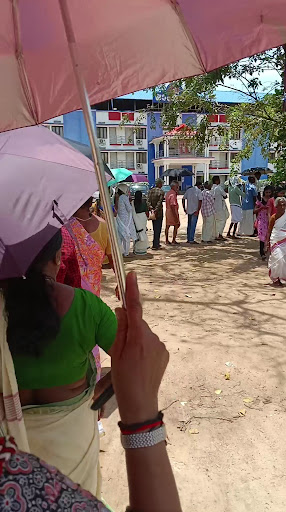
One of the most striking features of Oachira Parabrahma Temple is its lack of a traditional temple structure. Instead, the sacred space is an open expanse adorned with towering banyan trees and ancient rock formations. This minimalist approach allows visitors to connect with nature and the divine energy in a more intimate and personal way.
The Divine Presence
As I ventured deeper into the temple grounds, I felt a sense of peace and tranquility wash over me. The absence of ornate idols or statues did not detract from the spiritual experience; rather, it created a sense of boundless possibilities. The temple's energy seemed to permeate the entire space, inviting visitors to connect with their inner selves and experience the divine presence in a profound way.
The Banyan Trees: Guardians of the Sacred Space
The towering banyan trees that dot the temple grounds are more than just natural features; they are revered as guardians of the sacred space. Their sprawling branches and intricate root systems create a sense of awe and wonder, and it is believed that these trees possess spiritual energy. Spending time under the shade of these ancient trees is a truly meditative experience.
The Rock Formations: Symbols of Eternity
The temple grounds are also home to a variety of rock formations, some of which are believed to have spiritual significance. These natural wonders add to the unique character of the temple and provide a sense of connection to the earth's ancient history.
Rituals and Traditions
While Oachira Parabrahma Temple may lack traditional temple structures, it is not devoid of rituals and traditions. Visitors can witness various ceremonies and offerings, such as the pouring of milk on the sacred stones and the lighting of lamps. These rituals serve as a reminder of the temple's rich spiritual heritage.
A Place for Reflection and Inner Peace
For those seeking a peaceful and contemplative experience, Oachira Parabrahma Temple is an ideal destination. The serene ambiance, combined with the temple's unique features, creates a space that is conducive to introspection and spiritual growth. Whether you are a devout believer or simply looking for a moment of tranquility, this sacred space offers something truly special.
My Personal Experience
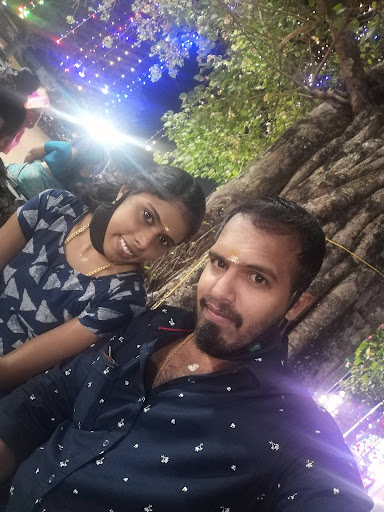
My visit to Oachira Parabrahma Temple was a transformative experience. The temple's peaceful ambiance and the absence of religious dogma allowed me to connect with my inner self in a profound way. I felt a sense of peace and serenity that I had not experienced in a long time.
A Must-Visit for Spiritual Seekers
If you are seeking a truly unique and spiritually enriching experience, I highly recommend visiting Oachira Parabrahma Temple. Whether you are a devout believer or simply looking for a moment of peace and tranquility, this sacred space offers something truly special.
Additional Tips for Visitors:
Dress modestly: While there is no strict dress code, it is respectful to dress modestly when visiting a religious site. Maintain silence: The temple's serene ambiance is best enjoyed in silence. Please refrain from loud talking or disruptive behavior. Offerings: While not mandatory, offering...
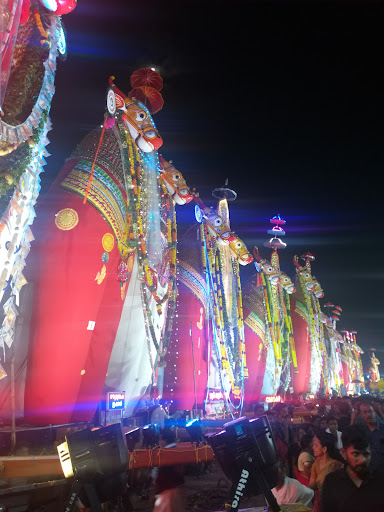
Read moreOachira Temple is an ancient temple located in Oachira in Kollam district in the South Indian state of Kerala. According to the Puranas, this temple is one of the famous sacred places of Kerala and India.[2] Oachira is on the border of Kollam and Allappuzha districts, next to the National Highway 47. This temple is known "DakshinaKashi"(SouthaKashi).This very ancient pilgrimage center is centered on the ParaBrahma temple (that is dedicated to the Para Brahman (or Param Brahman) or shiva or Ohmkaram, the Universal Consciousness), and covers thirty-six acres of land. Every year the Oachira Vrischikam Festival is celebrated during December and January. Oachirakkali is a famous ritual performed here during June and it involves mock-fighting in muddy water by traditional martial art experts. And "Irupathattam onam" (28 days after Onam) is also celebrated. It is the festival of cattle. In this festival, huge "Eduppu kala" (gigantic idols of bull madeof cloth&hay) are made. They are then pulled on giant wheels to the Oachira Temple from the site where they are made. Normally there are around 50 such structures. It is the biggest festival in "Onattu Kara" which is an area of a few square miles. Oachirakkali was actually a war exercise performed annually by soldiers of Kayamkulam Raja. Nearby, about 108 Kalaries were in 52 karas up to the beginning of the 20th century. Soldiers belonging to the above Karas met together at Oachira in the Malayalam month of Mithuna every year and performed war-like exercises. This is what is called Oachirakkali.
Ward and Conner, two British officials entrusted to survey Travancore in the beginning of the 19th century, made their observations about Oachira in their report. In the report it was made clear that there was a very old and damaged pagoda on the eastern side of the Padanilam. It was also disclosed that there was a large reservoir at the center of the vast ground on which the temple stands, (which was now known as Kallukettuchira), and which is outside the temple compound today. There are many beliefs as to why this place is called Oachira. Some people believe that the place name came from the word Omkarachira and some others believe that the name is originated from the name Oymanchira. Also there are strong beliefs that the name derived from Uvachanchira as Uvachan means Lord Siva as per belief. All these assumptions are based on myths.
The real reason for arriving at the name of Oachira is possibly different. For that, we should understand the observations made by the two British officials, Ward and Conner, who conducted a survey in the erstwhile Travancore during the beginning of the 19th century. In their survey report, it was mentioned that there was a large reservoir at the center of the large ground called Padanilam. This reservoir (tank/pond/chira) was at the center of the Padanilam. This chira was used by the soldiers in olden days for bathing and for supplying water to the horses used in the war exercises. This chira might have been known in olden days as Onattuchira, as the place belonged to the Kayamkulam Raja who was also called the Odanattu Raja or simply Onattu Rajah. The Headquarters of Kayamkulam Raja was at that time at Krishnapuram, very near to the Padanilam (which is hardly 1 km away from Oachira). So it is believed that the word Onattuchira was gradually accepted as the place name and as time passed by further, that word was corrupted into Oachira. This is quite a plausible explanation as there are so many examples in known history about the transformation of place names.
The Oachira Temple is unique in the sense that it does not have covered structures for temples. People worship the Para Brahma (the original formless power lord shiva) under neatly...
Read moreThe Oachira Parabrahma Temple, popularly known as Oachira Temple is an ancient temple located in Oachira in Kollam district in the South Indian state of Kerala.
Also known as Dakshina Kashi (Benares of the South), Oachira Temple is a unique pilgrim centre, situated on the way to Alappuzha. There are many versions about the origin of the name Oachira. One of them is that, 'Om' the representation of Parambrahmam, the god of all gods and the word 'Chira' (piece of land) combine together to form 'Om Chira' meaning the 'land of Parambrahmam'. During the course of time Om chira became Ochira.
Attracting thousands of devotees, Parabrahma temple in Ochira is uniquely different from other temples in Kerala. The peculiarity of the temple complex is that, it covers a surface area of 32 acres without a walled enclosure does not contain a sanctum sanctorum nor is there an idol or deity for worship. The temple is dedicated to workship the lord parabrahaman.
It is also believed that, it was a Buddhist center that reverted after the revival initiated by Sri Sankaracharya.
This pilgrim center believes in the existence of universal consciousness or one supreme power known as Parabrahma. One can only find 'Aal thara's' (a peepal tree with a base foundation) where pujas are performed. There are no official pujaris.
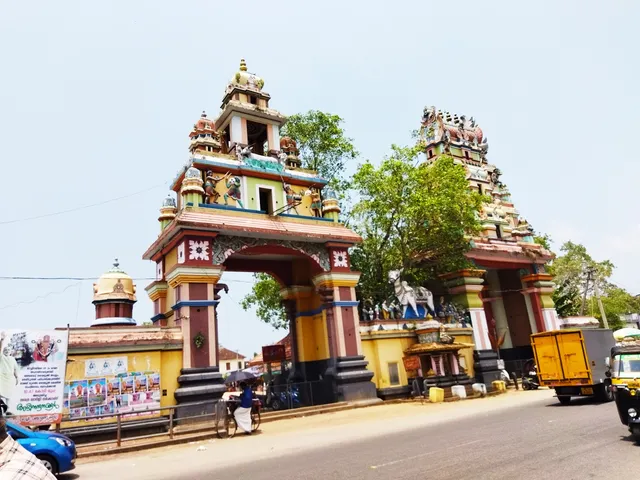
The 50 feet high twin gopuram (tower) in front of the complex is carved with many ancient sculptures. These Gopurams, East Nada, West Nada, Theerthakkulam (sacred pond), Ondikkavu, Ayyappa Temple, Mahalakshmi Temple and Ganapathi temple are the points of worship at Oachira temple. Another interesting feature of the temple is connected with its offerings. Bulls are considered to be sacred in this temple and believed to be the vehicle of Parabrahmam. Hence offerings are made in the form of well decorated bulls named 'Oachirakkaala' (Sacred Bull). Devotees can also donate calves as an offering.
Ochira Kalii (held in mid-June), Panthrandu Vilakku ('twelve lamps festival', held in November-December) and Irupathettam Onam are the famous festivals celebrated here. The Oachira Kali (game) on the first and second of Mithunam (mid-June) is a big draw. For the last 60 years, the temple administration manages a social organisation named 'Annadana Mandhiram' and this organisation serves daily free lunch for about 500 people.
The main festival at the temple is a 12-day affair, called 'panthrantu villaku'(twelve lamps) starting on the first day of Vrischikam (Malayalam era) falling in the middle of November. The Ochira Kali (game) on the first and second of Mithunam (mid-June) is a big draw. The 'game' as it were imitates a battle of rival armies and is held more often in knee-deep rainwater at the peak of the monsoons, and the belief is that it will invariably rain on Ochira Kali even in a drought year
The temple is open to all regardless of...
Read more