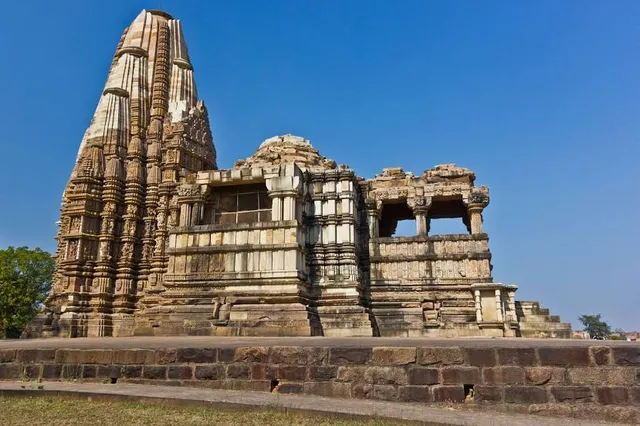
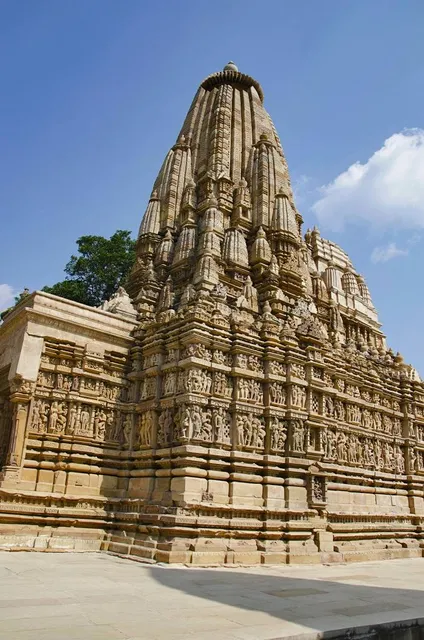
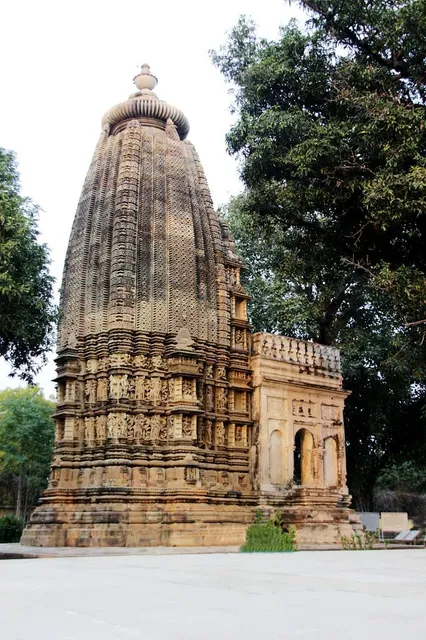
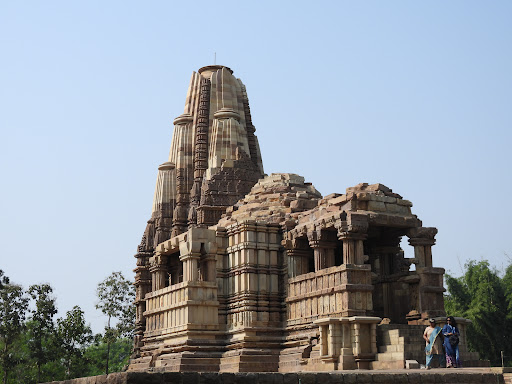
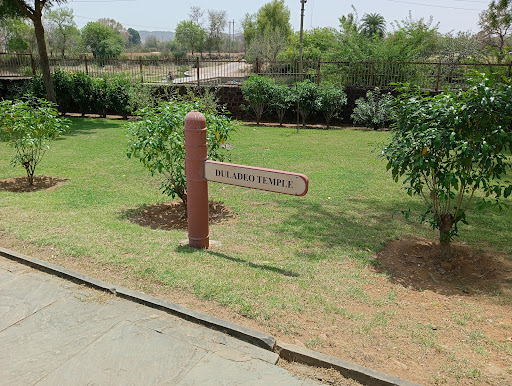
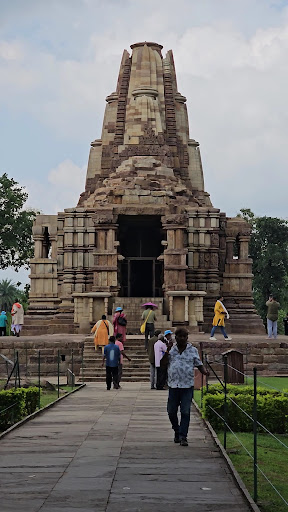
The Duladeo Temple (Devanagri: दुलादेव मंदिर) is a Hindu temple in Khajuraho, Madhya Pradesh, India. The temple is dedicated to the god Shiva in the form of a linga, which is deified in the sanctum.1 'Dulodeo' means "Holy Bridegroom".[3] The temple is also known as "Kunwar Math".[1] The temple faces east and is dated to 1000–1150 AD.[1] It is the last of the temples built during the Chandela period. The temple is laid in the seven chariot plan (saptarata).[4] The figurines carved in the temple have soft expressive features unlike other temples. The walls have a display of carved celestial dancers (apsara) in erotic postures and other figures. Duladeo Temple is one of the 22 temples to the Hindu god Shiva, which are among the 87 temples that were created by the Chandela rulers of Central India. The peak period of building activity was from 950-1050 AD in the small village of Khajuraho.[9] The temples belong to the traditional religions of Hinduism and Jainism. They are identified under three groups or three zones - the western zone, the eastern zone and the southern zone. Ibn Batuta, the Moroccan traveller had attested to the existence of these temples even in 1335. The temples in the southern group are the Duladeo and Chaturbhujs. All the extant temples were inscribed in 1986 under the UNESCO List of World Heritage Sites under Criterion III for its artistic creation and under Criterion V for the culture of the Chandellas that was popular till the country was invaded by Muslims in 1202.[10] It is also said that Madanaverman (1128–1165) of the Chandela dynasty built this temple during his reign.[11]
The sculptures in the temple have strong identity with those found among the remnants of a temple in Jamsor near Kanpur in Uttar Pradesh. From this similarity it has been inferred that the sculpturing at both locations were the handiwork of the same sculptors and further that they were created during the period from 1060-1100, during the reign of Kirttivarman.[12] However, Archaeological Survey of India has inferred the period of temple building activity in Khajuraho from 950 to 1150 AD based on palaeography and the architectural style.[1]
From the name Vasala inscribed at a number of locations in the temple, it is inferred that the name is of the chief sculptor who created...
Read moreDuladeo Temple, Kajuraho, Madhya Pradesh, India
The Duladeo Temple is a temple in Khajuraho, Madhya Pradesh, India. The temple is dedicated to the god Shiva in the form of a linga, which is deified in the sanctum. 'Dulodeo' means "Holy Bridegroom". The temple is also known as "Kunwar Math". The temple faces east and is dated to 1000–1150 AD. It is the last of the temples built during the Chandela period. The temple is laid in the seven chariot plan (saptarata). The figurines carved in the temple have soft expressive features unlike other temples. The walls have a display of carved celestial dancers (apsara) in erotic postures and other figures.
The temple is located on the bank of the Khodar River in the southern group of the Khajuraho Group of temples in Khajuraho village.
Duladeo Temple is one of the 22 temples to the Hindu god Shiva, which are among the 87 temples that were created by the Chandela rulers of Central India. The peak period of building activity was from 950-1050 AD in the small village of Khajuraho. The temples belong to the traditional religions of Hinduism and Jainism. They are identified under three groups or three zones - the western zone, the eastern zone and the southern zone. Ibn Batuta, the Moroccan traveller had attested to the existence of these temples even in 1335. The temples in the southern group are the Duladeo and Chaturbhujs. All the extant temples were inscribed in 1986 under the UNESCO List of World Heritage Sites under Criterion III for its artistic creation and under Criterion V for the culture of the Chandellas that was popular till the country was invaded by Muslims in 1202. It is also said that Madanaverman (1128–1165) of the Chandela dynasty built this temple...
Read moreThe Duladeo temple, also called Kunwar Math, is notable for being the latest temple of Khajuraho. Dedicated to Siva, it is nirandhara temple and consists of a sanctum, vestibule, maha-mandapa and porch. On plan and in design, it has some features common with the developed medieval temples of the Deccan and western India, though its scheme of ornamentation is typical of Khajuraho. While its sikhara is of the usual developed form, clustered round by three rows of minor sikharas, its maha-mandapa shows some peculiarities of design and decoration. The maha-mandapa hall is remarkably large and octagonal showing twenty apsaras brackets, grouped in bunches of two or three an butting against its corbelled circular ceiling. Even in respect o plastic style and decoration, the Duladeo has many individual features which distinguish it from the rest of the Khajuraho temples. While the dancing apsaras of its interior and the flying vidyadharas on the top row of its facades show vigorous tension and dynamic movement, its elaborately-crowned and heavily ornamented apsaras forming the brackets of the maha-mandapa and porch and the river-goddesses of the doorway, standing under umbrellas are decorated with pompons. While some figures on this temple are of an exceptional artistic merit, the plastic treatment has on the whole, become rigid, and, in many cases, lacks depth of relief, which is evident on a majority of the apsaras-figures of the exterior. On the basis of palaeography and style the temple is datable to circa A.D. 1000-1150....
Read more