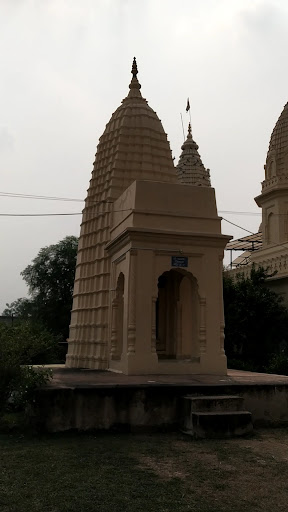
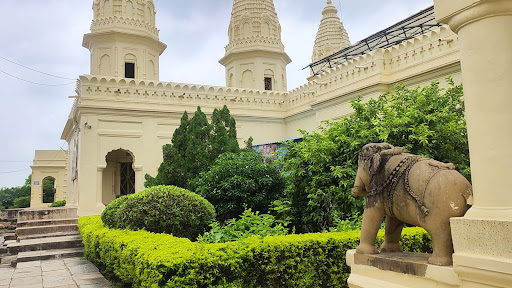
Traveling to the destinations of historical importance offers an opportunity to explore the ancient cultures and traditions through art and architecture of the existing monuments and even ruins are also able to contribute the significance of glory and the values of ancient period to which they belong. Belief of human beings in Almighty God is always alive and plays a vital role. Construction of magnificent and grand places of worship by the devotees remain sign of their gratitude and dedication. One such temple that is Pasharvnath Temple of Khajuraho is an example which was built by such a devotee.
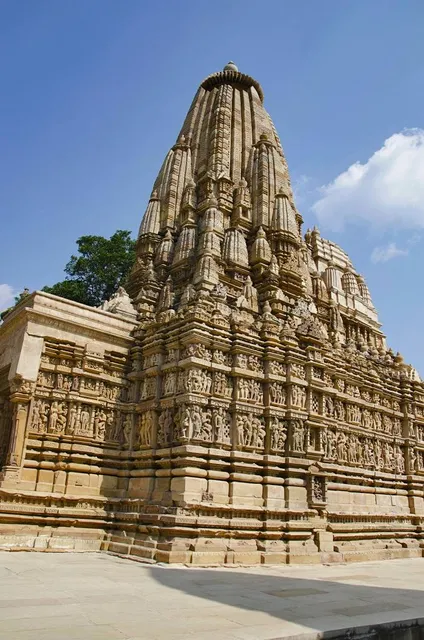
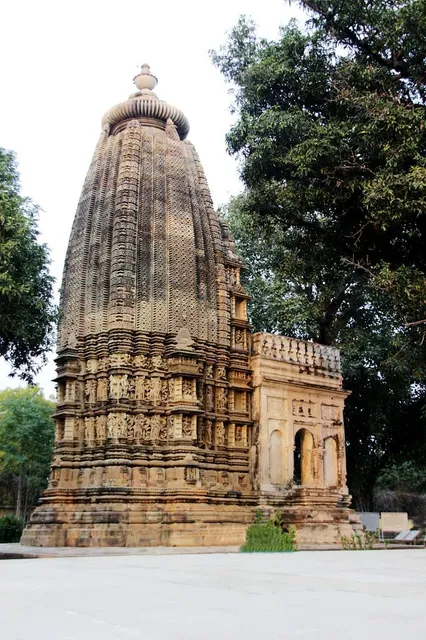
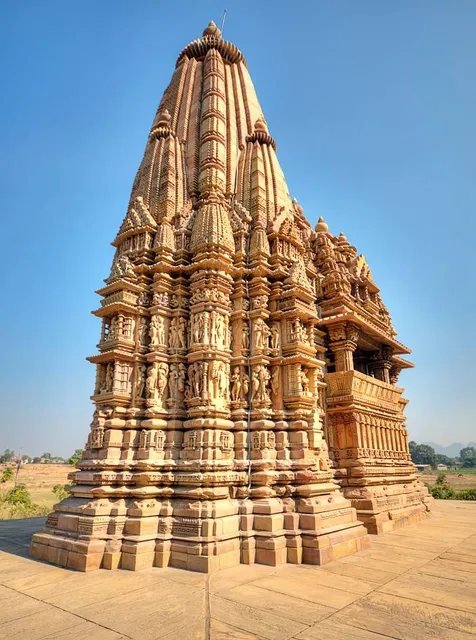
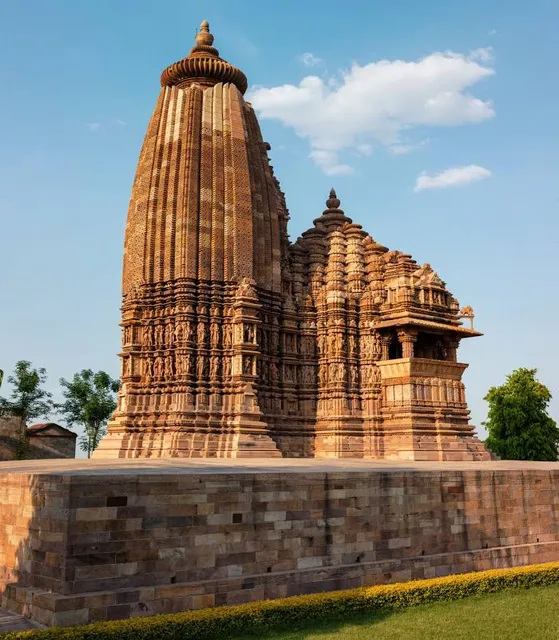
It's built in Nagara Style and sand stone is used in its construction. Facing to the east and having entrance porch, hall, main hall Antarala, and the sanctum Sanctorum. It's not having the balconied windows and interior is having magnificent carvings on ceilings with popular chain and bells motifs, sculptures of Jain Tirthankars, elephants, tigers, etc and at the lintel depicts ten armed Chakreshvari riding on Garuda, ceiling also have the Sculptures of two pairs of updevas and deity attendants etc are the notable features including the magic square. Eastern porch is the front and at the West a sanctum Sanctorum attached to the main Sanctorum. It was dedicated to Lord Adinath and in 19th century Lord Pasharvnath idol which is having a 9 hooded Cobra over his head. And the western sanctum is having an image of Adinath Jee. Exterior walls are covered with three straps of Sculptures. Having many Hindu Gods and goddesses sculptures, graceful beauties, musicians, dancers, Tirthankars, flying couples, etc in niches and panels. Erotic images are hardly seen. Roof is adorned with the central tower having subsidiary towers and quite decorated.
He was a highly respected man in the eyes of the king. According to the inscription in Pali language available at the doorjamb of the sanctum his name was Pahila and other donors names are also engraved and the gardens in the premise are assigned to them. It's located in the Eastern Group of temples, Protected Monument of National Importance and part of the World Heritage site. It was built in 950 to 970 AD during the reign of King Dhanga by the Jain family who were the great patron and devotee of the Jainism.
It needs an hour to understand the art and architecture. It's a major attraction among the history buffs wanderers soulseekers heritage art and...
Read moreParshvanatha temple (IAST: Pārśvanātha Mandir) is a 10th-century Jain temple at Khajuraho in Madhya Pradesh, India. It is now dedicated to Parshvanatha, although it was probably built as an Adinatha shrine during the Chandela period. Despite the temple's Jain affiliation, its exterior walls feature Vaishnavaite themes. The entrance has an inscription with a most-perfect magic square. It is part of a UNESCO World Heritage Site along with other temples in the Khajuraho Group of Monuments. The temple is believed to have been constructed by a prominent Jain family between 950 and 970 CE, during the reign of the Chandela king Dhanga.[1] A 954 CE (1011 VS) inscription on the left door jamb of the temple records gifts and endowments of gardens by one Pahila. The gardens are named Pahila-vatika, Chandra-vatika, Laghuchandra-vatika, Shankara-vatika, Panchaitala-vatika, Amra-vatika and Dhanga-vadi. The inscription describes Pahila as a devotee of Jinanatha and states that he was held in great esteem by the king Dhanga.[2]
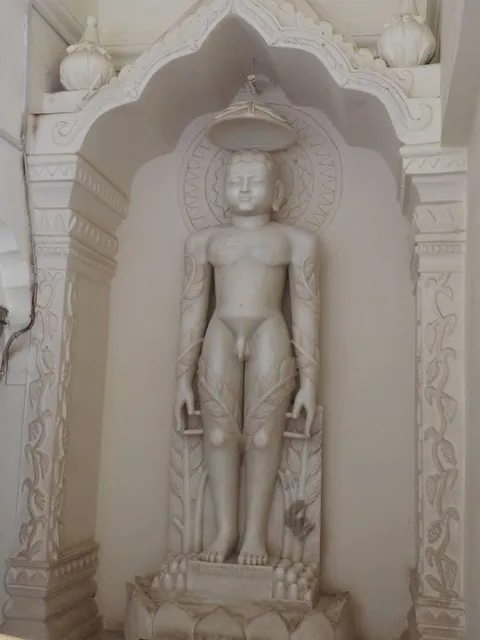
The earliest idol enshrined in the temple appears to have been that of Adinatha. When the British archaeological surveyor Alexander Cunningham visited in 1852, he found the main sanctum deserted. He described it as "Jinanatha temple" and wrote that it had been repaired by a Jain banker in 1847. In 1860, a Parshvanatha idol was installed in the main sanctum. An Adinatha statue was placed in a secondary shrine attached to the rear of the temple.[3]
The temple has been classified as a Monument of National Importance by the Archaeological Survey of India. The Parshvanatha temple is the largest among the Jain temples of Khajuraho.[5] It has an entrance porch, a small hall, a large hall (mandapa), a vestibule, and a sanctum.[6] The temple structure has an oblong architectural plan with projections at two ends. The front (eastern) projection forms the entrance porch, the back (western) projection is a shrine attached to the sanctum.[5]
The ceiling of the entrance porch features chain and floral patterns, and a pair of intertwined flying vidyadharas. The door-lintel of the mandapa has the sculpture of Adinatha's attendant: a ten-armed Chakreshvari riding a Garuda. The sanctum features sculptures...
Read moreParshwanath temple, Khajuraho, Madhya Pradesh, India
Khajuraho is one of the most popular tourist attractions in the country that is famous for its temples and fantastic architectures. The Parshwanath temple is a Jain Temple built by the then Chandela Ruler Dhanga during the early 10th century. This temple falls in the category of Alankrit temples and is a symbol of the king’s devotion and love. It is dedicated to Teerthankar.
This part of the temple group is famous for its perfect vastu maintained constructions. This is the perfect example of the expert talent of the craftsmen of that era. This temple is said to be the largest and the most beautiful of all the Jain Temples of Khajuraho. In spite of its simple design it attracts numerous visitors to it all over the year. It is completely different from all the other temples in the group.
This temple does not have any windows. It is known that in earlier times a majestic statue of Shri Adinath ji was established in this temple but in present time you will find a majestic statue of Shri Parshwanath Ji in the same position in place of the other statue. This temple is mainly a dedication to Shri Adinath ji.
The temple is built on a huge platform void of all designs and motifs. But, it seems there are a lot of attractive things that are worth admiring. The main temple complex has a beautiful mandap and a parikrama hall. Both of these look just too beautiful with all the maintenance.
This temple is mainly popular for its number of idols. These surround the temple that is very precisely built. All the idols depict the beauty of feminism. The temple can be entered after crossing seven gates that have maheen craftwork on them. Various motifs of male, female, Gemini, trees, flowers, Ganga, Yamuna, etc can be seen on the walls here. In the temple there are many idols of female Goddesses playing musical instruments like gandarva, manjeera, shankha, mridanga and vadya. The temple also comprises of idols of Lord Vishnu...
Read more