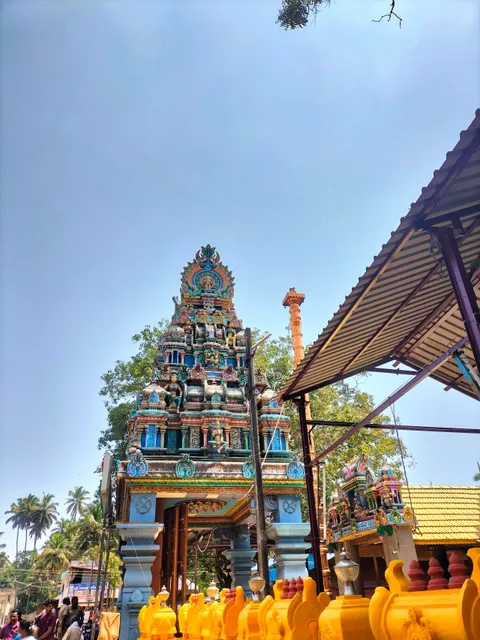
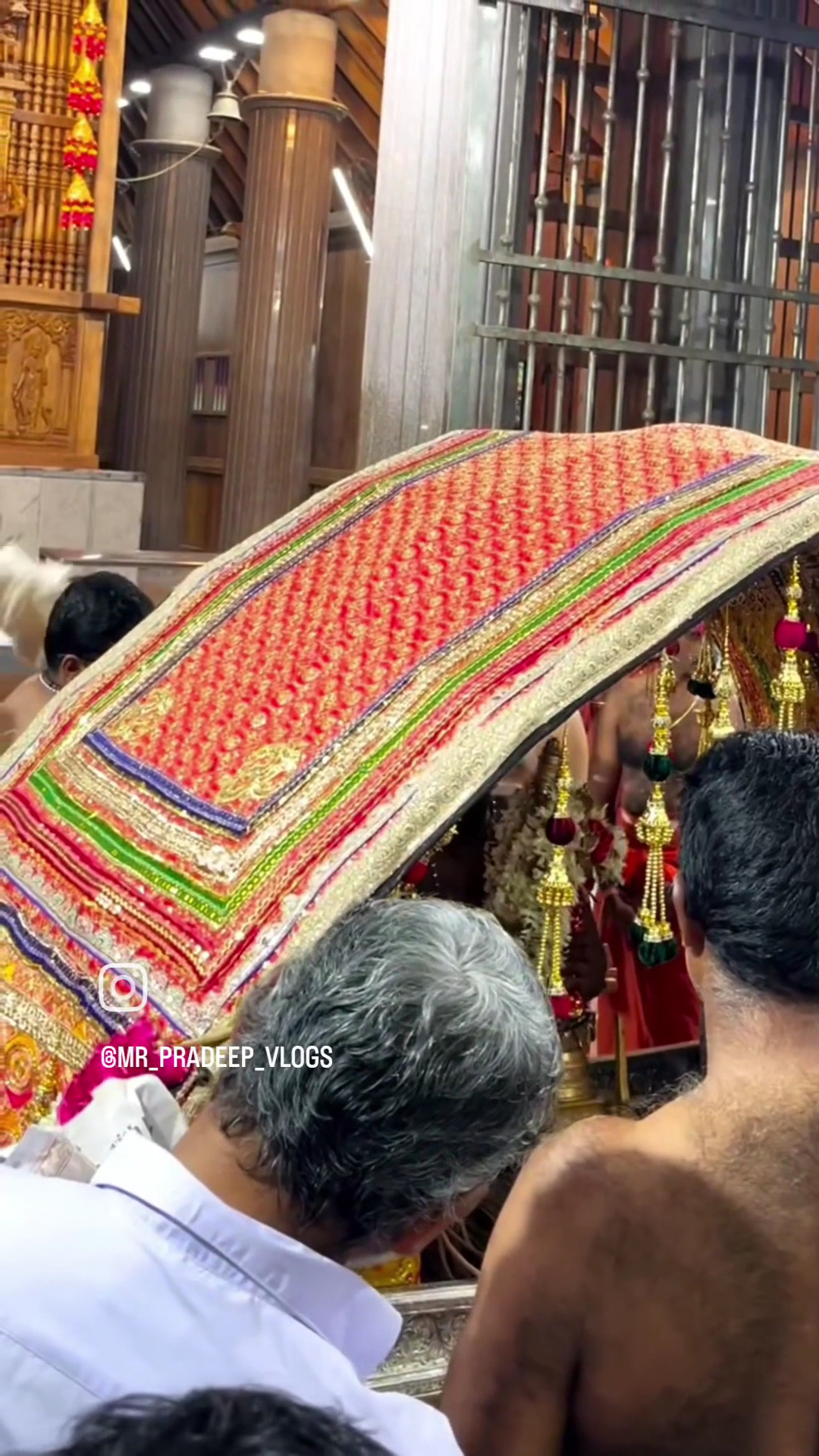
History says that in the olden days, Sri Sankaracharya used to perform the Srichakra Puja in Kerala. He would do it regularly with some disciples. One day Sri Sankaracharya wanted to stay at this place for a long time, and that is how he attained Samadhi. This was also the place of Srichakra. Then as time passed, an anthill started to grow in the same place. Over the years, this structure grew stronger and taller. Children there started hitting this anthill, but they would get hurt every time. This also became news and started spreading. The news reached the King of Kerala, Marthanda Varma; the king looked upon the situation and decided to build a temple there. This way, he kept the anthill secure as well as the children. People started performing puja to this anthill and considered it significant. This same place is now known as Mandaikadu Bhagavathy Devi Temple; the anthill is preserved in the Sabarimala. After a few days, another incident happened. Some outsiders approached the village people at midnight. They knocked on some doors and asked for food as they were hungry. However, the villagers did not want any trouble, so they were not hospitable. They then directed those outsiders to the temple for food. The travelers then approached the temple and prayed to the Goddess for some food. A miracle happened when they heard the voice of the Goddess, who asked them to take a bath and have food. They all took a bath and went to the temple again, where the Goddess herself fed them food. After satiating their hunger, they all slept well in the temple. They also had a dream of seeing the Goddess lovingly smiling at them. They then returned to their track; before returning, they left all their valuables for the Goddess as an offering. The following night, the king of the place had a dream when the Goddess told him to build a temple for her with the travelers' money and valuables. Hence a temple was made by the king to serve the Goddess. However, the hill was growing in height, so the king had to demolish the temple twice. The king then requested the Goddess not to grow the hill anymore. The Goddess said that it is not possible to stop the height, but it will only grow equal only to a grain size each year. Festivals And Important Dates
Many days occur here, such as Full moon day (Poornima), Tuesdays, Fridays, and Sundays. On all these days, more devotees visit the temple and offer their prayers to the Goddess. The most important festival occurs in Maasi month (February – March) when thousands of people...
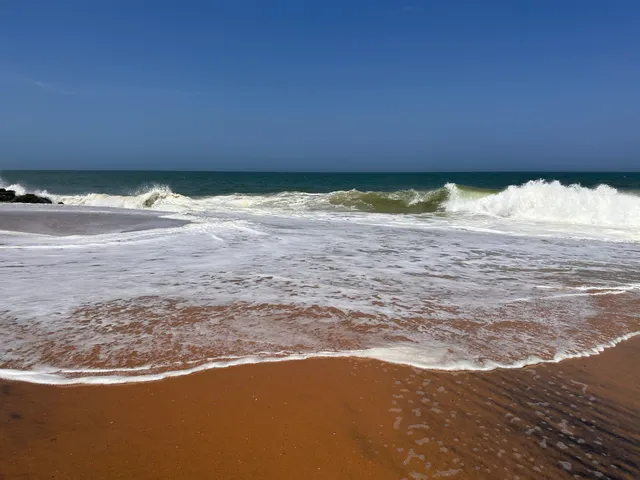
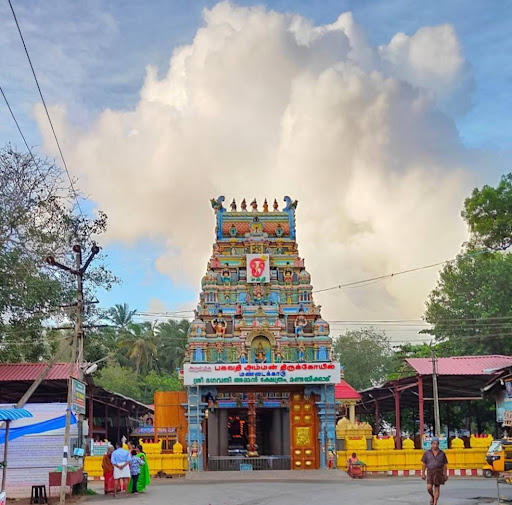
Read moreMandaikadu Bhagavathy Temple is a Hindu temple dedicated to the Hindu goddess Parvati (Known as Bhagavathy) located in Mandaikadu Village near Colachel in the western coast of Kanyakumari District in the State of Tamilnadu. This temple on the sea shore is a sought-after pilgrim centre for both people of Tamilnadu and Kerala. This Temple was built in Kerala tradition in very simple style. Holy trees for this temple are Bo Tree and Neem. Pujas is performed four times daily. This Temple is administrated by the Hindu Religious & Charitable Endowments Department of Tamilnadu. The Kodai festival at Mandaikadu is a major festival celebrated in March every year. Pilgrims from southern parts of Tamilnadu and Kerala take part in the celebration. This temple is also commonly called as “Women’s Sabarimala”. Devotees worship Bhagavathy Amman for fulfillment of their expectations. The 15 feet tall anthill is the Bhagavathy Amman. Since this temple is Sabarimala for women, they visit the temple with the Irumudi (a bundle containing pooja items for the Goddess) as men go to Sabarimala. She is also believed to rule the nine planets or the Navagrahas in one’s astrological chart.
Festival:
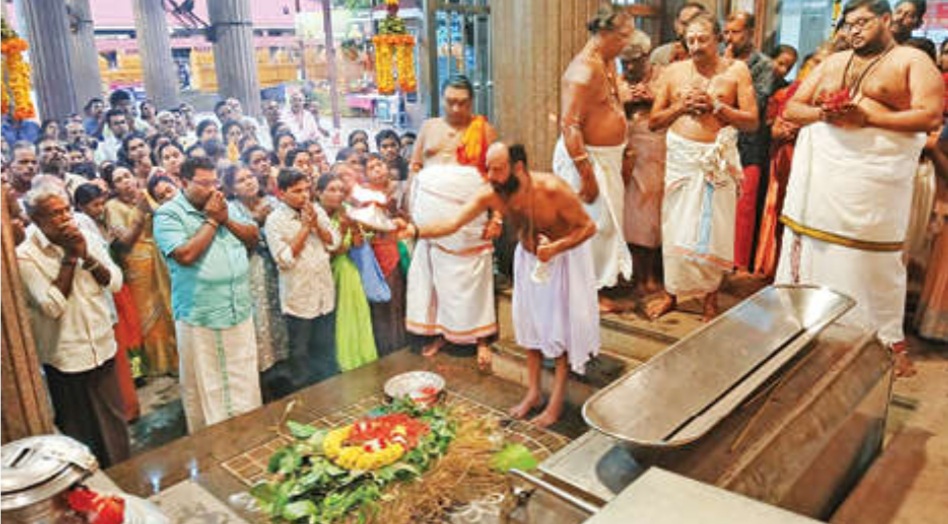
Mandaikadu Kodai Festival is celebrated on last Tuesday in the Tamil month of “Masi” every year. Festival will start ten days prior to this Tuesday.ie, Sunday with flag hoisting in flag mast of the temple. At the time of flag hoisting, priest along with devotees will go for holy bath in the morning and will return with a pot of holy water. The holy water will be sprayed all over the temple premises and cleaned. Then only the festival will start. Throughout the 10 days every day at 8.30 pm after the poojas are over, the goddess will be taken in procession around the temple streets.
Temple Timing:
Morning Darshan Timing is from 5:30 AM to 12:30 PM
Evening Darshan Timing is from 5:00 PM to 8:30 PM
How to Reach:
By Air: Nearest Airport is Thiruvananthapuram Airport (67 Kms).
By Rail: Nearest Railway Stations are Eraniel Railway Station (7 Kms) and Nagercoil Railway Station (20 Kms).
By Road: The Temple is around 4 km from Colachel, 5 km from Thingalnagar, 22 km from Nagarcoil, 41 km from Kanyakumari and 70 km from...
Read moreMandaikadu Bhagavathi Amman Temple is a famous temple located near Colachel in the Kanyakumari district of Tamil Nadu, also known as ‘Women’s Sabarimala’. Images of the goddesses Kamatchi, Meenakshi, Mari and so on abound in Tamil Nadu. Every goddess in Tamil Nadu holds her speciality. In that sense, the Mandaikadu Bhagavathi Goddess speciality is said to be in a burrow or den.
According to local residents, the face of the idol of Bhagavathi is made of sandalwood on top of a burrow that stands 15 feet high. There are many inscriptions and manuscripts in this temple that show the history of most of the temples in Tamil Nadu. As this Mandaikadu area was densely forested many centuries ago, people from the surrounding villages used to drive their cattle for grazing. It is said there were flocks of sheep and cows, so it was called ‘Manthaikadu’ and with time it was called ‘Mandaikadu’. It is in this area that Bhagavathi is said to have appeared to followers in the form of burrow or den.
History of Mandaikadu ‘Mandaikadu’, a place in Kanyakumari district, has been a forest in the past. Earlier, cholera, smallpox was prevalent in the villages of this region. The people suffered due to lack of adequate medical facilities. At one point, villagers began evacuating Mandaikadu. According to legend, one day, a disciple of Adi Sankara visited the place carrying a ‘chakra’ in his hand. He drew a wheel with 63 angles and performed prayer every day. Subsequently, he “cured" the diseases of the people. Saadhu, who stayed there for a long time, cured the ailments of the people and also performed games to entertain the children in the village. Apparently, a burrow had developed at the place of worship where Saadhu’s Sri Chakra was kept. Leaving Sri Chakra on the ground, he immersed himself in the puja and the burrow grew around him. When the children tried to wake him, he became ‘Jeeva Samadhi’ (merging with God or Light) at the place and Sri Chakra, too, did not leave the soil. When King Marthandavarma came to know about this, he built a temple in that particular area. This is said to be the history of the Mandaikadu Bhagavathi Amman Temple. The ‘Mandayappam’ offered in this temple is...
Read more