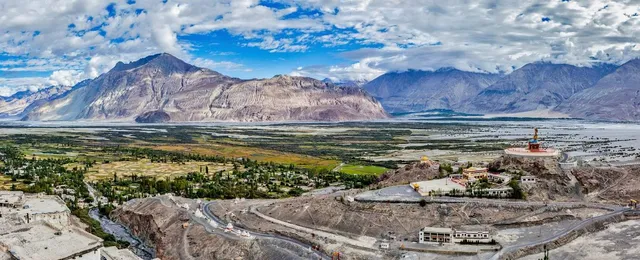
Diskit is a picturesque town located in the Nubra Valley in the northernmost region of Ladakh, India. It is situated at an altitude of about 3,144 meters (10,315 feet) above sea level, making it one of the highest inhabited regions in India. Diskit is known for its stunning landscapes, Buddhist monasteries, and serene atmosphere, making it a popular destination for travellers visiting Ladakh.
Location:
Diskit is located in Nubra Valley, which lies to the north of Leh, the capital of Ladakh. The town is approximately 120 kilometres (75 miles) from Leh and can be reached via the Khardung La Pass, one of the highest motorable roads in the world. The drive from Leh to Diskit takes around 4 to 5 hours, depending on road conditions, and offers travellers breathtaking views of the Himalayan and Karakoram mountain ranges.
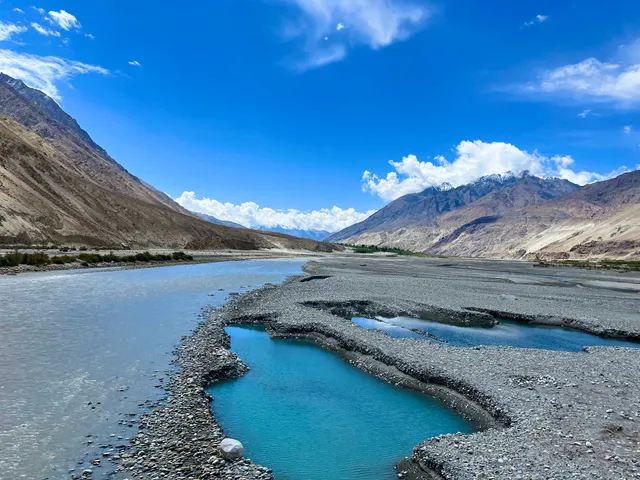
Nubra Valley is formed by the Shyok River and the Nubra River, and Diskit is situated at the confluence of these rivers, contributing to its scenic beauty. The town serves as the administrative centre of the Nubra region and is a significant point for exploring the valley’s attractions.
Key Attractions in Diskit:
Diskit Monastery: The Diskit Monastery is the main attraction in the town. Founded in the 14th century, it is one of the oldest and largest Buddhist monasteries in Nubra Valley. The monastery is famous for its towering Maitreya Buddha statue, which stands at 32 meters (105 feet) and is one of the tallest Buddha statues in Ladakh. The monastery also houses ancient Buddhist scriptures, artefacts, and murals depicting scenes from Buddhist mythology. It offers panoramic views of the surrounding valley and is a significant place of worship for Tibetan Buddhists. The Maitreya Buddha Statue: The Maitreya Buddha statue is located on a hilltop behind the Diskit Monastery. It is a major landmark of the region, with a beautiful backdrop of the Nubra Valley’s desert landscape. The statue is a popular pilgrimage site and provides a great photo opportunity, with the surrounding mountains and sand dunes offering a striking contrast to the green valleys below. Nubra Valley’s Desert and Sand Dunes: While Diskit itself is not a desert, it lies near the Hunder region, which is famous for its sand dunes. Visitors can enjoy camel rides on the double-humped Bactrian camels that roam the sand dunes of Hunder, offering a unique desert experience in the Himalayan region. The area around Diskit is a blend of green valleys, white sand dunes, and snow-capped peaks, providing a diverse and stunning landscape. Trekking and Exploration: Diskit serves as a base for trekking and exploration in the Nubra Valley. Visitors can embark on trekking routes to nearby villages such as Sumur, Tegar, and Panamik, where they can experience the region’s remote culture, natural beauty, and Buddhist heritage. The trek to Yarab Tso Lake, a hidden gem, is also popular for its scenic views. Local Culture and Villages: Diskit is home to a small but vibrant community of Ladakhi Buddhists. The town and surrounding villages retain a traditional lifestyle, and visitors can experience the unique culture, cuisine, and lifestyle of the Ladakhi people. The local markets offer a range of handicrafts, including woollen goods and Tibetan jewellery Conclusion:
Diskit is a must-visit destination for travellers exploring Ladakh and Nubra Valley. The town offers a peaceful, picturesque environment, rich Buddhist heritage, and stunning landscapes that make it a perfect spot for nature lovers, spiritual seekers, and adventure enthusiasts. The Diskit Monastery and Maitreya Buddha statue, along with the surrounding desert dunes and trekking opportunities, make this destination a unique experience in the heart of...
Read moreNubra Valley, a mesmerizing region in Ladakh, is renowned for its surreal landscapes, cultural richness, and unique experiences. Here's a detailed review:
Stunning Landscapes: Nubra Valley's landscapes are a visual delight, with high mountains, lush green valleys, and cold desert expanses. The contrasting scenery, including sand dunes against a backdrop of snow-capped peaks, is simply breathtaking.
Hunder Sand Dunes: The sand dunes in Hunder, dotted with double-humped Bactrian camels, offer a surreal experience. Visitors can enjoy camel rides and witness the unique sight of these gentle giants in the midst of a cold desert.
Panamik Hot Springs: Panamik, known for its hot springs, provides a relaxing experience amidst the stunning surroundings. The therapeutic properties of the springs and the serene atmosphere make it a noteworthy stop in Nubra Valley.
Diskit Monastery: The Diskit Monastery, perched on a hill, offers panoramic views of the valley. The monastery's ancient architecture, vibrant murals, and a towering statue of Maitreya Buddha make it a culturally significant and visually striking site.
Turtuk Village: Turtuk, a remote village near the Line of Control, provides a glimpse into the unique Ladakhi way of life. Visitors can explore ancient monasteries, traditional homes, and interact with the friendly locals, offering a cultural immersion.
Khardung La Pass: Nubra Valley is accessible via the world's highest motorable pass, Khardung La. The journey through this pass, though challenging, rewards travelers with breathtaking views of the surrounding mountains.
Yarab Tso Lake: Yarab Tso Lake, surrounded by serene landscapes, is a hidden gem in Nubra Valley. The peaceful environment and the reflection of the mountains in the lake make it a serene spot for those seeking tranquility.
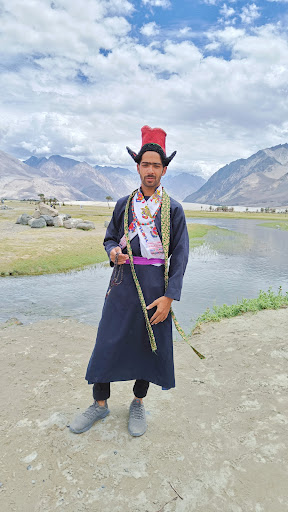
Cultural Interactions: Interacting with the locals provides a deeper understanding of the Ladakhi culture. Staying in traditional homestays, participating in local festivities, and sampling traditional cuisine contribute to an authentic experience.
Challenges: While Nubra Valley is a paradise, the high altitude poses challenges. Visitors are advised to acclimatize gradually to avoid altitude sickness. Additionally, road conditions, especially in winter, can be challenging.
Conclusion: Nubra Valley stands as a destination that seamlessly blends natural wonders and cultural treasures. The varied landscapes, from sand dunes to snow-capped peaks, coupled with the warmth of the local people, create an unforgettable experience for those fortunate enough to explore this hidden...
Read moreThe Nubra Valley, also known historically as "Ldumra" meaning "valley of flowers," is a captivating high-altitude cold desert nestled in the Ladakh region of India. Situated approximately 150 km north of Leh, the capital of Ladakh, this tri-armed valley is formed by the confluence of the Nubra and Shyok rivers, carving a fertile oasis amidst the rugged Himalayan and Karakoram mountain ranges. Geography and Landscape: Location: Northeast of the Ladakh Valley. Formation: Carved by the Nubra and Shyok rivers. Altitude: Averages around 10,000 feet (3,000 meters) above sea level, though elevations vary significantly across the valley. Climate: Characterized by a cold desert climate with stark temperature variations. Summers (June to September) are mild and pleasant (15°C to 25°C), while winters (November to February) are harsh and extremely cold (down to -20°C or lower). The region receives very little rainfall, resulting in sparse vegetation primarily along the riverbeds. Unique Features: Sand Dunes: The presence of sand dunes at Hunder is a striking feature of this high-altitude desert. Double-Humped Bactrian Camels: These camels, remnants of the Silk Road trade, are unique to this region and offer memorable safari rides on the sand dunes. Orchards and Greenery: Despite the desert landscape, the valley is known for its relatively fertile soil along the rivers, supporting orchards of apricots, apples, and other vegetation, justifying its historical name "valley of flowers." Dramatic Mountain Views: The valley is surrounded by towering, often snow-capped, peaks of the Himalayas and Karakoram ranges, creating breathtaking panoramic vistas. Culture and History: Historical Significance: Nubra Valley was a crucial transit point on the ancient Silk Road, facilitating the exchange of goods and cultures between Central Asia, Tibet, and Kashmir. Buddhist Influence: The valley is home to several ancient and significant Buddhist monasteries (Gompas), which serve as centers of spiritual and cultural life. Key monasteries include: Diskit Monastery: The largest and oldest monastery in Nubra, dating back to the 14th century, famous for its...
Read more