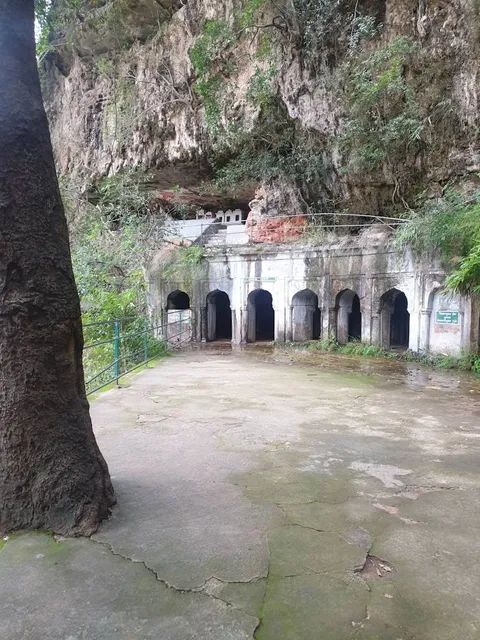
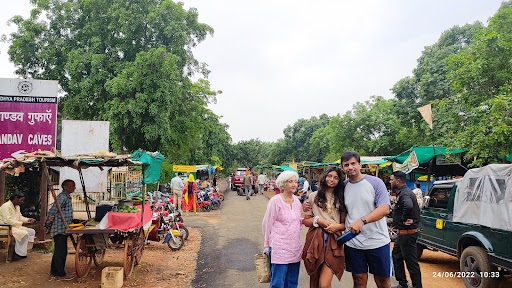
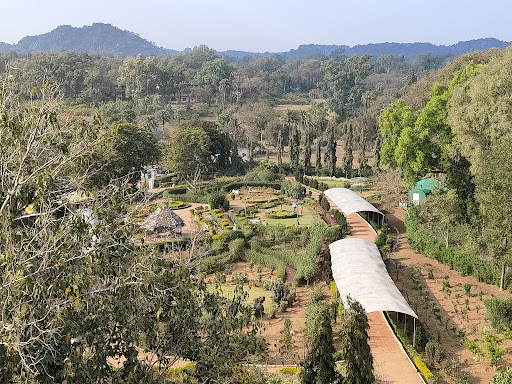
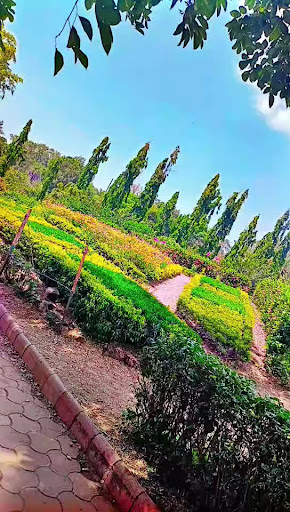
Pandav Caves. Some background info on Pandav caves. Capt. James Forsyth discovered Pachmarhi in 1857. That was also the time when he located five caves on a hill. In the local language, five means ‘Pach; and a cave means ‘Marhi’. So the town came to be known as Pachmarhi. Later Britishers developed the town as the only hill station in central India, for their stay during hot Indian summers. Pandav Caves is a very popular tourist attraction in Pachmarhi. It is a hill feature about 150 to 200 feet high, where around six room-shaped caves have been carved out of solid rock. As per the local folklore/legends, these caves are the ones where the Pandavas had spent time during their exile Five caves were for five brothers and the sixth cave was for Draupadi. Wife of Pandavas. A comparatively bigger and best-ventilated cave which also has beautiful carvings on the wall was occupied by Draupadi. The darkest cave was occupied by Bhima the toughest of them all. As per another and more credible version, these caves were carved out of solid rock by Buddhist monks around the 10th – 11th century for their stay and meditation. This version acquires more credibility as a remain of a brick-made stupa on top of the hill can still be seen. Our visit. Parking is not too far from the Pandav caves. The road from the parking to the garden at the base of the hill is lined on both sides by the usual street food, soft drink, tea coffee vendors and shops selling toys for kids and other small knickknacks. At the end of the street, we entered a beautifully laid-out and maintained garden. The full beauty can really be seen and appreciated only when viewed from the top of the hill. The path from the garden exits in an open space from where steps with safety railings have been made to facilitate climbing the hill which lead to Pandav Caves. One can make out that originally the steps were carved out from solid rock. Administration replaces all the damaged/worn out and unsafe steps with proper concrete steps. Steps and the railing make the climb quite comfortable and tourist-friendly. Caves are not too big or deep. Some caves have pillar support. Three of the cave which were adjacent to each other were closed and locked we could not see them at all. There was one more cave a little away which was also locked. So all I can say is that we did not see or know which was Drupadi or Bhima Caves. Remains of a Buddhist stupa brick structure can be seen right at the top. From the top of the hill, one can see a breathtaking and amazing panoramic view of the natural beauty of Pachmarhi hills and forests. The garden at the base and its artistic layout of the hill also look very beautiful. I personally feel that I enjoyed the view from the top much more that the...
Read moreThe Pandav Caves are a group of five rock-cut caves located in the hill station of Pachmarhi in the Indian state of Madhya Pradesh. These caves are believed to be ancient Buddhist shrines, dating back to the 1st century BCE, and are one of the most popular tourist destinations in Pachmarhi.
The Pandav Caves are named after the five Pandava brothers from the Hindu epic Mahabharata, who are believed to have stayed in these caves during their exile. The caves are carved out of sandstone and are situated on a hilltop, offering panoramic views of the surrounding landscape.
The first cave is the most impressive, with intricate carvings of Buddhist deities and scenes from the Jataka tales, which narrate the stories of the previous births of Lord Buddha. The other caves are smaller and less elaborate, but still worth a visit for their historical significance and natural beauty.
To reach the Pandav Caves, visitors need to trek for about 2-3 kilometers from the town of Pachmarhi. The trail is not very difficult and can be completed in about an hour. The trek takes visitors through dense forests and rocky terrain, offering a glimpse of the flora and fauna of the region.
Apart from the Pandav Caves, visitors can also explore other historical and natural attractions in Pachmarhi, such as the Bee Falls, Dhoopgarh, and the Satpura National Park. The town is also known for its colonial-era architecture and is a popular destination for history buffs and architecture enthusiasts.
In conclusion, the Pandav Caves are a must-visit destination for anyone traveling to Pachmarhi. The historical significance and intricate carvings of the caves make it a popular attraction among tourists, and the trek to the caves offers a chance to witness the natural beauty...
Read moreA group of five rock-cut caves came up in Pachmarhi, Madhya Pradesh, sometime between the first century AD to the 10th century AD. This group of caves is one that comes with a number of stories, mainly stories of their creation. Some sources connect these caves with the legend of Mahabharata, and some sources say that these caves were carved by the travelling Buddhist monks.
The history of these caves may have mysterious elements to it but what we know today is that they make for a very good tourist attraction in the Pachmarhi region of Madhya Pradesh. Pach means five, and marhi means caves in Hindi.
The Pandava Caves are located in the lush Satpura Range, and are surrounded by dense forests. For those who love nature trips, this site is one of the best options in the state of Madhya Pradesh
Relationship with Mahabharata It is widely believed that the five Pandava Caves were carved by the Pandavas. As per legends, the Pandava brothers carved one cave each, as a place of shelter during their 13 years of exile.
According to these stories, it was a game of dice where the Pandavas lost everything to the Kauravas, and were immediately exiled and forced to live a life of anonymity. Well, what better than to go live in a forest? As they crossed the region of Pachmarhi, they found a suitable place and carved out these caves. It is believed that the Pandavas stayed here for 13 years.
Apparently, the cave that was supposed to have been built by Bhim, is also the darkest of them all.
The Buddhist angle
As per some sources, these caves were carved by the travelling Buddhist monks or the Bhikshus. These caves served as both shelter and places to do meditation. This was somewhere between the ninth and the...
Read more