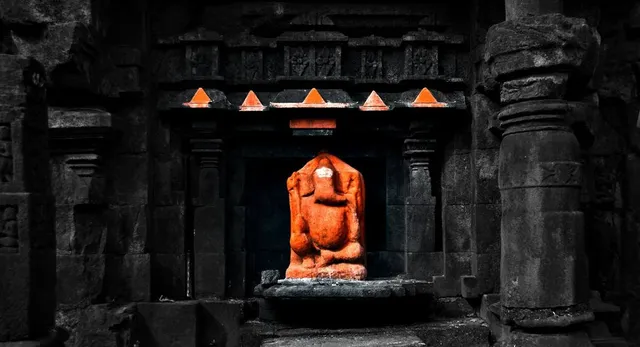
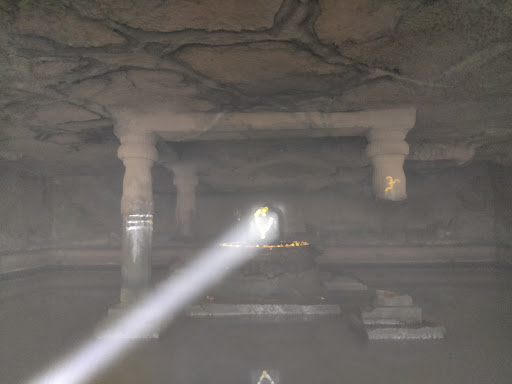
The four pillars and a legend As per locals, the temple was built by the Kalachuri dynasty inside the Harishchandragad fort during the 6th century. One of the greatest sages, Changdev stayed here and wrote the famous scripture Tatvasaar in the 14th century. There are three caves close to the temple. One of the caves here is home to a 5-foot Shiva Lingam. Each pillar here represents four yugas, which are Satya Yuga, Treta Yuga, Dvapara Yuga and Kali Yuga. Today, this lingam is standing on only one pillar while three other pillars have fallen. People believe that if the last pillar also breaks, then the world will come to an end!
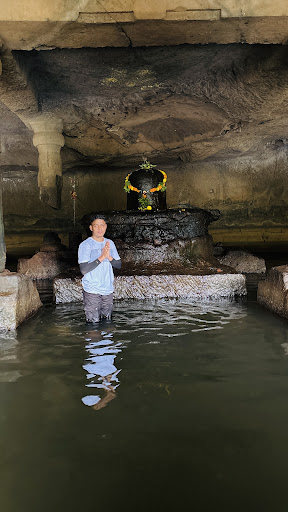
A hidden natural gem in Maharashtra The Kedareshwar Cave Temple is not any ordinary religious site but is housed within a naturally formed cave. The cave's entrance is narrow and leads to a gorgeous sight within. As visitors venture deeper into the cave, they’ll find a beautiful Shiva Lingam representing Lord Shiva. It is believed that the lingam here is self-manifested.
Another enchanting feature of the temple is the divine waterfall that cascades gracefully onto the Shiva Lingam which makes the scene all more beautiful. It’s a view to behold! It's said that the water flows non-stop here. Devotees believe that the sacred waters of this waterfall possess spiritual and healing properties.
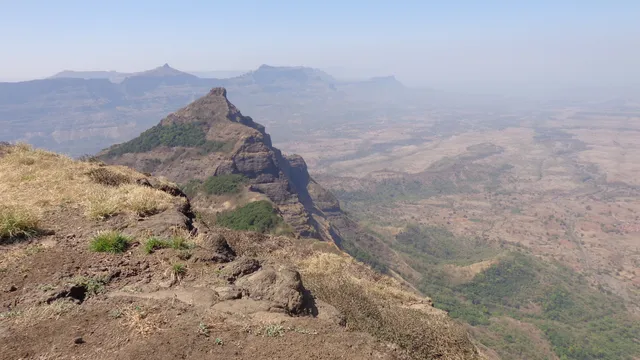
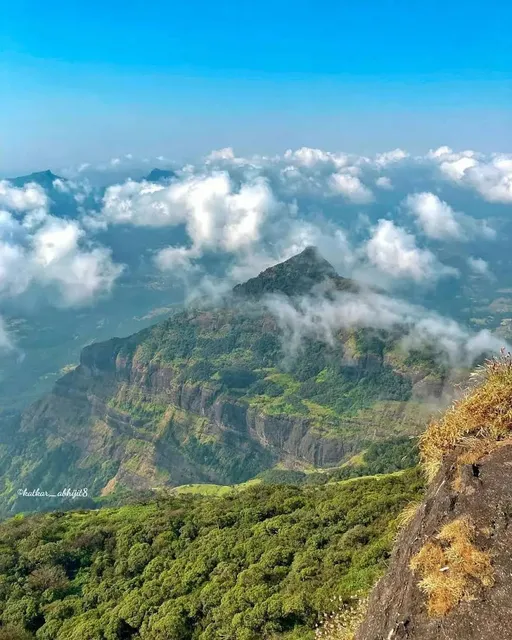
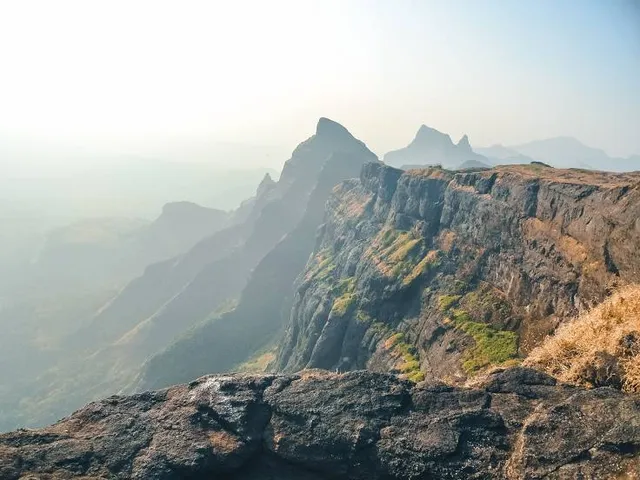
The Harishchandragad TrekReaching the Kedareshwar Cave Temple is an adventure in itself as it is situated within the sprawling Harishchandragad fort complex. To access this divine abode, trekkers must embark on a journey through the rugged terrains and lush landscapes of the Western Ghats.
The Kedareshwar Cave Temple is more than just a place of worship; it's a spiritual oasis. The tranquil ambiance inside the cave, coupled with the natural beauty that surrounds it, creates an atmosphere of serenity and reflection. Devotees and seekers of inner peace flock to this temple to meditate, seeking the divine presence and solace that only a place like...
Read moreKedareshwar Cave is a spiritual and scenic site located in the town of Harishchandragad, Maharashtra, India. It is known for its religious significance and its mesmerising natural beauty. This ancient cave is dedicated to Lord Shiva and houses a unique Shivling (Lingam), which remains partially submerged in water throughout the year.
Key Features: Shivling in Water: The cave's central attraction is the giant Shivling, surrounded by water, symbolising the site's sacredness. The source of the water remains mysterious, adding to its allure.
Four Pillars of Dharma: The cave has four pillars representing the four Yugas—Satya Yuga, Treta Yuga, Dvapara Yuga, and Kali Yuga. According to legend, each pillar collapses as each Yuga ends. Currently, only one pillar is standing, symbolising Kali Yuga.
Scenic Surroundings: Located in the Western Ghats, the cave is surrounded by lush greenery, waterfalls, and rugged terrains, making it a popular spot for trekking and nature lovers.
Harishchandragad Fort: Kedareshwar Cave is part of the Harishchandragad Fort complex, a popular destination for trekkers and history enthusiasts.
Spiritual Significance: The cave is a revered pilgrimage site for devotees of Lord Shiva, especially during Mahashivratri.
Tips for Visitors: The trek to the cave is challenging and requires physical fitness, especially during the monsoon. Carry appropriate gear, water, and snacks, as facilities are minimal in this remote location. Respect the sanctity of the site...
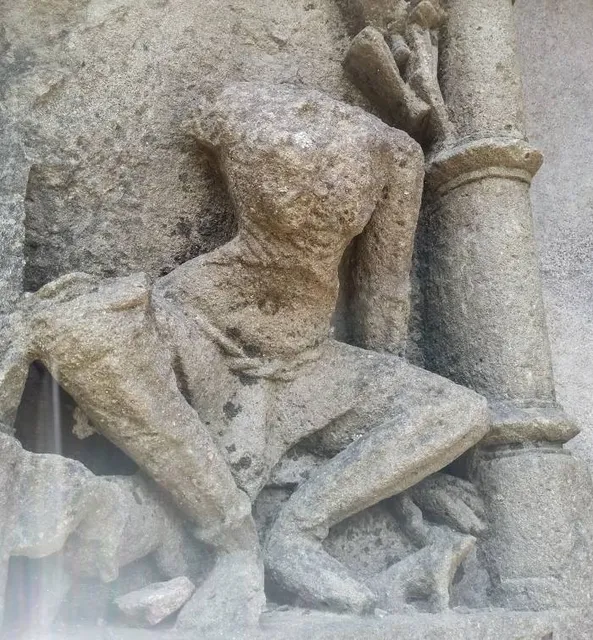
Read moreTHe Kedareshwar Cave temple can be visited during timings 6:00 AM - 8:00 PM. The best time to visit the temple is from January to June as it advisable to avoid the monsoon season. During the monsoon, since the temple is located inside the cave, the path becomes slippery. A Shiva Linga of about five feet is situated at the centre of the cave. One has to wade through waist deep and ice cold water to reach the Shiva Linga. Though there were four pillars surrounding the Linga, now there is only one pillar intact. Some believe the pillars to be symbols of yuga or time, namely, Satya, Tretha, Dwapara and the Kali Yuga. The present pillar is said to symbolise the last and final yuga, which is the present one, the Kali Yug. Thus a belief exists that when this last and remaining pillar breaks off, the world will come to an end. The walls of the cave are replete with sculptures and carvings. Kedareshwar Cave Temple is a must-visit for its unique built and the beliefs surrounding it. Trekkers too can enjoy a visit to the temple in a fort. Another interesting thing about this place is that water seeps into this temple from the four walls on a daily basis. And owing to the water being very cold, it's difficult to reach inside too. The water continues to seep in during all the seasons...
Read more