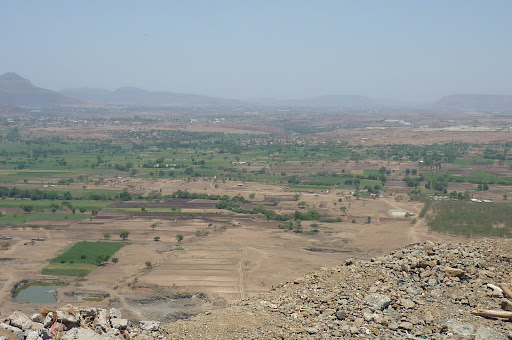
Dehu is a neighbourhood in the city of Pune, India. It is known for being the abode of Sant Tukaram .Opening hours
Thursday7 am–10:30 pm Friday7 am–10 pm Saturday7 am–10 pm Sunday7 am–10:30 pm Monday7 am–10:30 pm Tuesday7 am–10 pm Wednesday7 am–10:30 pm
Country - India State - Maharashtra District - Pune Demonym(s) - Punekar, Puneri, Puneite Languages • Official - Marathi Vehicle registration - MH 12
The Tukaram Palakhi heading towards the town of Pandharpur originates from Dehu in the month of Ashadh.
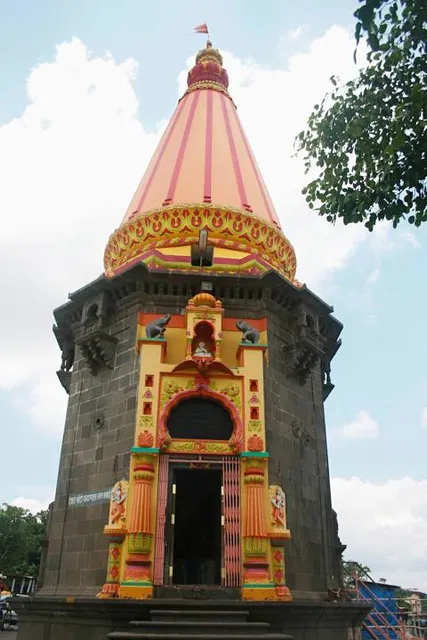
Sant Tukaram lived in Dehu. His temple is located on the banks of the Indrayani river. This temple was constructed by his younger son Narayanbaba in 1723. A rock (pashan,samadhi) where Saint Tukaram was on fast is also here.
Important Places associated with Tukaram in Dehu are:
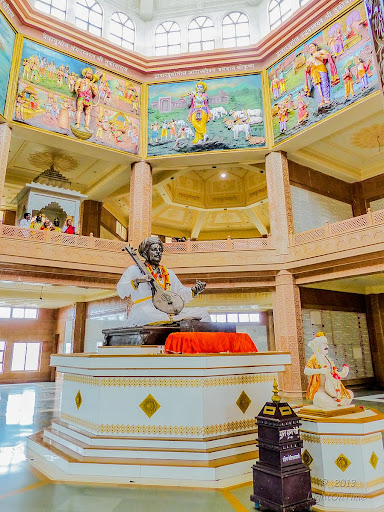
Tukaram Maharaj Janm Sthan Temple, Dehu – place where Tukaramji was born, around which a temple was built later Saint Tukaram Vaikunthstan Temple, Dehu – from where Tukaramji ascended to Vaikunth in his mortal form; there is a nice ghat behind this temple along the Indrayani river Saint Tukaram Maharaj Gatha Mandir, Dehu – modern structure; massive building housing a big statue of Tukaram; In the Gatha temple, about 4,000 abhangs (verses) created by Tukaram maharaj were carved on the walls.
Sant Tukaram (1608–1645) was a prominent Varkari Sant (Saint) and spiritual poet during a Bhakti movement in India.
Sant Tukaram was born and lived most of his life in Dehu, a town close to Pune in Maharashtra, India. Kumar, Munshi, Kincaid and Parasanisa, consider him to be of the Vani or grocer caste. In accordance with an ancient Indian tradition, Tukaram's family name is rarely used in identifying him. His real name is Tukaram Vhilhoba Aambile. Rather, in accord with another tradition in India of assigning the epithet "sant" to persons regarded as thoroughly saintly, Tukaram is commonly known in Maharashtra as Sant Tukaram (संत तुकाराम). He is known as Bhakta Tukaram to southern Indian people.
Sant Tukaram's first wife, Rakhumabai, died in 1602 in her early youth. Sant Tukaram and his second wife, Jijabai (also known as Avali), had three sons: Santu or Mahadev, Vithoba, and Dilip Purushottam Chitre, a well known Marathi Scholar, identifies Tukaram as the first modern poet of Marathi. Chitre believes that Tukaram was the second saint after Sant Dnyaneshwar who denied caste hierarchy in Hindu religion and attacked rituals present in Hindu Dharma.
Spiritual life and poetry Sant Tukaram was a devotee of god Vitthala or Vithoba, a form of Krishna.
Sant Tukaram is considered to be the climactic point of the Bhagabata Hindu tradition, which is thought to have begun in Maharashtra with Namdev. Dnyaneshwar, Namdev, Janabai, Eknath, and Tukaram are revered especially in the Varkari (वारकरी) sect in Maharashtra. Most information about the lives of the above saints of Maharashtra comes from the works Bhakti-Wijay and Bhakti-Leelāmrut of Mahipati. Mahipati was born 65 years after the death of Tukaram, (Tukaram having died 50 years, 300 years, and 353 years after the deaths of Ekanath, Namdev, and Dnyaneshwar, respectively.) Thus, Mahipati undoubtedly based his life sketches of all the above "sants" primarily on hearsays. Dehu Gatha Mandir is one of the biggest temples and is situated near Pune. There is a statue of Sant Tukaram Maharaj at the entrance of the temple. What attracts people the most is the carvings on the walls of the temple with all the gathas i.e. tales/stories of Saint Tukaram which are very easy to read. It is said that at least 3 gathas must be read while visiting the temple. This temple is situated on the banks of Indrayani river.
History of this Temple A garden dedicated to the memory of his wife and a rock dedicated to the 13-day fast of Tukaram standing are the main attractions of the city. Built by the youngest son of Tukaram, the Dehu Temple is a major attraction of the city. Built during the 18th century, this temple has Lord Pandurang as its presiding deity. A religious attraction in Dehu...
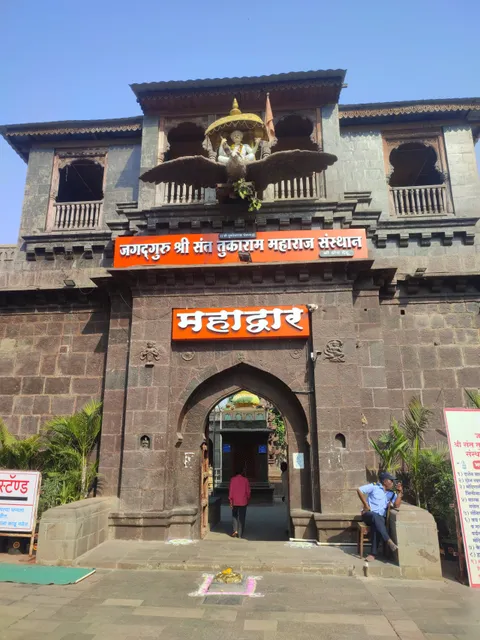
Read moreDehu Road Tukaram Temple On Sunday,20.05.2012, our relatives came at 9.00 am to our house in Pune and took us to Dehu Road. Dehu Road is the famous birthplace of Sant Tukaram . Dehu Road lies at a distance of 27km N.W. of Pune. It lies on the old Pune Mumbai Highway on NH4. The ride was quite smooth and when we reached the place on the banks of river Indrayani the first spot we saw was the Moksha sthal of Tukaramji. At the entrance was a painting of Sant Tukaram on Garuda. Such was His devotion to Vittala that He sent His own vahana to transport Tukaram to Vaikunta. We entered inside and ascended a flight of steps to find a statue of the saint flanked by Panduranga and Rukmabai with their hands on their hips. After garlanding the saint we came down and circumbulated a huge tree under which a devotee was standing and people were offering dakshina and pranams to him. From this place we proceeded to the Vithala Rukmini temple. The vigrahas are swayambu murthis and we proceeded in the queue which was moving in an orderly fashion to have darshan of Panduranga and Rukma bai. In Maharashtra temples one is allowed to touch the feet of the deities and even hug them.There is sanctity and cleanliness is maintained. The simple yet clean atmosphere is charged with devotion. At the entrance a group of kirtan singers were singing abhangs seated in an orderly manner with tampuras and cymbals.They were not disturbed by the crowds going in for darshan and concentrated on their books. As we came out we noticed a silver palanquin and realized it was the one used during Ashada ekadasi. Incidentally a procession from Dehu Road walks all the way to Pandharpur. Similarly a procession of devotees walk from Alandi the birthplace of Sant Gnaneswar to Pandharpur for the same ekadashi to worship Panduranga. Sant Tukaram’s followers are called varkaris and their mantra is RamaKrishna Hari. It is said that during Tukaram’s time many people by uttering this mantra would take free grocery from Tukaram’s shop. Sant Tukaram took every devotee who said this to be a sadhu and refused payment. This led to his bankruptcy and he was scolded by his wife for his irresponsible behaviour. Again Brahmins learned in the sastras found fault with His Marathi outpourings. So Tukaram tied all his writings in a piece of cloth and threw it away. Next day the wet pile was found on Vittala’s head.Such is the spontaneity and devotion of the abhangs that Sant Tukaram is called the Shakespeare of Marathi literature. We saw the hand-written book of abhangs enclosed in a glass case. We were told that daily annadanam is there for everyone but since we have to get back to Pune we had to leave. Chatrapathi Shivaji the great Maratha leader was his devotee and sought his blessings but the saint refused to accept gold or any other riches from him.It was the presence of such great men that made Bharat mahan .From the temple we proceeded to a place called Bandara at the top of a hill. The drive up was exciting and when we reached the top we found a place where kirtan was on and we went in to have darshan of Sant Tukaram, flanked by Datthathreya, Panduranga Rukmabai and a shivling. Outside was a kitchen where several women were rolling chapathis for the afternoon lunch. We were told that Sant Tukaram fasted for several days at this spot and a small temple has been built here. The view from this spot was good and one could see the whole city from there. One could feel the holiness of the place and the presence of the simple villagefolk unsullied by the modern entertainments and mall- culture gave a unique sense of peace and inner calm. The feeling of satisfaction and peace prevailed even after coming back home and even when thinking...
Read moreIf you're on a spiritual journey or simply want to explore the rich cultural and devotional fabric of Maharashtra, Sant Tukaram Maharaj Gatha Mandir in Dehu is a must-visit destination. Situated on the banks of the Indrayani River, this grand temple is a tribute to one of Maharashtra’s most beloved saints – Sant Tukaram Maharaj, a 17th-century poet-saint and philosopher known for his timeless abhangs (devotional poetry) dedicated to Lord Vitthal.
🛕 About the Gatha Mandir: The Gatha Mandir is an architectural marvel constructed with over 4,000 stone slabs inscribed with Tukaram Maharaj’s 4,000+ abhangs, making it one of the only temples in India dedicated not to a deity’s idol, but to a saint's teachings. The temple structure is large, clean, and peaceful – reflecting the simplicity and depth of Tukaram Maharaj’s life. You’ll also find a statue of the saint atop a hillock, overseeing the town of Dehu.
The temple complex is well-organized with facilities for pilgrims, meditation spaces, and spiritual discourses. It’s more than a temple – it’s a living archive of bhakti, poetry, and social reform.
👣 Connection to Pandharpur Vari (Wari): Dehu is the starting point of the Sant Tukaram Maharaj Palkhi, which begins every year in the Hindu month of Jyeshtha (June). Thousands of warkaris (devotees) begin their 250+ km spiritual march from here to Pandharpur, the sacred abode of Lord Vitthal. This procession merges with the Palkhi from Alandi (of Sant Dnyaneshwar Maharaj) en route. The entire Wari is a spectacle of devotion, discipline, music, and faith, where pilgrims chant Tukaram’s abhangs, play traditional instruments like taal and mridang, and walk with unwavering devotion under sun and rain alike.
📝 Travel & Visitor Tips:
📅 Best Time to Visit: June-July (Wari season) for a cultural experience, or October-February for a peaceful pilgrimage.
🧘♂️ What to Expect: Peaceful darshan, river ghats for spiritual cleansing, well-maintained premises, and cultural displays.
🧴 Essentials to Carry: Comfortable footwear (to be removed inside the temple), water bottles, and a basic understanding of Marathi to better enjoy the inscriptions and local hospitality.
🍛 Food & Stay: Local Maharashtrian meals are available at eateries and bhakta niwas (pilgrim lodges). You can also find free prasad or meals at specific times.
📍 Nearby Attractions: Indrayani River Ghat, the birth place of Sant Tukaram, and Bhajani Mandaps where daily kirtans (devotional singing) take place.
💬 Final Thoughts: Dehu and the Gatha Mandir are not just tourist spots – they are living spiritual experiences. Whether you're familiar with the Warkari tradition or discovering it for the first time, a visit here will leave you deeply touched. The teachings of Sant Tukaram Maharaj – on equality, devotion, and moral living – are timeless and resonate across generations. A visit to the Gatha Mandir will uplift your spirit and give you a glimpse into the profound bhakti movement of...
Read more