During the time of the Yadava monarch Ramadevarava, Dnyaneshwar was born in 1275 (on the auspicious day of Krishna Janmashtami) into a Marathi-speaking Deshastha Brahman family in Apegaon hamlet on the banks of the Godavari river close to Paithan in Maharashtra. The kingdom with Devagiri as its capital was relatively peaceful and stable, and the king was a supporter of the arts and literature. The writings of Sant Dnyaneshwar’s students Satyamalanath and Sachchidanand contain biographical information about his life. There are divergent stories of Dnyaneshwar’s life in various traditions. However, there is no questioning the fact that his work Dnyaneshwari was created in 1290 CE. The more widely recognised version of Dnyaneshwar’s life story is that he was born in 1275 CE and attained samadhi in 1296 CE. He was born in 1271 CE, according to other sources.
Life of Dnyaneshwar
The veracity of the biographical information on Dnyaneshwar’s brief life of approximately 21 years is disputed. His hagiographic legends and miracles, like his capacity to make a buffalo recite the Vedas and degrade a yogi by riding a moving wall, are abundant in the accounts that are readily available. The accounts that have been survived, state that Dnyaneshwar’s father Vitthalapant was a Kulkarni (hereditary accountant, typically Brahmin, who kept land and tax records in villages) in the Maharashtrian village of Apegaon on the banks of the Godavari River. This occupation was one he had inherited from his forefathers. The Kulkarni of Alandi’s daughter, Rakhumabai, was his wife.
Vitthalapant yearned for spiritual education even as a householder. Because of the passing of his father and the fact that he was married but had no children, he became increasingly disenchanted with life. He eventually decided to give up his worldly life and relocate to Kashi to become a sannyasin (renunciate) with the approval of his wife. Another account of these events claims that Dnyaneshwar’s father Vitthalapant was a very pious man who hailed from a long line of Nath yogi teachers and made a journey to Varanasi.
He found a guru (spiritual instructor) there and made the decision to renounce without consulting his wife. His spiritual guide Rama Sharma, also known as Ramananda, Nrisimhashrama, Ramadvaya, and Shripad in different accounts, initiated Vitthalapant as a sannyasin. Rama Sharma ordered Vitthalapant to return to his wife and carry out his responsibilities as a householder after learning that Vitthalapant had abandoned his family to become a monk. Rakhumabai conceived four children: Nivruttinath (1273 CE), Dnyaneshwar (1275 CE), Sopan (1277 CE), and Muktabai (1279 CE) now since Vitthalapant returned to his wife and resided in Alandi.
A renunciate reverting to his life as a householder was seen as heresy by traditional Brahmins. In order to gain complete admittance to the Brahmin caste, Dnyaneshwar and his brothers were not permitted to participate in the holy thread rite. This entailed ex-communication from the Brahmin caste. Eventually, Vitthalapant and his family departed the town for Nashik. One day, Vitthalapant encountered a tiger while going about his usual routine. Three of Vitthalapant’s four children also managed to flee, but Nivruttinath was left behind and took refuge in a cave. Gahaninath, whom he encountered while hiding in the cave, introduced Nivruttinath to the knowledge of the Nath yogis.
Later, Vitthalapant went back to Alandi and begged the Brahmins for advice on how to atone for his transgressions; they urged that he take his own life as a form of penance. Within a year of one another, Vitthalapant and his wife committed suicide by plunging into the Indrayani River in the vain hope that their children may live lives free from oppression. According to local lore and other accounts, the parents jumped into the Indrayani River to commit suicide. Another version of the story claims that the father, Vitthalapant, atoned for his transgression by jumping into the Ganges River. The Nath Hindu live tradition, to which their...
Read more5/5 Stars - A Spiritual Oasis: Shree Sant Dnyaneshwar Samadhi Mandir, Alandi
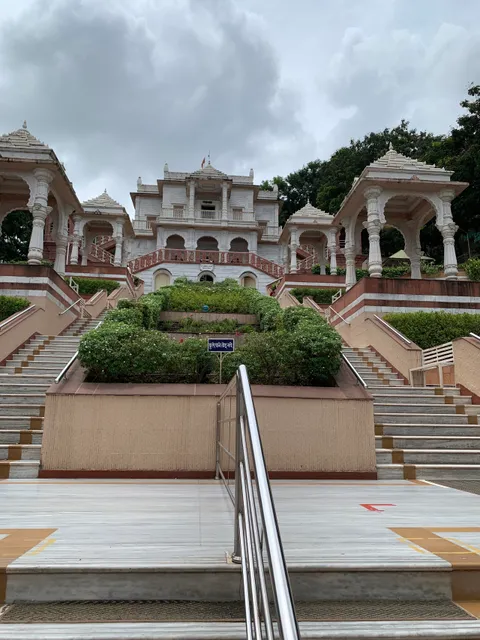
Tucked away in the quaint town of Alandi, Maharashtra, lies the revered Shree Sant Dnyaneshwar Samadhi Mandir, a sacred sanctuary that embodies the essence of spirituality, serenity, and divine connection. This magnificent temple complex is dedicated to the 13th-century Marathi saint and poet, Sant Dnyaneshwar, whose legacy continues to inspire and guide millions.
A Calm and Cool Ambiance
As we stepped into the temple premises, we were enveloped by an aura of tranquility. The lush green surroundings, soothing water features, and majestic architecture create a sense of harmony, calming the mind and soothing the soul. The temple's serene atmosphere is a perfect antidote to the chaos of modern life.
Holy Energy
The Samadhi Mandir is believed to be the site where Sant Dnyaneshwar attained samadhi (enlightenment). The sacred energy emanating from this holy spot is palpable, filling visitors with a deep sense of reverence and devotion. We felt blessed to be in the presence of such spiritual significance.
Architectural Marvel
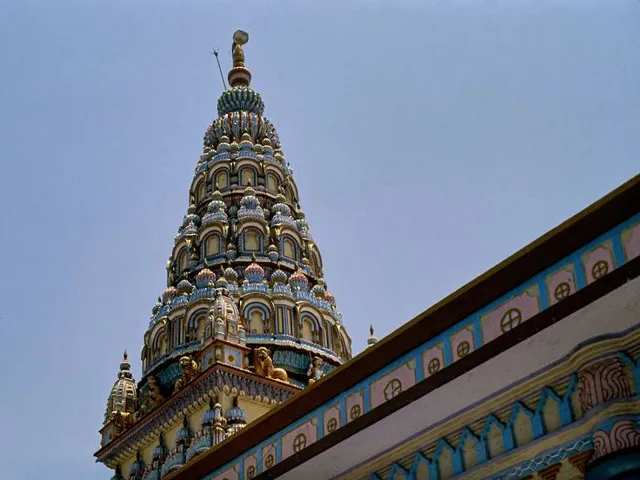
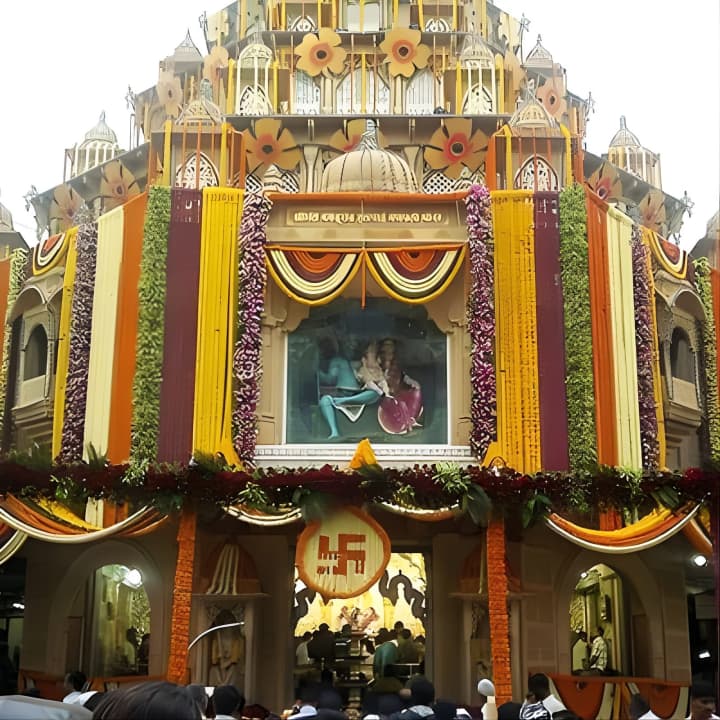
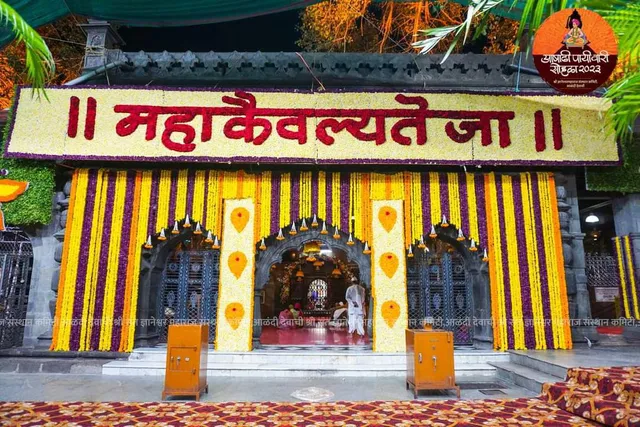
The temple's architecture is a blend of ancient and modern styles, showcasing intricate carvings, beautiful sculptures, and stunning murals depicting Sant Dnyaneshwar's life and teachings. The majestic shrine, adorned with vibrant flowers and ornate decorations, is a testament to the devotion of the temple's caretakers.
Spiritual Significance
Sant Dnyaneshwar's teachings, as encapsulated in his iconic work, the Dnyaneshwari, emphasize the importance of self-realization, love, and devotion. The temple serves as a beacon for spiritual seekers, offering guidance and inspiration through various programs, discourses, and cultural events.
Excellent Amenities
The temple complex offers:
Clean and well-maintained premises Ample parking and accessibility Refreshment stalls serving prasad and local delicacies Accommodation options for pilgrims Library and bookstall featuring spiritual literature
Rating Breakdown:
Spirituality: 5/5 Ambiance: 5/5 Architecture: 5/5 Amenities: 5/5 Overall Experience: 5/5
Conclusion
Shree Sant Dnyaneshwar Samadhi Mandir, Alandi, is an extraordinary destination that nourishes both body and soul. This sacred site is a must-visit for:
Spiritual seekers History enthusiasts Architecture lovers Those seeking solace and peace
We left the temple feeling blessed, rejuvenated, and inspired by Sant Dnyaneshwar's timeless teachings. As we reflect on our experience, we are reminded of the saint's profound words: "The ultimate goal of human life is to realize one's true Self."
Tips:
Visit during sunrise or sunset for a mesmerizing experience. Attend discourses or cultural events to deepen your understanding of Sant Dnyaneshwar's teachings. Explore the nearby Indrayani River and scenic surroundings. Respect the temple's sanctity and traditions.
In the words of Sant Dnyaneshwar, "The Lord is within us, and we are within the Lord." Shree Sant Dnyaneshwar Samadhi Mandir, Alandi, is a poignant reminder of this...
Read moreIt is a famous pilgrimage place where Sant Dnyaneshwar Maharaj, a 13th century Marathi saint, yogi, poet and philosopher of Nath tradition has taken sanjeevan samadhi here. Sant in Marathi language means Saint.
The famous pilgrimage place here in Alandi is Sant Dnyaneshwar Maharaj samadhi mandir present under Siddheshwar (Lord Shiva) temple.
The temple was constructed in the year 1570, where Saint Dnyaneshwar Maharaj spent a few years of his life in Alandi village.
How to reach Alandi:
Alandi town is at a distance of 21 km from Pune district and takes roughly 40 mins to reach via Vadgaon road. Chinchwad is at a distance of 21 km and Dehu is at a distance of 15 km from Alandi.
Mumbai (Bombay) the capital city of Maharashtra is at a distance of roughly 151 km from Alandi. The official language spoken at Alandi is Marathi.
By Road:
Alandi is well connected by Maharashtra local road transportation. One can easily reach from all corner cities of Maharashtra to Pune and from there it is easy to get to Alandi by road.
By Train:
Pune is the nearest railway junction connecting all major cities of India.
By Air:
Pune is the nearest airport present at a distance of 21 km away from Alandi. Pune airport connects to all other major cities of India like Hyderabad, Chennai, Delhi, Mumbai and Bangalore.
Brief Biography of Sant Dnyaneshwar:
Sant Dnyaneshwar is a 13th century Maharashtrian Hindu philosopher, poet and saint. He was born in Alandi town in 1271.
He wrote Dnyaneshwari 700 year ago, which is a commentary on Sanskrit Bhagwat Gita in simple Marathi language for the first time.
Sant Dnyaneshwar was born into a Deshastha Brahmin family. Dnyaneshwar father's name is Vithalpant and mother's name is Rukminibai Kulkarni.
Vithalpant, found his married life boring due to his detachment in worldly matters and decided to go to Varanasi.
He met his Guru Ramanandswami there and requested to accept him as his disciple hiding that he was a married person. Ramanandswami accepted him as his disciple and gave him the new name as Chaitanyashram.
However, the Guru Ramanandswami came to know about his wife upon his pilgrimage trip to Rameshwar when he stayed at Alandi. He immediately ordered Chaitanyashram to return to his village and establish a family.
Vithalpant carried out his Guru orders and on returning to the home he spent his time reading Vedas and Shastras.
In the course of time, the couple had four children. The first was Nivruttinath, Dnyaneshwar was the second, Sopana was the third and the fourth was a daughter named Muktabai was born to the couple. All four children became great spiritual leaders in the future.
Dnyaneshwar was initiated into the spirituality by his elder brother and his guru...
Read more