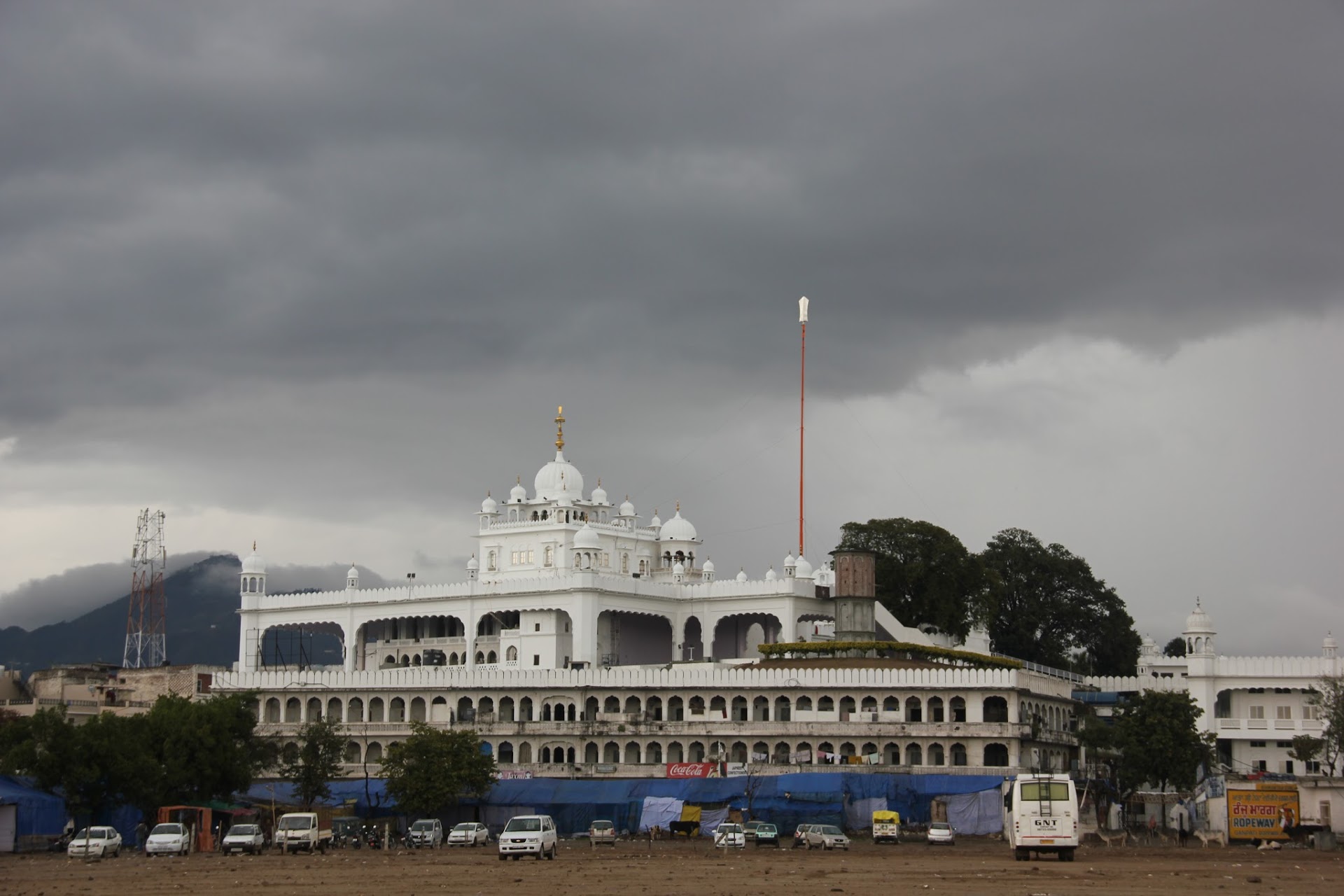
Anandpur Sahib, sometimes referred to simply as Anandpur (lit. "city of bliss"), is a city in Rupnagar district (Ropar), on the edge of Shivalik Hill The city is a pilgrimage site in Sikhism.3] It is the venue of the largest annual Sikh gathering and festivities during Hola Mohalla in the spring season.[4] Anandpur Sahib is located on National Highway 503 that links Kiratpur Sahib and Chandigarh to Nangal, Una and further Kangra, Himachal Pradesh. It is situated near the Sutlej river, the longest of the five rivers that flow through the historic crossroads region of Punjab. Anandpur Sahib was founded in June 1665 by the ninth Sikh Guru, Guru Tegh Bahadur. He previously lived in Kiratpur, but given the disputes with Ram Rai – the elder son Guru Har Rai and other sects of Sikhism, he moved to village in Makhoval. He named it Chakk Nanaki after his mother. In 1675, Guru Tegh Bahadur was tortured and beheaded for refusing to convert to Islam under the orders of the Mughal Emperor Aurangzeb, a martyrdom that led Sikhs to rename the town to Anandpur and coronate his son Gobind Das (also known as Gobind Rai)[5] as his successor and famous as Guru Gobind Singh.[68] The village grew into town, likely dramatically state Louis E. Fenech and W. H. McLeod, as Sikhs moved near Guru Gobind Singh.[6] The growing strength of Sikhs in Anandpur under the tenth Guru, after the execution of the ninth Guru, raised concerns of the neighboring Pahari rajas - the vassals of the Mughal Empire, along with the Mughal ruler Aurangzeb.[6:14 In 1693, Aurangzeb issued an order that banned large gatherings of Sikhs such as during the festival of Baisakhi.9]:14 In 1699, Guru Gobind Singh founded the Khalsa panth and gathered a large armed militia. This triggered Aurangzeb and his vassal Hindu kings around Anandpur to blockade Anandpur.[6] This led to several battles: First Battle of Anandpur (1700), against the Mughal army of Aurangzeb, who had sent 10,000 soldiers under the command of Painda Khan and Dina Beg.[10] In a direct combat between Guru Gobind Singh and Painda Khan, the latter was killed. His death led to the Mughal army fleeing the battlefield.[10]The siege of Anandpur Sahib (1701), against the neighboring Hindu kingdom chiefs who controlled the mountain kingdoms. This was accompanied by a battle wherein Jagatullah was killed by Sikh forces.[10] The hill chiefs laid a siege of Anandpur, and the Guru had to temporarily leave Anandpur as a condition for peace.[11]According to Louis Fenech, his wars with kings of the Himalayan kingdoms was likely triggered by the growing army of Sikhs, which then raided and plundered villages in nearby mountainous kingdoms for supplies; the Hindu kings joined forces and blockaded Anandpur.[9]:14Second Battle of Anandpur (1704), against the Mughal army led first by Saiyad Khan and then by Ramjan Khan;[10] The Mughal general was fatally wounded by Sikh soldiers, and the army withdrew. Aurangzeb then sent a larger army with two generals, Wazir Khan and Zaberdast Khan in May 1704, to destroy the Sikh resistance.[10] The approach the Islamic army took in this battle was to lay a protracted siege against Anandpur, from May to December, cutting off all food and other supplies moving in and out, along with repeated battles.[12]Some Sikh men deserted the Guru during Anandpur siege in 1704, and escaped to their homes where their women shamed them and they rejoined the Guru's army and died fighting with him in 1705.[13Towards the end, the Guru, his family and followers accepted an offer by Aurangzeb of safe passage out of Anandpur.15]However, as they left Anandpur in two batches, they were attacked, and one of the batches with Mata Gujari and Guru's two sons – Zorawar Singh aged 8 and Fateh Singh aged 5 – were taken captive by the Mughal army.[11 Both his children were executed by burying them alive into a wall.12 The grandmother Mata Gujari died there...
Read moreTitle: Takht Shri Keshgarh Sahib: A Sacred Seat of Sikh Authority with Comfortable Accommodations
Review:
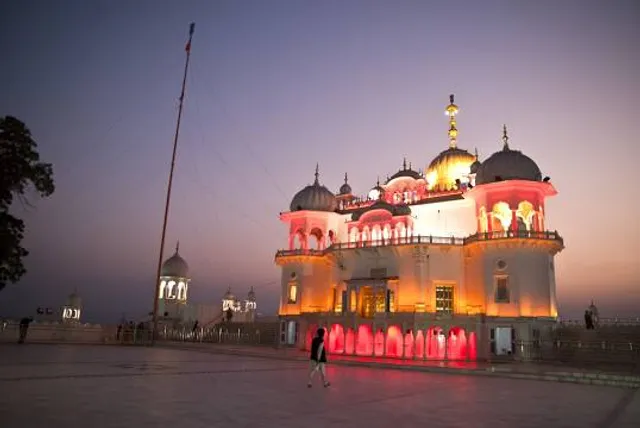
Takht Shri Keshgarh Sahib, located in Anandpur Sahib, Punjab, holds a position of great reverence and historical significance as one of the five takhts (thrones) of Sikhism. This sacred shrine serves as a spiritual and cultural center, attracting devotees from around the world who seek solace, divine guidance, and a deeper connection to their faith.
The moment you step foot into the premises of Takht Shri Keshgarh Sahib, you are enveloped in an atmosphere of sanctity and devotion. The grandeur of the architecture, characterized by its majestic domes and intricate detailing, is awe-inspiring, reflecting the rich heritage of Sikh culture and tradition.
At the heart of the gurudwara complex lies the sanctum sanctorum, where the Guru Granth Sahib, the holy scripture of Sikhism, resides. The rhythmic recitation of Gurbani (Sikh devotional hymns) creates a captivating ambiance, transporting visitors into a realm of spiritual tranquility and enlightenment. The powerful sermons delivered by the priests further enrich the experience, providing insights into the teachings of Sikhism and inspiring devotees on their spiritual journey.
In addition to its religious significance, Takht Shri Keshgarh Sahib offers comfortable accommodations for pilgrims who wish to stay and fully immerse themselves in the spiritual environment. The gurudwara committee provides well-maintained guesthouses and dormitory facilities that cater to the needs of visitors. These accommodations ensure a peaceful and secure stay, allowing devotees to focus on their prayers and contemplation without any concerns.
The facilities provided by the gurudwara committee are commendable. Clean and hygienic restrooms, 24-hour electricity supply, and safe drinking water are readily available for the convenience of visitors. The langar, a communal kitchen where free vegetarian meals are served, is a testament to the Sikh principle of selfless service and equality. Devotees, irrespective of their social status or background, can partake in these nutritious meals, promoting a sense of unity and brotherhood.
The gurudwara committee also organizes various community services and events throughout the year, including medical camps, educational programs, and cultural activities. These initiatives reflect the commitment to social welfare and upliftment that is deeply ingrained in Sikh traditions.
It is worth mentioning that Anandpur Sahib, the town where Takht Shri Keshgarh Sahib is situated, is surrounded by picturesque landscapes, adding to the overall experience of the visit. The serene beauty of the nearby Sutlej River and the tranquil hills create an environment conducive to introspection and spiritual rejuvenation.
In conclusion, a visit to Takht Shri Keshgarh Sahib is a transformative and enriching experience for devotees of Sikhism. With its profound religious significance, serene atmosphere, and comfortable accommodations, it offers a perfect setting for seekers of divine guidance and spiritual solace. The facilities provided by the gurudwara committee ensure a pleasant stay, allowing devotees to fully immerse themselves in the devotion and...
Read moreAnandpur Sahib
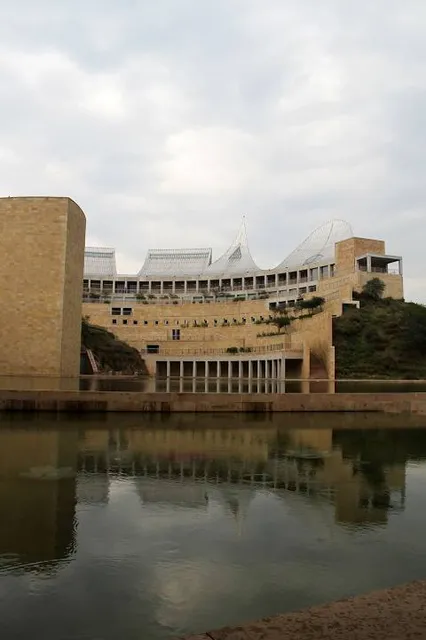
Anandpur Sahib, sometimes referred to simply as Anandpur (lit. "city of bliss"), is a city in Rupnagar district (Ropar), on the edge of Shivalik Hills, Indian state of Punjab. Located near the Sutlej River, the city is one of the most sacred places in Sikhism, being the place where the last two Sikh Gurus lived, Guru Teg Bahadur Ji and Guru Gobind Singh Ji. this is the place where Guru Gobind Singh Ji founded the Khalsa Panth in 1699. The city is home to Kesgarh Sahib Gurdwara, one of the five Takhts in Sikhism.
Anandpur Sahib features a major festival and gathering of Sikhs every year on the occasion of Hola Mohalla. This tradition dates back to the times of the 10th Guru, Guru Gobind Singh. The guru decreed that the occasion of the festival of Holi be the occasion for the display of the martial spirit of his people. He gave this festival of Holi the Sikh name of 'Hola Mohalla'. Each year Hola Mohalla marks the congregation of nearly 20,00,000 Sikhs from all over the country for a festival of colour and gaiety. The festival, among other things, remembers the creation of Khalsa on the Baisakhi day in 1699.
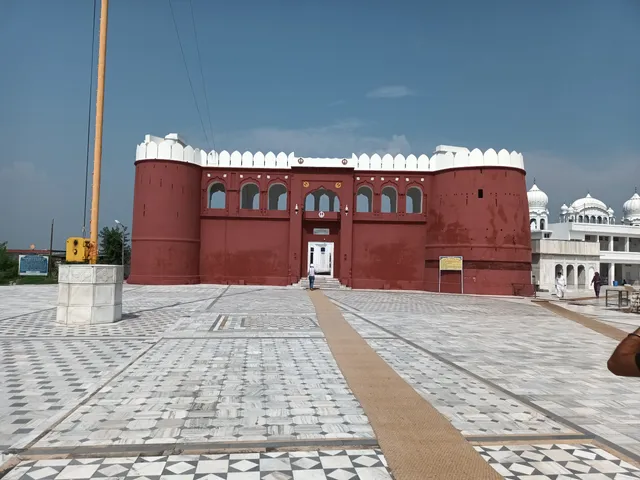
The fair lasts for three days. The Gurudwaras are specially decorated for the occasion. During Hola Mohalla, Anandpur Sahib wears a festive appearance and hums with activities in March. Community conferences and religious functions are also organized. On this occasion, Nihangs from all over the country gather for the celebrations. The highlight is a huge procession by the Nihangs, clad in their traditional dress and weapons, on the last day of the fair. The procession starts from the headquarters of the Nihangs, opposite Gurudwara Anandgarh Sahib, and passes through the bazaar, goes to village Agampur and reaches the fort of Holgarh, the place where Guru Gobind Singh used to celebrate this fair. Thereafter, the procession heads toward the sandy bed of Charan Ganga, where demonstration of martial games including riding, tent pegging, sword-wielding, etc. are witnessed by a large number of people .
Baisakhi in 1999, at Anandpur Sahib marked the completion of 300 years of the birth of the Khalsa. It was on Baisakhi day in 1699 that Guru Gobind Singh baptised the Panj Pyaras at the place where Takht Sri Keshgarh Sahib stands.
Anandpur Sahib was founded in June 1665 by the ninth Sikh Guru, Guru Tegh Bahadur. He previously lived in Kiratpur, but given the disputes with Ram Rai – the elder son Guru Har Rai and other sects of Sikhism, he moved to village in Makhoval. He named it Chakk Nanaki after his mother. In 1675, Guru Tegh Bahadur was tortured and beheaded for refusing to convert to Islam under the orders of the Mughal Emperor Aurangzeb, a martyrdom that led Sikhs to rename the town to Anandpur and crown his son Gobind Das as per his orders (also known as Gobind Rai) as his successor and famous as Guru...
Read more