The Rise of Maa Trikuta: A Pilgrimage in Kota
Nestled amidst the rolling hills of Rajasthan, in the vibrant city of Kota, lies a relatively young yet rapidly renowned pilgrimage site - Maa Trikuta Dham. Its history, though brief, is an intriguing tapestry woven with devotion, architectural finesse, and the yearning for spiritual solace.
From Vision to Stone:
The story of Maa Trikuta begins in the late 2000s with the vision of Shri Suresh Chand Agarwal, a prominent industrialist and philanthropist. Inspired by the arduous yet spiritually enriching pilgrimage to Vaishno Devi in Katra, he dreamt of creating a similar experience closer to home for the devotees of Kota.
Construction commenced in 2010, and over the next decade, the barren hillock on the outskirts of Kota transformed into a magnificent replica of the Katra Vaishno Devi temple. The intricate details, from the serpentine cave passages to the three holy Mata ki peedhis (resting places of the Goddess), were meticulously recreated, paying homage to the original shrine.
A Journey of Faith:
Stepping into Maa Trikuta is akin to embarking on a mini-Vaishno Devi Yatra. Devotees navigate through a series of natural and man-made caves, encountering captivating murals depicting the life and legends of Goddess Durga. The echoing chants of "Jai Mata Di" mingle with the gentle trickle of waterfalls, creating an atmosphere of profound serenity.
Reaching the three Mata ki peedhis - Adi Trikuta, Chota Bangal, and Bhairon Ghati - is the culmination of the spiritual journey. Each peedhi houses a captivating idol of Maa Vaishno Devi, radiating divine grace and fulfilling the wishes of countless devotees.
Beyond the Shrine:
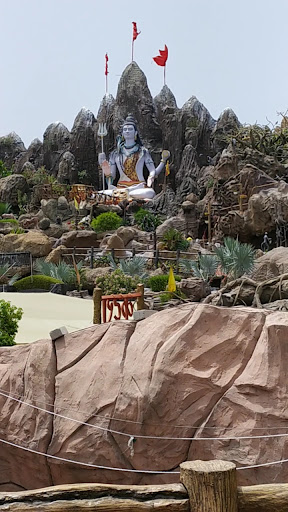
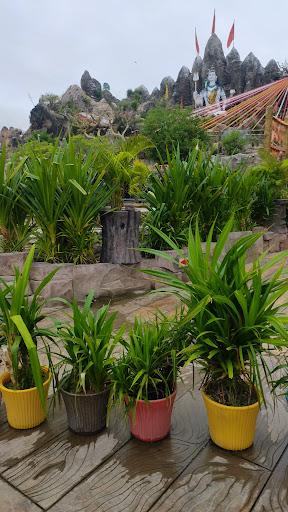
Maa Trikuta is more than just a replica; it's a vibrant and ever-evolving spiritual hub. The sprawling complex boasts lush gardens, serene ponds, and meditation centers, offering respite and rejuvenation for weary souls. A majestic 51-foot statue of Lord Shiva stands tall, overlooking the temple, adding a touch of grandeur to the sacred space.
As years pass, Maa Trikuta continues to attract devotees from near and far. Its proximity to Kota city, coupled with its accessibility and serene ambiance, makes it a beacon of faith for millions. The temple's story is a testament to the enduring power of devotion, the spirit of community, and the unwavering human desire for a connection with the divine.
Here are some additional aspects you might be interested in:
The challenges faced during the construction of the temple and how they were overcome.
The impact of Maa Trikuta on the local community, both economically and socially.
The unique features of Maa Trikuta that set it apart from other Vaishno Devi temples.
The role of Shri Suresh Chand Agarwal in shaping the temple's legacy.
I hope this brief history gives you a glimpse into the captivating world of Maa Trikuta. Its journey is far from over, and I am sure it will continue to inspire and enrich the lives of countless devotees for...
Read moreMaa Trikuta Temple
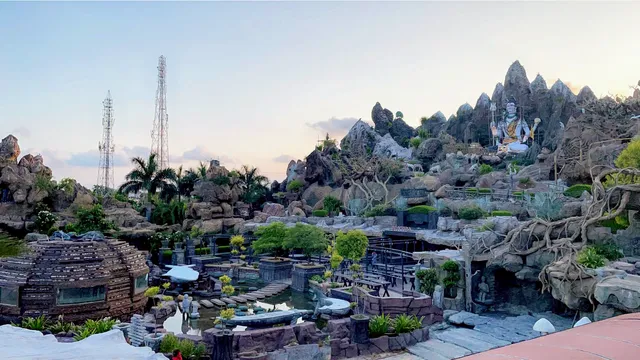
This auspicious temple of Maa Trikuta, a synonym for Maa Vaishno Devi had its construction going on in Kota from about past 10 to 12 years. The time it took does the proper justice with the grandeur of this temple. The main sanctum has the sculpture of Maa Vaishno Devi that totally resembles with the original one at Shri Mata Vaishno Devi in Katra.
The beauty of this temple is enhanced by the entrance gate that has two huge lions and elephants on both the sides.
The temple was made for the made open for the the common people in November 2021. This temple is made in form of hills and caves similar to to the actual path of Maa Vaishno Devi temple.
The main attraction of this temple is the huge sculpture of Lord Shiva at the center of the temple premises. Other attractions of this Temple are natural-looking caves, waterfalls, trees, animals, stone carvings, and various statues of Hindu gods and goddesses like Lord Hanuman and Goddess Parvati.
A temple of Charan Paduka is also located there. The artisans of this temple have tried their best to give it the most natural look possible. If you are visiting Kota then this is the place that you should not miss to visit with your friends and family.
Instructions and Rules
Cameras, mobile phones, leather belts, shoes, and other gadgets are not allowed inside the temple premises. Photography and videography is prohibited there.
A food court by the name Katra is present there where you can have have some food while visiting the temple. You can use your mobile before entering the temple or at this food court.
You should not enter the premises after having any addictive consumables like liquor or cigarette. It’s our duty to keep this newly built natural wonder of architecture as much clean as possible.
Timings of Maa Trikuta Temple
The temple remains open from 9 a.m. to 6 p.m. for all the seven days of a week. It takes around 1 to 2 hours to completely explore the temple premises so you should plan your day accordingly.
Tickets and Other Fees
Currently the ticket price for one person is INR 60. This price may have an increase in future as this place is becoming an emerging tourism spot for the people of Rajasthan and nearby states.
Parking charges of INR 10 are taken for two wheelers while that of INR 30 for four wheelers.
No extra charges are taken for lockers and shoes stands.
How to Reach Maa Trikuta Temple
Maa Trikuta temple is located on Kota Bundi road and is about 10 km from the city center of Kota.
Nearest bus stand is Nayapura bus stand at about 4 to 5 km distance. Kota Railway Station is about 10 km for from this place.
For boarding a flight the nearest airport is in Jaipur at about 240 km distance.
The best advisable method to reach there is it through private vehicles as they provide convenience to you. You can also reach through Rajasthan government buses, and autorickshaws but they have no...
Read moreThe Trikuta Temple in Kota is a temple dedicated to Goddess Vaishno Devi, which is currently attracting people. The construction of this sacred temple of Mother Vaishno Devi, also known as Mother Trikuta, has been underway in Kota for about 12 to 13 years. The time invested reflects the grandeur of the temple. The construction of this temple has been done in a manner similar to the stages of the Vaishno Devi pilgrimage.
The temple was opened to the general public in November 2021. This temple is built in the form of hills and caves similar to the actual path of the Vaishno Devi temple.
A ticket counter for the journey to Katra, which costs fifty rupees for each devotee, has been set up. There is a door designed like a train compartment to enter, similar to how we disembark from the train in Katra. A grand restaurant named Katra has been established, and such restaurants have been created even in Sanjichhat. The food served here is pure vegetarian, and it doesn't include garlic or onions.
The path from Katra to Ardhkuwari is a mountainous route with intermittent waterfalls. Ardhkuwari cave is prepared similarly to the one in Vaishno Devi.
The main sanctum houses the idol of Mother Vaishno Devi, resembling the original idol in Katra, and the burning flame is brought from Himachal and is known as Mata Jwala Devi.
The temple's beauty is enhanced by the entrance with two large lions on either side.
The main attraction of the temple complex is the large statue of Lord Shiva in the center. Other attractions include natural caves, waterfalls, trees, animals, stone carvings, and statues of Hindu deities like Lord Hanuman and Goddess Parvati.
There is also a temple for Charan Paduka located there. The artisans of this temple have put in great effort to give it a natural appearance. If you are going to Katra, this is the place you shouldn't miss exploring with your friends and family.
The Trikuta Temple in Kota's timings are from 9 AM to 6 PM every day of the week. It takes about 1 to 2 hours to explore the temple complex, so plan your day accordingly.
Inside the temple premises, cameras, mobile phones, leather belts, shoes, and other gadgets are not allowed. Photography and videography are restricted.
There's a food court called "Katra" where you can have some food when visiting the temple. You can use your mobile before entering the temple or this food court.
After consuming any intoxicants like alcohol or cigarettes, it's advised not to enter the premises. We have a responsibility to keep this newly constructed marvel of architecture clean.
Currently, the ticket price is INR 60 per person. In the future, the price might increase due to growing popularity among people from Rajasthan and nearby states.
A fee of 50 rupees is charged for four-wheeler parking.
Feel free to ask any...
Read more