HTML SitemapExplore
logo
Find Things to DoFind The Best Restaurants

Bhojeshwar Mahadev Temple, Bhojpur, Raisen — Attraction in Rasuliya

Name
Bhojeshwar Mahadev Temple, Bhojpur, Raisen
Description
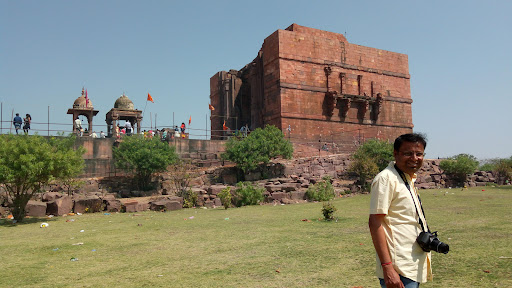
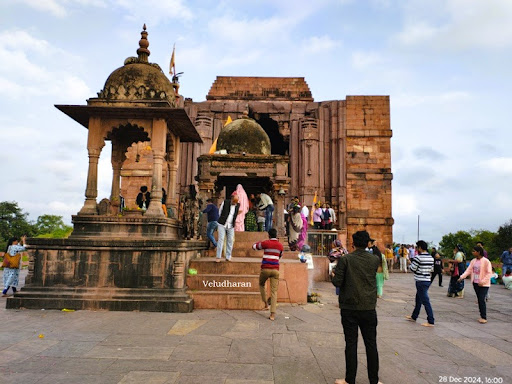
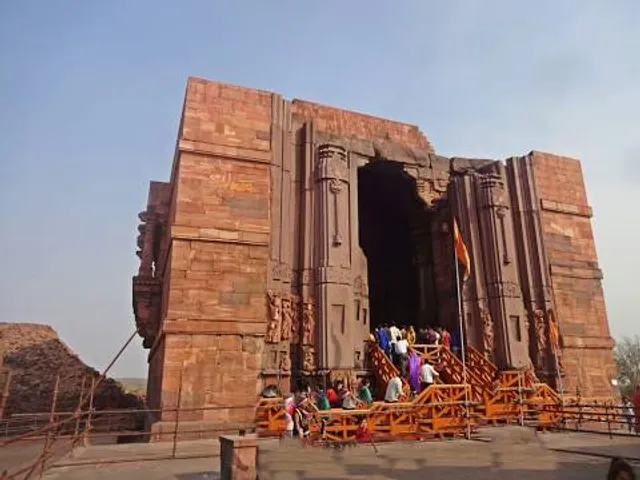
The Bhojeshwar Temple is an incomplete Hindu temple in Bhojpur village of Madhya Pradesh, India. Dedicated to Shiva, it houses a 7.5-foot high lingam in its sanctum. The temple's construction is believed to have started in the 11th century, during the reign of the Paramara king Bhoja.
Nearby attractions
Nearby restaurants
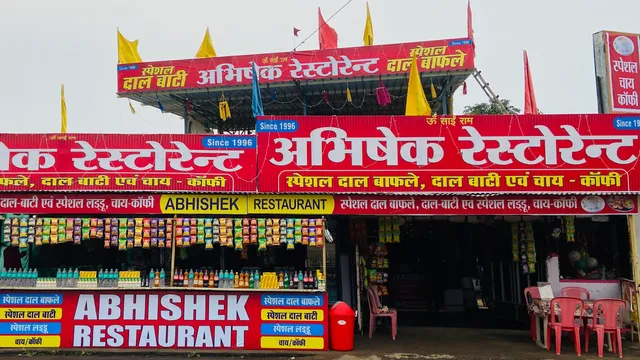
Abhishek Restaurant
Bhojpur Temple, Bhojpur, Madhya Pradesh 464993, India
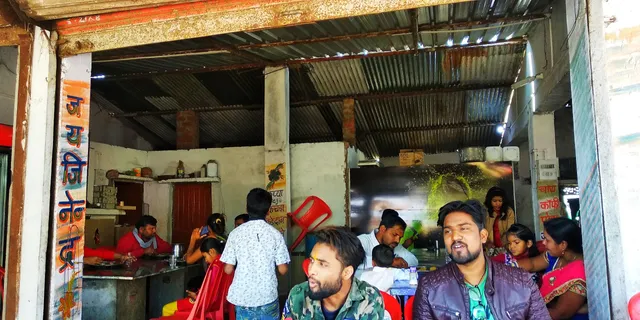
Jain Restaurant & Bhojnalaya
3HXH+JJV, Bhojpur, Madhya Pradesh 464993, India
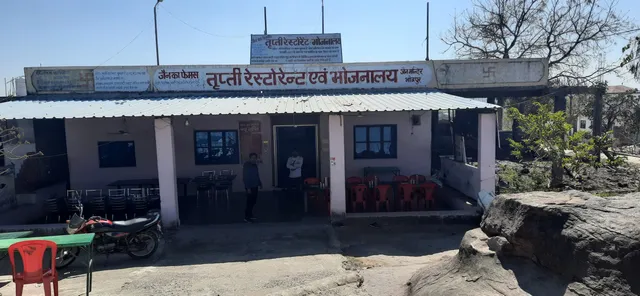
Tripti Restaurant
4H2M+26G, Bhojpur Rd, Bhojpur, Madhya Pradesh 464993, India
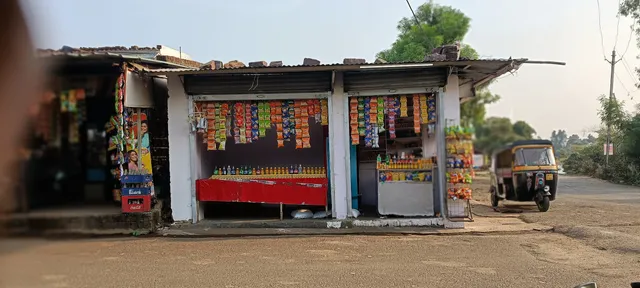
Prashant Keer coldrink Shop
3HXH+H3R, Bhojpur, Madhya Pradesh 464993, India
Abhishek Family Restaurant
Goharganj - Bhojpur Rd, Bhojpur, Kiratnagar, Madhya Pradesh 464993, India
Related posts
Keywords
Bhojeshwar Mahadev Temple, Bhojpur, Raisen tourism.Bhojeshwar Mahadev Temple, Bhojpur, Raisen hotels.Bhojeshwar Mahadev Temple, Bhojpur, Raisen bed and breakfast. flights to Bhojeshwar Mahadev Temple, Bhojpur, Raisen.Bhojeshwar Mahadev Temple, Bhojpur, Raisen attractions.Bhojeshwar Mahadev Temple, Bhojpur, Raisen restaurants.Bhojeshwar Mahadev Temple, Bhojpur, Raisen travel.Bhojeshwar Mahadev Temple, Bhojpur, Raisen travel guide.Bhojeshwar Mahadev Temple, Bhojpur, Raisen travel blog.Bhojeshwar Mahadev Temple, Bhojpur, Raisen pictures.Bhojeshwar Mahadev Temple, Bhojpur, Raisen photos.Bhojeshwar Mahadev Temple, Bhojpur, Raisen travel tips.Bhojeshwar Mahadev Temple, Bhojpur, Raisen maps.Bhojeshwar Mahadev Temple, Bhojpur, Raisen things to do.
Bhojeshwar Mahadev Temple, Bhojpur, Raisen things to do, attractions, restaurants, events info and trip planning
Bhojeshwar Mahadev Temple, Bhojpur, Raisen
IndiaMadhya PradeshRasuliyaBhojeshwar Mahadev Temple, Bhojpur, Raisen

Basic Info

Bhojeshwar Mahadev Temple, Bhojpur, Raisen

Bhojpur Temple, Bhojpur Rd, Bhojpur, Madhya Pradesh 464993, India
4.7(3.9K)
Open until 6:00 PM
Save
spot

Ratings & Description

Info

The Bhojeshwar Temple is an incomplete Hindu temple in Bhojpur village of Madhya Pradesh, India. Dedicated to Shiva, it houses a 7.5-foot high lingam in its sanctum. The temple's construction is believed to have started in the 11th century, during the reign of the Paramara king Bhoja.

Cultural
Family friendly
attractions: , restaurants: Abhishek Restaurant, Jain Restaurant & Bhojnalaya, Tripti Restaurant, Prashant Keer coldrink Shop, Abhishek Family Restaurant
logoLearn more insights from Wanderboat AI.
Open hoursSee all hours
Fri5 AM - 6 PMOpen

Plan your stay

hotel
Pet-friendly Hotels in Rasuliya
Find a cozy hotel nearby and make it a full experience.
hotel
Affordable Hotels in Rasuliya
Find a cozy hotel nearby and make it a full experience.
hotel
The Coolest Hotels You Haven't Heard Of (Yet)
Find a cozy hotel nearby and make it a full experience.
hotel
Trending Stays Worth the Hype in Rasuliya
Find a cozy hotel nearby and make it a full experience.

Reviews

Nearby restaurants of Bhojeshwar Mahadev Temple, Bhojpur, Raisen

Abhishek Restaurant

Jain Restaurant & Bhojnalaya

Tripti Restaurant

Prashant Keer coldrink Shop

Abhishek Family Restaurant

Abhishek Restaurant

Abhishek Restaurant

4.7

(270)

Click for details
Jain Restaurant & Bhojnalaya

Jain Restaurant & Bhojnalaya

3.8

(6)

Click for details
Tripti Restaurant

Tripti Restaurant

4.3

(53)

Click for details
Prashant Keer coldrink Shop

Prashant Keer coldrink Shop

3.0

(2)

Click for details
Get the Appoverlay
Get the AppOne tap to find yournext favorite spots!
Wanderboat LogoWanderboat

Your everyday Al companion for getaway ideas

CompanyAbout Us
InformationAI Trip PlannerSitemap
SocialXInstagramTiktokLinkedin
LegalTerms of ServicePrivacy Policy

Get the app

© 2025 Wanderboat. All rights reserved.
logo

Reviews of Bhojeshwar Mahadev Temple, Bhojpur, Raisen

4.7
(3,856)
avatar
5.0
6y

Bhojeshwar Temple is situated on a mountain abutting Bhojpur. It is around 32 km from the capital of Madhya Pradesh, Bhopal. Every year, thousands of devotees come to this temple to pray and purge their mind, body & soul.

Let us take a look at some astounding facts of Bhojeshwar Temple:

  1. The temple was built by the famous Raja Bhoj between 1010 BC and 1055 BC.
  2. The Shivling placed here is made of single stone and is 18-feet long. And it’s diameter is 7.5 feet.
  3. There is a slope behind the temple that is believed to be used for rolling the stones up for construction.
  4. It is said that no other similar structure in the world has this technique available to build huge complexes.
  5. This unfinished temple could have been one of the largest temples of Lord Shiva if it was completed.
  6. Archeological Survey of India is responsible for the protection of this temple.7) Since local builders are constantly procuring the stones from the remains of the temple, the place is in imminent danger.
  7. Depicting the temple plans, mouldings and pillars, there are various architectural drawings etched on the flat surfaces of the quarry
  8. The wall at the entrance features sculptures of apsaras, ganas (attendants of Shiva) and river goddesses.

Architecture: The temple has ben built on a 115 feet long, 82 feet wide and 13 feet high platform. There is a sanctum on the platform with a gigantic Shiva Lingam. The lingam has been built using three limestones which are superimposed with one over the other and it has a height of about 7.5 feet. The lingam has been placed on a square shaped platform. The sanctum's doorway is 33 feet in height and there are sculptures of apsaras engraved on the walls at the entrance gate. The temple walls are window-less and are made of large sandstone blocks. The pre-restoration walls did not have any cementing material. The northern, southern and eastern walls feature three balconies, which rest on massive brackets. These are faux balconies that are purely ornamental. They are not approachable from either inside or outside of the temple, because they are located high up on the walls, and have no openings on the interior walls. The northern wall features a makara-pranala, which provided a drainage outlet for the liquid used to bathe the lingam. Other than the sculptures on the front wall, this makara sculpture is the only carving on the external walls. 8 images of goddesses were originally placed high up on the four interior walls (two on each wall); only one of these images now remains.

Restoration and Conservation: Because of the damage caused due to rainwater during 1950 the temple had become extremely weak structurally. And therefore the, Government of India handed it over to the Archaeological survey of India in 1951, for its preservation. This was done in accordance with the Monuments Preservation act 1904. Also, during the early 1990s, the damaged steps of the temple have been repaired by the ASI and the missing ones were restored. ASI also restored the North-West corner of the temple.

Incomplete Construction: The temple's construction has been abandoned in between and abruptly. Although the reason behind the abandonment of the temple's construction is not known yet but speculations say that, it may have occurred due to some natural disaster or lack of some resources or there may have ben a war like situation which may have resulted into the abandonment.

How to reach: Public transportation is available from Bhopal bus stand (Nadra Bus Stand). Bhopal-Hoshangabad bus needs to be boarded. Get down at 11miles and from there take a shared/reserved auto to reach this temple. If you have your own vehicle you can easily visit Bhimbetka which is approximately 25 Kms from here.

There are no entry tickets. Cameras are allowed. Since it's a place of worship, footwear/shoes are not allowed into...

   Read more
avatar
5.0
42w

HISTORY, SIVA TEMPLE, BHOJPUR. The temple stands magnificently on the right bank of the river Betwa (ancient Betrouveti), over the rocky outcrop. It is about 32 km south-east of Bhopal. This unique but incomplete temple for some unknown reason is ascribed to the illustrious King Bhojdeva (1010 – 1055 CE), Paramara dynasty of central India, who was a great patron of art, architecture, and learning The King Bhojdeva was a renowned author who wrote more than eleven books, of which Samarangana- Sutradhara a treaty on architecture is most important. There is no written evidence of why the temple remained incomplete, only there have been assumptions. Probably the king died while the construction was still not completed or because King Bhojadev was involved in warfare so there was lack of funds and manpower hence the temple was left incomplete. Though what we inherited is incredible. As per a world scenario this heritage is an evident proof of contemporary construction techniques and methods. ARCHITCTURE This lofty West-facing temple is raised on a 106 ft. long. 77 ft. wide and 17 ft. high platform. The incomplete Sikhara of the Garbhagriha (Sanctum) is supported on four colossal pillars and twelve pilasters rising to a height of 40 ft. The sanctum is square on plan and enshrines a polished Siva-linga. The door- jambs of the sanctum are carved with figures of the river goddesses Ganga and Yamuna on either side. The bracket-capitals of four massive pillars are portrayed with figures of Uma- Maheswar, Lakshmi Narayan, Brahma-Savitri and Sita-Ram. Externally the temple is bereft of any ornamentation except of the front façade. The balconies on the three facades although do not have any functional use breaks the monotony of the plain walls. Probably these balconies once accommodated with deities of the Saiva family which are now scattered around the temple. The Siva temple has a garbhagriha and a jagti (the platform). A great size lingam enshrined in the garbhagriha. Garbhagriha is in plan, a simple square with an exterior dimension of 19.8 meter approximately. Inside, four massive columns, with double capital (total 11.30 meter high), supporting an incomplete but magnificent corbeled ceiling. The doorway is very high and its dwarshakha (doorjamb) is adorned with sculptures. The walls are approximately 3.30 meter wide and comparatively plain. Three bands at regular intervals on the wall and blind ornament pillared balconies on three sides of the garbagriha also relive the monotony of the soaring walls. The ambulatory path surrounding the garbhagriha is not provided, so it is a nirandhara style of Temple. The platform in front of garbhagriha is rectangular in shape. It has devkoshataka, niches in the side walls. There are some Samadhis of 18-19th cent of the Gosai constructed on the temple platform. The steps lead to the platform. The temple was never completed. It is difficult to surmise the features of the complete temple on the basis of the extant portion. On the available evidence it is a temple SPECIAL FEATURES: It is exhilarating to know that the Sivalinga with its Yonipitha rising to a height of 22 ft. is one of the tallest and grandest in the world. The huge Yonipitha made of a single block of stone broke into two pieces when a large size stone from the ceiling fell down on it. Thus, the temple was remained with a broken Yonipitha and ceiling open to the sky for centuries, Later on, the Yonipitha has been meticulously joined together and the opening of the ceiling has been covered with a fiber glass sheet decorated with inverted lotus flower which is exactly alike the original architecture remains...

   Read more
avatar
5.0
5y

Bhojpur is famous for the incomplete Bhojeśvar temple dedicated to Shiva. The site is under the protection of the Archaeological Survey of India as a monument of national importance. The temple houses one of the largest liṅga-s in India, 5.5 m (18 ft) tall and 2.3 m (7.5 ft) in circumference. It is crafted out a single rock.[6] The liṅga was repaired by the Archaeological Survey of India who also added a roof over the top to prevent weather damage.

The attribution of the temple to Bhoja is based on the testimony of Merutuṅga, who reports in the Prabandhacintāmaṇi that Bhoja bestowed on the poet Māgha "all the merit of the new Bhojasvāmin temple that he was about to build himself", and then "set out for the country of Mālava".[7] The style of the sculpture on the building confirms an early to mid-eleventh-century date for the structure.

The building as it stands consists of the inner cella or garbhagṛha, supported by massive pillars, surmounted with an elegant corbelled dome. The outer walls and superstructure of the temple were never built, but unfinished parts lie nearby.

Quarries and rock drawingsEdit


Architectural fragments in one of the quarries at Bhojpur

The temple at Bhojpur is unique in being left unfinished, with a series of large architectural parts still located in the quarries where the stones were cut and fashioned. In addition, there are a significant number of architectural drawings engraved on the flat surfaces of the quarry showing mouldings, pillars, and temple plans.[8] Also of note is the large earthen ramp behind the temple which shows how medieval craftsmen raised the large blocks of stone into position. The drawings and architectural parts have been subject to in-depth study and with a book on the subject published by the Indira Gandhi National Centre for the Arts. [9]

Jain templesEdit


Idols at the unfinished Jain Temple, Bhojpur

Bhojpur also has an unfinished Jain temple containing a 6-meter-tall statue of Bhagwan Shantinath and two statues of Bhagwan Parshvanath (left) and Bhagwan Suparshvanatha (right). On the base of the central images of Lord Shatinath there is an inscription mentioning king Bhoja, the only epigraphic evidence connecting Bhoja to the site.[10] The Suparshanath image on left has an inscription date samvat 1157 which mentions Naravarman, the nephew of king Bhoja, and mentions that the two smaller idols were installed by the grandson of Nemichandra of Vemaka community, who had installed the main image in the middle[11]The same temple complex hosts shrine for Ācārya Manatunga who wrote Bhaktamara Stotra.

Main Temple & IdolEdit

This huge temple was established in year 1100 AD. The miraculous idol of principal deity Bhagwan Shantinath in standing posture (22½ feet in height) is installed in the huge sanctum of this temple. On the both sides of this idol, 2 standing beautiful idols of Bhagwan Parshvanath & Suparshvanath (7th Teerthankar) 8 feet in height each are installed. Near the feet of Bhagwan Shantinath, artistic whisk bearers are carved on both sides.

Cave of PārvatīEdit

Immediately opposite the temple, on the west side of the gorge facing the Betwā, is a rock-shelter or cave, now occupied by religious mendicants. Popularly known as Pārvatī's Cave, the cave contains a number of sculptures and architectural fragments dating to the...

   Read more
Page 1 of 7
Previous
Next

Posts

Tanu RajTanu Raj
Bhojeshwar Temple is situated on a mountain abutting Bhojpur. It is around 32 km from the capital of Madhya Pradesh, Bhopal. Every year, thousands of devotees come to this temple to pray and purge their mind, body & soul. Let us take a look at some astounding facts of Bhojeshwar Temple: 1) The temple was built by the famous Raja Bhoj between 1010 BC and 1055 BC. 2) The Shivling placed here is made of single stone and is 18-feet long. And it’s diameter is 7.5 feet. 3) There is a slope behind the temple that is believed to be used for rolling the stones up for construction. 4) It is said that no other similar structure in the world has this technique available to build huge complexes. 5) This unfinished temple could have been one of the largest temples of Lord Shiva if it was completed. 6) Archeological Survey of India is responsible for the protection of this temple.7) Since local builders are constantly procuring the stones from the remains of the temple, the place is in imminent danger. 8) Depicting the temple plans, mouldings and pillars, there are various architectural drawings etched on the flat surfaces of the quarry 9) The wall at the entrance features sculptures of apsaras, ganas (attendants of Shiva) and river goddesses. Architecture: The temple has ben built on a 115 feet long, 82 feet wide and 13 feet high platform. There is a sanctum on the platform with a gigantic Shiva Lingam. The lingam has been built using three limestones which are superimposed with one over the other and it has a height of about 7.5 feet. The lingam has been placed on a square shaped platform. The sanctum's doorway is 33 feet in height and there are sculptures of apsaras engraved on the walls at the entrance gate. The temple walls are window-less and are made of large sandstone blocks. The pre-restoration walls did not have any cementing material. The northern, southern and eastern walls feature three balconies, which rest on massive brackets. These are faux balconies that are purely ornamental. They are not approachable from either inside or outside of the temple, because they are located high up on the walls, and have no openings on the interior walls. The northern wall features a makara-pranala, which provided a drainage outlet for the liquid used to bathe the lingam. Other than the sculptures on the front wall, this makara sculpture is the only carving on the external walls. 8 images of goddesses were originally placed high up on the four interior walls (two on each wall); only one of these images now remains. Restoration and Conservation: Because of the damage caused due to rainwater during 1950 the temple had become extremely weak structurally. And therefore the, Government of India handed it over to the Archaeological survey of India in 1951, for its preservation. This was done in accordance with the Monuments Preservation act 1904. Also, during the early 1990s, the damaged steps of the temple have been repaired by the ASI and the missing ones were restored. ASI also restored the North-West corner of the temple. Incomplete Construction: The temple's construction has been abandoned in between and abruptly. Although the reason behind the abandonment of the temple's construction is not known yet but speculations say that, it may have occurred due to some natural disaster or lack of some resources or there may have ben a war like situation which may have resulted into the abandonment. How to reach: Public transportation is available from Bhopal bus stand (Nadra Bus Stand). Bhopal-Hoshangabad bus needs to be boarded. Get down at 11miles and from there take a shared/reserved auto to reach this temple. If you have your own vehicle you can easily visit Bhimbetka which is approximately 25 Kms from here. There are no entry tickets. Cameras are allowed. Since it's a place of worship, footwear/shoes are not allowed into the sanctum.
VeludharanVeludharan
HISTORY, SIVA TEMPLE, BHOJPUR. The temple stands magnificently on the right bank of the river Betwa (ancient Betrouveti), over the rocky outcrop. It is about 32 km south-east of Bhopal. This unique but incomplete temple for some unknown reason is ascribed to the illustrious King Bhojdeva (1010 – 1055 CE), Paramara dynasty of central India, who was a great patron of art, architecture, and learning The King Bhojdeva was a renowned author who wrote more than eleven books, of which Samarangana- Sutradhara a treaty on architecture is most important. There is no written evidence of why the temple remained incomplete, only there have been assumptions. Probably the king died while the construction was still not completed or because King Bhojadev was involved in warfare so there was lack of funds and manpower hence the temple was left incomplete. Though what we inherited is incredible. As per a world scenario this heritage is an evident proof of contemporary construction techniques and methods. ARCHITCTURE This lofty West-facing temple is raised on a 106 ft. long. 77 ft. wide and 17 ft. high platform. The incomplete Sikhara of the Garbhagriha (Sanctum) is supported on four colossal pillars and twelve pilasters rising to a height of 40 ft. The sanctum is square on plan and enshrines a polished Siva-linga. The door- jambs of the sanctum are carved with figures of the river goddesses Ganga and Yamuna on either side. The bracket-capitals of four massive pillars are portrayed with figures of Uma- Maheswar, Lakshmi Narayan, Brahma-Savitri and Sita-Ram. Externally the temple is bereft of any ornamentation except of the front façade. The balconies on the three facades although do not have any functional use breaks the monotony of the plain walls. Probably these balconies once accommodated with deities of the Saiva family which are now scattered around the temple. The Siva temple has a garbhagriha and a jagti (the platform). A great size lingam enshrined in the garbhagriha. Garbhagriha is in plan, a simple square with an exterior dimension of 19.8 meter approximately. Inside, four massive columns, with double capital (total 11.30 meter high), supporting an incomplete but magnificent corbeled ceiling. The doorway is very high and its dwarshakha (doorjamb) is adorned with sculptures. The walls are approximately 3.30 meter wide and comparatively plain. Three bands at regular intervals on the wall and blind ornament pillared balconies on three sides of the garbagriha also relive the monotony of the soaring walls. The ambulatory path surrounding the garbhagriha is not provided, so it is a nirandhara style of Temple. The platform in front of garbhagriha is rectangular in shape. It has devkoshataka, niches in the side walls. There are some Samadhis of 18-19th cent of the Gosai constructed on the temple platform. The steps lead to the platform. The temple was never completed. It is difficult to surmise the features of the complete temple on the basis of the extant portion. On the available evidence it is a temple SPECIAL FEATURES: It is exhilarating to know that the Sivalinga with its Yonipitha rising to a height of 22 ft. is one of the tallest and grandest in the world. The huge Yonipitha made of a single block of stone broke into two pieces when a large size stone from the ceiling fell down on it. Thus, the temple was remained with a broken Yonipitha and ceiling open to the sky for centuries, Later on, the Yonipitha has been meticulously joined together and the opening of the ceiling has been covered with a fiber glass sheet decorated with inverted lotus flower which is exactly alike the original architecture remains of the roof.
BHUPATI MALIBHUPATI MALI
Bhojpur is famous for the incomplete Bhojeśvar temple dedicated to Shiva. The site is under the protection of the Archaeological Survey of India as a monument of national importance. The temple houses one of the largest liṅga-s in India, 5.5 m (18 ft) tall and 2.3 m (7.5 ft) in circumference. It is crafted out a single rock.[6] The liṅga was repaired by the Archaeological Survey of India who also added a roof over the top to prevent weather damage. The attribution of the temple to Bhoja is based on the testimony of Merutuṅga, who reports in the Prabandhacintāmaṇi that Bhoja bestowed on the poet Māgha "all the merit of the new Bhojasvāmin temple that he was about to build himself", and then "set out for the country of Mālava".[7] The style of the sculpture on the building confirms an early to mid-eleventh-century date for the structure. The building as it stands consists of the inner cella or garbhagṛha, supported by massive pillars, surmounted with an elegant corbelled dome. The outer walls and superstructure of the temple were never built, but unfinished parts lie nearby. Quarries and rock drawingsEdit  Architectural fragments in one of the quarries at Bhojpur The temple at Bhojpur is unique in being left unfinished, with a series of large architectural parts still located in the quarries where the stones were cut and fashioned. In addition, there are a significant number of architectural drawings engraved on the flat surfaces of the quarry showing mouldings, pillars, and temple plans.[8] Also of note is the large earthen ramp behind the temple which shows how medieval craftsmen raised the large blocks of stone into position. The drawings and architectural parts have been subject to in-depth study and with a book on the subject published by the Indira Gandhi National Centre for the Arts. [9] Jain templesEdit  Idols at the unfinished Jain Temple, Bhojpur Bhojpur also has an unfinished Jain temple containing a 6-meter-tall statue of Bhagwan Shantinath and two statues of Bhagwan Parshvanath (left) and Bhagwan Suparshvanatha (right). On the base of the central images of Lord Shatinath there is an inscription mentioning king Bhoja, the only epigraphic evidence connecting Bhoja to the site.[10] The Suparshanath image on left has an inscription date samvat 1157 which mentions Naravarman, the nephew of king Bhoja, and mentions that the two smaller idols were installed by the grandson of Nemichandra of Vemaka community, who had installed the main image in the middle[11]The same temple complex hosts shrine for Ācārya Manatunga who wrote Bhaktamara Stotra. Main Temple & IdolEdit This huge temple was established in year 1100 AD. The miraculous idol of principal deity Bhagwan Shantinath in standing posture (22½ feet in height) is installed in the huge sanctum of this temple. On the both sides of this idol, 2 standing beautiful idols of Bhagwan Parshvanath & Suparshvanath (7th Teerthankar) 8 feet in height each are installed. Near the feet of Bhagwan Shantinath, artistic whisk bearers are carved on both sides. Cave of PārvatīEdit Immediately opposite the temple, on the west side of the gorge facing the Betwā, is a rock-shelter or cave, now occupied by religious mendicants. Popularly known as Pārvatī's Cave, the cave contains a number of sculptures and architectural fragments dating to the eleventh century.
See more posts
See more posts
hotel
Find your stay

Pet-friendly Hotels in Rasuliya

Find a cozy hotel nearby and make it a full experience.

Bhojeshwar Temple is situated on a mountain abutting Bhojpur. It is around 32 km from the capital of Madhya Pradesh, Bhopal. Every year, thousands of devotees come to this temple to pray and purge their mind, body & soul. Let us take a look at some astounding facts of Bhojeshwar Temple: 1) The temple was built by the famous Raja Bhoj between 1010 BC and 1055 BC. 2) The Shivling placed here is made of single stone and is 18-feet long. And it’s diameter is 7.5 feet. 3) There is a slope behind the temple that is believed to be used for rolling the stones up for construction. 4) It is said that no other similar structure in the world has this technique available to build huge complexes. 5) This unfinished temple could have been one of the largest temples of Lord Shiva if it was completed. 6) Archeological Survey of India is responsible for the protection of this temple.7) Since local builders are constantly procuring the stones from the remains of the temple, the place is in imminent danger. 8) Depicting the temple plans, mouldings and pillars, there are various architectural drawings etched on the flat surfaces of the quarry 9) The wall at the entrance features sculptures of apsaras, ganas (attendants of Shiva) and river goddesses. Architecture: The temple has ben built on a 115 feet long, 82 feet wide and 13 feet high platform. There is a sanctum on the platform with a gigantic Shiva Lingam. The lingam has been built using three limestones which are superimposed with one over the other and it has a height of about 7.5 feet. The lingam has been placed on a square shaped platform. The sanctum's doorway is 33 feet in height and there are sculptures of apsaras engraved on the walls at the entrance gate. The temple walls are window-less and are made of large sandstone blocks. The pre-restoration walls did not have any cementing material. The northern, southern and eastern walls feature three balconies, which rest on massive brackets. These are faux balconies that are purely ornamental. They are not approachable from either inside or outside of the temple, because they are located high up on the walls, and have no openings on the interior walls. The northern wall features a makara-pranala, which provided a drainage outlet for the liquid used to bathe the lingam. Other than the sculptures on the front wall, this makara sculpture is the only carving on the external walls. 8 images of goddesses were originally placed high up on the four interior walls (two on each wall); only one of these images now remains. Restoration and Conservation: Because of the damage caused due to rainwater during 1950 the temple had become extremely weak structurally. And therefore the, Government of India handed it over to the Archaeological survey of India in 1951, for its preservation. This was done in accordance with the Monuments Preservation act 1904. Also, during the early 1990s, the damaged steps of the temple have been repaired by the ASI and the missing ones were restored. ASI also restored the North-West corner of the temple. Incomplete Construction: The temple's construction has been abandoned in between and abruptly. Although the reason behind the abandonment of the temple's construction is not known yet but speculations say that, it may have occurred due to some natural disaster or lack of some resources or there may have ben a war like situation which may have resulted into the abandonment. How to reach: Public transportation is available from Bhopal bus stand (Nadra Bus Stand). Bhopal-Hoshangabad bus needs to be boarded. Get down at 11miles and from there take a shared/reserved auto to reach this temple. If you have your own vehicle you can easily visit Bhimbetka which is approximately 25 Kms from here. There are no entry tickets. Cameras are allowed. Since it's a place of worship, footwear/shoes are not allowed into the sanctum.
Tanu Raj

Tanu Raj

hotel
Find your stay

Affordable Hotels in Rasuliya

Find a cozy hotel nearby and make it a full experience.

Get the Appoverlay
Get the AppOne tap to find yournext favorite spots!
HISTORY, SIVA TEMPLE, BHOJPUR. The temple stands magnificently on the right bank of the river Betwa (ancient Betrouveti), over the rocky outcrop. It is about 32 km south-east of Bhopal. This unique but incomplete temple for some unknown reason is ascribed to the illustrious King Bhojdeva (1010 – 1055 CE), Paramara dynasty of central India, who was a great patron of art, architecture, and learning The King Bhojdeva was a renowned author who wrote more than eleven books, of which Samarangana- Sutradhara a treaty on architecture is most important. There is no written evidence of why the temple remained incomplete, only there have been assumptions. Probably the king died while the construction was still not completed or because King Bhojadev was involved in warfare so there was lack of funds and manpower hence the temple was left incomplete. Though what we inherited is incredible. As per a world scenario this heritage is an evident proof of contemporary construction techniques and methods. ARCHITCTURE This lofty West-facing temple is raised on a 106 ft. long. 77 ft. wide and 17 ft. high platform. The incomplete Sikhara of the Garbhagriha (Sanctum) is supported on four colossal pillars and twelve pilasters rising to a height of 40 ft. The sanctum is square on plan and enshrines a polished Siva-linga. The door- jambs of the sanctum are carved with figures of the river goddesses Ganga and Yamuna on either side. The bracket-capitals of four massive pillars are portrayed with figures of Uma- Maheswar, Lakshmi Narayan, Brahma-Savitri and Sita-Ram. Externally the temple is bereft of any ornamentation except of the front façade. The balconies on the three facades although do not have any functional use breaks the monotony of the plain walls. Probably these balconies once accommodated with deities of the Saiva family which are now scattered around the temple. The Siva temple has a garbhagriha and a jagti (the platform). A great size lingam enshrined in the garbhagriha. Garbhagriha is in plan, a simple square with an exterior dimension of 19.8 meter approximately. Inside, four massive columns, with double capital (total 11.30 meter high), supporting an incomplete but magnificent corbeled ceiling. The doorway is very high and its dwarshakha (doorjamb) is adorned with sculptures. The walls are approximately 3.30 meter wide and comparatively plain. Three bands at regular intervals on the wall and blind ornament pillared balconies on three sides of the garbagriha also relive the monotony of the soaring walls. The ambulatory path surrounding the garbhagriha is not provided, so it is a nirandhara style of Temple. The platform in front of garbhagriha is rectangular in shape. It has devkoshataka, niches in the side walls. There are some Samadhis of 18-19th cent of the Gosai constructed on the temple platform. The steps lead to the platform. The temple was never completed. It is difficult to surmise the features of the complete temple on the basis of the extant portion. On the available evidence it is a temple SPECIAL FEATURES: It is exhilarating to know that the Sivalinga with its Yonipitha rising to a height of 22 ft. is one of the tallest and grandest in the world. The huge Yonipitha made of a single block of stone broke into two pieces when a large size stone from the ceiling fell down on it. Thus, the temple was remained with a broken Yonipitha and ceiling open to the sky for centuries, Later on, the Yonipitha has been meticulously joined together and the opening of the ceiling has been covered with a fiber glass sheet decorated with inverted lotus flower which is exactly alike the original architecture remains of the roof.
Veludharan

Veludharan

hotel
Find your stay

The Coolest Hotels You Haven't Heard Of (Yet)

Find a cozy hotel nearby and make it a full experience.

hotel
Find your stay

Trending Stays Worth the Hype in Rasuliya

Find a cozy hotel nearby and make it a full experience.

Bhojpur is famous for the incomplete Bhojeśvar temple dedicated to Shiva. The site is under the protection of the Archaeological Survey of India as a monument of national importance. The temple houses one of the largest liṅga-s in India, 5.5 m (18 ft) tall and 2.3 m (7.5 ft) in circumference. It is crafted out a single rock.[6] The liṅga was repaired by the Archaeological Survey of India who also added a roof over the top to prevent weather damage. The attribution of the temple to Bhoja is based on the testimony of Merutuṅga, who reports in the Prabandhacintāmaṇi that Bhoja bestowed on the poet Māgha "all the merit of the new Bhojasvāmin temple that he was about to build himself", and then "set out for the country of Mālava".[7] The style of the sculpture on the building confirms an early to mid-eleventh-century date for the structure. The building as it stands consists of the inner cella or garbhagṛha, supported by massive pillars, surmounted with an elegant corbelled dome. The outer walls and superstructure of the temple were never built, but unfinished parts lie nearby. Quarries and rock drawingsEdit  Architectural fragments in one of the quarries at Bhojpur The temple at Bhojpur is unique in being left unfinished, with a series of large architectural parts still located in the quarries where the stones were cut and fashioned. In addition, there are a significant number of architectural drawings engraved on the flat surfaces of the quarry showing mouldings, pillars, and temple plans.[8] Also of note is the large earthen ramp behind the temple which shows how medieval craftsmen raised the large blocks of stone into position. The drawings and architectural parts have been subject to in-depth study and with a book on the subject published by the Indira Gandhi National Centre for the Arts. [9] Jain templesEdit  Idols at the unfinished Jain Temple, Bhojpur Bhojpur also has an unfinished Jain temple containing a 6-meter-tall statue of Bhagwan Shantinath and two statues of Bhagwan Parshvanath (left) and Bhagwan Suparshvanatha (right). On the base of the central images of Lord Shatinath there is an inscription mentioning king Bhoja, the only epigraphic evidence connecting Bhoja to the site.[10] The Suparshanath image on left has an inscription date samvat 1157 which mentions Naravarman, the nephew of king Bhoja, and mentions that the two smaller idols were installed by the grandson of Nemichandra of Vemaka community, who had installed the main image in the middle[11]The same temple complex hosts shrine for Ācārya Manatunga who wrote Bhaktamara Stotra. Main Temple & IdolEdit This huge temple was established in year 1100 AD. The miraculous idol of principal deity Bhagwan Shantinath in standing posture (22½ feet in height) is installed in the huge sanctum of this temple. On the both sides of this idol, 2 standing beautiful idols of Bhagwan Parshvanath & Suparshvanath (7th Teerthankar) 8 feet in height each are installed. Near the feet of Bhagwan Shantinath, artistic whisk bearers are carved on both sides. Cave of PārvatīEdit Immediately opposite the temple, on the west side of the gorge facing the Betwā, is a rock-shelter or cave, now occupied by religious mendicants. Popularly known as Pārvatī's Cave, the cave contains a number of sculptures and architectural fragments dating to the eleventh century.
BHUPATI MALI

BHUPATI MALI

See more posts
See more posts