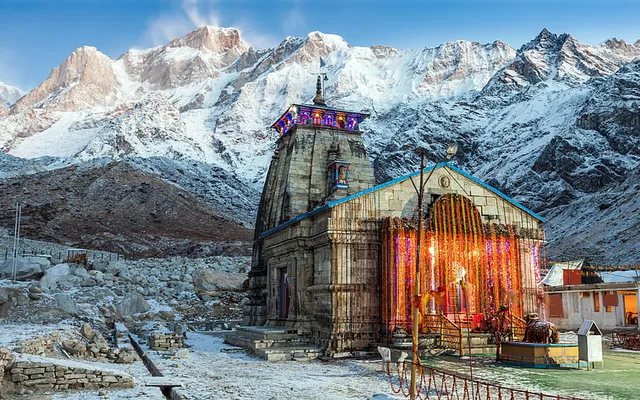
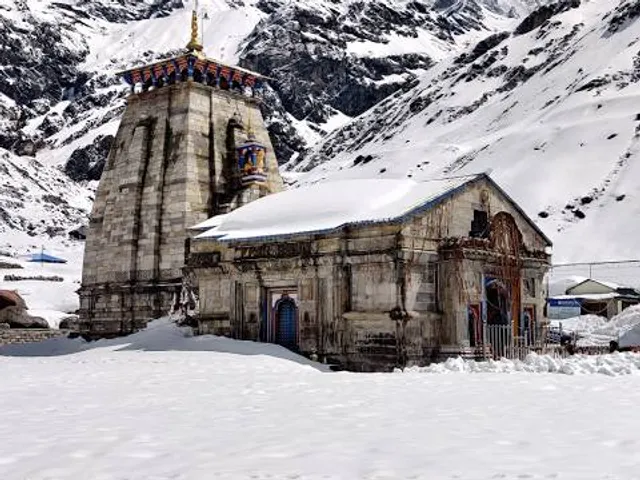
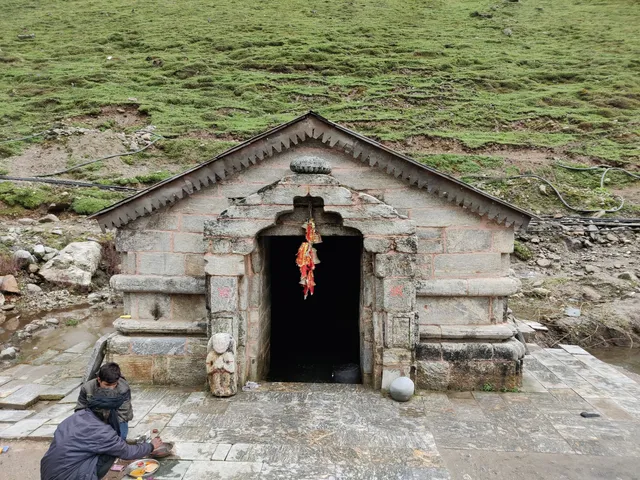
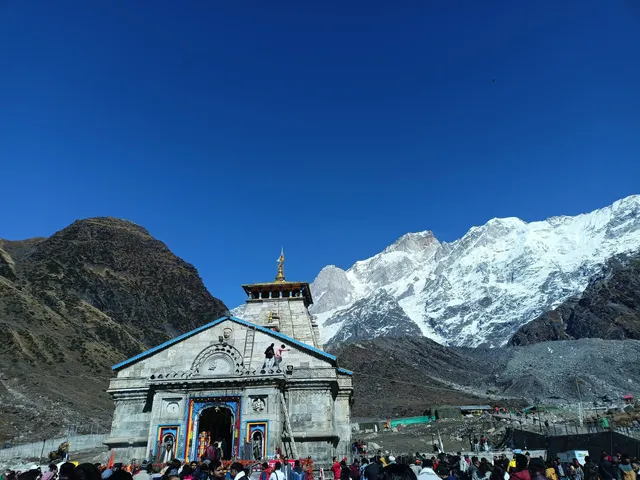
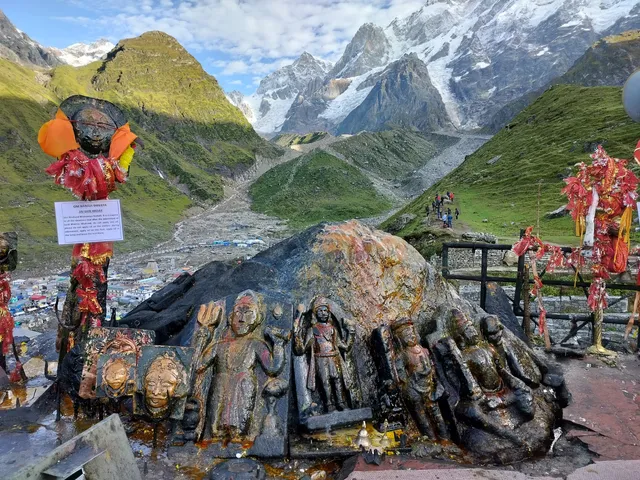
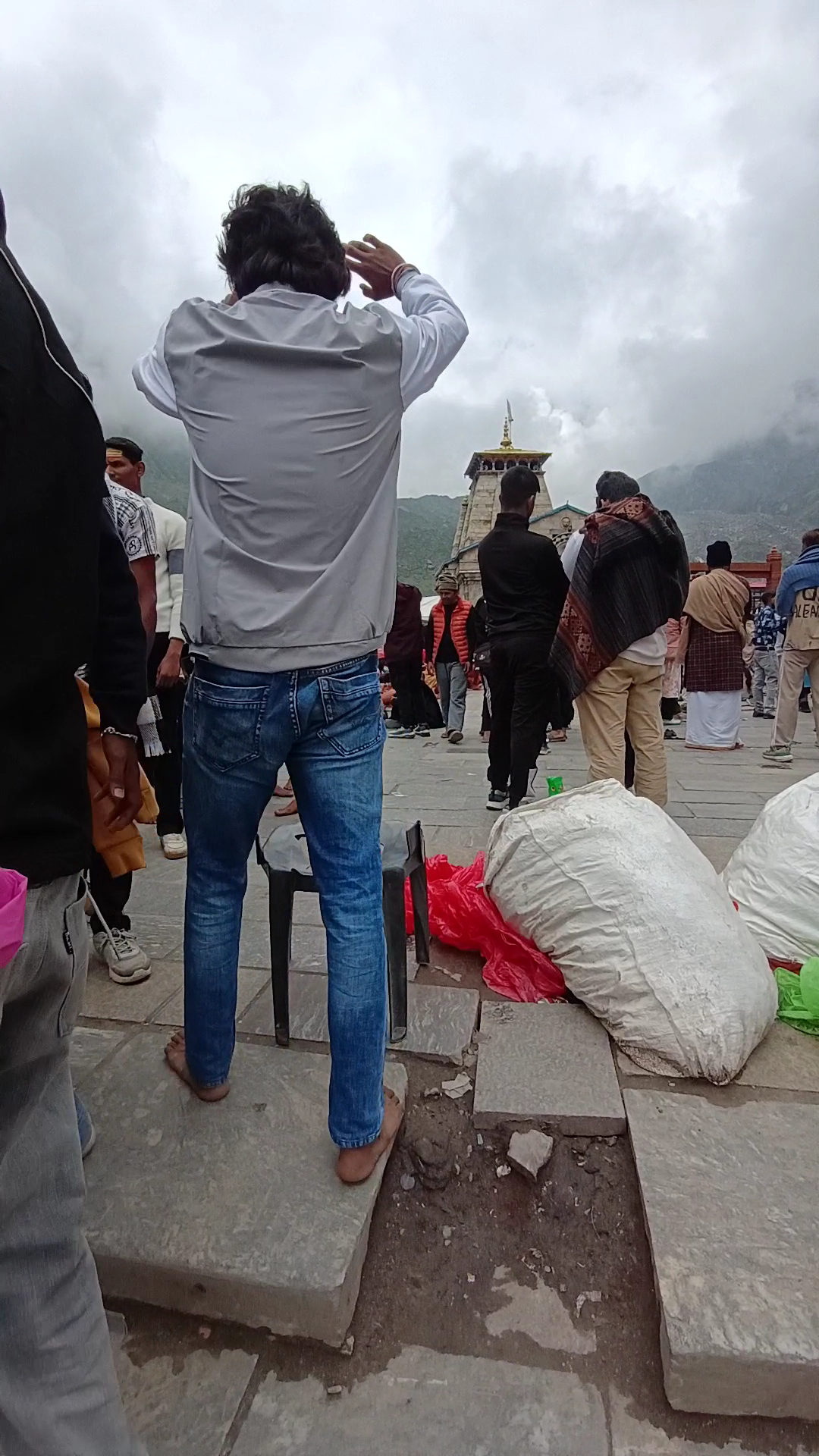
Kedarnath Temple is the famous temple of Hindus located in Rudraprayag district of Uttarakhand state of India. In the preparation of Himalaya Mountain in Uttarakhand, Kedarnath Temple is one of the four dollars and punch killed with the inclusion of twelve Jyotiling. Due to adverse climate here, this temple opens for the philosophy of April from November. This temple made from the stories made from stones are said about that it was made by the Maharajah-born Penalty of Pengues. Here is Swimming Shivling is ancient ancient. Ethanted Aadiguru Shankaracharya has rebelled this temple.
During the June 2013, Kedarnath was the most affected area due to sudden imagination and landslides in Uttarakhand and Himachal Pradesh. The houses around the temple were flowing.The main part of this historic temple and the centuries are preferred, but the entrance of the temple and the area around it has completely devastated. Kedarnath temple is an unsolved puzzle !! The Kardanath temples had called a lot about what to build. From Pandavas to Shankaracharya. Today's science states that Kedarnath temple was probably made in the 8th century. If you do not say, even this temple is existed for at least 1200 years. The land of Kedarnath is also very adverse in the 21st century. On one side, 22,000 feet high, Kedarnath Hill, on 21st66 feet high and more than 22,700 feet elevated hurricanes. There are five rivers flowing by these three mountains, Mandakini, Madhuganga, Chirgyanga, Saraswati and Sandundry. Some of these are written in this mythology. This area is the only watercard area of "Mandakini River". This temple is an artwork I am how big as an impossible work is to create an example of artwork such as artists where cold ones are cold in the huge amount and flows in water at very fast speed in the rainy season. Even today you can not go to the place with the car then why did this temple have made such a place? How can this unimpany temple be done before 1200 years in such adverse conditions? After 1200 years, even where everything is taken from the helicopter in that area, even without JCB, there is no even structure standing there. This temple stands there and not stands, but it is very strong. We should think all this at least once. Scientific guesses that if the temple would have been on the earth in the 10th century, then it would have been in a short period of "Snow era". Wadia Institute of Geology, Dehradun tested ligomatic dating on the rocks of Kedarnath temple. It is done to identify the "life of stones". The test showed that the temple was completely under the middle of the 14th century ranging in the snow till the middle of the 17th century. However, there was no harm in the creation of the temple. All in the Kedarnath in 2013 will have seen all the destructive floods. During this time, 375% of the rain was rained. "5748 people" (government figures) were killed and damaged 4200 villages in the flood flood. Indian Air Force has more than 1 million people than 10 thousand people. Everything was taken. But in the solar flood, the full structure of the Kedarnath temple was not influenced. According to the Indian Archeology Society, the 99 percent temple is completely safe in the audit of the temple of the temple even after the flood, I was a loss of the future of the 2013 and the current status was done for the construction of the "IIT Madras" on the temple "NDT test" done Also, the temple is completely safe and strong. If the temple is not passed in a very "scientist and scientific test" organized by two different institutions, so what today's reviewers say what best? Behind the animal of the temple: The direction in which this temple has been created and the place which has been selected is the only reason I am the second thing that the stone used in it is very strict and durable. The special thing is that the stone used for the creation of this temple is not available there, so think so that the stone could be taken there. So many devices were not available for those who have tailored...
Read moreMy Kedarnath Trek: A Soul-Stirring Journey to Bholenath! 🙏🏔️🕉️
From the moment I decided to embark on the Kedarnath Yatra, a mix of excitement and nervous anticipation filled me. Knowing I was heading to one of the holiest abodes of Lord Shiva, nestled high in the majestic Himalayas, was incredibly motivating! Here’s how my trek unfolded:
Starting Point: Gaurikund - The Energy is Palpable! 👣🎒 After a long journey to Gaurikund, the starting point of the trek, the atmosphere was electric! Fellow pilgrims from all walks of life, their faces filled with devotion, were bustling around, preparing for the sacred walk. The air buzzed with chants of "Har Har Mahadev!" which instantly ignited a spiritual fervor within me. The sight of the rugged mountains in the distance was both humbling and awe-inspiring! ⛰️🤩
The Initial Ascent: Testing My Limits 💪😥 The first few kilometers were definitely challenging! The uphill climb was steep in places, and the thin air started to make itself felt. My breath came in short gasps, and my legs began to ache. But with every step, the stunning views of the valley below kept me going. Lush greenery 🌳, the sound of the gushing Mandakini River 🏞️ alongside the path, and the sheer determination of my fellow yatris spurred me on. We exchanged encouraging smiles and chants, a beautiful sense of camaraderie building among us. 😊🤝
Along the Scenic Route: Nature's Grandeur Unveiled 🌸🏞️ As I continued, the landscape transformed. Waterfalls cascaded down rocky cliffs 🏞️💦, vibrant wildflowers dotted the meadows 🌸🌼, and the towering snow-capped peaks seemed to get closer with every turn. There were moments when I just had to stop, take a deep breath, and soak in the sheer beauty of nature's grandeur. It felt like Lord Shiva himself had painted this canvas! 🎨💖
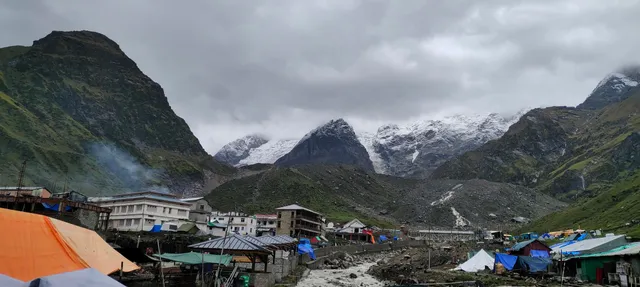
Battling the Elements: Rain and Cold 🌧️🥶 The Himalayas are unpredictable! Midway through, the weather suddenly shifted. Dark clouds rolled in, and a cold drizzle turned into a steady rain. The path became a bit slippery, and the temperature dropped. It was a test of endurance and faith! Huddling under a makeshift shelter with other pilgrims, sharing stories and sips of hot tea ☕, strengthened our resolve. "Har Har Mahadev!" echoed even louder, a collective prayer against the elements. 🙏
The Final Push: Nearing the Divine Destination ✨🚩 As I neared Kedarnath, the sight of colorful prayer flags fluttering in the wind filled me with renewed energy! The sound of temple bells grew clearer, and a sense of anticipation surged within me. The last few kilometers felt like a spiritual sprint, my weariness replaced by pure excitement. The iconic silhouette of the Kedarnath Temple against the backdrop of the majestic Kedar Dome peak was a sight that will forever be etched in my memory! 😍🏔️
Reaching Kedarnath: A Moment of Pure Bliss! 😇 Tears of Joy!😭 Finally, reaching the temple was an incredibly emotional moment. The sight of the ancient stone structure, standing strong against the harsh Himalayan terrain, filled me with awe and reverence. Joining the queue for darshan, the chants and the spiritual vibrations were overwhelming. Stepping inside the sanctum sanctorum and beholding the Jyotirlinga – that unique, powerful form of Lord Shiva – brought tears of joy to my eyes. It was a moment of profound connection, a culmination of a challenging yet deeply rewarding journey. 🙏🕉️ Tears streamed down my face, a release of all the physical and emotional exertion, replaced by pure bliss and gratitude.
The Descent: Reflecting on the Sacred Journey 👇🚶 The descent was physically demanding in a different way, putting pressure on the knees. But my heart was light, filled with the divine experience. Every step downhill was a reflection on the incredible journey I had undertaken, the breathtaking beauty I had witnessed, and the unwavering faith that had carried me through. I returned to Gaurikund with a sense of deep peace and spiritual...
Read moreKedarnath Temple, one of the holiest shrines in Hinduism, is dedicated to Deva di Dev Madadeva Shiva. It is part of the Char Dham Yatra and stands majestically amidst the snow-capped peaks of the Garhwal Himalayas in Uttarakhand, India. The temple is situated at an altitude of 3,583 meters (11,755 feet) and is surrounded by breathtaking natural beauty.
Getting There
By Air: The nearest airport is Jolly Grant Airport in Dehradun, approximately 239 km from Kedarnath. From the airport, you can hire a taxi or take a bus to reach Gaurikund, the base camp for the Kedarnath trek.
By Train: The nearest railway stations are Rishikesh (about 221 km), Haridwar (about 241 km), and Dehradun (about 270 km). From these stations, you can take a taxi or bus to Gaurikund.
By Road: Gaurikund is well-connected by road. Buses and taxis are available from major cities in Uttarakhand like Rishikesh, Haridwar, and Dehradun.
The Trek
From Gaurikund, a 16 km trek leads to Kedarnath Temple. The trek is well-marked and offers facilities like resting points, refreshments, and medical aid. Here's what you need to know:
Starting Point: Gaurikund Distance: 16 km Duration: 6-8 to 12 hours (depending on your pace and weather conditions) Route: Gaurikund – Jungle Chatti – Bheem Bali – Linchauli – Kedarnath
Best Time to Visit The temple is open to devotees from April/May (Akshaya Tritiya) to November (Kartik Purnima). The best time to visit is:
May to June: Pleasant weather and moderate crowds. September to October: After the monsoon, the weather is clear, and the crowd is less compared to the summer months.
Trekking Details Preparation
Fitness: Moderate fitness is required. Prepare with regular walking, cardio exercises, and stamina-building activities.
Packing Essentials: Warm clothes, trekking shoes, raincoat, first-aid kit, water bottle, snacks, flashlight, and personal ID.
On the Trek
Stay Hydrated: Carry sufficient water and take breaks to stay hydrated.
Acclimatization: Spend some time in Gaurikund to acclimatize to the altitude.
Safety: Trek in groups, follow the marked path, and heed local advice regarding weather conditions.
Facilities Available Accommodation
Gaurikund: Budget hotels and guesthouses. On the Trek: Basic shelters and dhabas are available at Jungle Chatti, Bheem Bali, and Linchauli.
Kedarnath: Various types of accommodation, including GMVN guesthouses, lodges, and tents. Booking in advance is recommended during peak season.
Food
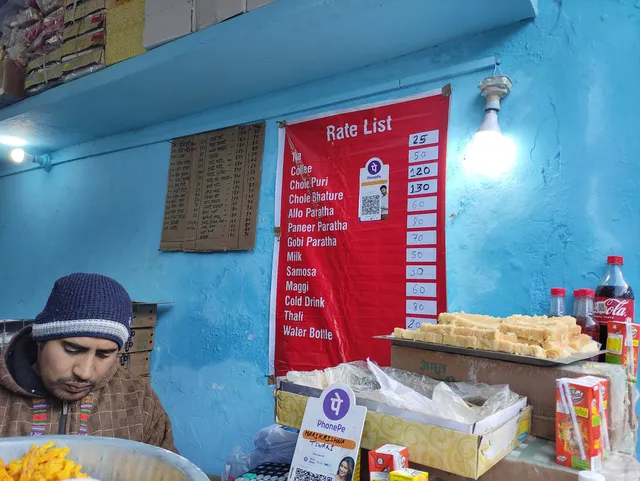
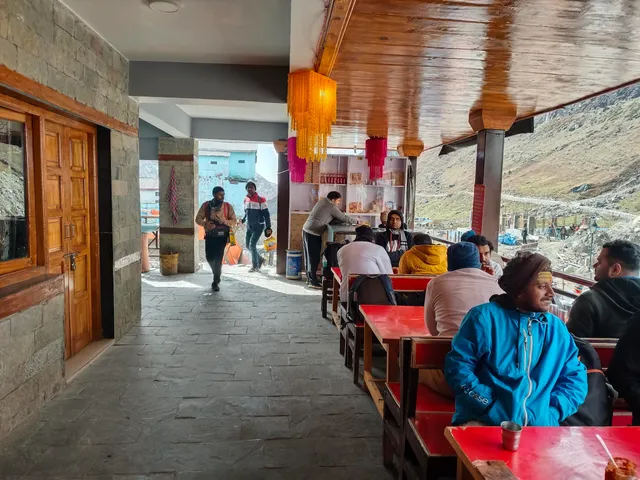
Gaurikund: Numerous eateries serving vegetarian food. On the Trek: Small stalls and dhabas offering basic meals and refreshments.
Kedarnath: Several eateries and dhabas serving simple vegetarian food. Langar (community kitchen) services are also available. Medical Facilities
Gaurikund: Basic medical facilities and pharmacies.
On the Trek: Medical aid posts at various points. Kedarnath: A dispensary and emergency medical services are available. Other Facilities
Mules and Porters: Available for hire at Gaurikund to carry luggage or for those unable to trek.
Helicopter Services: Operate from Phata, Sersi, Guptkashi, and Sitapur, reducing travel time to 10 minutes. Advance booking is essential.
Restrooms: Available at several points along the trek and in Kedarnath.
Duration of the Visit A typical itinerary includes:
Day 1: Travel to Gaurikund and overnight stay. Day 2: Trek to Kedarnath, visit the temple, and overnight stay. Day 3: Return trek to Gaurikund and travel back.
Conclusion Visiting Kedarnath Temple is a spiritually enriching experience set against the backdrop of the majestic Himalayas. Proper preparation, planning, and awareness of the facilities available can make your pilgrimage smooth and memorable. Whether trekking or using helicopter services, the journey to Kedarnath is both challenging and rewarding, offering a unique blend of adventure...
Read more