Adi Shankara was an Indian philosopher and theologian who expounded the doctrine of Advaita Vedanta. He renounced the worldly pleasures at a very young age. Shankaracharya amalgamated the ideologies of ancient ‘Advaita Vedanta’ and also explained the basic ideas of Upanishads. He advocated the oldest concept of Hinduism which explains the unification of the soul (atman) with the Supreme Soul (Nirguna Brahman). Though he is best known for popularizing ‘Advaita Vedanta’, one of Shankaracharya’s most important works is his efforts to synthesize the six sub-sects, known as ‘Shanmata.’ ‘Shanmata’, which literally translates to ‘six religions,’ is the worship of six supreme deities. Shankaracharya explained the existence of one Supreme Being (Brahman) and that the six supreme deities are part of one divine power. He also founded ‘Dashanami Sampradaya,’ which talks about leading a monastic life. While Shankaracharya was a firm believer in ancient Hinduism, he condemned the ‘Mimamsa school of Hinduism’ which was purely based on ritual practices. Throughout the course of his journey, Shankaracharya discussed his ideas with various other philosophers and fine-tuned his own teachings from time to time. Shankaracharya founded four monasteries (mathas) that continue to spread his teachings.
Birth
Shankara, as he was known before becoming a great teacher, was born into a poor Brahmin family at Kaladi, present day Kerala, India. His parents, Sivaguru and Aryamba, offered their prayers to Lord Shiva, requesting the deity to bless them with a child. Their prayers were soon answered in the form of a baby boy. A few theories suggest that Aryamba had a dream in which Lord Shiva himself promised her that he would be taking birth as her child. Hence, many consider Shankara as a reincarnation of Shiva. Shankara was educated by his mother as he lost his father when he was just seven. Aryamba played a key role in teaching Vedas and Upanishads to a young Shankara.
There is a lot of confusion regarding the birth-date of Shankara as different sources have proposed several different dates. The most accepted birth-date places him as a scholar from the first half of the 8th century CE.
Life
Throughout the course of his early life, Shankara astounded many with his knowledge intelligence. He started writing his own analysis of the Upanishads, Brahma Sutras and the Bhagavad Gita at a young age. Right from his childhood, he was keen on becoming a monk. Though his idea of becoming a monk was opposed by his mother, Shankara knew exactly what he had to do. Once he accompanied his mother to a nearby river and took a plunge into the river. Suddenly, a crocodile appeared from beneath the river and caught hold of his leg. Shankara then cried out to his mother, saying that a crocodile was pulling him into the river. When his mother felt helpless, Shankara urged her to allow him to die as a monk. As soon as Aryamba gave her consent, the crocodile spared Shankara’s life and went back into the river. Shankara was miraculously unharmed and went on to become a monk as his mother had already given him the permission to do so.
He then went in search of a guru and according to a few ancient scripts, a young Shankara walked at least 2000 kilometers before meeting Govinda Bhagavatpada. Under Govinda Bhagavatpada’s guidance, Shankara studied ‘Gaudapadiya Karika’, ‘Brahmasutra’, Vedas, and Upanishads. To his teacher’s amazement, Shankara was able to master almost all the ancient scripts in a short time. He even started writing commentaries on major religious scripts. Once he had a clear understanding of the ancient Hindu scripts, he started traveling across India, propagating ‘Advaita Vedanta’ and ‘Dashanami Sampradaya.’ During the course of his journey, Shankara’s teachings were challenged by many philosophers and thinkers. He was even involved in a number of debates pertaining to Hinduism and its beliefs, but Shankara managed to astound all his doubters with his intelligence and clarity. He then went about propagating his ideas and was soon...
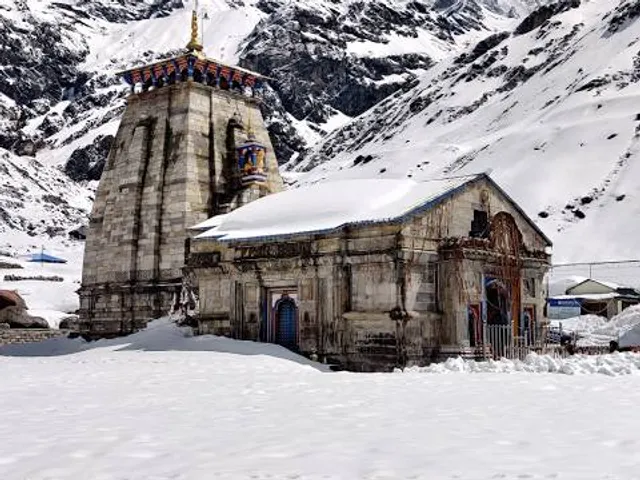
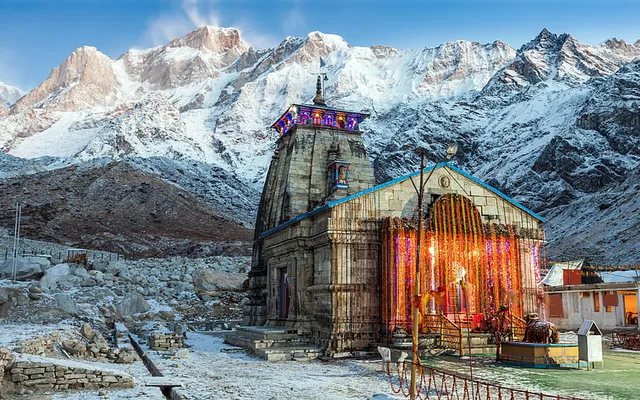
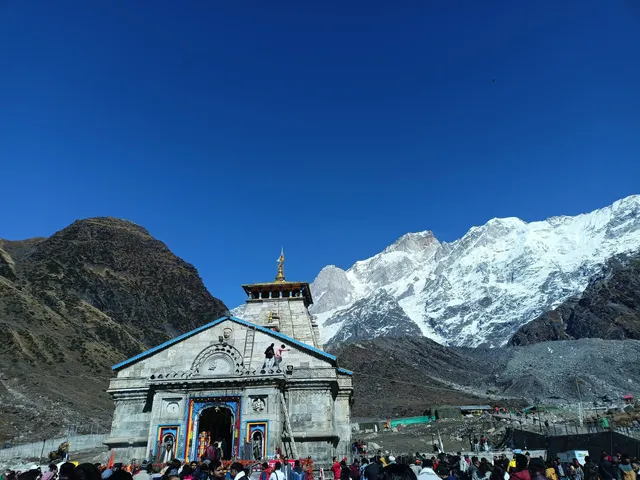
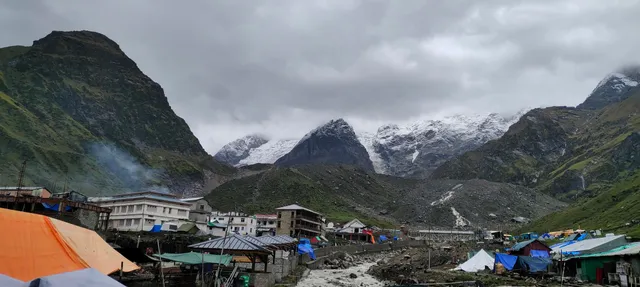
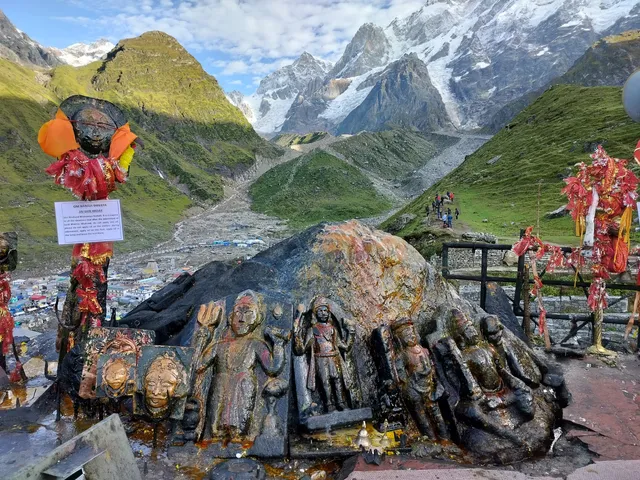
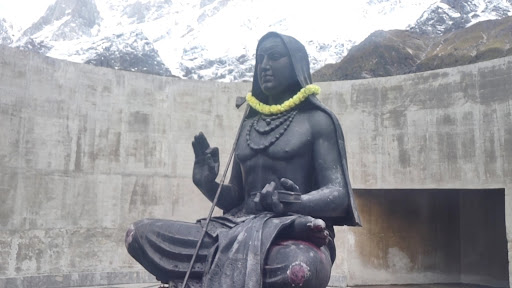
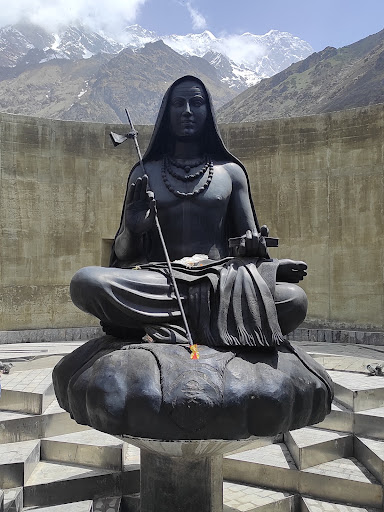
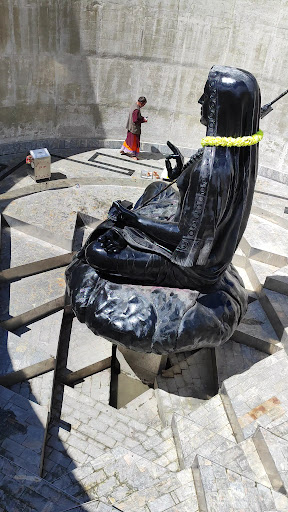
Read moreAdi Shankaracharya was born on the 5th day after Amavasya during Shukla paksha in the month of Vaishakha in 788 CE. Adi Shakaracharya was born to mother Aryamba and father Sivaguru in a small village of Kerala named Kaldi. Adi Shankaracharya was also known as Jagadguru.He preached about Vedik knowledge.It is believed that once there was a time when people were deprived with holiness and spirituality. All sages decided to go to Lord Shiva to seek his help and Lord Shiva promised them that he will be born as Adi Shankaracharya to enlighten the people in Hindu Religion about spirituality. That is how, Adi Shankaracharya was born to teach and help the followers of Hindu Religion. For this purpose Jagadguru Adi Shankaracharya founded four Math in all the four direction namely - Shringeri Math, Govardhan Math, Sharda Math, Jyotir Math. He assigned each math with the responsibility of spreading awareness among people of Hindu Religion to acquire the indepth knowledge of Vedas, Upnishads and other Holy Scriptures. These math had played a vital role in establishing Vedic knowledge among people by following the Vedas. Prime Minister Narendra Modi unveiled a 12-foot statue of Adi Shankaracharya at Kedarnath, where the acharya is believed to have attained samadhi at the age of 32 in the ninth century. Calling Shankara a reincarnation of Lord Shiva. In a lifespan of just 32 years, he is said to have visited all the important spiritual centres of the time — from Kanchi (Kancheepuram) to Kamrup (Assam), and Kashmir and the Kedar and Badri dhams, as well as Sringeri, Ujjain, Kashi, Puri, and Joshimath. He is believed to have attained samadhi at Kedarnath. The Shankaracharya statue is made up of chlorite schist, , weighing 35 tonnes, has been built at the seer’s samadhi sthal that has been redeveloped after it suffered heavy damage during the 2013 deluge. Pandavas built the temple of Kedarnath and the present temple was established by Adi Shankaracharya, who restored the glory of the shrine in the 8th century A.D. The temple is said to be more than 1,200 years old and one among the 12...
Read moreBest Time to Visit Summer season, with the warm sunlight penetrating through the high mountains, is the best time to visit most of the sightseeing and tourist attractions in Kedarnath. To truly enjoy the peace and quiet of the Samadhi, visit it in the warm and comfortable months of the summer season. The winter season is difficult to manage, with temperatures dropping below freezing point at times. Therefore, summers remains the ideal time to visit Kedarnath.
Traveler Tips •Avoid visiting Kedarnath during rainy season, as the place is prone to landslides and roads also get slippery.
Things to Do •A spring of hot water is present at the Samadhi, which is believed to remove the climatic sufferings of the devotees. Be sure to witness the spring. •Be sure to visit the Kedarnath Temple, one of the four pit stops in the Char Dham Yatra. •You can also visit the Vasuki Tal, a mesmerizing lake made up of crystal clear waters and scenic surroundings.
Interesting Facts and Trivia About Shankaracharya Samadhi Adi Shankaracharaya was born in the 8th century, and he was an extraordinary discipline at the Gurukul, learning complex and abstract philosophies of life at the tender age of 5. He visited various parts of Asia, but Kedarnath was destined to be his resting place. At the age of 32, Shankaracharaya decided to achieve the ultimate release from the miseries of his human form and achieve moksha form his human body. He achieved nirvana and it is said that he merged with the...
Read more