HTML SitemapExplore
logo
Find Things to DoFind The Best Restaurants

Arulmigu Peruvudaiyar Temple, Gangaikonda Cholapuram — Attraction in Tamil Nadu

Name
Arulmigu Peruvudaiyar Temple, Gangaikonda Cholapuram
Description
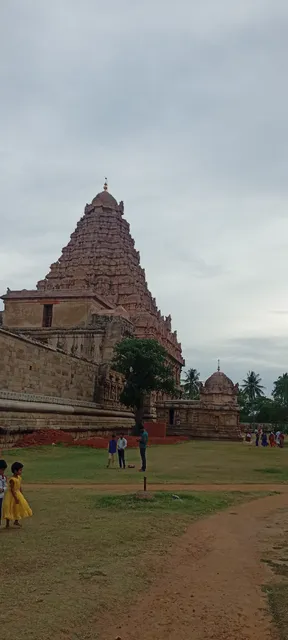
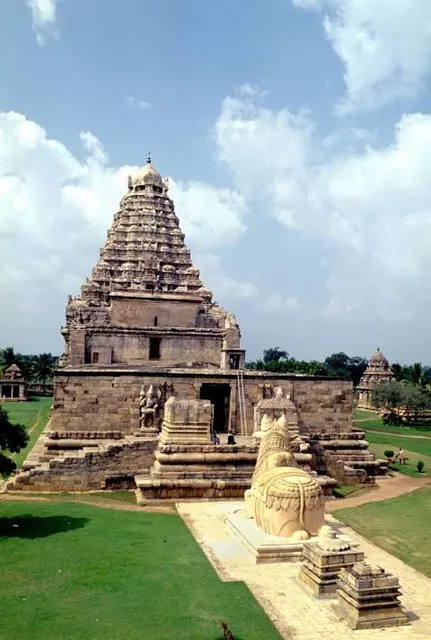
The Brihadisvara Temple is a Hindu temple dedicated to Shiva in Gangaikonda Cholapuram, Jayankondam, in the South Indian state of Tamil Nadu.
Nearby attractions
Nearby restaurants
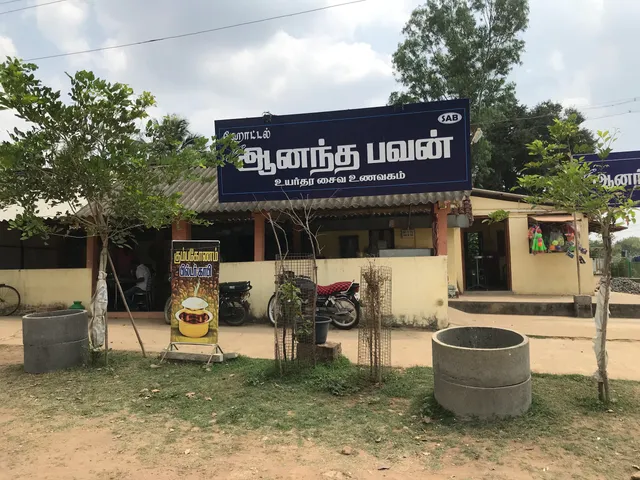
Sri Anantha Bhavan
6F42+74J, Gangaikonda Cholapuram, Tamil Nadu 612901, India
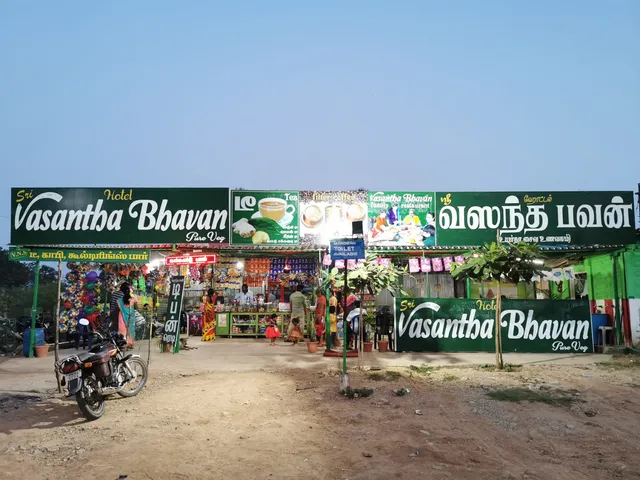
Sri Vasantha Bhavan
Gangaikonda Cholapuram, Tamil Nadu 612901, India
Aadhi Mess
6F42+X5C, Gangaikonda Cholapuram, Tamil Nadu 612901, India
Vasu Mess
Gangaikonda Cholapuram, Tamil Nadu 612901, India
Nearby hotels
Related posts
Keywords
Arulmigu Peruvudaiyar Temple, Gangaikonda Cholapuram tourism.Arulmigu Peruvudaiyar Temple, Gangaikonda Cholapuram hotels.Arulmigu Peruvudaiyar Temple, Gangaikonda Cholapuram bed and breakfast. flights to Arulmigu Peruvudaiyar Temple, Gangaikonda Cholapuram.Arulmigu Peruvudaiyar Temple, Gangaikonda Cholapuram attractions.Arulmigu Peruvudaiyar Temple, Gangaikonda Cholapuram restaurants.Arulmigu Peruvudaiyar Temple, Gangaikonda Cholapuram travel.Arulmigu Peruvudaiyar Temple, Gangaikonda Cholapuram travel guide.Arulmigu Peruvudaiyar Temple, Gangaikonda Cholapuram travel blog.Arulmigu Peruvudaiyar Temple, Gangaikonda Cholapuram pictures.Arulmigu Peruvudaiyar Temple, Gangaikonda Cholapuram photos.Arulmigu Peruvudaiyar Temple, Gangaikonda Cholapuram travel tips.Arulmigu Peruvudaiyar Temple, Gangaikonda Cholapuram maps.Arulmigu Peruvudaiyar Temple, Gangaikonda Cholapuram things to do.
Arulmigu Peruvudaiyar Temple, Gangaikonda Cholapuram things to do, attractions, restaurants, events info and trip planning
Arulmigu Peruvudaiyar Temple, Gangaikonda Cholapuram
IndiaTamil NaduArulmigu Peruvudaiyar Temple, Gangaikonda Cholapuram

Basic Info

Arulmigu Peruvudaiyar Temple, Gangaikonda Cholapuram

Gangaikonda Cholapuram, Tamil Nadu 612901, India
4.8(2.9K)
Open 24 hours
Save
spot

Ratings & Description

Info

The Brihadisvara Temple is a Hindu temple dedicated to Shiva in Gangaikonda Cholapuram, Jayankondam, in the South Indian state of Tamil Nadu.

Cultural
Accessibility
attractions: , restaurants: Sri Anantha Bhavan, Sri Vasantha Bhavan, Aadhi Mess, Vasu Mess
logoLearn more insights from Wanderboat AI.
Phone
+91 1800 4253 1111

Plan your stay

hotel
Pet-friendly Hotels in Tamil Nadu
Find a cozy hotel nearby and make it a full experience.
hotel
Affordable Hotels in Tamil Nadu
Find a cozy hotel nearby and make it a full experience.
hotel
The Coolest Hotels You Haven't Heard Of (Yet)
Find a cozy hotel nearby and make it a full experience.
hotel
Trending Stays Worth the Hype in Tamil Nadu
Find a cozy hotel nearby and make it a full experience.

Reviews

Nearby restaurants of Arulmigu Peruvudaiyar Temple, Gangaikonda Cholapuram

Sri Anantha Bhavan

Sri Vasantha Bhavan

Aadhi Mess

Vasu Mess

Sri Anantha Bhavan

Sri Anantha Bhavan

4.4

(57)

Click for details
Sri Vasantha Bhavan

Sri Vasantha Bhavan

3.5

(28)

Click for details
Aadhi Mess

Aadhi Mess

4.5

(5)

Open until 5:00 PM
Click for details
Vasu Mess

Vasu Mess

3.2

(4)

Click for details
Get the Appoverlay
Get the AppOne tap to find yournext favorite spots!
Wanderboat LogoWanderboat

Your everyday Al companion for getaway ideas

CompanyAbout Us
InformationAI Trip PlannerSitemap
SocialXInstagramTiktokLinkedin
LegalTerms of ServicePrivacy Policy

Get the app

© 2025 Wanderboat. All rights reserved.
logo

Reviews of Arulmigu Peruvudaiyar Temple, Gangaikonda Cholapuram

4.8
(2,897)
avatar
5.0
1y

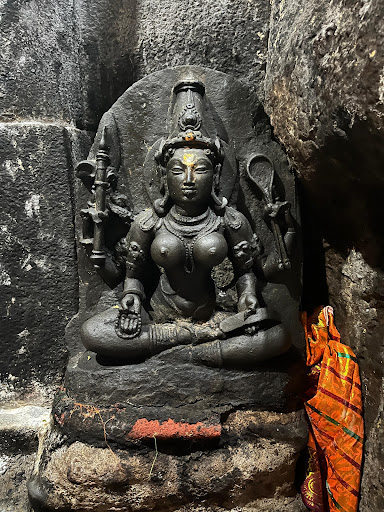
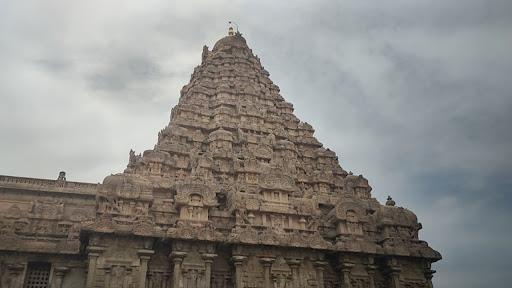
EPIGRAPHICAL IMPORTANCE. 1 Rajendra Chola I succeeded to the throne in A. D. 1012. His conquests were even more extensive and wide than those of his father and comprised the regions beyond Kalinga, viz., Kosala, Vangala and the banks of the Ganges. Gangaikonda-Chola was one of the birudas adopted by the king in consequence of these conquests. The Tiruvalangadu 2 plates distinctly state that he got the conquered chiefs of the north to carry the sacred water of the Ganges to be poured into a tank called poetically a pillar of victory' which he constructed at Gangaikonda-solapuram, a town which was founded by himself and which served as the Chola Capital for a sufficiently long time. Mudigonda-Chola 'was a surname of Rajendra-Chola I and this he must have deservedly assumed; for, in his historical introduction he is stated to have taken the Crown (mudi) of the king of Ilam (Ceylon) with that of his queen, the Crown of Sundara, the Crown of the king of Kerala and the Crown which Parasurama had deposited in Santimattivu (identified with the Kerala country), Gangaikonda-solapuram which was founded by him must have also borne the name Mudigonda-solapuram. In later times this city was occupied by the Pandya king Maravarman Sundara Pandya who boasts of having performed the anointment of heroes and victors there. At present we have very few traces of the ancient greatness of the place, besides the ruins of the palace at a short distance to the south-west of the local shrine of Brihadesvara. The plan of the building (Fig. 55) appears to have been similar to that of the Tanjore temple having the same architectural peculiarity of possessing a lofty stone erection over the sanctum, unlike most of the other edifices, which have the largest gopura at the main entrance. The crown over the tower is said to have been formed of a single block of stone, and placed in its present posture by means of an inclined plane laid out from the village of Paranam, which is a few miles off. There are still slight traces of stone bastions of ancient days. In the interior of the temple a monolithic representation of the Navagrahas (the 9 planets) is installed in the shape of a chariot with a lotus flower at the top. Surya occupies the topmost place in the chariot, and Saturn is the driver. The other planets occupy places on the sides. There is also a fine sculpture of Mahishasura-Mardini (Fig. 56), the Goddess in the aspect of the slayer of the buffalo demon. The sculptures over the outer walls of the temple are of fine workmanship. The story of Chandesa, a devotee of Siva, is depicted in a most appreciative manner in a niche in the northern wall, and it is called Chandesanugrahamurti. ARCHAEOLOGICAL INFORMATION. "The temple is enclosed in a single courtyard. It is one of the most important of the temples erected by the Cholas in the 11th century. Though not as large as the great temple at Tanjore, it is of similar plan and design and of slightly earlier date. It has the same unique architectural feature of a lofty stone tower over the shrine. In this respect these two examples are distinguished from the majority of South Indian temples which are architecturally defective in having the most lofty structures over the gateways. As with Tanjore, the crowning member of the tower the Sikara is formed of a single block of stone, said to have been placed in position by means of an inclined plane laid from the village of Paranam situated some miles to the westward in the Udayarpalayam Zamindari. Around the tower are numbers of archaic sculptures and inscriptions. In front of the shrine is an immense Nandi cut out of a block of stone. In the courtyard is a large round well entered by an underground passage with a large figure of a Yali at the entrance. The water of the Ganges is traditionally stated to brave flowed into the well, hence the name of the place. Another derivation is that the place was named after the Chola who ruled here. The temple had at one time been fortified by bastions at the four corners of the courtyard but the walls have...

   Read more
avatar
5.0
40w

Arulmigu Peruvudaiyar Thirukovil is located in Gangaikonda Chozhapuram, Tamil Nadu at a distance of 39 Kms from Mayiladuthurai Railway Station and 70 Kms from Thanjavur Periya kovil. It is more than 1000 Years old.

It is one of the UNESCO Heritage site of Great Living Chola Temples. Which includes: Brihadeshwara Temple, Thanjavur constructed by Raja Raja I in 1010, Brihadeshwara Temple, Gangaikonda Cholapuram constructed by Rajendra (Rajendra Chola) in 1035 ( to celebrate his victorious march up to the Ganga River in eastern India) and Airavatesvara Temple, Darasuram constructed by Raja Raja II in 1166. It is also a protected monument under Archaeological Survey of India (ASI).

One of the interesting features of the temple and the town itself is the way the place got its name. Rajendra I, a Chola emperor sent his army towards the Northern parts of India to get pots of water from the holy river of Ganga. On the way, they defeated several enemy armies and came home victorious. Thus he earned the nickname Gangaikonda Chola or the one who conquered the Ganges. So when he established a new capital city, he named it Gangaikonda Cholapuram and later when the temple was built, it got the same name.

Moolavar : Sri Brihadeshwarar; Ambal : Shree Peria Nayagi; Sthala Vriksham : Punnai, Vanni; Theertham : Simma Kinaru. The vimana of the Brihadeshwara Temple towers to a height of 55m and is just nine metres short of its counterpart at Thanjavur.

The Shiva Linga in the temple (13.5 feet tall) is the biggest in size among the Lingas in Tamilnadu temples. Nandi is made of a single limestone 200 metres far from the sanctum sanctorum and placed on ground. Sun light falls on the Nandhi each day reflecting onthe Linga. Even if all lights in the sanctum are put off, devoteescan see the Lord in the sunlight. This is an outstanding evidence of the rare skill of sculptors of Tamilnadu with no parallel elsewhere. The shadow of the Kalasa on the tower does not fall on ground. A rare stone called Chandrakanta stoneis installed under the Linga which has a peculiar characteristic of making the sanctum sanctorum cool in summer and warm in winter. Mother Periya Nayaki, as Her very name suggests, is 9.5 feet tall standing majestically. The Navagraha has the nine planets are made of a single stone on Lotus design peeta. This is another rare individuality of the temple.

Another star attraction of the Brihadeshwara Temple Complex, Gangaikonda Cholapuram is the intricate sculptures that adorn the walls not of the main temple but also of the subsidiary shrines.

Some of the top 10 sculptures from the Brihadeshwara Temple, Gangaikonda Cholapuram are : 1) Chandesanugraha Murti: Located on the western wall flanking the northern entrance of the ardha-mandap. It shows Shiva, with Parvati on her side, blessing Rajendra I 2) Nataraj: Located at the far end of the southern wall. It depicts Shiva the celestial dancer 3) Bhikshatana: Located on the western wall flanking the southern entrance of the ardha-mandap. It depicts Shiva as a Supreme mendicant, a person relying chiefly or exclusively on alms to survive. 4) Gajalakshmi: Located on the eastern wall flanking the southern entrance of the ardha-mandap. It shows goddess Lakshmi with a pair of elephants above her head. 5) Sarswati: Located on the eastern wall flanking the northern entrance of the ardha-mandap. It shows the godes of knowledge, music, art and wisdom 6) Madantaka: Located at the begining of the norther wall. It shows Shiva in Madntaka form 7) Kalantaka: Located at the far end of the norther wall. It depicts Shiva as conqueror of time and death 8) Bramha: Located on the central niche of the northern wall. It shows Bramha flanked by Savitri and Saraswat 9) Ardhanarishvara: Located second from the begining of the southern wall. It is a form of the Hindu deity Shiva combined with his consort Parvati 10) Ganesh: Located at the begining of the southern wall. The elphant headed god.

Temple timings are : 6am -12...

   Read more
avatar
5.0
33w

The Brihadisvara Temple is a Hindu temple dedicated to Shiva in Gangaikonda Cholapuram, Jayankondam, in the South Indian state of Tamil Nadu. Completed in 1035 CE by Rajendra Chola I as a part of his new capital, this Chola dynasty era temple is similar in design, and has a similar name, as the older 11th century, Brihadeeswarar Temple about 70 kilometres (43 mi) to the southwest in Thanjavur.2] The Gangaikonda Cholapuram Temple is smaller yet more refined than the Thanjavur Temple. Both are among the largest Shiva temples in South India and examples of Dravidian style temples. The temple is also referred to in texts as Gangaikonda Cholapuram Temple or Gangaikondacholeeswaram Temple

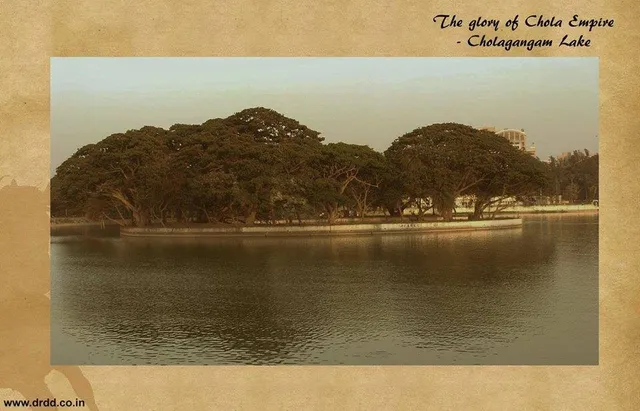
The temple was constructed in 1035 CE by Rajendra Chola I (1012-44 CE), the son of the famous Chola king Raja Raja Chola I, who built the Brihadeeswarar Temple at Thanjavur.[20] Some experts believe that the temple was built during 1020, during the 6th regnal year, but inscriptions indicate the 20th regnal year, which is 1035 CE. Rajendra wanted to emulate the temple built by his father after his victory in a campaign across India that Chola era texts state covered Karnataka, Andhra Pradesh, Odisha, and Bengal. After his victory, he demanded that the defeated kingdoms send pots of Ganges River water and pour them into the temple's well.[15] The well was originally called Cholagangam as it was filled with water from Ganges

Rajendra I, as is Tamil tradition, then assumed the name Gangaikonda Cholan, meaning the one who conquered the Ganges. He established Gangaikonda Cholapuram as his capital from the earlier Chola capital of Thanjavur. Gangaikonda Cholapuram remained the Chola capital for the next 250 years.[30] Rajendra I built the entire capital with several temples using plans and infrastructure recommended in Tamil Vastu and Agama Sastra texts.[15] These included a Dharma Sasta, Vishnu and other temples. However, these structures were destroyed in the late 13th and 14th centuries except this temple. The other Chola landmarks, clearly shown by soil covered mounds and excavated broken pillar stumps and brick walls, are found over a large area nearby.[15 The earliest inscription that mentions this city by name is dated 1029, while the earliest reference to Rajendra I's expedition towards the Ganges river in the north is dated 1023. The first gift to the newly built Gangaikonda Cholapuram temple is dated 1035.[15]

Rajendra I, states Dehejia, must have involved the same craftsmen used by his father and transferred them from Thanjavur.[20] Most or all of the Chola kings from Rajendra I had their coronation at Gangaikonda Cholapuram. Archaeological excavations have revealed fort walls and palace remains a few kilometers from this temple. It is believed that Kulothunga Chola I, Rajendra's successor, built fortifications around the city.[31]

The reasons for the city's destruction are unclear. According to Vasanthi, the Pandyas who defeated the Cholas during the later part of 13th-century "may have razed the city to ground" to avenge their previous defeats.[31] However, it is unclear why other temples were destroyed and this temple was spared, as well as why there are around twenty inscriptions from later Cholas, Pandyas and Vijayanagar Empires indicating various gifts and grants to this temple if they previously razed this place.[32]

An alternative theory links the destruction to the raids, plunder and wars, particularly with the invasion of the capital city and the territories, that were earlier a part of the Chola and Madurai Empires, by the armies of the Delhi Sultanate led by the Muslim commander Malik Kafur in 1311, followed by Khusrau Khan in 1314, and Muhammad bin...

   Read more

Page 1 of 7
Previous
Next

Posts

VeludharanVeludharan
EPIGRAPHICAL IMPORTANCE. 1 Rajendra Chola I succeeded to the throne in A. D. 1012. His conquests were even more extensive and wide than those of his father and comprised the regions beyond Kalinga, viz., Kosala, Vangala and the banks of the Ganges. Gangaikonda-Chola was one of the birudas adopted by the king in consequence of these conquests. The Tiruvalangadu 2 plates distinctly state that he got the conquered chiefs of the north to carry the sacred water of the Ganges to be poured into a tank called poetically a pillar of victory' which he constructed at Gangaikonda-solapuram, a town which was founded by himself and which served as the Chola Capital for a sufficiently long time. Mudigonda-Chola 'was a surname of Rajendra-Chola I and this he must have deservedly assumed; for, in his historical introduction he is stated to have taken the Crown (mudi) of the king of Ilam (Ceylon) with that of his queen, the Crown of Sundara, the Crown of the king of Kerala and the Crown which Parasurama had deposited in Santimattivu (identified with the Kerala country), Gangaikonda-solapuram which was founded by him must have also borne the name Mudigonda-solapuram. In later times this city was occupied by the Pandya king Maravarman Sundara Pandya who boasts of having performed the anointment of heroes and victors there. At present we have very few traces of the ancient greatness of the place, besides the ruins of the palace at a short distance to the south-west of the local shrine of Brihadesvara. The plan of the building (Fig. 55) appears to have been similar to that of the Tanjore temple having the same architectural peculiarity of possessing a lofty stone erection over the sanctum, unlike most of the other edifices, which have the largest gopura at the main entrance. The crown over the tower is said to have been formed of a single block of stone, and placed in its present posture by means of an inclined plane laid out from the village of Paranam, which is a few miles off. There are still slight traces of stone bastions of ancient days. In the interior of the temple a monolithic representation of the Navagrahas (the 9 planets) is installed in the shape of a chariot with a lotus flower at the top. Surya occupies the topmost place in the chariot, and Saturn is the driver. The other planets occupy places on the sides. There is also a fine sculpture of Mahishasura-Mardini (Fig. 56), the Goddess in the aspect of the slayer of the buffalo demon. The sculptures over the outer walls of the temple are of fine workmanship. The story of Chandesa, a devotee of Siva, is depicted in a most appreciative manner in a niche in the northern wall, and it is called Chandesanugrahamurti. ARCHAEOLOGICAL INFORMATION. "The temple is enclosed in a single courtyard. It is one of the most important of the temples erected by the Cholas in the 11th century. Though not as large as the great temple at Tanjore, it is of similar plan and design and of slightly earlier date. It has the same unique architectural feature of a lofty stone tower over the shrine. In this respect these two examples are distinguished from the majority of South Indian temples which are architecturally defective in having the most lofty structures over the gateways. As with Tanjore, the crowning member of the tower the Sikara is formed of a single block of stone, said to have been placed in position by means of an inclined plane laid from the village of Paranam situated some miles to the westward in the Udayarpalayam Zamindari. Around the tower are numbers of archaic sculptures and inscriptions. In front of the shrine is an immense Nandi cut out of a block of stone. In the courtyard is a large round well entered by an underground passage with a large figure of a Yali at the entrance. The water of the Ganges is traditionally stated to brave flowed into the well, hence the name of the place. Another derivation is that the place was named after the Chola who ruled here. The temple had at one time been fortified by bastions at the four corners of the courtyard but the walls have been demolished.
Ankur K. RayAnkur K. Ray
Brihadeeswarar Temple Brihadeeshwara Temple (Peruvudaiyar Kovil) is a Hindu temple dedicated to Shiva located in Thanjavur in the Indian state of Tamil Nadu. It is also known as Periya Kovil, RajaRajeswara Temple and Rajarajesvaram. It is one of the largest temples in India and is an example of Dravidian architecture during the Chola period. Built by emperor Raja Raja Chola I and completed in 1010 AD, the temple turned 1000 years old in 2010. The temple is part of the UNESCO World Heritage Site known as the "Great Living Chola Temples", with the other two being the Brihadeeswarar Temple, Gangaikonda Cholapuram andAiravatesvara temple. The temple stands amidst fortified walls that were probably added in the 16th century. The vimanam (temple tower) is 216 ft (66 m) high and is the tallest in the world. The Kumbam (the apex or the bulbous structure on the top) of the temple is carved out of a single rock and weighs around 80 tons. There is a big statue of Nandi (sacred bull), carved out of a single rock measuring about 16 ft (4.9 m) long and 13 ft (4.0 m) high at the entrance. The entire temple structure is made out of granite, the nearest sources of which are about 60 km to the west of temple. The temple is one of the most visited tourist attractions in Tamil Nadu. GANGAIKONDA CHOLAPURAM Ariyalur is best known for the Gangaikondacholisvarar temple in Gangaikondacholapuram, the biggest temple constructed during the reign of Rajendra–I in Ariyalur region. Following the conquest of the Gangetic plains in A.D. 1023 Rajendra–I built a great city called Gangaikondacholapauram and a Siva temple Gangaikondacholisvarar and a lake Chola Gangam in commemoration of his victory. The place, the temple and the lake (Chola Gangam) are the living embodiments of the heroism of the Tamils who unfurled the Chola‘s Tiger flag on the banks of the River Ganges. He also shifted his capital from Thanjavur to this newly built town. From his period to the end of the Chola family rule in A.D.1279 this city was the capital for the Chola Empire for a period of 256 years. The gigantic stone temple which he built in this place is rich repository of beautiful sculptures of middle Chola period. This city is celebrated in the literature of Muvar ula of Ottakuttar and Kalingattuparani of Jayankondar. Rajendra’s Gangetic expedition was over by his 11th regal year (A.D.1023). The earliest reference which mentions the city of Gangaikondacholapuram is a record of A. D. 1027 of him. Hence it is evident that the city was built in memory of his great victory between A.D. 1023 and 1027. The recently discovered Esalam Copper plates of A.D. 1036 of Rajendra–I give concrete evidence that he built the Gangaikondacholisvarar temple. Another record of A.D. 1068 of Virarajendra in Gangaikondacholapuram which is the earliest record in the temple mentions about the grant of villages to the Gangaikondacholisvarar temple by Rajendra-I in his 24th year (A.D. 1036). These evidences indicate that the siva temple was built between A.D. 1023 and 1036 although the earliest extant record in this big temple belongs to A. D. 1068 of Virarajendra. This temple is a living history of the Cholas in stone from the period of Rajendra-I and a beautiful gallery of Chola art and architecture. Many sculptures brought from Andhra, Karnataka and Bengal as war trophies are also preserved in the temple and in the nearby villages. Chandesura Anugraha Murthy and Sarasvathy are the most beautiful sculptures of the temple. Big temple, Tanjore, Tamilnadu - India (Bharat)
sreekanthnaidu galisreekanthnaidu gali
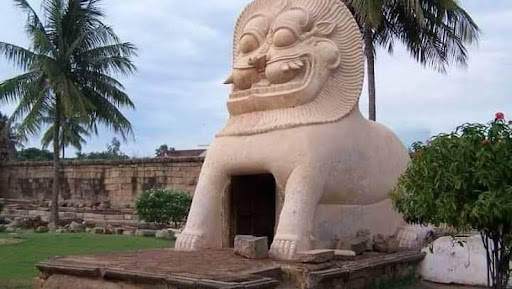
A Hidden Gem of Chola Architecture The name “Anaconda” is believed to have come from a statue at Gangaikonda Cholapuram. • On the right side of the temple’s entrance, there is a guardian statue (Dvarapala). • In this sculpture, a huge snake is swallowing an elephant, and the guardian is stopping it with his right leg. • In Tamil, “Aana” (ஆனை) means Elephant, and “Konda” (கொண்ட) means the one who swallowed. So, “Aana-Konda” means “the snake that swallowed an elephant.” • Since the guardian is even bigger than both, it shows the power of divine protection. • European travelers may have seen this statue and later used the word “Anaconda” for the giant snake found in South America. This temple’s sculpture might be the true origin of the name Anaconda! Gangaikonda Cholapuram’s Brihadeeswarar Temple is an architectural marvel that rivals its counterpart in Thanjavur. Built by Rajendra Chola I in the 11th century, this temple showcases the grandeur of the Chola dynasty. The intricate carvings, massive Nandi statue, and the majestic Shiva Lingam create a divine and awe-inspiring atmosphere. The temple complex is well-maintained, with lush green lawns adding to its serenity. Unlike the more crowded Thanjavur temple, this site is relatively peaceful, making it perfect for those who want to soak in its history and spiritual essence. A must-visit for history enthusiasts, photographers, and devotees alike! Tips: ✔️ Visit during early mornings or evenings for a peaceful experience. ✔️ Don’t miss the finely sculpted lion-well and the inscriptions on the temple walls. ✔️ No entry fee, and photography is allowed. Historical Background & Story of Gangaikonda Cholapuram Who Built It & Why? Gangaikonda Cholapuram was built by Rajendra Chola I, son of the great Raja Raja Chola I, around 1025 CE. After his victorious campaign in North India, where he defeated the Pala dynasty and reached the Ganges River, he wanted to establish a new capital that symbolized his power. He brought sacred Ganges water and consecrated this temple, hence the name Gangaikonda Cholapuram (meaning “The city of the Chola who conquered the Ganges”). Architectural Significance • Inspired by the Brihadeeswarar Temple in Thanjavur but has softer, more intricate carvings. • The Shiva Lingam here is one of the largest in South India, with a height of 13 feet. • The Nandi (sacred bull) faces the sanctum and is beautifully carved. • The temple has unique sculptures, including the depiction of Chandesanugrahamurti, showing Lord Shiva blessing Chandesha, a rarity in Dravidian temples. Decline & Rediscovery After the fall of the Cholas, the city was largely abandoned, and the temple lost its former glory. The later Pandyas, Vijayanagara rulers, and Marathas protected it to some extent, but many of its treasures were lost over time. Today, it stands as a UNESCO-listed heritage site and a testament to Tamil Nadu’s glorious past.
See more posts
See more posts
hotel
Find your stay

Pet-friendly Hotels in Tamil Nadu

Find a cozy hotel nearby and make it a full experience.

EPIGRAPHICAL IMPORTANCE. 1 Rajendra Chola I succeeded to the throne in A. D. 1012. His conquests were even more extensive and wide than those of his father and comprised the regions beyond Kalinga, viz., Kosala, Vangala and the banks of the Ganges. Gangaikonda-Chola was one of the birudas adopted by the king in consequence of these conquests. The Tiruvalangadu 2 plates distinctly state that he got the conquered chiefs of the north to carry the sacred water of the Ganges to be poured into a tank called poetically a pillar of victory' which he constructed at Gangaikonda-solapuram, a town which was founded by himself and which served as the Chola Capital for a sufficiently long time. Mudigonda-Chola 'was a surname of Rajendra-Chola I and this he must have deservedly assumed; for, in his historical introduction he is stated to have taken the Crown (mudi) of the king of Ilam (Ceylon) with that of his queen, the Crown of Sundara, the Crown of the king of Kerala and the Crown which Parasurama had deposited in Santimattivu (identified with the Kerala country), Gangaikonda-solapuram which was founded by him must have also borne the name Mudigonda-solapuram. In later times this city was occupied by the Pandya king Maravarman Sundara Pandya who boasts of having performed the anointment of heroes and victors there. At present we have very few traces of the ancient greatness of the place, besides the ruins of the palace at a short distance to the south-west of the local shrine of Brihadesvara. The plan of the building (Fig. 55) appears to have been similar to that of the Tanjore temple having the same architectural peculiarity of possessing a lofty stone erection over the sanctum, unlike most of the other edifices, which have the largest gopura at the main entrance. The crown over the tower is said to have been formed of a single block of stone, and placed in its present posture by means of an inclined plane laid out from the village of Paranam, which is a few miles off. There are still slight traces of stone bastions of ancient days. In the interior of the temple a monolithic representation of the Navagrahas (the 9 planets) is installed in the shape of a chariot with a lotus flower at the top. Surya occupies the topmost place in the chariot, and Saturn is the driver. The other planets occupy places on the sides. There is also a fine sculpture of Mahishasura-Mardini (Fig. 56), the Goddess in the aspect of the slayer of the buffalo demon. The sculptures over the outer walls of the temple are of fine workmanship. The story of Chandesa, a devotee of Siva, is depicted in a most appreciative manner in a niche in the northern wall, and it is called Chandesanugrahamurti. ARCHAEOLOGICAL INFORMATION. "The temple is enclosed in a single courtyard. It is one of the most important of the temples erected by the Cholas in the 11th century. Though not as large as the great temple at Tanjore, it is of similar plan and design and of slightly earlier date. It has the same unique architectural feature of a lofty stone tower over the shrine. In this respect these two examples are distinguished from the majority of South Indian temples which are architecturally defective in having the most lofty structures over the gateways. As with Tanjore, the crowning member of the tower the Sikara is formed of a single block of stone, said to have been placed in position by means of an inclined plane laid from the village of Paranam situated some miles to the westward in the Udayarpalayam Zamindari. Around the tower are numbers of archaic sculptures and inscriptions. In front of the shrine is an immense Nandi cut out of a block of stone. In the courtyard is a large round well entered by an underground passage with a large figure of a Yali at the entrance. The water of the Ganges is traditionally stated to brave flowed into the well, hence the name of the place. Another derivation is that the place was named after the Chola who ruled here. The temple had at one time been fortified by bastions at the four corners of the courtyard but the walls have been demolished.
Veludharan

Veludharan

hotel
Find your stay

Affordable Hotels in Tamil Nadu

Find a cozy hotel nearby and make it a full experience.

Get the Appoverlay
Get the AppOne tap to find yournext favorite spots!
Brihadeeswarar Temple Brihadeeshwara Temple (Peruvudaiyar Kovil) is a Hindu temple dedicated to Shiva located in Thanjavur in the Indian state of Tamil Nadu. It is also known as Periya Kovil, RajaRajeswara Temple and Rajarajesvaram. It is one of the largest temples in India and is an example of Dravidian architecture during the Chola period. Built by emperor Raja Raja Chola I and completed in 1010 AD, the temple turned 1000 years old in 2010. The temple is part of the UNESCO World Heritage Site known as the "Great Living Chola Temples", with the other two being the Brihadeeswarar Temple, Gangaikonda Cholapuram andAiravatesvara temple. The temple stands amidst fortified walls that were probably added in the 16th century. The vimanam (temple tower) is 216 ft (66 m) high and is the tallest in the world. The Kumbam (the apex or the bulbous structure on the top) of the temple is carved out of a single rock and weighs around 80 tons. There is a big statue of Nandi (sacred bull), carved out of a single rock measuring about 16 ft (4.9 m) long and 13 ft (4.0 m) high at the entrance. The entire temple structure is made out of granite, the nearest sources of which are about 60 km to the west of temple. The temple is one of the most visited tourist attractions in Tamil Nadu. GANGAIKONDA CHOLAPURAM Ariyalur is best known for the Gangaikondacholisvarar temple in Gangaikondacholapuram, the biggest temple constructed during the reign of Rajendra–I in Ariyalur region. Following the conquest of the Gangetic plains in A.D. 1023 Rajendra–I built a great city called Gangaikondacholapauram and a Siva temple Gangaikondacholisvarar and a lake Chola Gangam in commemoration of his victory. The place, the temple and the lake (Chola Gangam) are the living embodiments of the heroism of the Tamils who unfurled the Chola‘s Tiger flag on the banks of the River Ganges. He also shifted his capital from Thanjavur to this newly built town. From his period to the end of the Chola family rule in A.D.1279 this city was the capital for the Chola Empire for a period of 256 years. The gigantic stone temple which he built in this place is rich repository of beautiful sculptures of middle Chola period. This city is celebrated in the literature of Muvar ula of Ottakuttar and Kalingattuparani of Jayankondar. Rajendra’s Gangetic expedition was over by his 11th regal year (A.D.1023). The earliest reference which mentions the city of Gangaikondacholapuram is a record of A. D. 1027 of him. Hence it is evident that the city was built in memory of his great victory between A.D. 1023 and 1027. The recently discovered Esalam Copper plates of A.D. 1036 of Rajendra–I give concrete evidence that he built the Gangaikondacholisvarar temple. Another record of A.D. 1068 of Virarajendra in Gangaikondacholapuram which is the earliest record in the temple mentions about the grant of villages to the Gangaikondacholisvarar temple by Rajendra-I in his 24th year (A.D. 1036). These evidences indicate that the siva temple was built between A.D. 1023 and 1036 although the earliest extant record in this big temple belongs to A. D. 1068 of Virarajendra. This temple is a living history of the Cholas in stone from the period of Rajendra-I and a beautiful gallery of Chola art and architecture. Many sculptures brought from Andhra, Karnataka and Bengal as war trophies are also preserved in the temple and in the nearby villages. Chandesura Anugraha Murthy and Sarasvathy are the most beautiful sculptures of the temple. Big temple, Tanjore, Tamilnadu - India (Bharat)
Ankur K. Ray

Ankur K. Ray

hotel
Find your stay

The Coolest Hotels You Haven't Heard Of (Yet)

Find a cozy hotel nearby and make it a full experience.

hotel
Find your stay

Trending Stays Worth the Hype in Tamil Nadu

Find a cozy hotel nearby and make it a full experience.

A Hidden Gem of Chola Architecture The name “Anaconda” is believed to have come from a statue at Gangaikonda Cholapuram. • On the right side of the temple’s entrance, there is a guardian statue (Dvarapala). • In this sculpture, a huge snake is swallowing an elephant, and the guardian is stopping it with his right leg. • In Tamil, “Aana” (ஆனை) means Elephant, and “Konda” (கொண்ட) means the one who swallowed. So, “Aana-Konda” means “the snake that swallowed an elephant.” • Since the guardian is even bigger than both, it shows the power of divine protection. • European travelers may have seen this statue and later used the word “Anaconda” for the giant snake found in South America. This temple’s sculpture might be the true origin of the name Anaconda! Gangaikonda Cholapuram’s Brihadeeswarar Temple is an architectural marvel that rivals its counterpart in Thanjavur. Built by Rajendra Chola I in the 11th century, this temple showcases the grandeur of the Chola dynasty. The intricate carvings, massive Nandi statue, and the majestic Shiva Lingam create a divine and awe-inspiring atmosphere. The temple complex is well-maintained, with lush green lawns adding to its serenity. Unlike the more crowded Thanjavur temple, this site is relatively peaceful, making it perfect for those who want to soak in its history and spiritual essence. A must-visit for history enthusiasts, photographers, and devotees alike! Tips: ✔️ Visit during early mornings or evenings for a peaceful experience. ✔️ Don’t miss the finely sculpted lion-well and the inscriptions on the temple walls. ✔️ No entry fee, and photography is allowed. Historical Background & Story of Gangaikonda Cholapuram Who Built It & Why? Gangaikonda Cholapuram was built by Rajendra Chola I, son of the great Raja Raja Chola I, around 1025 CE. After his victorious campaign in North India, where he defeated the Pala dynasty and reached the Ganges River, he wanted to establish a new capital that symbolized his power. He brought sacred Ganges water and consecrated this temple, hence the name Gangaikonda Cholapuram (meaning “The city of the Chola who conquered the Ganges”). Architectural Significance • Inspired by the Brihadeeswarar Temple in Thanjavur but has softer, more intricate carvings. • The Shiva Lingam here is one of the largest in South India, with a height of 13 feet. • The Nandi (sacred bull) faces the sanctum and is beautifully carved. • The temple has unique sculptures, including the depiction of Chandesanugrahamurti, showing Lord Shiva blessing Chandesha, a rarity in Dravidian temples. Decline & Rediscovery After the fall of the Cholas, the city was largely abandoned, and the temple lost its former glory. The later Pandyas, Vijayanagara rulers, and Marathas protected it to some extent, but many of its treasures were lost over time. Today, it stands as a UNESCO-listed heritage site and a testament to Tamil Nadu’s glorious past.
sreekanthnaidu gali

sreekanthnaidu gali

See more posts
See more posts