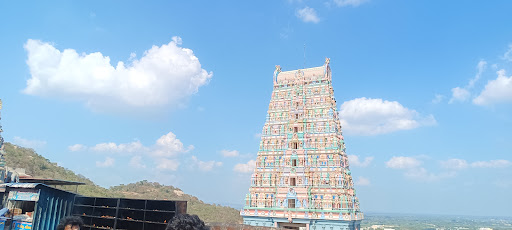
The history of the Tiruttani Murugan Temple, also known as the Subramanya Swamy Temple, is deep and ancient. Some say the Pallava kings built the temple in the ninth or tenth century CE, and later the Cholas renovated it. The temple has been mentioned in the Sangam period work Tirumurugatruppadai by Nakkeerar The main temple in Tiruttani is one of the six abodes of Lord Subramanyaswamy spread over South India. Located on a small hill, the temple is accessed by 365 steps leading to the shrine, representing the number of days in a year. Thiruthani has more to offer than just the Subramanyaswamy Temple.
In route to Tirupati, fifty-four miles from Chennai, In Thiruthani, lies the sacred Thiruthani Murugan temple. It stands proudly on the hills of Thiruttani, Tiruvallur district, Tamil Nadu, seven hundred feet above the sea level. It is one of the six holy abodes of Lord Muruga, known as a whole as the Arupadaiveedu.
Thiruthani Murugan is also known as Sri Subrahmanya Swami Kovil. The devotees make their way climbing three hundred sixty-five steps to reach the shrine, the number 365 has a deep meaning hidden within itself as it represents the 365 days of the year. The stories associated with the temple are as bewildering as the temple itself, amongst them, one says that Muruga chose to rest atop the hill to calm himself down in the aftermath of the battle with the demon king Surapadman which had resulted in latter’s demise. Another legend states that Indira, the lord of heaven, gave a nod to the marriage between his daughter Devayani and Muruga and as a gift, handed him over his elephant Airavata. Gradually Indra began to notice his wealth days after Airavata left, To which Muruga had offered to return the elephant but was respectfully declined by Indira who instead insisted that the elephant should face his direction. All the elephants at the temple along with their images have been facing east to this day.

Thiruthani set an example of true love, which would be witnessed by generations to come. Even a millennia later, it keeps us reminding again and again that true love knows no bounds. Such is the story of Lord Muruga and his consort Valli.
Valli was a mere human but the love she possessed for her creator knew no limits and was too strong, even for Lord Muruga himself. A baby girl was found amidst the plants by Nambirajan, the head of the Gypsy-Kuravas community, who took her in and brought her up. He named Her Valli after the plants.
Valli was a watch woman in the field of grains who was tasked with driving the birds away. Once an aged hunter (who was a disguised Lord Muruga) caught her attention and moments later, saved her life from a storming elephant. She thanked him but in return was asked by the hunter to marry him. She refused, stating that her love was only for the almighty for she could never love anyone other than him. She successfully passed the ultimate testament. Muruga embraced her and his touch cleared all her illusions. This event is celebrated as Valli Kalyanam.
This makes us understand that the world and the material wealth we are hunting for, is ours but only the enlightened souls understand the truth and are successful in reaching their final destination.
Here are some facts about the temple's history:
The temple is located on a 700 foot rock.
The white elephant, Airavatam, was gifts to Murugan by God of Heavens, Indra, as part of his daughter Deivanai's marriage dowry.
After Airavatam left, Indra's wealth declined.
Murugan asked Indra to take back the elephant, but Indra refused.
Instead, Murugan asked Indra to face the heads of the elephant statues in the temple.
As a result, the elephants in this temple face the east, which is the direction of Indra.
The temple is one of the six Padai Veedu shrines of Lord Subramanya.
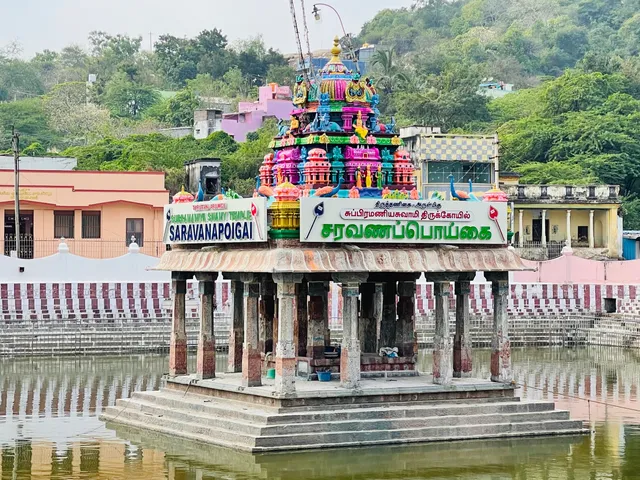
The temple is known for Saravana Poikai, a sacred tank at the foot of the hill.
The temple is also known for Sapta Rishi Teertham, a garden with seven cool springs where the Seven Rishis are said to have worshipped...
Read moreThe history of the Tiruttani Murugan Temple, also known as the Subramanya Swamy Temple, is deep and ancient. Some say the Pallava kings built the temple in the ninth or tenth century CE, and later the Cholas renovated it. The temple has been mentioned in the Sangam period work Tirumurugatruppadai by Nakkeerar The main temple in Tiruttani is one of the six abodes of Lord Subramanyaswamy spread over South India. Located on a small hill, the temple is accessed by 365 steps leading to the shrine, representing the number of days in a year. Thiruthani has more to offer than just the Subramanyaswamy Temple.
In route to Tirupati, fifty-four miles from Chennai, In Thiruthani, lies the sacred Thiruthani Murugan temple. It stands proudly on the hills of Thiruttani, Tiruvallur district, Tamil Nadu, seven hundred feet above the sea level. It is one of the six holy abodes of Lord Muruga, known as a whole as the Arupadaiveedu.
Thiruthani Murugan is also known as Sri Subrahmanya Swami Kovil. The devotees make their way climbing three hundred sixty-five steps to reach the shrine, the number 365 has a deep meaning hidden within itself as it represents the 365 days of the year. The stories associated with the temple are as bewildering as the temple itself, amongst them, one says that Muruga chose to rest atop the hill to calm himself down in the aftermath of the battle with the demon king Surapadman which had resulted in latter’s demise. Another legend states that Indira, the lord of heaven, gave a nod to the marriage between his daughter Devayani and Muruga and as a gift, handed him over his elephant Airavata. Gradually Indra began to notice his wealth days after Airavata left, To which Muruga had offered to return the elephant but was respectfully declined by Indira who instead insisted that the elephant should face his direction. All the elephants at the temple along with their images have been facing east to this day.

Thiruthani set an example of true love, which would be witnessed by generations to come. Even a millennia later, it keeps us reminding again and again that true love knows no bounds. Such is the story of Lord Muruga and his consort Valli.
Valli was a mere human but the love she possessed for her creator knew no limits and was too strong, even for Lord Muruga himself. A baby girl was found amidst the plants by Nambirajan, the head of the Gypsy-Kuravas community, who took her in and brought her up. He named Her Valli after the plants.
Valli was a watch woman in the field of grains who was tasked with driving the birds away. Once an aged hunter (who was a disguised Lord Muruga) caught her attention and moments later, saved her life from a storming elephant. She thanked him but in return was asked by the hunter to marry him. She refused, stating that her love was only for the almighty for she could never love anyone other than him. She successfully passed the ultimate testament. Muruga embraced her and his touch cleared all her illusions. This event is celebrated as Valli Kalyanam.
This makes us understand that the world and the material wealth we are hunting for, is ours but only the enlightened souls understand the truth and are successful in reaching their final destination.
Here are some facts about the temple's history:
The temple is located on a 700 foot rock.
The white elephant, Airavatam, was gifts to Murugan by God of Heavens, Indra, as part of his daughter Deivanai's marriage dowry.
After Airavatam left, Indra's wealth declined.
Murugan asked Indra to take back the elephant, but Indra refused.
Instead, Murugan asked Indra to face the heads of the elephant statues in the temple.
As a result, the elephants in this temple face the east, which is the direction of Indra.
The temple is one of the six Padai Veedu shrines of Lord Subramanya.
The temple is known for Saravana Poikai, a sacred tank at the foot of the hill.
The temple is also known for Sapta Rishi Teertham, a garden with seven cool springs where the Seven Rishis are said to have worshipped...
Read moreThe Arulmigu Subramanyaswamy Temple, nestled atop the serene Thanigai Hill in the Tiruttani, Tiruvallur district, is a profound and moving spiritual destination. As one of the six sacred abodes (Arupadaiveedu) of Lord Murugan, it holds immense significance for devotees and is a must-visit for anyone seeking a blend of rich history, divine tranquility, and breathtaking natural beauty. My experience here was nothing short of transformative, and I hope this detailed review helps you plan your visit.
The journey to the temple itself is a pilgrimage. The hill is famously ascended by 365 steps, each symbolizing a day of the year. Climbing these steps is a meditative act, and as you ascend, the noise of the world below fades, replaced by a deep sense of reverence. The cool breeze and lush greenery on the hill create a peaceful atmosphere, preparing your mind and soul for the divine presence. For those unable to climb, there are also well-maintained roads for vehicles.
The history of this temple is steeped in antiquity, with its origins tracing back to the Sangam period, as mentioned in the ancient Tamil work, Tirumurugaatruppadai, composed by the poet Nakkeerar. The name "Tiruttani" itself is derived from the Tamil word Thanigai, meaning "to cool down" or "to subside." This is a reference to the legend that Lord Murugan came to this hill to rest and cool his anger after his fierce and victorious battle with the demon king Soorapadman at Tiruchendur. It is a place where divine wrath was calmed, and in turn, it is believed to be a place where the worries and afflictions of devotees can be pacified.
Another powerful legend surrounds Lord Indra, the king of the devas. After his daughter Devasena was married to Lord Murugan, Indra presented his celestial elephant, Airavata, as a dowry. However, as the elephant left for the temple, Indra's wealth began to wane. Murugan, out of compassion, offered to return Airavata, but Indra, bound by protocol, refused to accept a gift that had already been given. He requested instead that the elephant's image face his direction so that his wealth would be retained. This is why, uniquely among many Murugan temples, the idol of the elephant Airavata stands before the sanctum, facing east towards Indra. This tale is a testament to the compassionate nature of the Lord.
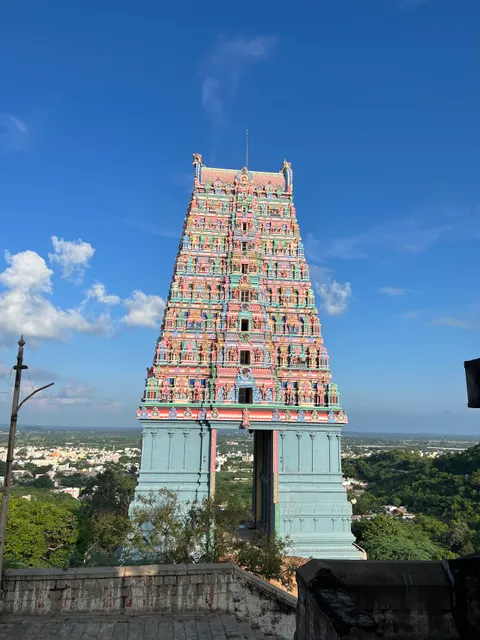
The temple has been patronized by various dynasties over the centuries, including the Pallavas, Cholas, and Vijayanagara rulers. Their contributions are visible in the temple's magnificent Dravidian architecture. The temple complex is expansive, with four precincts and a recently constructed nine-tiered Rajagopuram (main tower) that stands as a majestic testament to the region’s architectural heritage.
Timings, Pujas, and Rituals
The temple is generally open from 5:45 AM to 8:45 PM on most days, though it may have extended hours during festivals. The daily rituals (poojas) are a central part of the temple's spiritual rhythm, each with its own significance.
Beyond the daily rituals, the temple offers various sevas for devotees, including Abhishekam, Thirukalyana Urchavam (the sacred marriage ritual), and the Golden Chariot procession (Thanga Theru). Performing these rituals is considered highly meritorious and brings immense blessings. A unique aspect is the daily Abhishekam performed for the Lord, which you can participate in by getting a ticket.
I highly recommend that you visit and share your experiences. For more insights into such spiritual journeys, feel free to check out my YouTube channel, @pravrutha. You'll find a lot of content on a variety of things there!
I hope this review helps you on your...
Read more