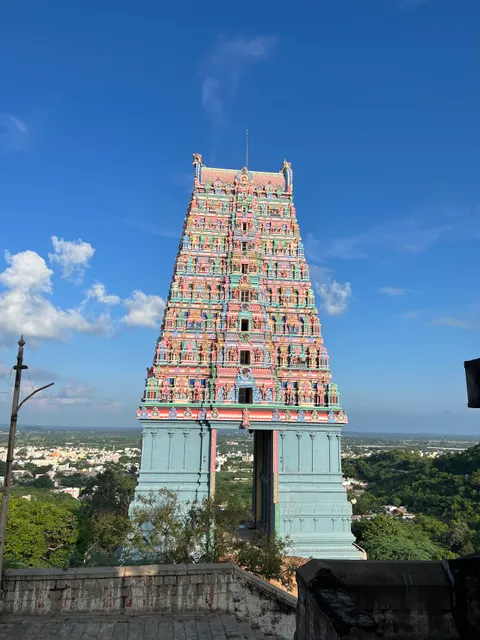
The history of the Tiruttani Murugan Temple, also known as the Subramanya Swamy Temple, is deep and ancient. Some say the Pallava kings built the temple in the ninth or tenth century CE, and later the Cholas renovated it. The temple has been mentioned in the Sangam period work Tirumurugatruppadai by Nakkeerar The main temple in Tiruttani is one of the six abodes of Lord Subramanyaswamy spread over South India. Located on a small hill, the temple is accessed by 365 steps leading to the shrine, representing the number of days in a year. Thiruthani has more to offer than just the Subramanyaswamy Temple.
In route to Tirupati, fifty-four miles from Chennai, In Thiruthani, lies the sacred Thiruthani Murugan temple. It stands proudly on the hills of Thiruttani, Tiruvallur district, Tamil Nadu, seven hundred feet above the sea level. It is one of the six holy abodes of Lord Muruga, known as a whole as the Arupadaiveedu.
Thiruthani Murugan is also known as Sri Subrahmanya Swami Kovil. The devotees make their way climbing three hundred sixty-five steps to reach the shrine, the number 365 has a deep meaning hidden within itself as it represents the 365 days of the year. The stories associated with the temple are as bewildering as the temple itself, amongst them, one says that Muruga chose to rest atop the hill to calm himself down in the aftermath of the battle with the demon king Surapadman which had resulted in latter’s demise. Another legend states that Indira, the lord of heaven, gave a nod to the marriage between his daughter Devayani and Muruga and as a gift, handed him over his elephant Airavata. Gradually Indra began to notice his wealth days after Airavata left, To which Muruga had offered to return the elephant but was respectfully declined by Indira who instead insisted that the elephant should face his direction. All the elephants at the temple along with their images have been facing east to this day.

Thiruthani set an example of true love, which would be witnessed by generations to come. Even a millennia later, it keeps us reminding again and again that true love knows no bounds. Such is the story of Lord Muruga and his consort Valli.
Valli was a mere human but the love she possessed for her creator knew no limits and was too strong, even for Lord Muruga himself. A baby girl was found amidst the plants by Nambirajan, the head of the Gypsy-Kuravas community, who took her in and brought her up. He named Her Valli after the plants.
Valli was a watch woman in the field of grains who was tasked with driving the birds away. Once an aged hunter (who was a disguised Lord Muruga) caught her attention and moments later, saved her life from a storming elephant. She thanked him but in return was asked by the hunter to marry him. She refused, stating that her love was only for the almighty for she could never love anyone other than him. She successfully passed the ultimate testament. Muruga embraced her and his touch cleared all her illusions. This event is celebrated as Valli Kalyanam.
This makes us understand that the world and the material wealth we are hunting for, is ours but only the enlightened souls understand the truth and are successful in reaching their final destination.
Here are some facts about the temple's history:
The temple is located on a 700 foot rock.
The white elephant, Airavatam, was gifts to Murugan by God of Heavens, Indra, as part of his daughter Deivanai's marriage dowry.
After Airavatam left, Indra's wealth declined.
Murugan asked Indra to take back the elephant, but Indra refused.
Instead, Murugan asked Indra to face the heads of the elephant statues in the temple.
As a result, the elephants in this temple face the east, which is the direction of Indra.
The temple is one of the six Padai Veedu shrines of Lord Subramanya.
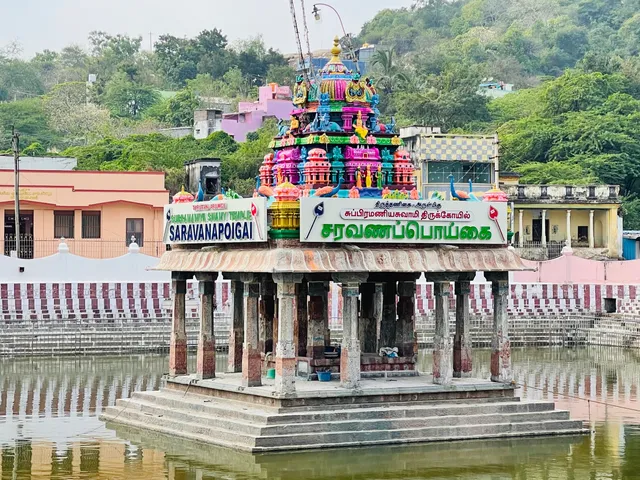
The temple is known for Saravana Poikai, a sacred tank at the foot of the hill.
The temple is also known for Sapta Rishi Teertham, a garden with seven cool springs where the Seven Rishis are said to have worshipped...
Read moreThe history of the Tiruttani Murugan Temple, also known as the Subramanya Swamy Temple, is deep and ancient. Some say the Pallava kings built the temple in the ninth or tenth century CE, and later the Cholas renovated it. The temple has been mentioned in the Sangam period work Tirumurugatruppadai by Nakkeerar The main temple in Tiruttani is one of the six abodes of Lord Subramanyaswamy spread over South India. Located on a small hill, the temple is accessed by 365 steps leading to the shrine, representing the number of days in a year. Thiruthani has more to offer than just the Subramanyaswamy Temple.
In route to Tirupati, fifty-four miles from Chennai, In Thiruthani, lies the sacred Thiruthani Murugan temple. It stands proudly on the hills of Thiruttani, Tiruvallur district, Tamil Nadu, seven hundred feet above the sea level. It is one of the six holy abodes of Lord Muruga, known as a whole as the Arupadaiveedu.
Thiruthani Murugan is also known as Sri Subrahmanya Swami Kovil. The devotees make their way climbing three hundred sixty-five steps to reach the shrine, the number 365 has a deep meaning hidden within itself as it represents the 365 days of the year. The stories associated with the temple are as bewildering as the temple itself, amongst them, one says that Muruga chose to rest atop the hill to calm himself down in the aftermath of the battle with the demon king Surapadman which had resulted in latter’s demise. Another legend states that Indira, the lord of heaven, gave a nod to the marriage between his daughter Devayani and Muruga and as a gift, handed him over his elephant Airavata. Gradually Indra began to notice his wealth days after Airavata left, To which Muruga had offered to return the elephant but was respectfully declined by Indira who instead insisted that the elephant should face his direction. All the elephants at the temple along with their images have been facing east to this day.

Thiruthani set an example of true love, which would be witnessed by generations to come. Even a millennia later, it keeps us reminding again and again that true love knows no bounds. Such is the story of Lord Muruga and his consort Valli.
Valli was a mere human but the love she possessed for her creator knew no limits and was too strong, even for Lord Muruga himself. A baby girl was found amidst the plants by Nambirajan, the head of the Gypsy-Kuravas community, who took her in and brought her up. He named Her Valli after the plants.
Valli was a watch woman in the field of grains who was tasked with driving the birds away. Once an aged hunter (who was a disguised Lord Muruga) caught her attention and moments later, saved her life from a storming elephant. She thanked him but in return was asked by the hunter to marry him. She refused, stating that her love was only for the almighty for she could never love anyone other than him. She successfully passed the ultimate testament. Muruga embraced her and his touch cleared all her illusions. This event is celebrated as Valli Kalyanam.
This makes us understand that the world and the material wealth we are hunting for, is ours but only the enlightened souls understand the truth and are successful in reaching their final destination.
Here are some facts about the temple's history:
The temple is located on a 700 foot rock.
The white elephant, Airavatam, was gifts to Murugan by God of Heavens, Indra, as part of his daughter Deivanai's marriage dowry.
After Airavatam left, Indra's wealth declined.
Murugan asked Indra to take back the elephant, but Indra refused.
Instead, Murugan asked Indra to face the heads of the elephant statues in the temple.
As a result, the elephants in this temple face the east, which is the direction of Indra.
The temple is one of the six Padai Veedu shrines of Lord Subramanya.
The temple is known for Saravana Poikai, a sacred tank at the foot of the hill.
The temple is also known for Sapta Rishi Teertham, a garden with seven cool springs where the Seven Rishis are said to have worshipped...
Read moreA very great place to relax and get spiritual vibes. It's a must visit place for me and my whole family every year to get that peace and blessings.
A very big temple with well organised way to reach the inside of temple. There is free pathway and also ticketed way. You can prefer like your need and go. Anyways both the ways join together at the nearest point to view the God Murugar inside the temple.
After the dharshana from the main Gods inside the temple, there are urchavar and other small parts of other Gods inside the temple which we can visualise and pray in our own pace if less people is there. We can even offer our prayers and our offerings in the temple Hundi there.
Timings - 6am - 8pm (make sure in the temple website for clarification) 8am-9am - There is a break during which they do prayers for God. And similarly one hour in the afternoon also, not sure of that timing.
The temple is mostly less crowded early in the morning. But during festivals and holidays, it is crowded even in the morning.
We can reach the temple through steps or through road by own vechiles or the bus that is available there. The bus is available inside the temple quarters complex at a very minimal and nominal price to reach the temple.
Prashada centre is present in the hill just near the place of exit of the temple. We can get sakara pongal, puliyogre, vada, and few more based on different days and availability. Annaprashadam is also provided in the temple.
Temple quarters complex is easily accessible from both steps and the roadway to the temple. Nearly 100-150 rooms available in the quarters with facilities. We can book rooms through temple website or directly when we visit them, but it is depending on the availability.
For those who wish to offer hair, there are two spots for it. One near the temple quarters complex (this is the old one) 6am - 6pm or above, bathrooms is available inside the building with good water supply and well maintained. The other one on the hill roadway in the hill (not sure on the working hours and availability of bathrooms).
For ear piercing, there is two spots one inside the old hair offering building and the other in the entrance of the temple. Timings are not known.
Shops are present for buying things for pooja and also shopping to home/kids both in the hill and near the steps.
Walk around the temple and have the good views of the hill and steps and also a pond and the spot where the divine workers reside can be seen.
Overall you can spend good time here. Mostly hot in all the season and very hot in summer. Be hydrated and get your spiritual vibes from...
Read more