HTML SitemapExplore
logo
Find Things to DoFind The Best Restaurants

Gingee Fort — Attraction in Tamil Nadu

Name
Gingee Fort
Description
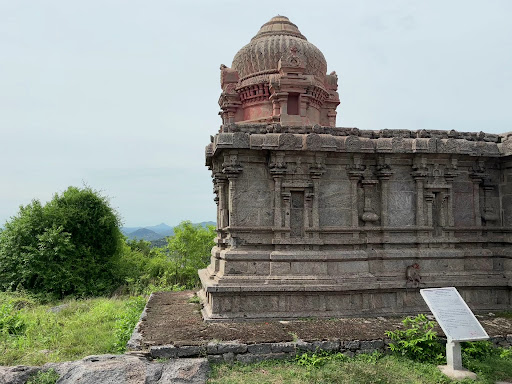
Gingee Fort or Senji Fort in Tamil Nadu, India is one of the surviving forts in Tamil Nadu, India. It lies in Villupuram District, 160 kilometres from the state capital, Chennai, and is close to the Union Territory of Puducherry.
Nearby attractions
Rajagiri Fort
792V+2V7, NH 66, Gingee, Tamil Nadu 604202, India
Nearby restaurants
Nearby hotels
Related posts
Keywords
Gingee Fort tourism.Gingee Fort hotels.Gingee Fort bed and breakfast. flights to Gingee Fort.Gingee Fort attractions.Gingee Fort restaurants.Gingee Fort travel.Gingee Fort travel guide.Gingee Fort travel blog.Gingee Fort pictures.Gingee Fort photos.Gingee Fort travel tips.Gingee Fort maps.Gingee Fort things to do.
Gingee Fort things to do, attractions, restaurants, events info and trip planning
Gingee Fort
IndiaTamil NaduGingee Fort

Basic Info

Gingee Fort

792V+2WQ, Tiruvannamalai Rd, Gingee, Tamil Nadu 604202, India
4.6(814)
Closed
Save
spot

Ratings & Description

Info

Gingee Fort or Senji Fort in Tamil Nadu, India is one of the surviving forts in Tamil Nadu, India. It lies in Villupuram District, 160 kilometres from the state capital, Chennai, and is close to the Union Territory of Puducherry.

Cultural
Outdoor
Adventure
Scenic
Family friendly
Off the beaten path
attractions: Rajagiri Fort, restaurants:
logoLearn more insights from Wanderboat AI.
Phone
+91 1800 4253 1111
Open hoursSee all hours
Tue9 AM - 5 PMClosed

Plan your stay

hotel
Pet-friendly Hotels in Tamil Nadu
Find a cozy hotel nearby and make it a full experience.
hotel
Affordable Hotels in Tamil Nadu
Find a cozy hotel nearby and make it a full experience.
hotel
The Coolest Hotels You Haven't Heard Of (Yet)
Find a cozy hotel nearby and make it a full experience.
hotel
Trending Stays Worth the Hype in Tamil Nadu
Find a cozy hotel nearby and make it a full experience.

Reviews

Nearby attractions of Gingee Fort

Rajagiri Fort

Rajagiri Fort

Rajagiri Fort

4.5

(787)

Closed
Click for details
Get the Appoverlay
Get the AppOne tap to find yournext favorite spots!
Wanderboat LogoWanderboat

Your everyday Al companion for getaway ideas

CompanyAbout Us
InformationAI Trip PlannerSitemap
SocialXInstagramTiktokLinkedin
LegalTerms of ServicePrivacy Policy

Get the app

© 2025 Wanderboat. All rights reserved.
logo

Reviews of Gingee Fort

4.6
(814)
avatar
5.0
15w

Gingee Fort: The Impregnable Citadel of Tamil Nadu

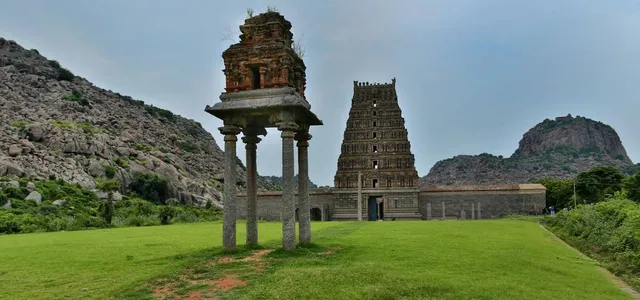
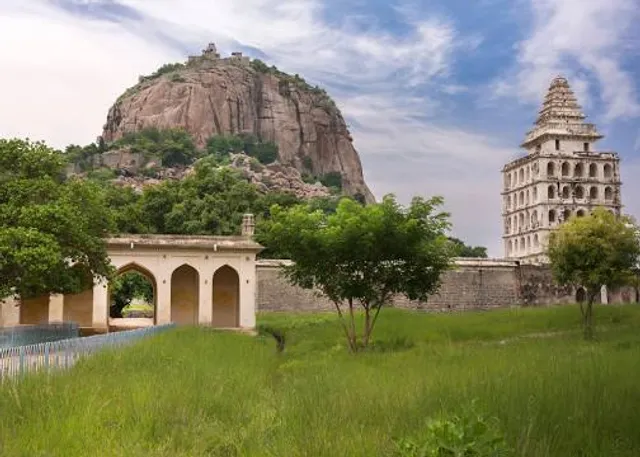
Gingee Fort, often hailed as the “Troy of the East,” is one of the most remarkable forts in South India. Located in Tamil Nadu’s Villupuram district, about 160 kilometers from Chennai, this historic stronghold sprawls dramatically across three rocky hills — Rajagiri, Krishnagiri, and Chandrayandurg — each crowned with formidable fortifications. Together, they form an extensive defensive complex that once made Gingee one of the most impregnable citadels in the region.

The fort’s origins trace back to the 9th century under the Cholas, with significant expansions later by the Vijayanagara Empire in the 15th century. Its strategic location and near-impossible access drew the attention of successive rulers, including the Marathas under Shivaji, the Mughals under Aurangzeb, the French, and finally the British. Each power added to its legacy, leaving behind layers of history etched into its walls.

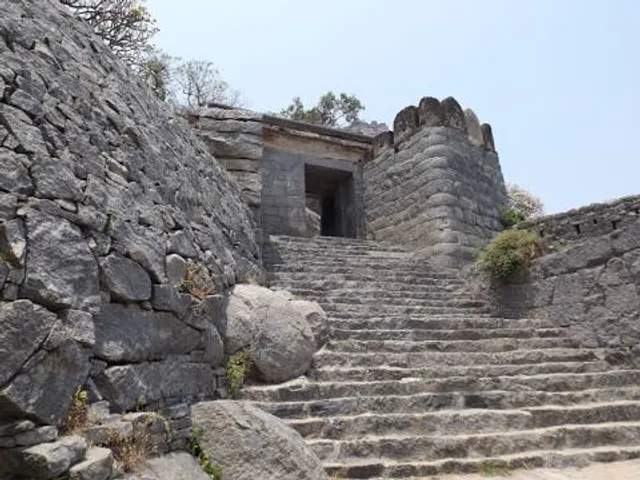
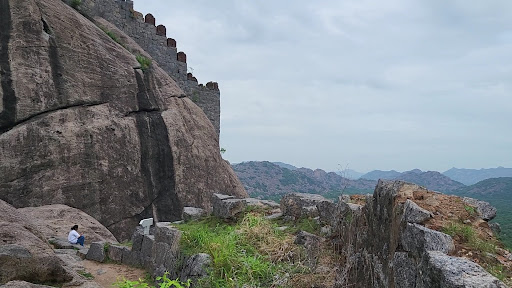
Spread over 11 square kilometers, Gingee Fort is an engineering marvel of military architecture. Massive granite walls, deep moats, and cleverly designed ramparts blend seamlessly with the natural rocky landscape. The complex houses granaries, temples, a seven-storey Kalyana Mahal (marriage hall), audience chambers, and hidden passageways. Particularly striking is the Rajagiri Hill, where a climb of over a thousand steps rewards visitors with breathtaking panoramic views of the surrounding countryside.

Despite its rugged strength, Gingee Fort is not merely a military relic. It also embodies cultural and architectural finesse, with Hindu shrines, Islamic structures, and later European influences coexisting within its vast expanse. Today, it stands as a protected monument under the Archaeological Survey of India and attracts travelers, historians, and trekkers alike.

A visit to Gingee Fort is more than just a historical tour — it is an immersive journey into Tamil Nadu’s past, where nature and history merge to create an awe-inspiring experience.

There are 3 hills - Rajagiri (1200 steps), Krishnagiri(around 700 steps) and Chandrayandurg.

We only had a day, so decided to walk up to Rajagiri. It's better to do Rajagiri and Krishnagiri on 2 separate days, as the climb is quite strenuous. Also remember to carry at least 3L of water, esp if it's very hot.

Before you ascend Rajagiri, you see the ruins of the palace, granaries, Kalyana Mantapa, gymnasium, hotse stables, ekephant ponds.

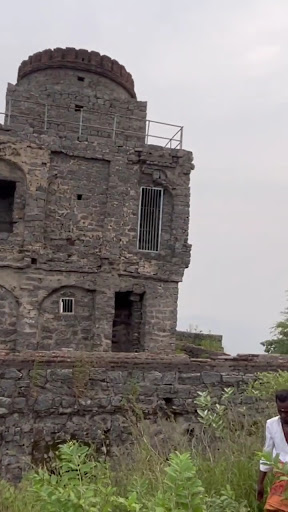
Once you go on top you see granaries, look out points, bell tower, a cannon(there is also another one mid-way), Hawa Mahal, Treasury and Ranganatha Temple.

A good experience, it takes around 1.5hours to ascend and 45mins to descend but you need to be fit, esp if the...

   Read more

avatar
5.0
1y

Gingee Fort, also known as Senji Fort, is a historic fort located in Tamil Nadu, India, in the Viluppuram district. Known as the Troy of the East, it is renowned for its strategic location, rugged terrain, and formidable architecture. Perched on three hillocks—Krishnagiri, Rajagiri, and Chandrayandurg—Gingee Fort offers a stunning view of the surrounding landscape and stands as a remarkable example of medieval South Indian fortification.

History of Gingee Fort

The origins of Gingee Fort trace back to the 9th century when it was initially built by the Chola dynasty. The fort was later expanded and strengthened by the Vijayanagara Empire in the 13th century, who transformed it into a powerful defensive structure. Over the centuries, it changed hands multiple times, being ruled by the Marathas, the Mughals, the Carnatic Nawabs, the French, and eventually the British. The fort's ability to withstand numerous invasions led to its reputation as an unassailable stronghold.

Features of Gingee Fort

Covering about 7 square kilometers, Gingee Fort is an extensive complex with unique architectural features designed for defense:

Hill Forts: The fort is divided among three hillocks, each with its own fortifications—Rajagiri, Krishnagiri, and Chandrayandurg. Rajagiri, the largest, served as the main citadel with the steepest ascents and thick walls.

Granaries and Water Reservoirs: Large granaries and reservoirs within the fort allowed it to withstand prolonged sieges by storing essential resources.

Kalyana Mahal: A unique marriage hall with a pyramidal tower, blending Indo-Islamic architectural styles, showcasing the cultural influences of the region.

Temples and Mosques: The fort houses ancient temples, like the Ranganatha Temple, and also reflects Islamic influences, highlighting its diverse history.

Moats and Walls: Deep moats and thick fort walls fortified the fort, making it difficult for enemies to breach.

Significance of Gingee Fort

Gingee Fort’s remarkable history and architecture make it a significant cultural and historical landmark in Tamil Nadu. Its strategic importance in various dynastic and colonial conflicts has left an indelible mark on the region’s history, and it remains a popular tourist site today, offering insight into India’s rich...

   Read more
avatar
5.0
22w

An awesome experience if you feel like you are missing out something in life.

This is what I experienced and some tips for you if it's your first time.

It was my first time but I was a little prepared. I started early. I was the second person to get the entry ticket. They open at 9am if you really wanna explore and have the fort for yourself make sure you reach before 9am.

Make sure you wear proper footwear or shoes that won't slip on rocks. Rain or sun the rocks at the first half are soo slippery. I was wearing shoes yet it slipped coz there was no friction.

You need alot of water, I had almost 3lts of water and energy drinks and ran out of them at the summit.

So atleast you need 2lts per head. Note that there is no drinking water once you start to climb up.

Anyone who can't climb more than 3 stories through staircase don't try. Reason the steps become steaper as you climb and it's not easy.

Also make sure to carry some snacks so that you can recharge after your climb and get back down with eaze.

Caution: There are macaques everywhere and they are not normal macaques. I just sat down for a min and one just started opening my backpack while I was still wearing it. If you reach there by car make sure to lock your window, if you reach there by motorcycle make sure you don't leave anything in you tank bag. They even took my documents out and made a mess.

Now for the good part, it felt like you just didn't something you thought you can't. The view and the architecture around are really awesome and breathtaking. Just get to know about the history of Rajagiri before you reach there.

If you expect to see artifact's just know that except few cannons there isn't much.

The interesting part, from a far it looks like a rock on top of pebbles but once you start to climb you'll see alot of caves, almost a tropical forest on your way. It was an awesome side quests for sure.

Have fun and please use the trashcans and...

   Read more
Page 1 of 7
Previous
Next

Posts

Deepak SDeepak S
Gingee Fort: The Impregnable Citadel of Tamil Nadu Gingee Fort, often hailed as the “Troy of the East,” is one of the most remarkable forts in South India. Located in Tamil Nadu’s Villupuram district, about 160 kilometers from Chennai, this historic stronghold sprawls dramatically across three rocky hills — Rajagiri, Krishnagiri, and Chandrayandurg — each crowned with formidable fortifications. Together, they form an extensive defensive complex that once made Gingee one of the most impregnable citadels in the region. The fort’s origins trace back to the 9th century under the Cholas, with significant expansions later by the Vijayanagara Empire in the 15th century. Its strategic location and near-impossible access drew the attention of successive rulers, including the Marathas under Shivaji, the Mughals under Aurangzeb, the French, and finally the British. Each power added to its legacy, leaving behind layers of history etched into its walls. Spread over 11 square kilometers, Gingee Fort is an engineering marvel of military architecture. Massive granite walls, deep moats, and cleverly designed ramparts blend seamlessly with the natural rocky landscape. The complex houses granaries, temples, a seven-storey Kalyana Mahal (marriage hall), audience chambers, and hidden passageways. Particularly striking is the Rajagiri Hill, where a climb of over a thousand steps rewards visitors with breathtaking panoramic views of the surrounding countryside. Despite its rugged strength, Gingee Fort is not merely a military relic. It also embodies cultural and architectural finesse, with Hindu shrines, Islamic structures, and later European influences coexisting within its vast expanse. Today, it stands as a protected monument under the Archaeological Survey of India and attracts travelers, historians, and trekkers alike. A visit to Gingee Fort is more than just a historical tour — it is an immersive journey into Tamil Nadu’s past, where nature and history merge to create an awe-inspiring experience. There are 3 hills - Rajagiri (1200 steps), Krishnagiri(around 700 steps) and Chandrayandurg. We only had a day, so decided to walk up to Rajagiri. It's better to do Rajagiri and Krishnagiri on 2 separate days, as the climb is quite strenuous. Also remember to carry at least 3L of water, esp if it's very hot. Before you ascend Rajagiri, you see the ruins of the palace, granaries, Kalyana Mantapa, gymnasium, hotse stables, ekephant ponds. Once you go on top you see granaries, look out points, bell tower, a cannon(there is also another one mid-way), Hawa Mahal, Treasury and Ranganatha Temple. A good experience, it takes around 1.5hours to ascend and 45mins to descend but you need to be fit, esp if the sun is shining.
Sweatha yuvarajanSweatha yuvarajan
Gingee Fort, also known as Senji Fort, is a historic fort located in Tamil Nadu, India, in the Viluppuram district. Known as the Troy of the East, it is renowned for its strategic location, rugged terrain, and formidable architecture. Perched on three hillocks—Krishnagiri, Rajagiri, and Chandrayandurg—Gingee Fort offers a stunning view of the surrounding landscape and stands as a remarkable example of medieval South Indian fortification. History of Gingee Fort The origins of Gingee Fort trace back to the 9th century when it was initially built by the Chola dynasty. The fort was later expanded and strengthened by the Vijayanagara Empire in the 13th century, who transformed it into a powerful defensive structure. Over the centuries, it changed hands multiple times, being ruled by the Marathas, the Mughals, the Carnatic Nawabs, the French, and eventually the British. The fort's ability to withstand numerous invasions led to its reputation as an unassailable stronghold. Features of Gingee Fort Covering about 7 square kilometers, Gingee Fort is an extensive complex with unique architectural features designed for defense: 1. Hill Forts: The fort is divided among three hillocks, each with its own fortifications—Rajagiri, Krishnagiri, and Chandrayandurg. Rajagiri, the largest, served as the main citadel with the steepest ascents and thick walls. 2. Granaries and Water Reservoirs: Large granaries and reservoirs within the fort allowed it to withstand prolonged sieges by storing essential resources. 3. Kalyana Mahal: A unique marriage hall with a pyramidal tower, blending Indo-Islamic architectural styles, showcasing the cultural influences of the region. 4. Temples and Mosques: The fort houses ancient temples, like the Ranganatha Temple, and also reflects Islamic influences, highlighting its diverse history. 5. Moats and Walls: Deep moats and thick fort walls fortified the fort, making it difficult for enemies to breach. Significance of Gingee Fort Gingee Fort’s remarkable history and architecture make it a significant cultural and historical landmark in Tamil Nadu. Its strategic importance in various dynastic and colonial conflicts has left an indelible mark on the region’s history, and it remains a popular tourist site today, offering insight into India’s rich military past.
AJAI KUMAR SAJAI KUMAR S
An awesome experience if you feel like you are missing out something in life. This is what I experienced and some tips for you if it's your first time. It was my first time but I was a little prepared. I started early. I was the second person to get the entry ticket. They open at 9am if you really wanna explore and have the fort for yourself make sure you reach before 9am. Make sure you wear proper footwear or shoes that won't slip on rocks. Rain or sun the rocks at the first half are soo slippery. I was wearing shoes yet it slipped coz there was no friction. You need alot of water, I had almost 3lts of water and energy drinks and ran out of them at the summit. So atleast you need 2lts per head. Note that there is no drinking water once you start to climb up. Anyone who can't climb more than 3 stories through staircase don't try. Reason the steps become steaper as you climb and it's not easy. Also make sure to carry some snacks so that you can recharge after your climb and get back down with eaze. Caution: There are macaques everywhere and they are not normal macaques. I just sat down for a min and one just started opening my backpack while I was still wearing it. If you reach there by car make sure to lock your window, if you reach there by motorcycle make sure you don't leave anything in you tank bag. They even took my documents out and made a mess. Now for the good part, it felt like you just didn't something you thought you can't. The view and the architecture around are really awesome and breathtaking. Just get to know about the history of Rajagiri before you reach there. If you expect to see artifact's just know that except few cannons there isn't much. The interesting part, from a far it looks like a rock on top of pebbles but once you start to climb you'll see alot of caves, almost a tropical forest on your way. It was an awesome side quests for sure. Have fun and please use the trashcans and let's not litter.
See more posts
See more posts
hotel
Find your stay

Pet-friendly Hotels in Tamil Nadu

Find a cozy hotel nearby and make it a full experience.

Gingee Fort: The Impregnable Citadel of Tamil Nadu Gingee Fort, often hailed as the “Troy of the East,” is one of the most remarkable forts in South India. Located in Tamil Nadu’s Villupuram district, about 160 kilometers from Chennai, this historic stronghold sprawls dramatically across three rocky hills — Rajagiri, Krishnagiri, and Chandrayandurg — each crowned with formidable fortifications. Together, they form an extensive defensive complex that once made Gingee one of the most impregnable citadels in the region. The fort’s origins trace back to the 9th century under the Cholas, with significant expansions later by the Vijayanagara Empire in the 15th century. Its strategic location and near-impossible access drew the attention of successive rulers, including the Marathas under Shivaji, the Mughals under Aurangzeb, the French, and finally the British. Each power added to its legacy, leaving behind layers of history etched into its walls. Spread over 11 square kilometers, Gingee Fort is an engineering marvel of military architecture. Massive granite walls, deep moats, and cleverly designed ramparts blend seamlessly with the natural rocky landscape. The complex houses granaries, temples, a seven-storey Kalyana Mahal (marriage hall), audience chambers, and hidden passageways. Particularly striking is the Rajagiri Hill, where a climb of over a thousand steps rewards visitors with breathtaking panoramic views of the surrounding countryside. Despite its rugged strength, Gingee Fort is not merely a military relic. It also embodies cultural and architectural finesse, with Hindu shrines, Islamic structures, and later European influences coexisting within its vast expanse. Today, it stands as a protected monument under the Archaeological Survey of India and attracts travelers, historians, and trekkers alike. A visit to Gingee Fort is more than just a historical tour — it is an immersive journey into Tamil Nadu’s past, where nature and history merge to create an awe-inspiring experience. There are 3 hills - Rajagiri (1200 steps), Krishnagiri(around 700 steps) and Chandrayandurg. We only had a day, so decided to walk up to Rajagiri. It's better to do Rajagiri and Krishnagiri on 2 separate days, as the climb is quite strenuous. Also remember to carry at least 3L of water, esp if it's very hot. Before you ascend Rajagiri, you see the ruins of the palace, granaries, Kalyana Mantapa, gymnasium, hotse stables, ekephant ponds. Once you go on top you see granaries, look out points, bell tower, a cannon(there is also another one mid-way), Hawa Mahal, Treasury and Ranganatha Temple. A good experience, it takes around 1.5hours to ascend and 45mins to descend but you need to be fit, esp if the sun is shining.
Deepak S

Deepak S

hotel
Find your stay

Affordable Hotels in Tamil Nadu

Find a cozy hotel nearby and make it a full experience.

Get the Appoverlay
Get the AppOne tap to find yournext favorite spots!
Gingee Fort, also known as Senji Fort, is a historic fort located in Tamil Nadu, India, in the Viluppuram district. Known as the Troy of the East, it is renowned for its strategic location, rugged terrain, and formidable architecture. Perched on three hillocks—Krishnagiri, Rajagiri, and Chandrayandurg—Gingee Fort offers a stunning view of the surrounding landscape and stands as a remarkable example of medieval South Indian fortification. History of Gingee Fort The origins of Gingee Fort trace back to the 9th century when it was initially built by the Chola dynasty. The fort was later expanded and strengthened by the Vijayanagara Empire in the 13th century, who transformed it into a powerful defensive structure. Over the centuries, it changed hands multiple times, being ruled by the Marathas, the Mughals, the Carnatic Nawabs, the French, and eventually the British. The fort's ability to withstand numerous invasions led to its reputation as an unassailable stronghold. Features of Gingee Fort Covering about 7 square kilometers, Gingee Fort is an extensive complex with unique architectural features designed for defense: 1. Hill Forts: The fort is divided among three hillocks, each with its own fortifications—Rajagiri, Krishnagiri, and Chandrayandurg. Rajagiri, the largest, served as the main citadel with the steepest ascents and thick walls. 2. Granaries and Water Reservoirs: Large granaries and reservoirs within the fort allowed it to withstand prolonged sieges by storing essential resources. 3. Kalyana Mahal: A unique marriage hall with a pyramidal tower, blending Indo-Islamic architectural styles, showcasing the cultural influences of the region. 4. Temples and Mosques: The fort houses ancient temples, like the Ranganatha Temple, and also reflects Islamic influences, highlighting its diverse history. 5. Moats and Walls: Deep moats and thick fort walls fortified the fort, making it difficult for enemies to breach. Significance of Gingee Fort Gingee Fort’s remarkable history and architecture make it a significant cultural and historical landmark in Tamil Nadu. Its strategic importance in various dynastic and colonial conflicts has left an indelible mark on the region’s history, and it remains a popular tourist site today, offering insight into India’s rich military past.
Sweatha yuvarajan

Sweatha yuvarajan

hotel
Find your stay

The Coolest Hotels You Haven't Heard Of (Yet)

Find a cozy hotel nearby and make it a full experience.

hotel
Find your stay

Trending Stays Worth the Hype in Tamil Nadu

Find a cozy hotel nearby and make it a full experience.

An awesome experience if you feel like you are missing out something in life. This is what I experienced and some tips for you if it's your first time. It was my first time but I was a little prepared. I started early. I was the second person to get the entry ticket. They open at 9am if you really wanna explore and have the fort for yourself make sure you reach before 9am. Make sure you wear proper footwear or shoes that won't slip on rocks. Rain or sun the rocks at the first half are soo slippery. I was wearing shoes yet it slipped coz there was no friction. You need alot of water, I had almost 3lts of water and energy drinks and ran out of them at the summit. So atleast you need 2lts per head. Note that there is no drinking water once you start to climb up. Anyone who can't climb more than 3 stories through staircase don't try. Reason the steps become steaper as you climb and it's not easy. Also make sure to carry some snacks so that you can recharge after your climb and get back down with eaze. Caution: There are macaques everywhere and they are not normal macaques. I just sat down for a min and one just started opening my backpack while I was still wearing it. If you reach there by car make sure to lock your window, if you reach there by motorcycle make sure you don't leave anything in you tank bag. They even took my documents out and made a mess. Now for the good part, it felt like you just didn't something you thought you can't. The view and the architecture around are really awesome and breathtaking. Just get to know about the history of Rajagiri before you reach there. If you expect to see artifact's just know that except few cannons there isn't much. The interesting part, from a far it looks like a rock on top of pebbles but once you start to climb you'll see alot of caves, almost a tropical forest on your way. It was an awesome side quests for sure. Have fun and please use the trashcans and let's not litter.
AJAI KUMAR S

AJAI KUMAR S

See more posts
See more posts